Understanding Fifth Disease: What Parents Need to Know
Fifth disease, medically known as erythema infectiosum, represents a common viral infection that predominantly affects children, though adults can contract it as well. This condition has gained increased attention among healthcare providers and parents due to rising case reports in recent years. Understanding the fundamentals of this illness—from its origins to its presentation and management—empowers families to recognize symptoms early and seek appropriate care when necessary.
The Origin and Classification of Fifth Disease
The distinctive name “fifth disease” carries historical significance rooted in early twentieth-century medical practice. During that era, physicians identified numerous childhood infections that produced characteristic rashes but could not definitively determine their causative agents. Scientists systematized these conditions by assigning numerical designations based on their prevalence and clinical presentation. Fifth disease earned its position as the fifth most common rash-producing infection among children, a designation that persists in modern medical terminology even though researchers have since identified the causative agent and renamed most other conditions in the original list.
Today, medical professionals recognize that parvovirus B19 causes fifth disease. This human parvovirus differs fundamentally from the parvovirus that affects canine and feline populations, making it exclusively a human pathogen. The virus predominantly circulates during late winter, spring, and early summer months in the United States, with minor outbreaks occurring approximately every three to four years.
Transmission Mechanisms and Infection Patterns
Fifth disease spreads through respiratory droplets, similar to the transmission patterns of influenza and COVID-19. When infected individuals talk, cough, or sneeze, they release viral particles into the surrounding air, where susceptible individuals may inhale them. This respiratory transmission route makes fifth disease particularly common in settings where children congregate, such as schools, daycare facilities, and recreational centers.
Interestingly, research indicates that approximately 20 percent of people exposed to parvovirus B19 develop no symptoms whatsoever, though they may still transmit the virus to others during the contagious phase. This asymptomatic presentation complicates prevention efforts, as infected individuals without recognizable symptoms continue participating in normal activities while potentially exposing vulnerable populations to the pathogen.
Recognizing the Clinical Presentation
Fifth disease manifests through a predictable progression of symptoms that unfolds across several distinct stages. Understanding this progression helps parents and caregivers differentiate fifth disease from other common childhood illnesses.
Initial Symptoms and Early Manifestations
The infection typically begins with non-specific flu-like symptoms that appear indistinguishable from common viral respiratory infections. Affected individuals may experience low-grade fever, sore throat, cough, and nasal congestion. Conjunctivitis, commonly called pink eye, frequently accompanies these initial symptoms. Additional early manifestations include headache, fatigue, muscle aches, and gastrointestinal upset characterized by diarrhea, nausea, or vomiting. These preliminary symptoms usually persist for several days and represent the period when infected individuals transmit the virus most effectively to others.
The Characteristic Rash Development
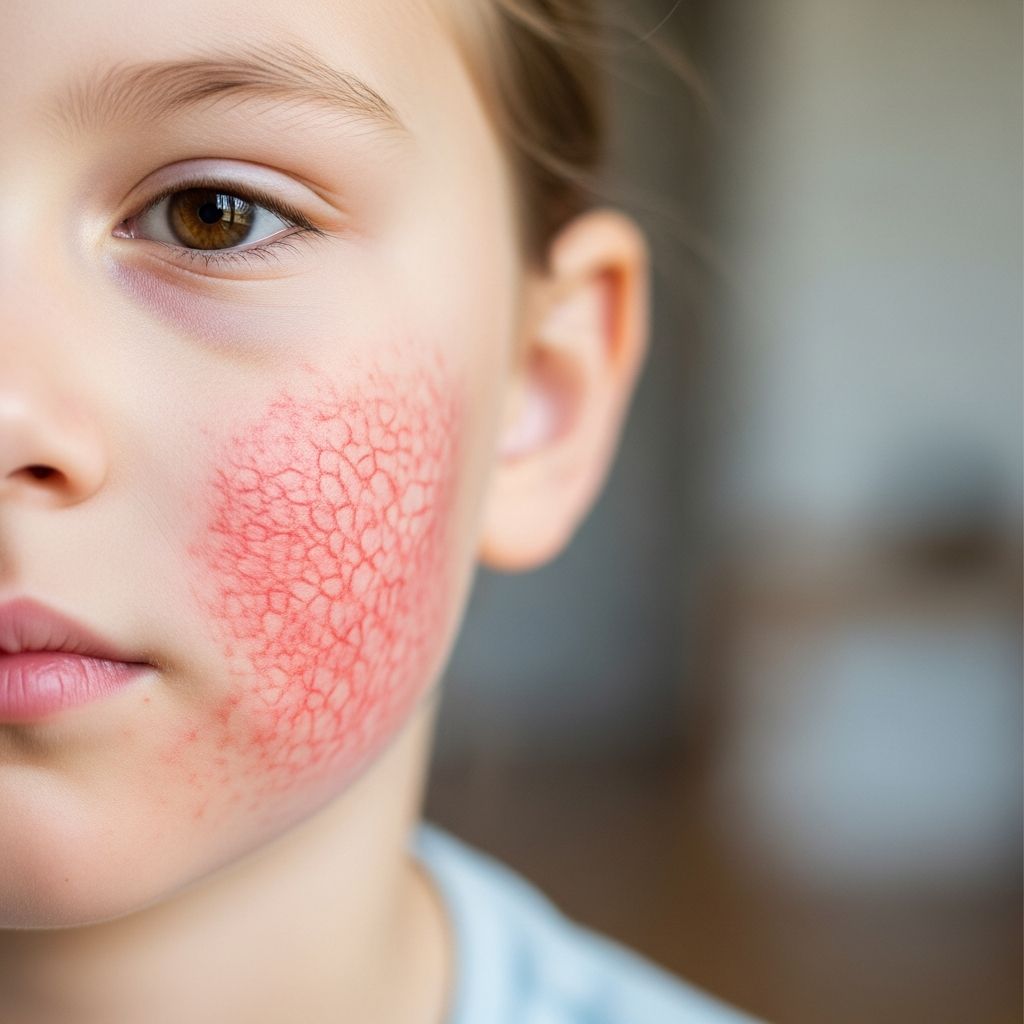
Approximately two to five days after the initial symptoms appear, the most recognizable feature of fifth disease emerges: the distinctive facial rash. This eruption begins on the cheeks, creating a bright red appearance that inspired the common designation “slapped cheek” rash. The affected areas appear flattened visually but notably produce no tactile sensation when touched—patients cannot feel the rash despite seeing its obvious appearance.
Within two to four days of its initial facial presentation, the rash extends beyond the cheeks to encompass the trunk, upper arms, and legs. During this spreading phase, the rash often develops a characteristic “lacey” or lace-like pattern, particularly on the extremities. This distinctive appearance helps differentiate fifth disease from other conditions producing similar rashes.
Duration and Persistence Patterns
The rash associated with fifth disease typically lasts between one and three weeks total, though the duration varies considerably among affected individuals. Notably, the rash may disappear and reappear multiple times during the recovery phase, particularly when children experience triggering factors such as sun exposure, temperature extremes (either very hot or cold environments), or minor skin trauma from scratching or friction. This recurrent pattern can cause confusion, as parents may believe the infection has returned when the rash reappears after days of absence.
Differential Presentations in Adults
While children typically develop the characteristic “slapped cheek” rash, adults infected with parvovirus B19 often present with a notably different clinical picture. Many adults experience prominent flu-like symptoms without developing the distinctive facial rash. Instead, approximately 80 percent of infected adults develop significant joint pain and swelling, affecting the wrists, hands, and knees particularly. Women experience this complication more frequently than men, and some individuals develop chronic polyarthritis that persists for weeks or even months following the acute infection phase.
Treatment Approaches and Management Strategies
Since fifth disease results from viral infection, no curative medication exists to eliminate the pathogen. Instead, medical management focuses on alleviating symptoms while allowing the immune system to resolve the infection naturally. Most individuals recover completely within weeks without requiring specialized interventions.
Supportive Care Measures
Healthcare providers recommend several straightforward supportive measures that facilitate recovery and enhance comfort during the acute illness phase:
- Maintaining adequate hydration through increased fluid intake to prevent dehydration and support immune function
- Ensuring sufficient rest and sleep to allow the body’s immune system to effectively combat the infection
- Using over-the-counter pain and fever relievers such as acetaminophen or ibuprofen to manage discomfort and reduce fever
- Applying unscented moisturizers and refrigerated topical preparations to provide relief from skin irritation
- Using over-the-counter antihistamine medications or topical hydrocortisone cream for intense itching
Parents should exercise particular caution when selecting fever management medications for children, avoiding aspirin entirely. Aspirin administration in children with viral infections carries a small but significant risk of triggering Reye syndrome, a rare but serious neurological condition affecting the brain and liver with potentially fatal consequences.
Medications to Avoid
Antibiotics prove ineffective for fifth disease management because the condition results from viral rather than bacterial infection. Inappropriate antibiotic use not only fails to benefit patients but also contributes to the growing problem of antibiotic resistance in microbial populations. Parents should resist pressure to obtain prescriptions for antibiotics and instead focus on supportive care approaches.
High-Risk Populations Requiring Special Consideration
While fifth disease typically remains a mild, self-limited illness in healthy children and adults, certain populations face significantly elevated risks of serious complications. These vulnerable groups require medical evaluation and potentially specialized treatment if exposed to or infected with parvovirus B19.
| Risk Category | Affected Population | Potential Complications |
|---|---|---|
| Immunocompromised Individuals | Patients receiving chemotherapy, those with weakened immune systems from medication or disease | Prolonged infection, severe anemia, chronic viremia |
| Transplant Recipients | Individuals with previous solid organ transplants (kidney, liver, etc.) | Severe infection requiring hospitalization, graft complications |
| Blood Disorder Patients | People with autoimmune hemolytic anemia or chronic hemolytic conditions | Severe anemia, aplastic crisis, transfusion requirements |
| Pregnant Women | Expectant mothers with exposure or infection | Fetal anemia, hydrops fetalis, pregnancy loss (rare) |
Pregnant women warrant particular attention because parvovirus B19 crosses the placental barrier and can infect fetal tissue. While severe complications occur rarely, infected fetuses may develop anemia and, in extremely rare cases, hydrops fetalis—a life-threatening condition characterized by abnormal fluid accumulation in fetal tissues. Medical consultation becomes essential for any pregnant woman with known exposure to fifth disease or who develops compatible symptoms.
Recognition of Severity and When to Seek Care
Although fifth disease typically resolves without complications, certain circumstances warrant immediate medical attention. Parents should contact healthcare providers if their child displays severe or persistent symptoms, experiences difficulty breathing, develops signs of severe dehydration, exhibits confusion or altered consciousness, or has underlying conditions placing them in high-risk categories. Adults developing fifth disease symptoms should similarly seek medical evaluation if they have compromised immune systems, chronic blood disorders, or are pregnant.
Prevention Strategies and Risk Reduction
Because fifth disease spreads through respiratory droplets, standard infection prevention measures reduce transmission risk. These include frequent handwashing with soap and water, covering the mouth and nose when coughing or sneezing, and avoiding close contact with infected individuals during the contagious phase. However, since the contagious period often precedes rash development—the most visible sign prompting isolation—preventing all transmission proves practically impossible. Once the characteristic rash appears, the individual has already passed the period of maximum contagiousness to others.
Long-Term Outcomes and Recovery Expectations
The vast majority of individuals infected with parvovirus B19 experience complete recovery with no lasting complications. Symptoms typically resolve within one to three weeks, with the initial flu-like manifestations usually subsiding within several days. The rash may persist or recur for several additional weeks but causes no permanent skin changes or scarring. Once recovered, infected individuals typically develop lifelong immunity, protecting them from reinfection with the same viral strain.
Frequently Asked Questions About Fifth Disease
Can adults get fifth disease?
Yes, adults can develop fifth disease, particularly if they were not exposed to parvovirus B19 during childhood. However, adults often experience different symptoms than children, with more prominent joint pain and swelling rather than the characteristic facial rash.
How long does someone remain contagious with fifth disease?
The contagious period occurs primarily during the early stages when flu-like symptoms appear, typically before the rash develops. Once the rash emerges, contagiousness has usually diminished significantly, though viral shedding may continue for brief periods.
Does the rash from fifth disease leave scars?A: No, the rash from fifth disease does not cause scarring or permanent skin changes. The affected skin returns to normal appearance as the rash resolves.
Q: Is there a vaccine for fifth disease?
Currently, no vaccine protects against parvovirus B19 infection. Prevention relies on standard infection control measures such as handwashing and respiratory etiquette.
Should my child stay home from school with fifth disease?
Since the rash represents the least contagious stage, children can often return to school once the rash appears and they feel well enough to participate. However, institutional policies vary, so checking with your school regarding their specific guidelines is advisable.
Why does the fifth disease rash come and go?
The rash may reappear or intensify with sun exposure, temperature extremes, or skin irritation. This recurrent pattern reflects the inflammatory nature of the skin response rather than reinfection with the virus.
References
- Fifth Disease — Children’s Hospital of Philadelphia. 2024. https://www.chop.edu/conditions-diseases/fifth-disease
- Fifth Disease: Symptoms, Stages, and Images — GoodRx Health. 2024. https://www.goodrx.com/health-topic/infections/fifth-disease-rash-causes-symptoms-stages-erythema-infectiosum
- Fifth Disease | Erythema infectiosum — MedlinePlus (National Library of Medicine, National Institutes of Health). 2024. https://medlineplus.gov/fifthdisease.html
- Fifth Disease (Erythema Infectiosum): Symptoms, Causes & Treatment — Cleveland Clinic. 2024. https://my.clevelandclinic.org/health/diseases/15774-fifth-disease
- About Parvovirus B19 — Centers for Disease Control and Prevention (CDC). 2024. https://www.cdc.gov/parvovirus-b19/about/index.html
- Fifth Disease: Care Instructions — Alberta Health Services. 2024. https://myhealth.alberta.ca/Health/aftercareinformation/pages/conditions.aspx?hwid=uh3509