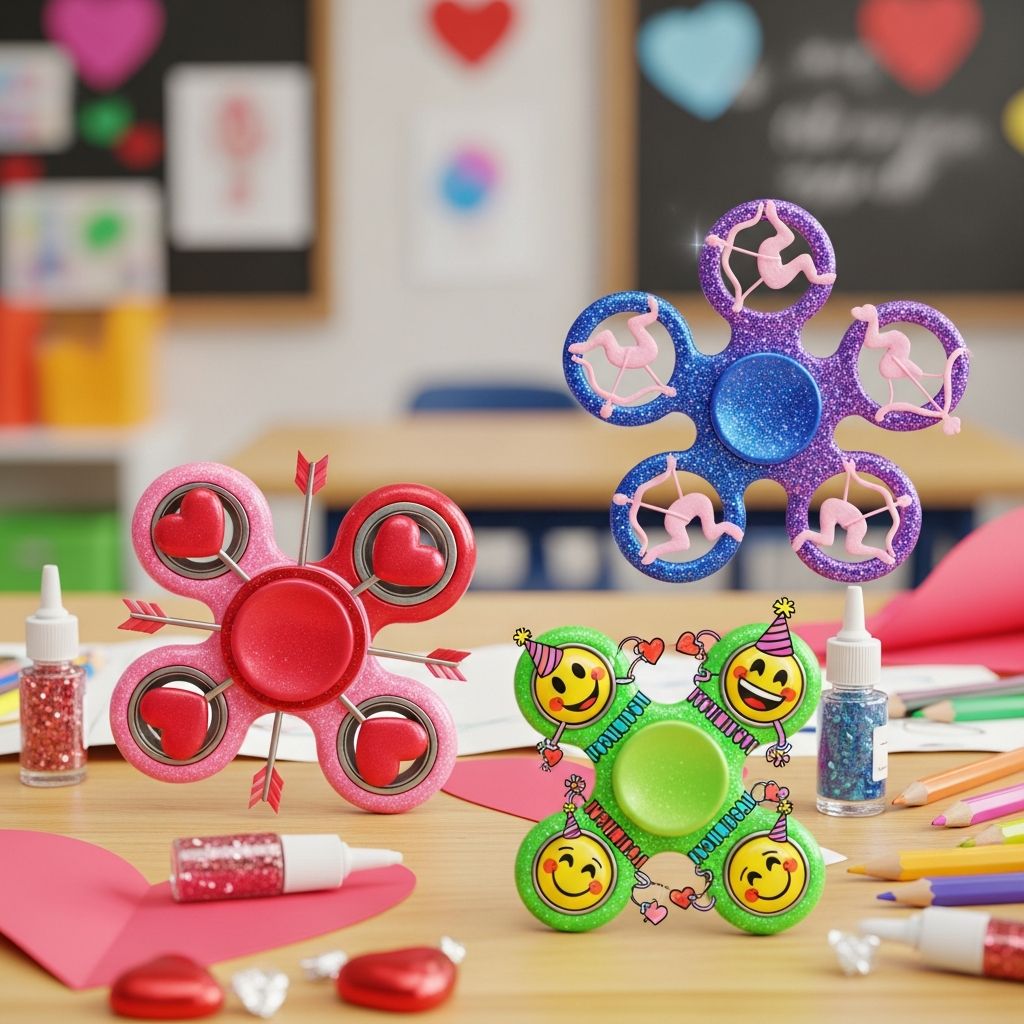
Fidget spinner Valentines are a fun way to bring together a trendy toy, kid-friendly movement, and the classic joy of exchanging cards. Instead of disposable trinkets that get tossed by the end of the week, a small spinner can double as a Valentine and a useful tool for busy little hands. This guide walks through how to plan, create, and share fidget spinner Valentines that are simple for adults to assemble and exciting for kids to receive.
Why Fidget Spinners Make Great Valentines
Fidget spinners are more than a quick fad; for many kids, they offer a quiet way to channel extra energy and stay focused. When these toys become part of a Valentine exchange, they turn into a memorable keepsake instead of just another piece of paper. They also work well for kids who do not enjoy candy or who have dietary restrictions, since they are a non-food option that still feels special.
Because spinners come in many colors and designs, it is easy to match them to classroom themes, school colors, or each child’s personality. Children often enjoy comparing spin time, colors, and tricks, which creates instant conversation starters and helps shy kids join in the fun.
Planning Your Spinner-Themed Classroom Exchange
A smooth Valentine exchange starts with a little planning. Decide early whether the spinners will act as the main Valentine or as an extra attached to traditional cards. This affects how many you need and how you will package them. Make a simple list of students’ names (or confirm a class list from the teacher) so every child receives the same number and type of Valentine.
Once you know the total, set a realistic budget. Bulk packs of mini spinners can keep costs down, while a smaller class might allow for slightly fancier designs. Consider packaging supplies such as small bags, labels, and tape in your budget so there are no last-minute surprises.
Choosing the Right Fidget Spinners
Not all spinners are created equal, and a classroom setting benefits from sturdy, quiet versions. Look for smooth bearings and rounded edges so there are no sharp points or rough plastic seams. Test a sample ahead of time if possible; a spinner that barely turns will be more frustrating than fun.
Color can matter too. Some adults prefer to avoid designs that light up or make noise, especially if the teacher has rules about distracting gadgets. Solid colors, metallic tones, or glow-in-the-dark finishes often strike a good balance between exciting and classroom-friendly.
Basic Packaging Ideas (No Craft Skills Required)
You do not need advanced crafting skills or fancy equipment to make cute spinner Valentines. Many simple ideas use basic supplies you may already have at home. The key is to attach a short message and space for the child’s name while keeping the spinner visible and secure.
- Simple bag and label: Place the spinner in a clear snack-size bag and seal it with a printed sticker or label that has a short Valentine message and signature line.
- Card with taped spinner: Use index cards or cardstock rectangles and tape the spinner to the center with removable tape, adding a note and the recipient’s name around it.
- Ribbon tie: For spinners with a center hole, thread thin ribbon through and tie it to a small tag. This works well if you want a more decorative look without using plastic bags.
Crafty Spinner Valentine Designs
For adults and kids who enjoy crafting, there are many ways to turn a small spinner into the centerpiece of a handmade Valentine. You can involve older children in cutting shapes, gluing decorations, or writing messages so the project becomes a shared activity instead of a solo task.
Consider using themed backgrounds such as rockets, flowers, or wheels and letting the spinner stand in as a moving part of the design. This playful approach encourages imagination and makes each card feel like a mini toy set.
Example Decorative Approaches
- Flower center: Cut large paper flowers and place a spinner as the center, taping or tying it through the middle.
- Spaceship control: Draw a simple spaceship or rocket dashboard and mount the spinner where a control dial would go.
- Game token: Design a small board game path on cardstock and attach the spinner as a “spinner piece” that kids can use later.
Classroom-Friendly Guidelines and Etiquette
Before committing to spinner Valentines, it helps to check in with the classroom teacher. Some schools limit certain toys or have specific Valentine policies, such as requiring enough for every student or avoiding candy. Clear communication prevents misunderstandings and keeps the celebration enjoyable for everyone.
Even if spinners are allowed, adults can help set expectations. Talk to children about when and where to use them, such as during free time or at home rather than during tests. Framing them as “tools” as well as toys can encourage more respectful use.
Non-Candy Alternative Kids Still Love
Many families and schools are moving toward non-candy classroom Valentines because of allergies, dietary preferences, or simply a desire to cut down on sugar. Fidget spinners meet this need while still feeling like a treat. Kids often value something they can play with longer than they would enjoy a small piece of candy.
For children with specific sensory needs, a spinner can also be a helpful regulation tool. It offers a quiet motion that occupies the hands without requiring much space, which can be particularly useful in busy or loud holiday environments.
Adapting Spinner Valentines for Different Age Groups
One strength of spinner Valentines is that they scale well across ages. Younger children may respond best to bright colors and simple messages, while older kids might enjoy jokes, puns, or more sophisticated designs. You can adjust packaging and wording accordingly without changing the basic idea.
For very young students, think about safety and supervision. Choose larger spinners without small detachable parts, and avoid any tiny add-ons that could pose a choking hazard. Older elementary or middle school students can handle smaller pieces and might even help assemble the Valentines themselves.
Age Group Customization Table
| Age Group | Spinner Style | Message Style | Packaging Tip |
|---|---|---|---|
| Preschool–K | Large, simple, bright colors | Short, bold text; large name space | Clear bags with big labels |
| Grades 1–3 | Colorful or glow-in-the-dark | Simple jokes or friendly messages | Cardstock with taped spinner |
| Grades 4–5 | Metallic or patterned | Playful puns or themed designs | Printed cards with cut-out slots |
| Middle School | Sleek, neutral tones | Minimal text; more “cool” than “cute” | Simple tags tied through center |
Inclusive Ideas for Students With Different Needs
Valentine’s Day can feel complicated for some students, especially those with sensory differences, attention challenges, or social worries. Spinner Valentines can support inclusion when adults think ahead about how each child might experience them. For instance, students sensitive to flashing lights may prefer non-light-up versions, and those who become overwhelmed by constant motion may do better if the spinner is kept in a pouch.
It can also help to provide quiet spaces or short “spin breaks” for kids who need a moment away from the excitement. Framing these breaks as normal and available to anyone avoids singling out specific children while still honoring different needs.
Budget-Friendly Tips and Tricks
Spinners can be affordable when purchased thoughtfully. Buying in bulk online, sharing a pack with another family, or coordinating a group order for the class can all help lower the cost per item. Look for deals on multi-packs, especially in off-peak seasons, and store extras for future celebrations or reward boxes.
Printing your own cards or labels at home saves money compared with pre-printed kits. Simple designs with a bit of color go a long way, and you can often reuse the same template year after year by changing only the text.
Simple Step-by-Step Assembly Guide
To keep the process manageable, break the project into small steps that can be done over a few days instead of all at once. Involving children in each stage not only reduces the adult workload but also helps kids take ownership of the Valentines they give.
- Gather supplies: Collect spinners, cardstock or bags, tape or ribbon, markers, and a class list.
- Prepare the cards: Cut or print card bases and write a short, friendly message on each one.
- Attach the spinners: Tape, tie, or slide each spinner onto its card so it is secure but still removable.
- Add names: Label each Valentine with the recipient’s name and your child’s name.
- Pack for transport: Place all finished Valentines in a sturdy bag or box for your child to take to school.
Fun Classroom Activities Using Fidget Spinners
Spinner Valentines can be more than a one-time exchange; they can inspire quick, low-prep classroom activities. With the teacher’s approval, children can use their new spinners in short games that reinforce cooperation, counting, or observation skills. These activities keep the focus on community rather than competition.
- Compliment circle: Children sit in a circle and spin their spinners. When a spinner stops, that child offers a kind word to someone else in the circle.
- Spin and share: Set a timer. During the spin, students share things they like about school, reading, or their class.
- Quiet focus challenge: Students see if they can read or draw quietly for the duration of a spin, turning it into a playful mindfulness exercise.
Safety, Storage, and Classroom Expectations
To keep spinner Valentines enjoyable, adults can help kids establish simple safety rules. These might include not throwing spinners, not placing them near faces, and not sharing them in ways that could spread germs. Setting these expectations ahead of the classroom party makes it easier to focus on fun instead of reminders.
Storage matters too. Encourage children to keep spinners in desk cubbies, pencil boxes, or small bags when not in use. This helps prevent lost toys and distractions while showing respect for classmates and teachers.
Making the Day Special Without Overcomplicating It
It is easy to feel pressure to create elaborate, picture-perfect Valentines, but children mostly remember how something felt, not whether every detail was flawless. A simple, thoughtfully chosen spinner with a warm message can mean just as much as an intricate craft. Focus on kindness, inclusion, and a sense of shared celebration rather than perfection.
By choosing fidget spinners as the heart of your classroom Valentines, you offer kids a small, lasting reminder that friendships can be both fun and supportive. A tiny spinning toy becomes a symbol of connection that continues long after the holiday decorations come down.
Frequently Asked Questions
Are fidget spinner Valentines allowed in all classrooms?
Not always. Each teacher and school may have different rules about toys, so it is important to ask before sending spinner Valentines. A quick message or note can clarify what is acceptable and help you adjust plans if needed.
How many spinners should I buy?
Plan for one spinner per classmate, plus a few extras in case of new students or last-minute changes. If your child wants one for themselves or a sibling, include those in your count as well.
What if a child in the class cannot use a spinner?
If you know a classmate has motor, sensory, or safety concerns, consider preparing an alternative non-spinner Valentine for that child, such as a small notebook or set of stickers. Quietly coordinating with the teacher can help ensure everyone receives something they can enjoy.
Do I need special tools to assemble spinner Valentines?
No. Basic school or home supplies like scissors, tape, ribbon, and paper are usually enough. Optional extras such as stickers or decorative hole punches can add flair but are not required.
Can kids help make their own spinner Valentines?
Yes, and many enjoy it. Children can sign their names, decorate cards, sort spinners by color, or help attach them under supervision. Involving them teaches generosity and thoughtfulness while building excitement for the classroom exchange.