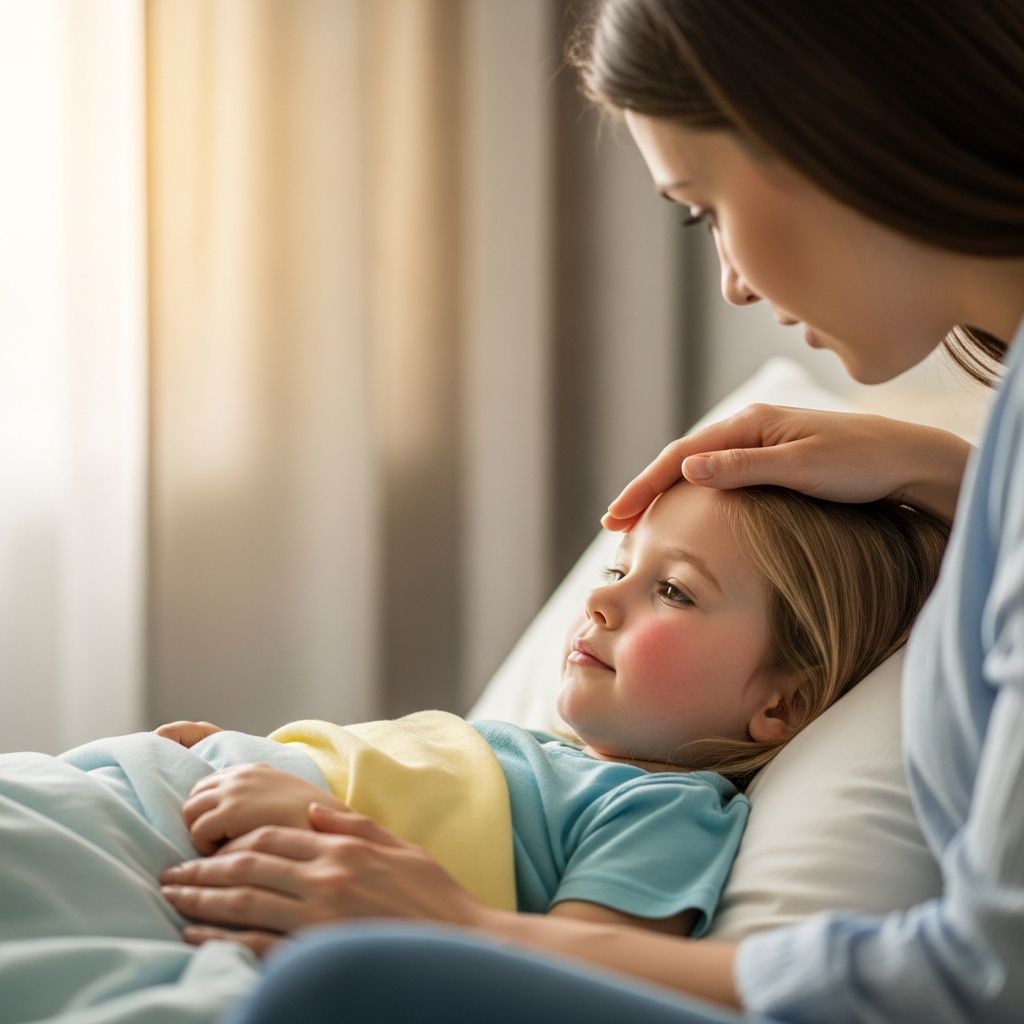
Fever is one of the most common reasons parents call their child’s doctor or visit urgent care. It can be scary to see the temperature rise, but in most cases fever is a normal, healthy response to infection and can be managed safely at home with simple steps.
This guide explains what fever is, how to check it correctly, when to treat it, when to call your child’s doctor, and when to seek urgent medical care.
What Is a Fever?
The body has an internal thermostat located in a part of the brain called the hypothalamus. When the immune system detects germs such as viruses or bacteria, this thermostat deliberately raises the body temperature to help fight the infection.
In healthy children, doctors typically define **fever** as:
- Rectal temperature: ≥ 100.4°F (38.0°C)
- Oral temperature: ≥ 100.0°F (37.8°C)
- Underarm (axillary): usually about 0.5–1.0°F (0.3–0.6°C) lower than oral, so a lower number may still represent a fever
- Forehead (temporal) or ear (tympanic): depends on the device; follow the manufacturer’s guidance
Normal temperature varies throughout the day and can be slightly higher in the evening or after activity. A single reading a little above 98.6°F (37°C) does not automatically mean your child is ill.
Why Children Get Fevers
Fever itself is a symptom, not a disease. It is usually a sign that the immune system is doing its job.
Common causes of fever in children include:
- Viral infections— such as colds, flu, COVID-19, RSV, or stomach bugs
- Bacterial infections— such as ear infections, strep throat, pneumonia, or urinary tract infections
- Post-vaccine fevers— brief fevers after some childhood vaccines
- Inflammatory or chronic conditions causing prolonged or recurring fevers
Short-lived fevers are most often caused by viral infections and resolve on their own without antibiotics.
Fever Myths vs. Facts
| Myth | Fact |
|---|---|
| Higher fever means a more serious illness. | The number on the thermometer does not always match how serious the illness is. How your child looks and behaves is usually more important than the exact temperature. |
| If you do not treat the fever, it will keep going higher without limit. | The brain’s thermostat controls body temperature. Fever rarely rises above 105°F (40.6°C) from infection alone in an otherwise healthy child. |
| Every fever must be brought down to normal. | Fever helps the body fight infection. Medicines are mainly for comfort, not for making the number normal. |
| Teething causes high fever. | Research shows teething may cause mild fussiness but not significant fevers. High temperatures usually mean an infection, not teething. |
How to Take Your Child’s Temperature
Accurate temperature measurement helps you and your child’s doctor make better decisions. Digital thermometers are recommended for home use in children.
Choosing the Right Method by Age
- Under 3 months: Rectal temperature is preferred for accuracy unless your child’s doctor recommends otherwise.
- 3 months to 3 years: Rectal, forehead (temporal), or underarm readings are commonly used.
- Over 4–5 years: Oral digital thermometers, forehead, or ear thermometers can be used if your child can hold the device correctly.
Always follow the instructions that come with the thermometer. Clean it after each use.
What Else to Watch Besides the Number
The temperature reading is only one part of the story. Focus on your child’s overall condition. Call your child’s doctor if you are concerned, even if the number seems mild.
Important things to observe:
- Alertness: Is your child difficult to wake up or unusually hard to console?
- Breathing: Is breathing fast, labored, or noisy when at rest?
- Hydration: Are there tears when crying? Are the lips and mouth moist? Is there at least one wet diaper or urination every 6–8 hours?
- Skin appearance: Any new or unusual rash, especially purple or tiny red spots that do not fade when pressed?
- Pain: Does your child have a very sore throat, severe headache, stiff neck, or intense localized pain (ear, joint, abdomen)?
- Duration: Has the fever lasted longer than two or three days, or is it returning after improving?
When You Can Usually Care for Fever at Home
Many fevers in otherwise healthy children can be safely managed at home. Home care is often reasonable when:
- Your child is older than 3 months and fully vaccinated.
- The fever is below a level your child’s doctor considers worrisome for their age.
- Your child is drinking fluids, urinating, and responsive, even if less active than usual.
- There are mild, common symptoms like runny nose, mild cough, or mild sore throat.
Comfort Measures and Home Care
Fluids and Rest
Fever makes the body work harder and can increase fluid loss through sweating and faster breathing. To prevent dehydration:
- Offer frequent sips of water to older children.
- For babies under 6 months, continue breast milk or formula; ask your pediatrician before giving any additional fluids.
- Give oral rehydration solutions if recommended by your child’s doctor, especially with vomiting or diarrhea.
- Encourage quiet play and rest; sleep helps recovery.
Clothing and Room Temperature
- Dress your child in **lightweight clothing** and use a light blanket if they are not shivering.
- If your child has chills and is shivering, add a light blanket until the shivering stops, then remove extra layers.
- Keep the room at a comfortable temperature; not overly hot or cold.
- Avoid ice baths or alcohol rubs, which can be uncomfortable and unsafe.
Fever-Reducing Medications
Medicines do not cure the infection but can make your child feel better by lowering fever and easing aches.
Common options include:
- Acetaminophen (Tylenol and generic forms)
- Ibuprofen (Advil, Motrin and generic forms) — usually for children over 6 months old, following your doctor’s guidance
Important safety points:
- Use your child’s **weight-based dose** chart or your doctor’s instructions.
- Do not give more often than the label or your pediatrician recommends.
- Use the measuring device that comes with the medicine.
- Do not give aspirin to children or teens because it is linked with Reye syndrome, a rare but serious condition.
- Speak with your child’s doctor before using medications in infants under 3 months.
Some pediatricians advise against routinely alternating acetaminophen and ibuprofen, as this can lead to dosing mistakes. Others may suggest it in specific circumstances. Follow your own child’s doctor’s advice.
When to Call Your Child’s Doctor
Call your child’s primary care provider for guidance if any of the following apply:
- Age under 3 months with a rectal temperature ≥ 100.4°F (38°C), even if the baby seems comfortable.
- Fever lasts more than **48–72 hours** in a child, or more than **24 hours** in a baby under 2 years, unless your doctor has given other instructions.
- Your child has a history of chronic medical problems (heart disease, lung disease, immune problems, cancer, sickle cell disease, or is on immune-suppressing medicines).
- Fever returns after several fever-free days.
- Your child has fewer wet diapers or bathroom trips, dry mouth, or no tears when crying.
- Your child has worsening cough, ear pain, pain when urinating, or any new concerning symptom.
- You simply feel that something is not right with your child, even if you cannot explain exactly why.
When Fever Is an Emergency
Seek **emergency care right away** (call your local emergency number or go to the nearest emergency department) if your child with fever has any of the following warning signs:
- Very hard to wake up, or not responding normally
- Difficulty breathing, fast breathing at rest, or pulling in of the skin between the ribs when breathing
- Blue or gray color of the lips, face, or nails
- Stiff neck, severe headache, or confusion
- A seizure (shaking or loss of consciousness)
- Skin rash that is purple, dark red, or made of tiny red spots that do not fade when pressed
- Signs of severe dehydration (no urination for 8 or more hours, extremely dry mouth, lethargy)
- Fever in a child of any age who has recently been in an overheated place such as a hot car
Special Situations
Fever After Vaccinations
It is common for some children to develop a mild fever for a day or two after receiving routine vaccines. This usually responds to fluids and comfort measures and may not require medicine. Follow vaccine aftercare instructions from your child’s doctor, and contact them if the fever is high or lasts longer than expected.
Prolonged or Recurrent Fevers
Fevers that last more than a week, or fevers that keep coming back without a clear cause, should always be discussed with your child’s healthcare provider. Sometimes these patterns can be linked to chronic infections, inflammatory diseases, or other less common conditions that need evaluation.
Helping Your Child Feel Safe and Cared For
Beyond numbers and medicines, your child also needs comfort and reassurance. Ways to support them include:
- Staying close, reading, or doing quiet activities together
- Offering small, frequent snacks or favorite fluids if appetite is low
- Letting your child rest and nap as needed
- Explaining in simple terms that their body is fighting germs and you are there to help
Quick Fever Reference Table
| Situation | What Parents Can Generally Do |
|---|---|
| Baby under 3 months, rectal temp ≥ 100.4°F (38°C) | Call your child’s doctor or seek urgent evaluation the same day. |
| Child older than 3 months, mild fever, drinking and playing some | Use fluids, rest, and light clothing; consider medicine for comfort only. |
| Fever for more than 2–3 days, or fever that returns after improving | Contact your child’s doctor for advice and possible exam. |
| Fever with severe headache, stiff neck, breathing trouble, or purple rash | Seek emergency care immediately. |
Frequently Asked Questions About Fever in Children
Should I wake my child to give fever medicine?
If your child is sleeping comfortably and breathing normally, there is usually no need to wake them just to lower the temperature. Rest helps recovery. Ask your pediatrician if they have specific instructions for your child.
What temperature is considered “too high”?
For babies under 3 months, a rectal temperature of 100.4°F (38°C) or higher needs prompt medical attention. In older children, the seriousness is determined more by how your child looks and acts than by the exact temperature. That said, any fever approaching 105°F (40.6°C) or higher, or a fever with alarming symptoms, should be evaluated urgently.
Can fever cause brain damage?
Fevers caused by infections and controlled by the brain’s thermostat almost never cause brain damage in healthy children. Very high body temperatures from environmental heat (heatstroke) are more dangerous and require emergency care.
Are febrile seizures dangerous?
Some children have seizures triggered by rapid changes in temperature, called febrile seizures. They are frightening to see but are usually brief and do not typically cause long-term harm. Any first-time seizure or prolonged seizure should be evaluated in an emergency department, and your child’s doctor can advise you about future risk and prevention.
Will treating the fever make my child get better faster?
Fever-reducing medicines can make your child more comfortable and help them drink and sleep, but they do not shorten the length of most infections and do not prevent complications like febrile seizures.
When is it okay to send my child back to school or daycare?
Policies vary, but many schools and childcare programs ask that a child be fever-free for at least 24 hours without fever-reducing medicine and well enough to participate in normal activities. Always check your local guidelines and talk to your child’s doctor if you are unsure.
References
- Fever in Healthy Children — Children’s Hospital of Philadelphia. 2023-04-10. https://www.chop.edu/conditions-diseases/fever-children
- Fever — Nationwide Children’s Hospital. 2022-08-01. https://www.nationwidechildrens.org/conditions/fever
- Pediatrician Tips on Fevers in Children — UC Davis Health. 2022-11-21. https://health.ucdavis.edu/children/patient-education/fevers-in-children
- Fever in Children — Stanford Medicine Children’s Health. 2023-05-15. https://www.stanfordchildrens.org/en/topic/default?id=fever-in-children-90-P02512
- Fever — Nationwide Children’s Hospital Family Resources PDF (Fever Age 0–5, adapted). 2021-09-01. https://www.childrensmercy.org/siteassets/media-documents-for-depts-section/documents-for-health-and-safety/fever-age-0-5.pdf
- Fever — Boston Children’s Hospital. 2022-06-30. https://www.childrenshospital.org/conditions/fever
- Fever (1 and Older) — Children’s Hospital Colorado. 2023-03-01. https://www.childrenscolorado.org/conditions-and-advice/conditions-and-symptoms/symptoms/fever/