Self-esteem is more than a child simply feeling happy. It is a deep, stable sense of being worthy, capable, and valued, even when life is difficult. Healthy self-esteem helps kids try new things, bounce back from mistakes, and build strong relationships.
Research suggests that the roots of self-esteem appear surprisingly early, with measurable self-esteem present by about age 5, and shaped strongly by family and everyday experiences. This means parents and caregivers play a powerful role—starting from infancy—in how children see themselves.
What Self-Esteem Really Means for Children
Self-esteem is often confused with praise, achievement, or constant happiness. In reality, it is a child’s overall emotional evaluation of themselves—how much they feel they are a “good enough” person.
Children with healthy self-esteem typically:
- Believe they are worthy of love and respect
- Trust that they can learn and improve with effort
- Feel proud of their strengths while accepting their limits
- Handle mistakes without falling apart or giving up easily
- Are willing to try new or challenging activities
Children with low self-esteem are more likely to:
- Put themselves down or talk negatively about their abilities
- Focus on failures and ignore successes
- Avoid challenges for fear of looking “stupid” or failing
- Be easily discouraged by criticism or small setbacks
- Rely heavily on others’ approval to feel good
How Self-Esteem Develops Across Childhood
Self-esteem grows over time, shaped by a child’s relationships, experiences, and environment.
| Age Range | Key Self-Esteem Milestones | How Adults Can Help |
|---|---|---|
| Infancy (0–2 years) |
|
|
| Preschool (3–5 years) |
|
|
| Early school age (6–9 years) |
|
|
| Later childhood & preteens |
|
|
Core Ingredients of Healthy Self-Esteem
Studies and long-standing psychological frameworks highlight several consistent conditions that foster strong self-esteem in children.
1. Warmth, Love, and Emotional Safety
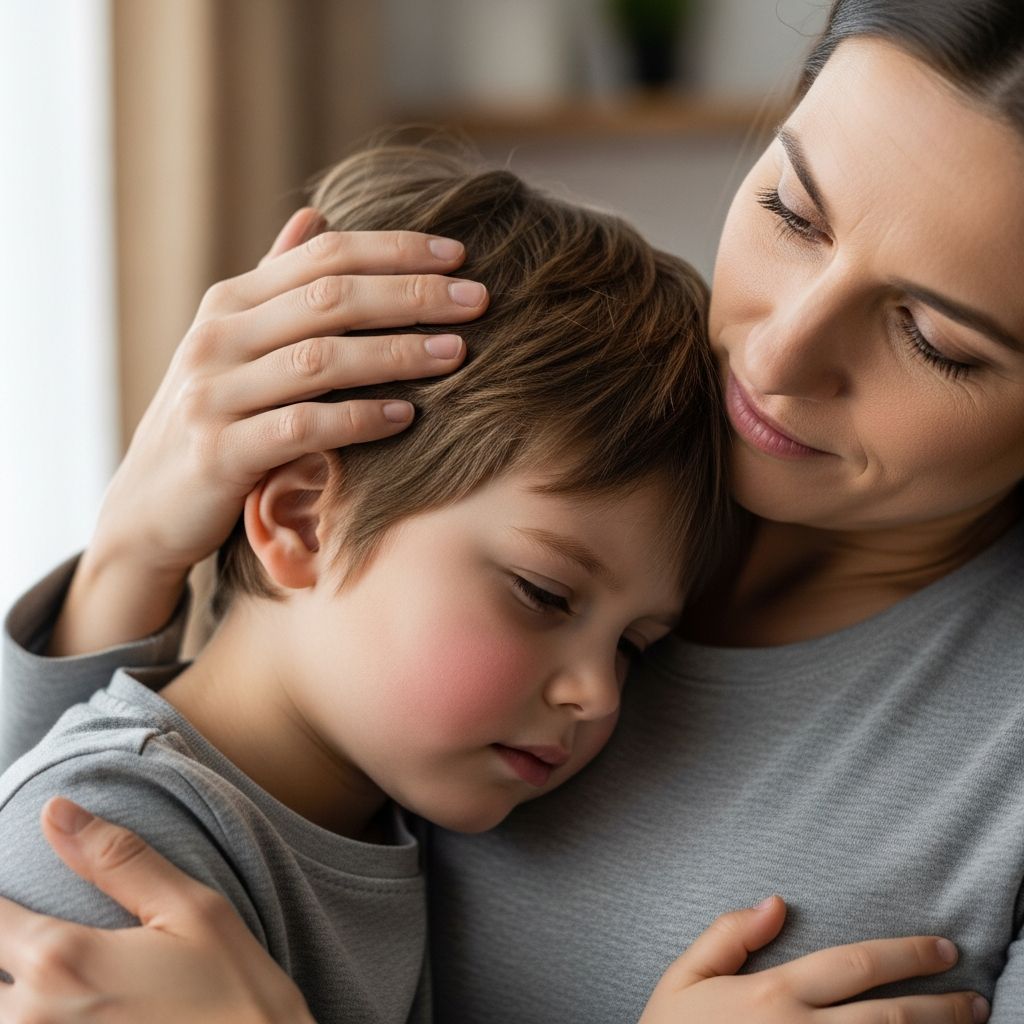
Children first learn that they matter when caregivers respond reliably and kindly. Feeling safe, comforted, and valued lays the groundwork for seeing themselves as worthy people.
- Comforting a crying baby
- Using a calm voice, even when correcting behavior
- Showing affection through hugs, smiles, and kind words
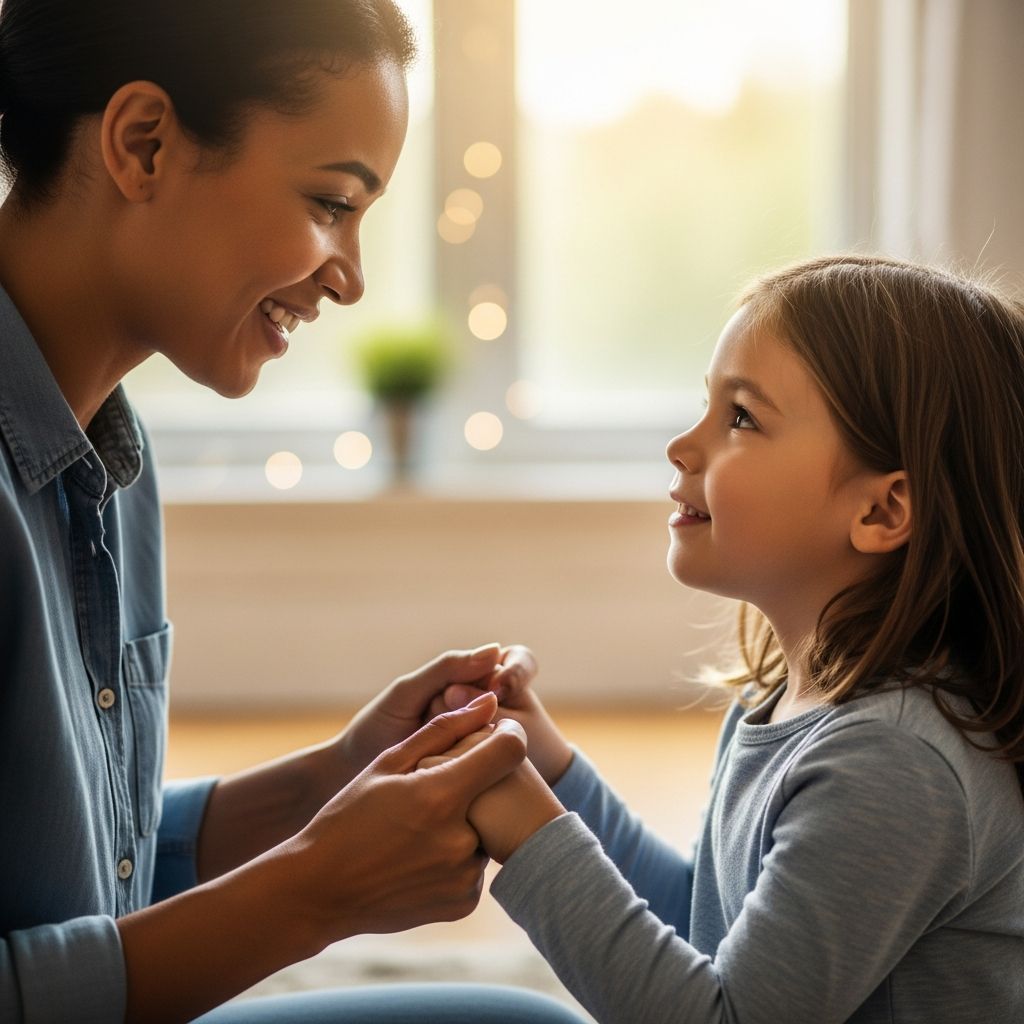
- Making regular time to talk and play together
2. Clear Limits Paired With Respect
Children feel more secure—and more confident—when they know what is expected and where the boundaries lie.
- Explain family rules in simple, age-appropriate language
- Follow through consistently but without shaming
- Offer limited choices within safe boundaries (for example, “You may do homework at the table or the desk”)
- Correct behavior while still affirming the child’s worth (for example, “I care about you and this behavior is not OK”)
3. Opportunities to Succeed and Contribute
Self-esteem grows from real experiences of mastery—trying, practicing, and gradually succeeding. Achievements in school, friendships, sports, arts, and daily life all help strengthen a child’s view of themselves.
- Give manageable tasks (feeding the pet, setting the table, organizing school items)
- Let children solve age-appropriate problems before stepping in
- Celebrate progress (learning a new word, riding a bike a bit farther)
- Encourage persistence instead of doing things for them immediately
4. Supportive Ways of Handling Emotions
How adults respond to children’s big feelings shapes whether kids learn to accept themselves or feel ashamed of their emotions.
- Normalize emotions: “It makes sense you feel disappointed.”
- Help name feelings: sad, mad, frustrated, excited, nervous
- Teach calming strategies (deep breathing, taking a break, talking it out)
- Avoid labels like “dramatic,” “baby,” or “too sensitive” when kids are upset
Everyday Parenting Habits That Build Self-Esteem
Small, daily interactions often matter more than big speeches. The following habits help children gradually build a strong, realistic sense of self.
Use Specific, Honest Encouragement
Over-the-top praise can feel fake and may even lead children to doubt themselves. Research suggests that realistic, focused encouragement supports genuine self-esteem without drifting toward narcissism.
- Notice effort: “You worked hard on that puzzle.”
- Highlight strategies: “You kept trying different ways until it fit.”
- Avoid constant global praise like “You’re the best!”
- Stay truthful—children feel safer when your words match reality
Encourage Healthy Risk-Taking
Children gain confidence when they attempt new things and discover they can handle discomfort or uncertainty.
- Support trying a new game, club, or skill even if they are nervous
- Frame mistakes as part of learning: “What did we learn for next time?”
- Share appropriate examples of your own past struggles and growth
- Resist the urge to rescue immediately from every challenge
Model Balanced Self-Talk
Children absorb how adults talk about themselves. When they see caregivers handling their own imperfections with self-respect, they are more likely to do the same.
- Replace “I’m terrible at this” with “I’m still learning this skill.”
- Acknowledge your emotions without self-attack: “I’m frustrated, but I can calm down.”
- Let your child see you try again after a mistake
- Avoid harsh self-criticism in front of children about your body, abilities, or worth
Help Children See Their Whole Self
Kids with low self-esteem often define themselves only by what goes wrong. Support them in noticing a more complete picture.
- Reflect strengths you notice (kindness, curiosity, humor, persistence)
- Keep a “small wins” list and add to it together
- Emphasize that everyone has areas of ease and areas of challenge
- Question all-or-nothing statements gently: “Is it true you always mess up, or did you do well on your reading today?”
Recognizing Signs of Self-Esteem Struggles
All children have bad days, but persistent patterns can signal that a child is struggling with their self-worth.
Possible signs include:
- Frequent self-criticism (“I’m dumb,” “No one likes me”)
- Refusing to try tasks they might not succeed at immediately
- Extreme reactions to small mistakes or corrections
- Dependence on praise or “likes” to feel OK
- Withdrawing from friends or activities they once enjoyed
If these signs persist, or if you notice changes in sleep, appetite, grades, or social behavior, consider talking with a pediatrician, school counselor, or mental health professional. Early support can prevent deeper emotional problems later on.
Balancing High Self-Esteem and Humility
Parents sometimes worry that building self-esteem will create entitlement or selfishness. Research distinguishes between healthy self-esteem—realistic, stable self-worth—and narcissism, which is an exaggerated sense of superiority and a strong need for admiration.
To support confidence without narcissism:
- Value kindness, cooperation, and respect as much as achievement
- Teach children to see others’ perspectives and feelings
- Avoid telling children they are “better than” others
- Praise effort, honesty, and courage more than status or winning
Special Considerations: Sensitive or Anxious Children
Some children are naturally more sensitive to criticism, conflict, or social tension. Sensitivity itself is not a problem, but it can make self-esteem more fragile if not understood and supported.
- Validate their emotional experience instead of dismissing it
- Prepare them gently for new situations (what to expect, who will be there)
- Build in quiet time for decompression after busy days
- Teach simple coping tools (breathing, movement, talking to a trusted adult)
For anxious or highly sensitive children, predictable routines, calm communication, and collaborative problem-solving can be especially important in building a sense of safety and competence.
Practical Phrases That Support Self-Esteem
The words you choose each day can either chip away at or strengthen your child’s sense of self. Here are examples of phrases that nurture confidence and connection.
- To affirm worth: “I’m glad you’re here.” “You matter to me.”
- To acknowledge effort: “You kept going, even when it was hard.”
- To normalize mistakes: “Everyone makes mistakes. Let’s see what we can do next.”
- To support feelings: “Your feelings are important. Tell me more.”
- To encourage autonomy: “What do you think would help?”
Frequently Asked Questions About Child Self-Esteem
Can a child have too much self-esteem?
Research suggests that healthy self-esteem is grounded in reality—children recognize strengths and weaknesses and feel valuable without believing they are superior to others. Problems arise when children receive constant messages that they are better than others, which can encourage narcissistic attitudes rather than true confidence.
How early should I start thinking about my child’s self-esteem?
You are influencing self-esteem from the very beginning. By early childhood, self-esteem is already measurable and linked to other aspects of personality and social behavior. Responsive, loving caregiving in infancy and toddlerhood lays the foundation for later self-worth.
Does high self-esteem guarantee good mental health?
High self-esteem does not protect against all difficulties, but it does reduce the risk of some mental health problems and helps children cope more effectively with stress and setbacks. It is one important piece, alongside supportive relationships, healthy routines, and access to help when needed.
What if I didn’t grow up with strong self-esteem myself?
Your past does not prevent you from supporting your child now. Many parents build healthier patterns for the next generation by learning new skills, practicing kinder self-talk, and seeking support when needed. Modeling growth, humility, and self-compassion may be one of the most powerful lessons you offer.
When should I seek professional help for my child’s self-esteem?
Consider consulting a pediatrician, school psychologist, or mental health professional if low self-worth seems persistent and is accompanied by changes in sleep, appetite, grades, friendships, or talk of self-harm. Early evaluation can clarify what is going on and connect your family with appropriate support.
References
- Children’s self-esteem already established by age 5, new study finds — University of Washington News. 2015-11-02. https://www.washington.edu/news/2015/11/02/childrens-self-esteem-already-established-by-age-5-new-study-finds/
- Importance and usefulness of evaluating self-esteem in children — Takashi Sakai et al., BioPsychoSocial Medicine. 2011-04-14. https://pmc.ncbi.nlm.nih.gov/articles/PMC3337795/
- Self-esteem in children 1–8 years — Raising Children Network (Australia). 2022-10-18. https://raisingchildren.net.au/toddlers/behaviour/understanding-behaviour/about-self-esteem
- Self-Esteem in Children — NC State Extension Publications. 2019-06-01. https://content.ces.ncsu.edu/self-esteem-in-children
- Raising Children With High Self-Esteem (But Not Narcissism) — Developmental Psychology, Society for Research in Child Development. 2017-03-01. https://srcd.onlinelibrary.wiley.com/doi/10.1111/cdep.12362
- The Highly Sensitive Child and Self-Esteem — Psychology Today. 2011-11-02. https://www.psychologytoday.com/us/blog/creative-development/201111/the-highly-sensitive-child-and-self-esteem