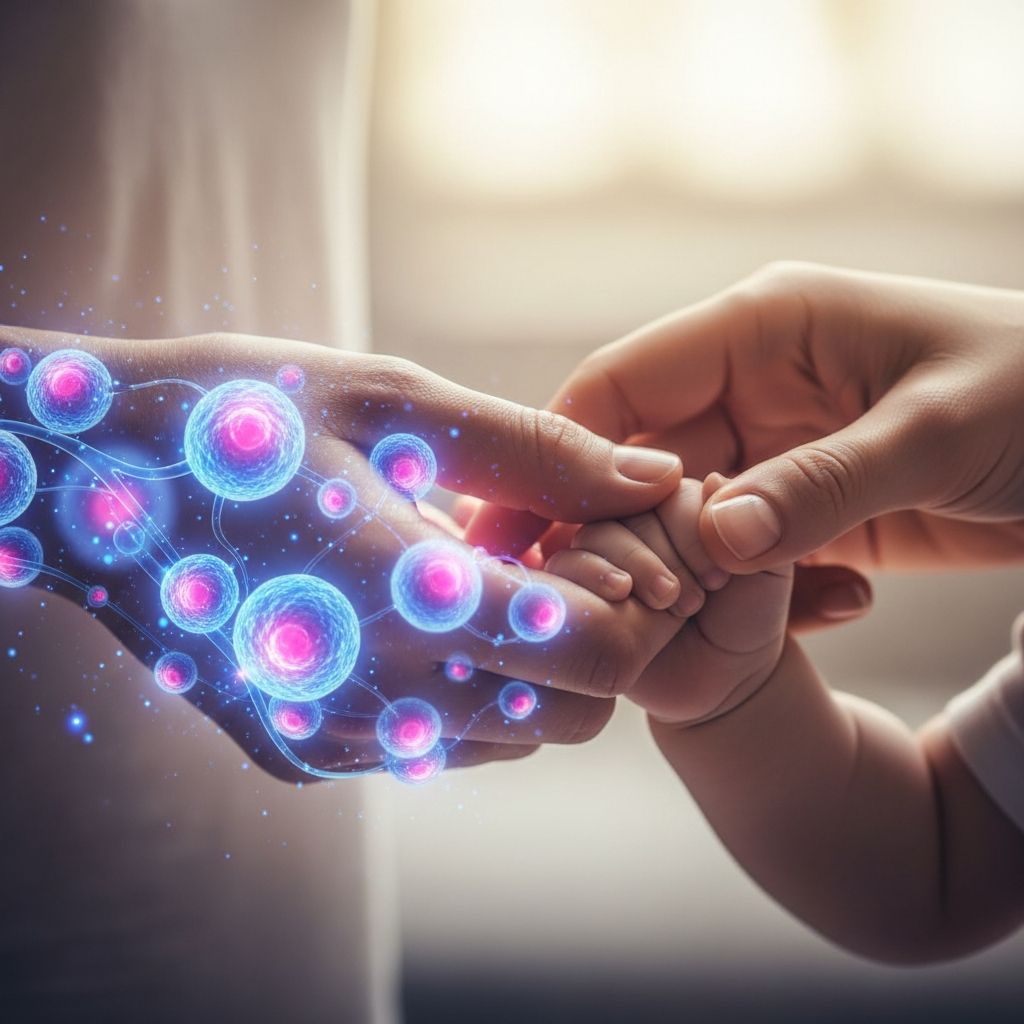
Pregnancy forges an indelible biological link between mother and child, as fetal cells migrate into the mother’s body and persist for decades, sometimes a lifetime. This phenomenon, known as fetal microchimerism, means aspects of your baby remain part of you indefinitely, influencing health and immunity in profound ways.
Biological Foundations of the Enduring Mother-Child Connection
During gestation, the placenta serves as a conduit for cellular exchange. Fetal cells cross into the maternal bloodstream, embedding in organs like the heart, brain, lungs, and thyroid. These cells, carrying the baby’s unique DNA, can endure for up to 27 years or longer, challenging the notion of pregnancy as a temporary state.
Microchimeric cells exhibit stem-like properties, differentiating into various types to aid maternal tissues. They appear in higher concentrations near injury sites, suggesting a reparative role. For instance, in maternal hearts post-labor, these cells proliferate, potentially mitigating damage from pregnancy stresses.
- Key Exchange Mechanisms: Placental shedding releases fetal cells; maternal immune tolerance allows their survival despite foreign DNA.
- Longevity Evidence: Detected in women decades post-childbirth, including those with only male offspring via Y-chromosome markers.
- Multi-Child Impact: Cells from multiple pregnancies coexist, creating a mosaic of fetal contributions.
Fetal Cells as Maternal Health Guardians
These persistent fetal cells act as biological allies. Studies reveal their accumulation in healing tissues, promoting regeneration. In breast cancer cases, fetal microchimerism correlates with improved survival, hinting at anti-tumor effects.
In autoimmune conditions like rheumatoid arthritis or thyroiditis, microchimeric cells may trigger or temper responses. Their presence in inflamed joints suggests involvement, though whether protective or pathological varies.
| Health Condition | Role of Fetal Microchimerism | Observed Effects |
|---|---|---|
| Cardiac Repair | Stem cell differentiation | Tissue regeneration post-pregnancy |
| Cancer (e.g., Breast) | Immune modulation | Potentially longer survival rates |
| Autoimmune Diseases | Antigen presentation | Increased risk or protection debated |
| Brain Health | Neural integration | Possible links to cognition, emotions |
Endometrial studies show fetal cells aiding wound healing after delivery, with concentrations peaking in repaired uterine tissue.
Bidirectional Cellular Legacy: Mother’s Mark on Baby
The exchange flows both ways. Maternal cells enter the fetus, persisting into adulthood. In child spinal fluid, maternal microchimerism appears elevated in conditions like autism, suggesting influences on neurodevelopment.
These maternal cells may shape the child’s immune system, tolerance, and even disease susceptibility. Long-term tracking reveals their presence in offspring organs, underscoring mutual biological imprinting.
Hormonal and Neurological Bridges in Bonding
Beyond cells, hormones like oxytocin solidify bonds. This ‘love hormone’ surges during skin-to-skin contact, breastfeeding, and eye gaze, enhancing maternal responsiveness in both human and animal models.
Brain adaptations include reduced prefrontal gray matter, sharpening social cue detection, and activated mirror neurons for empathy. Prenatal emotional connections predict stronger postnatal ties, especially vital for at-risk mothers.
Prenatal Bonding: Building Blocks for Lifelong Health
Emotional prenatal attachment forecasts positive child interactions. In a study of 160 diverse mothers, strong fetal bonds linked to balanced attachment representations at toddler age, buffering negative parental legacies.
- Prenatal factors boosting bonds: Positive partner relationships, social support.
- Risks: History of strained family ties, leading to weaker connections.
Postpartum Influences on Lasting Ties
First-year bonding hinges on mental health, sleep, and support. A survey of 1,495 mothers found postpartum depression, birth trauma, and poor sleep undermining bonds, while partner satisfaction and networks fortified them.
Secure bonds yield lifelong benefits: better emotional regulation, immunity, and adult outcomes like relationship success.
Intergenerational Echoes in Maternal Bonds
Past relationships shape current ones. Mothers with supportive co-parents or parental figures show robust fetus-to-child bonds, protecting against depression transmission.
Couple dynamics directly impact: Shared duties reduce maternal stress, enhancing interactions. Fathers bolster this by mitigating perinatal mood disorders.
Practical Strategies to Nurture Biological Bonds
Enhance microchimerism benefits through responsive care:
- Skin-to-Skin: Boosts oxytocin, aiding cell integration.
- Breastfeeding: Prolongs prolactin exposure, strengthening ties.
- Mindful Prenatal Practices: Visualization, talking to baby for emotional foundations.
- Support Seeking: Leverage networks to counter depression risks.
Even after weaning or separation, cellular legacies persist, offering quiet protection.
FAQs
What is fetal microchimerism?
Fetal cells from pregnancy integrate into mother’s tissues, lasting decades and aiding repair.
Does this bond affect health positively?
Often yes—linked to healing and cancer resistance—but roles in autoimmunity need more study.
Can dads contribute similarly?
No direct cellular exchange, but emotional support strengthens maternal bonds.
How to improve bonding if struggling?
Prioritize sleep, seek therapy for depression, build support; prenatal programs help.
Is microchimerism in every pregnancy?
Common, detected in most multiparous women; even miscarriages leave traces.
Potential Research Frontiers
Emerging inquiries probe microchimerism in Alzheimer’s prevention or fertility. Longitudinal studies track multi-generational effects, promising personalized maternal health strategies.
Understanding these ties reframes motherhood: not an endpoint, but an eternal biological partnership.
References
- Creating a Healthy Bond Between Mothers and Children — TecScience. 2023-05-15. https://tecscience.tec.mx/en/health/creating-a-healthy-bond-between-mothers-and-children/
- Stronger Bonds Before Birth Shape Healthier Mother-Child Futures — Neuroscience News (Thomas Jefferson University). 2025-01-20. https://neurosciencenews.com/maternal-bond-social-neurodevelopment-28515/
- Psychological and social factors influencing mother–child bonding — Frontiers in Psychology. 2025-10-01. https://www.frontiersin.org/journals/psychology/articles/10.3389/fpsyg.2025.1588433/full
- ‘Love hormone’ turns mothers into moms — Science | AAAS. 2014-11-05. https://www.science.org/content/article/love-hormone-turns-mothers-moms
- Mother-Infant Bonding and Its Associated Factors Among Mothers — PMC (NIH). 2022-07-20. https://pmc.ncbi.nlm.nih.gov/articles/PMC9326158/
- The Mother-Baby Bond: Role of Past and Current Relationships — PMC (NIH). 2023-03-10. https://pmc.ncbi.nlm.nih.gov/articles/PMC10046950/
- Researchers Explore the Science Behind the Maternal-Fetal Bond — Pew Research. 2020-11-12. https://www.pew.org/en/research-and-analysis/articles/2020/11/12/researchers-explore-the-science-behind-the-maternal-fetal-bond