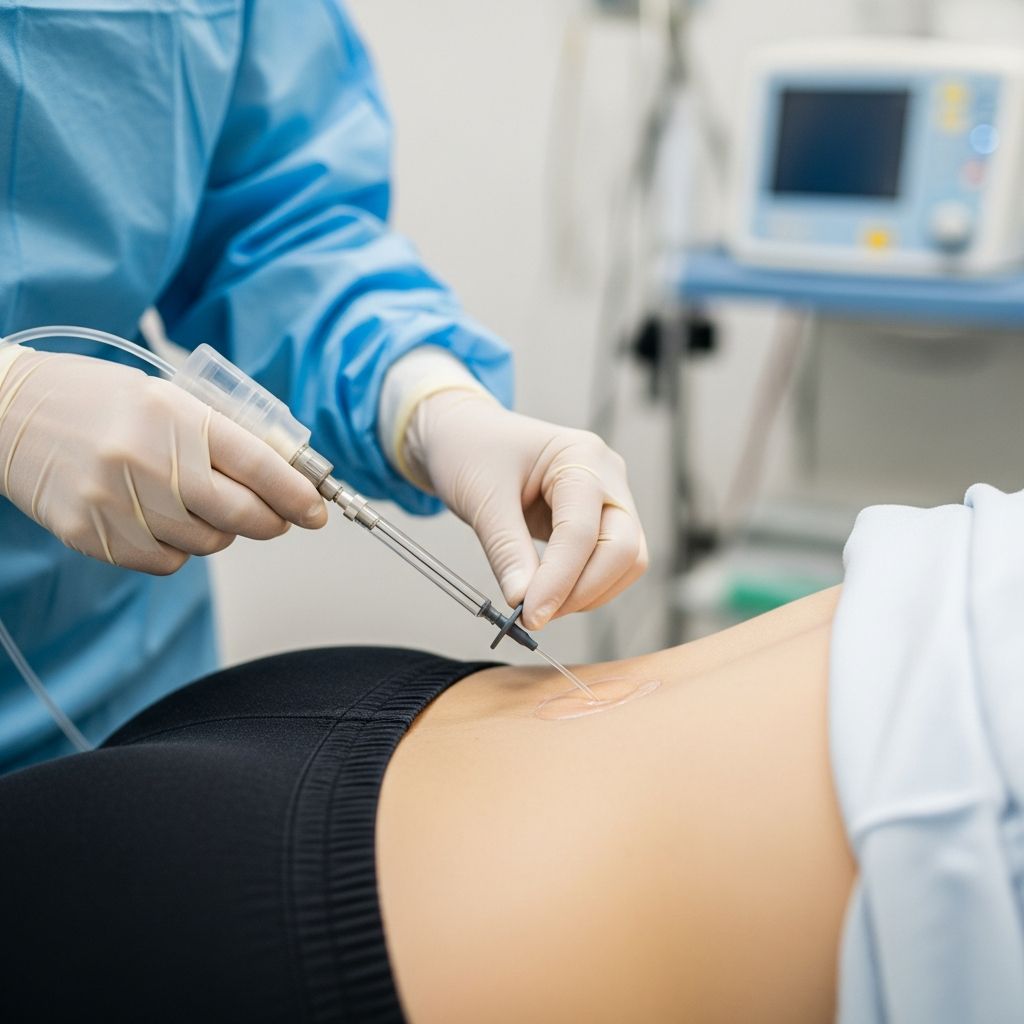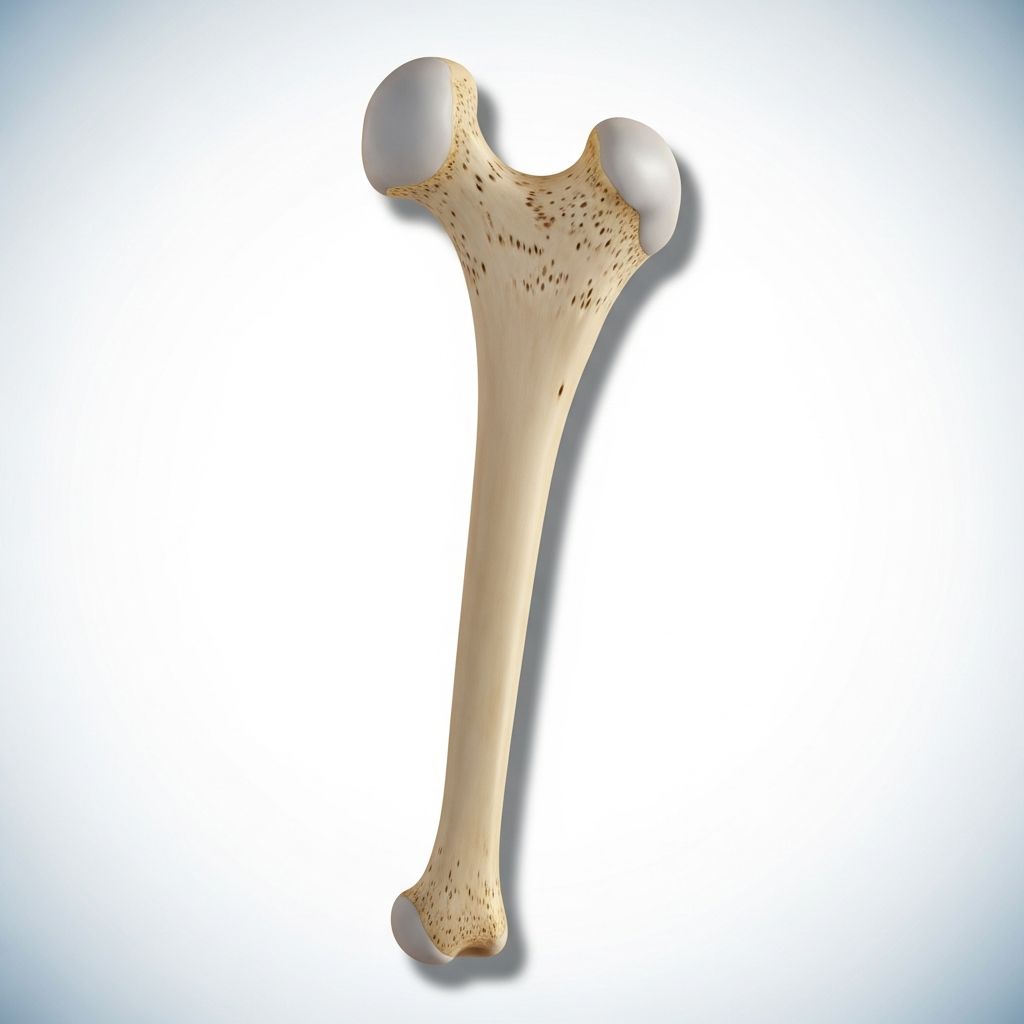
The femur, often called the thighbone, is the longest and strongest bone in your body. It runs from your hip to your knee and helps you stand, walk, jump, and play sports. When it’s healthy, you barely think about it—but when it’s injured, you notice right away.
This guide explains what the femur does, where it is, how it can break, what a femur fracture feels like, and how doctors diagnose and treat it, especially in teens and young adults.
Where the Femur Sits in Your Body
Your femur makes up the main part of your upper leg. It connects to two major joints:
- At the top (proximal end): it fits into the hip socket (acetabulum) to form the hip joint.
- At the bottom (distal end): it meets the shinbone (tibia) and kneecap (patella) to form the knee joint.
Every time you move your hip or bend your knee, your femur is part of the action.
Basic Anatomy of the Femur
Even though it looks like one solid piece of bone from the outside, different parts of the femur have special jobs.
| Region | Location | Main Role |
|---|---|---|
| Head | Round top of the femur | Fits into the hip socket to form the hip joint |
| Neck | Just below the head | Connects the head to the shaft; common fracture site in older adults |
| Shaft | Long middle portion of the bone | Bears most of the body’s weight and provides leverage for muscles |
| Condyles | Rounded areas at the bottom of the femur | Form part of the knee joint with the tibia and patella |
Strong muscles of the front, back, and inner thigh attach to the femur, helping control hip and knee movement.
What the Femur Does for You
The femur is more than just a bone that fills your leg. It plays several key roles in how your body works.
- Supports body weight: It carries most of the weight from your upper body down to your knee and lower leg.
- Helps you move: It forms the main part of both the hip and knee joints, allowing walking, running, squatting, and jumping.
- Provides stability: Its shape and strong outer layer help keep your gait stable and balanced.
- Gives muscles a place to attach: Many powerful leg muscles anchor to the femur, making strong movements like sprinting and jumping possible.
- Protects bone marrow: The inner part of the femur contains marrow that helps make blood cells, especially earlier in life.
Because your femur is so strong, it can withstand very large forces—human femurs can resist compression forces of hundreds of kilograms. That’s why it usually takes a major impact to break one in a healthy teen or young adult.
How Femur Fractures Happen
Breaking a femur is serious. In young, otherwise healthy people, it almost always takes a lot of force.
Common causes include:
- Car or motorcycle crashes
- High-speed sports accidents (like skiing, snowboarding, or contact sports)
- Falling from a significant height
- Severe direct blow to the thigh (for example in a collision)
In older adults or people with weak bones (such as osteoporosis), even a smaller fall can sometimes cause a femur fracture, especially near the hip.
Types of Femur Fractures
Doctors describe femur fractures based on where the bone breaks and how it breaks.
By Location
- Near the hip: fractures of the femoral head or neck, or just below the neck.
- Along the shaft: breaks in the long middle portion of the bone.
- Near the knee: fractures of the lower end of the femur that involve the knee joint.
By Pattern
- Transverse: straight across the bone.
- Oblique: angled break.
- Spiral: twists around the bone.
- Comminuted: bone is broken into several pieces.
- Open (compound): the broken bone comes through the skin, or a wound goes down to the bone.
- Closed: the skin is not broken.
Open fractures are emergencies because they raise the risk of infection and usually require rapid surgery.
What a Broken Femur Feels Like
A fractured femur almost always causes intense symptoms. Signs and symptoms can include:
- Severe pain in the thigh or hip that gets worse if you try to move.
- Swelling and bruising around the injured area.
- Inability to walk, stand, or put weight on the leg.
- Leg looks shorter or turned outward compared with the other leg.
- Visible deformity or an abnormal bend in the thigh.
- Bleeding or bone showing if the fracture is open.
Because the femur is large and has a rich blood supply, a bad fracture can lead to heavy internal bleeding and shock. That’s why anyone who may have a femur fracture needs emergency medical care.
What to Do Right After a Suspected Femur Injury
If you think someone has broken their femur:
- Call emergency services immediately.
- Do not try to move the person unless they are in immediate danger (like in traffic).
- Keep the injured leg still. You can gently support it with pillows or rolled blankets on both sides.
- Control bleeding with clean cloth or gauze if there is an open wound.
- Watch for signs of shock such as pale, cool, or clammy skin; fast breathing; or confusion.
Paramedics may place the leg in a splint or traction device to keep the bones from moving during transport.
How Doctors Diagnose a Femur Fracture
At the hospital, the medical team will first check breathing, circulation, and overall stability. Then they focus on the leg injury.
Physical Exam
The doctor may:
- Look for swelling, bruising, or deformity.
- Check pulse and skin temperature in the foot to be sure blood is flowing.
- Test feeling and movement in the foot and toes to check nerve function.
Imaging Tests
- X-rays: show where the bone is broken and how the pieces line up.
- CT scan: gives a 3D view, useful for complex or joint-involving fractures.
- MRI: sometimes used to see soft tissues (like ligaments and cartilage) or stress fractures.
These tests help the team decide the best treatment plan.
Treatment Options for Femur Fractures
Most femur fractures in teens and adults need surgery to realign and stabilize the bone.
Emergency Care
- Pain control with medicine.
- IV fluids to support blood pressure if needed.
- Antibiotics and tetanus protection for open fractures.
Surgical Treatments
Common surgical options include:
- Intramedullary nailing: a metal rod is placed inside the center of the bone and held with screws at each end. This is a standard treatment for many femoral shaft fractures.
- Plates and screws: metal plates are attached along the outside of the bone and secured with screws, often used near joints or for certain fracture patterns.
- External fixation: pins are placed into the bone above and below the break and connected to a frame outside the leg; often used temporarily in very severe or complicated injuries.
Non-Surgical Care
In rare cases, such as some stable fractures in younger children, doctors may use casts or braces instead of surgery. However, for older teens and adults, surgery is usually needed for proper alignment and faster recovery.
Healing and Recovery
Bone healing takes time. A femur fracture often needs several months to fully heal, and sometimes longer depending on age, health, and how severe the injury is.
Hospital Stay
- Most people stay in the hospital for a few days after surgery.
- Physical therapists often start gentle movement early to prevent stiffness and clots.
Rehabilitation
Rehab is a big part of getting back to normal activities:
- Physical therapy to restore motion, strength, and balance.
- Gradual weight bearing as allowed by the surgeon; you may start with crutches or a walker.
- Home exercises to keep the rest of your body strong while your leg heals.
Most teens eventually return to sports and full activity, though it may take many months and requires following medical advice closely.
Possible Complications
Serious femur injuries can sometimes lead to complications.
- Infection, especially after open fractures or surgery.
- Delayed healing or non-union (bone takes a long time to heal or does not heal properly).
- Leg length difference if bone heals shorter or longer than before.
- Joint stiffness in the knee or hip.
- Blood clots in the legs because of reduced movement.
Regular follow-up visits and X-rays help doctors catch and treat these problems early.
Keeping Your Femurs Strong
While you cannot prevent every accident, you can support healthy bones and lower your risk of fractures.
- Get enough calcium and vitamin D through diet or supplements if recommended.
- Stay active with weight-bearing exercises like walking, jogging, or team sports, which help build and maintain bone strength.
- Use proper safety gear (helmets, pads, seat belts) during sports and travel.
- Avoid smoking and vaping, which can weaken bones and slow healing.
Frequently Asked Questions (FAQs)
How long does it take for a broken femur to heal?A: Healing time varies, but many femur fractures take around 3 to 6 months to heal enough for most daily activities. Full recovery for sports and high-impact activities may take longer and usually depends on the type of fracture, treatment, and how closely you follow rehab instructions.
Q: Will I be able to play sports again after a femur fracture?
Many teens and young adults return to sports after a femur fracture, but it often takes months of physical therapy and gradual training. Your doctor and physical therapist will guide when it is safe to go back based on strength, flexibility, and X-ray findings.
Is a femur fracture life-threatening?
It can be, especially right after the injury, because of blood loss and the risk of shock, or if there are other injuries at the same time. Fast emergency care and proper treatment greatly improve the chances of a good recovery.
Why does a femur usually need surgery to heal?
The femur is large and under strong muscular forces that can pull the broken pieces out of alignment. Surgery with rods, plates, or screws helps keep the bone stable and straight so it can heal in the correct position.
Can a healthy femur break from a simple fall?
In a healthy teen or young adult with strong bones, a simple fall from standing height usually does not break the femur. When it happens, doctors often look for very high-energy trauma or conditions that may weaken the bone.
References
- Anatomy, Bony Pelvis and Lower Limb: Femur — StatPearls Publishing. 2023-01-30. https://www.ncbi.nlm.nih.gov/books/NBK532982/
- Femur bone anatomy: Proximal, distal and shaft — Kenhub. 2022-05-10. https://www.kenhub.com/en/library/anatomy/femur
- Femur — Physiopedia. 2022-11-15. https://www.physio-pedia.com/Femur
- Femur | Research Starters — EBSCO / Salem Press. 2020-06-01. https://www.ebsco.com/research-starters/anatomy-and-physiology/femur
- What to Know About the Femur Bone — WebMD. 2022-07-22. https://www.webmd.com/a-to-z-guides/femur-what-to-know
- The Femur – Proximal – Distal – Shaft — TeachMeAnatomy. 2021-09-12. https://teachmeanatomy.info/lower-limb/bones/femur/
- Femur | Definition, Function, Diagram, & Facts — Encyclopaedia Britannica. 2015-04-16. https://www.britannica.com/science/femur