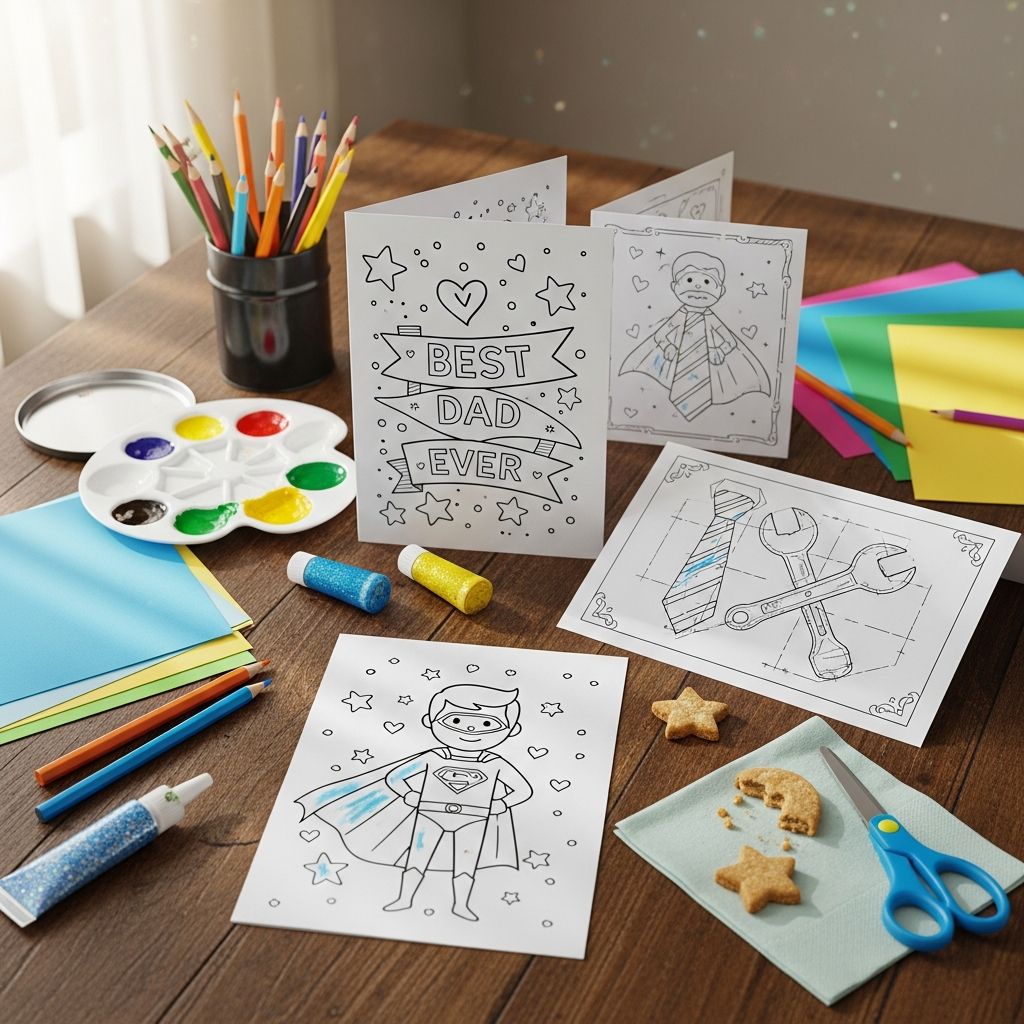
Handmade cards have a special charm, and Father’s Day is the perfect excuse to let kids turn crayons, markers, and simple printables into something Dad will want to keep forever. Instead of grabbing a last-minute card at the store, you can help children build a colorful, personal card that feels like a tiny scrapbook of shared memories.
This guide walks through creative ideas for Father’s Day coloring cards, from layout concepts and messages to interactive elements and keepsake details. It is designed for parents, caregivers, and teachers who want low-stress but meaningful projects that work for a variety of ages.
Why Coloring Cards Are Perfect for Father’s Day
Coloring cards bridge the gap between easy and meaningful. Young children enjoy the familiar act of coloring, while adults appreciate the thought that went into a one-of-a-kind design. With a printable base or a hand-drawn outline, kids can focus on colors, patterns, and heartfelt messages rather than struggling to design a card from nothing.
- They work for all ages, from toddlers scribbling bright colors to older kids adding intricate patterns.
- They can be printed at home or school, making them accessible for classrooms, daycare centers, and busy families.
- They naturally invite conversation about gratitude, memories, and the unique things kids love about their dad or father figure.
Planning Your Father’s Day Coloring Card
Before anyone picks up a crayon, decide what kind of card will work best for your setting. Think about the time you have, the supplies available, and how much guidance kids will need. A little planning prevents last-minute stress and ensures that kids can focus on the fun parts: coloring and personalizing.
Key Decisions to Make
- Card size: Typical choices are a simple folded half-sheet, a tall vertical card, or a small booklet-style card with multiple pages.
- Orientation: Landscape cards are great for wide scenes, while portrait cards suit characters or tall lettering designs.
- Display style: Decide whether the card will stand on a desk, be pinned to a bulletin board, or slip into an envelope.
Front Cover Design Ideas
The front cover sets the tone, so encourage kids to choose a design that reflects how they see their dad. Some children might imagine a superhero, while others might draw tools, sports, cooking, or outdoor scenes. A simple outline on the cover gives enough structure for coloring while leaving room for creativity.
Theme Ideas for the Front
- Super Dad: A caped figure, shield emblem, or comic-style speech bubble saying something loving.
- Hobby Hero: Icons such as a grill, soccer ball, guitar, fishing rod, or game controller based on Dad’s favorite activities.
- Everyday Moments: A couch and popcorn for movie nights, a playground scene, or a car ride with everyone singing along.
- Word Art: Big bold letters spelling “DAD” filled with patterns, geometric shapes, or doodles for kids to color.
Inside the Card: Prompts and Spaces to Color
The inside of a Father’s Day coloring card can be more than just a blank space for a signature. Consider adding simple prompts and framed areas that guide kids to write or draw about their favorite memories with Dad. This turns the card into a tiny memory book that will be cherished long after the holiday passes.
| Section | Purpose | Kid-Friendly Ideas |
|---|---|---|
| Top message area | Short greeting or title | “To my amazing dad,” “You make every day fun,” or a child’s own phrase. |
| Drawing box | Space for a small illustration | Draw a favorite activity, place, or shared memory together. |
| Prompt lines | Guided sentences to complete | “I love when we…,” “You are great at…,” “Thank you for…” |
| Pattern borders | Relaxing coloring space | Stars, stripes, doodles, or simple shapes to fill with color. |
Age-Appropriate Card Styles
Different age groups benefit from different levels of structure. Very young children thrive with big shapes and low-pressure scribbling, while older kids may enjoy more detailed designs and writing opportunities. Adjusting complexity ensures every child feels successful.
For Toddlers and Preschoolers
- Use large, bold outlines with wide spaces that are easy to color.
- Limit text to a short greeting that an adult can pre-write or trace in bubble letters.
- Add simple shapes like hearts, stars, and circles that invite free coloring.
For Early Elementary Kids
- Include short prompts with dotted or lined areas where they can write a few words.
- Offer sections where they can draw themselves with Dad, a family pet, or a favorite place.
- Add medium-detail patterns such as zigzags, polka dots, and waves around the border.
For Older Children
- Incorporate more detailed patterns like mandalas, small geometric shapes, or comic-style borders.
- Leave larger writing spaces so they can include letters, jokes, or short stories.
- Encourage them to design their own cover around a theme or inside joke shared with Dad.
Interactive Elements to Make Cards Extra Special
Adding interactive elements makes a Father’s Day coloring card feel more like a playful gift than just a piece of paper. You do not need special materials; simple cutting, folding, and gluing can create delightful surprises that kids are proud to present.
Ideas for Interactive Features
- Lift-the-flap jokes: Kids color a flap on the front or inside, and underneath is a simple joke or loving message.
- Mini coupon pockets: A small pocket holds hand-drawn “coupons” such as a hug, a chore, or a game night choice.
- Accordion fold message: A folded strip of paper that extends to reveal a longer message or a sequence of tiny drawings.
- Color-in badges: Kids color a medal or badge and attach it with tape so Dad can remove and wear it.
Coloring Techniques and Style Tips for Kids
Children naturally experiment with color, but a few simple suggestions can turn coloring time into a mini art lesson. Rather than insisting on staying inside the lines, focus on expressing feelings, using favorite colors, and trying easy techniques that add depth and interest to the card.
- Invite kids to mix warm and cool colors, such as pairing blue backgrounds with red or yellow foregrounds.
- Suggest using lighter pressure for sky or background areas and stronger pressure for important symbols like hearts or lettering.
- Encourage patterns like stripes, dots, or checkers on clothing, capes, or borders.
- Offer different tools (crayons, colored pencils, washable markers) so kids can layer and experiment.
Personal Messages Kids Can Create Themselves
Many children have plenty to say but feel stuck the moment they see a blank page. Short prompts and conversation starters help them think about the everyday moments that make their relationship with Dad special. Let kids speak in their own voice, spelling quirks and all, because the authenticity is often the most touching part.
Simple Prompt Ideas
- “I like it when we…” followed by a shared activity.
- “You make me laugh when…” with a favorite silly moment.
- “You are really good at…” highlighting a talent or habit.
- “One thing I want to do with you this year is…” to look ahead.
Adapting Cards for All Father Figures
Father’s Day can celebrate many kinds of relationships, including grandfathers, stepdads, uncles, mentors, or any caring adult who fills a fatherly role. By adjusting text and imagery, the same basic coloring card can honor whoever matters most in a child’s life.
- Swap “Dad” for a name, nickname, or title like “Papa,” “Grandpa,” or “Coach.”
- Ask kids to choose symbols that match the person being honored: gardening tools, books, instruments, or other hobbies.
- Encourage open wording such as “Thank you for taking care of me” or “You make my day better.”
Practical Tips for Printing and Paper
Good paper and clear outlines make coloring more enjoyable. Even basic home printers can handle simple Father’s Day card designs, but a few small adjustments help avoid smudges, see-through ink, and flimsy cards that flop over on the kitchen table.
- Use slightly heavier paper or cardstock when possible, especially if kids will color with markers.
- Print with high contrast so lines are easy to see while coloring.
- Leave generous margins around the edges so small hands can color comfortably without running off the page.
Finishing Touches and Presentation Ideas
Small finishing touches help a homemade Father’s Day coloring card look ready for gifting. Encourage kids to make their own choices about how to present the card, whether that means tying it with string, placing it beside breakfast, or hiding it for a surprise reveal.
- Add a date and the child’s age on the back so the card becomes a time capsule.
- Use a hole punch and yarn to attach a small colored tag with a brief note.
- Let kids decorate an envelope with matching doodles, symbols, or patterns.
Sample Layouts for Inspiration
To help visualize how all these pieces can fit together, here are a few example layouts you can sketch or recreate digitally. Each layout leaves space for coloring, writing, and simple decorative touches that invite kids to participate at their own level.
| Layout Name | Front Cover | Inside Left | Inside Right |
|---|---|---|---|
| Hero Badge Card | Large badge or shield to color with the word “DAD” | Space for a drawing of Dad as a hero | Short prompts and a signature area |
| Memory Snapshot Card | Frame outline for kids to draw a favorite memory | Lines to describe the memory in a sentence or two | Pattern border for relaxing coloring time |
| Coupon Pocket Card | “Tickets for Dad” lettered title | Paper pocket glued down and colored | Loose coupons with small icons and simple promises |
FAQs About Father’s Day Coloring Cards
How early should kids start working on a Father’s Day coloring card?
Starting a week or two ahead gives plenty of time for kids to color at a relaxed pace, especially for detailed designs or multi-page cards. It also leaves room for last-minute changes, extra drawings, or the occasional spilled juice incident.
What if a child does not have a dad at home?
Father’s Day can be reframed as a chance to celebrate any important caregiver. Allow the child to choose who the card is for and adapt the wording so it feels respectful and inclusive of different family structures.
Can these cards be used in classrooms or group settings?
Yes, coloring cards work very well in group settings because children can share supplies while still creating something unique. Teachers and leaders can offer multiple wording options and prompts so each child can tailor the card to their family situation.
What if a child is frustrated by coloring inside the lines?
Remind kids that the purpose of the card is to share love, not to create a perfect illustration. Scribbles, unexpected colors, and playful markings often become the most beloved parts of a handmade card.
Is it better to design cards by hand or use digital templates?
Both approaches can be meaningful. Hand-drawn layouts add a personal artistic touch, while digital outlines are convenient when making cards for many children or repeating the activity each year.
Encouraging Kids to Take the Lead
Above all, a Father’s Day coloring card is a chance for kids to express how they feel, in their own words and colors. Adults can provide structure, printables, and gentle guidance, but the most memorable cards usually come from kids’ unfiltered creativity, humor, and affection.
By offering flexible layouts, simple prompts, and plenty of room to color, families and classrooms can turn an everyday art activity into a meaningful tradition that dads look forward to year after year.