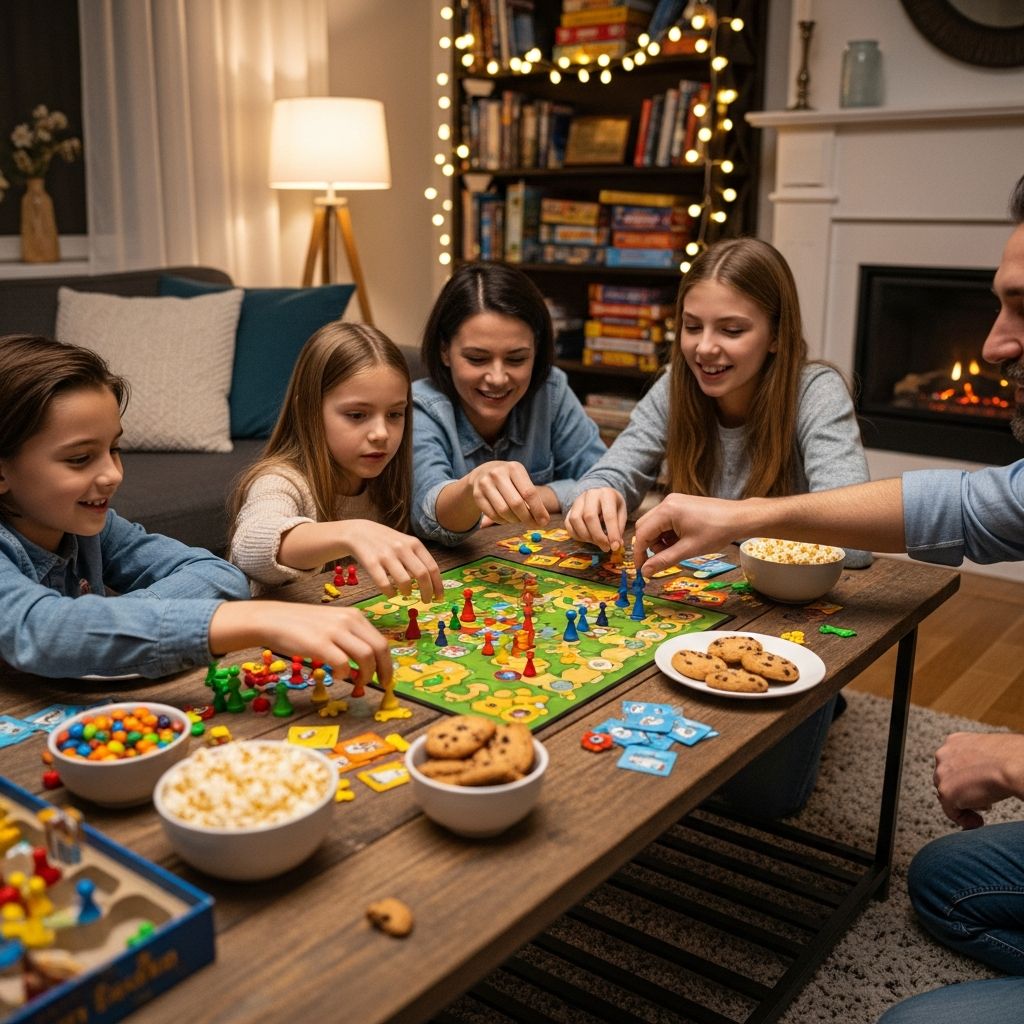
Family game night can be much more than a way to pass time; it can be a playful laboratory where kids learn patience, emotional regulation, and problem-solving while parents practice calm, connected discipline. When you design a simple, kid-friendly game with intention, you create a fun environment that teaches life skills without a lecture.
Why Turn Games Into Parenting Tools?
Children learn best when they are engaged, moving, laughing, and experimenting with real emotions in low-stakes situations. A board-style game with colorful spaces, silly challenges, and built-in pauses becomes an ideal practice ground for frustration, anticipation, and self-control. Instead of correcting kids only when things go wrong in daily life, you give them a safe space to rehearse better responses during play.
For parents, a structured game can act as a script: it offers ready-made prompts to praise effort, set limits gently, and model coping skills. This shifts the focus from policing behavior to enjoying time together, which naturally encourages cooperation.
Designing Your Own Sweet-Themed Family Game
You do not need artistic talent to create a memorable family game; you only need a large sheet of paper, markers, and a simple path of spaces that children can follow with a pawn or small toy. Give the track a fun, sweet or treat-inspired theme—kids are instantly engaged by colorful, playful imagery, even if the drawings are simple stick figures and blobs of color.
Mix three types of spaces along the path: action spaces (where kids do something silly or active), reflection spaces (where they answer a quick feeling or problem-solving question), and rest spaces (where they take a pause and breathe). This mix keeps the game moving while embedding emotional and social skills into the play.
Core Skills Your Game Can Teach
A custom family game is most powerful when you choose a few core skills and build spaces around them. Rather than trying to address every challenge at once, focus on what your child is currently working on—such as waiting their turn, staying calm when disappointed, or listening the first time.
- Emotional naming: Spaces that invite kids to name a feeling help them recognize emotions in themselves and others.
- Self-soothing: Short breathing or stretching prompts show kids what to do with big feelings instead of acting them out.
- Perspective-taking: Quick questions about what someone else might feel encourage empathy and more flexible thinking.
- Gratitude and noticing positives: Occasional “what went well today?” prompts tilt attention away from complaints and toward small joys.
Suggested Sections For Your Board Path
To keep the game engaging from start to finish, divide the path into themed zones, each emphasizing a different type of challenge. Use color changes to signal a new zone so kids anticipate a shift in what they will do next.
Below is a simple example of how you might structure a 40–50 space game path.
| Zone | Approx. Spaces | Main Focus | Example Prompts |
|---|---|---|---|
| Starting Sweets Street | 1–10 | Warm-up, silliness | Make a silly face; hop three times; say your superhero name. |
| Patience Path | 11–20 | Waiting and turn-taking | Skip a mini turn; let another player move for you; cheer for the person behind you. |
| Feelings Forest | 21–30 | Emotional vocabulary | Name a time you felt proud; show a “frustrated” face; share a worry. |
| Kindness Corner | 31–38 | Empathy and gratitude | Say one kind thing about another player; remember a helpful moment from today. |
| Calm Castle Finish | 39–Finish | Settling down | Take three deep breaths; stretch like a cat; whisper a goodnight wish. |
Example Space Ideas You Can Adapt
To make the board easy to customize, write the prompts lightly in pencil first so you can adjust them as you discover what your child enjoys. Aim for a mix of movement, thinking, and connection spaces so no one feels stuck answering questions the whole time.
- Movement spaces: “Tiptoe around the table,” “Spin once,” “Walk your pawn backwards one space while you clap.”
- Feeling spaces: “Name one feeling you had at school today,” “Show with your face how you look when you’re proud,” “Share something that made you feel nervous recently.”
- Kindness spaces: “Say thanks for something another player did this week,” “Offer a pretend high-five to each player,” “Tell one player something you like about playing with them.”
- Challenge spaces: “Lose a turn but choose a special movement for everyone else to do,” “Move back two spaces and take a deep breath,” “Swap places with another pawn and say ‘good game.’”
Rules That Keep Things Fun And Fair
Your rules should be simple enough for a young child to repeat back to you, with only a few core expectations. The goal is to balance the unpredictability that makes games exciting with clear boundaries that prevent meltdowns from taking over.
- One roll, one move: Each player rolls the die (or spins) once and moves forward that number of spaces.
- Do the space, then pass: When you land, read or explain the prompt, complete it, and then pass the die to the next player.
- Respect the pause: If a player is upset, the game pauses while everyone practices being calm and kind; no one moves until the player is ready.
- Winning is cooperative: Celebrate when the first person reaches the end, but invite everyone to keep playing until all pawns reach the finish.
Handling Big Feelings During The Game
Frustration, tears, and arguments are not signs that the game is failing; they are evidence that your child is hitting real emotional edges in a safe environment. Treat those moments as practice opportunities instead of problems to eliminate. Pause the game, get to eye level, and describe what you see in neutral language.
You might say something like: “Your face looks tight and your hands are squeezed; it seems like you’re really disappointed about moving back.” Then offer one quick tool—such as a slow breath together or a short break—before deciding whether to continue or end the round.
Age-Based Variations
A flexible game structure lets you adjust complexity for different age groups while keeping the same board. The prompts can evolve as children mature, allowing older siblings to play at their level while younger ones still feel included.
| Age Range | Adjustments | Example Prompts |
|---|---|---|
| 3–5 years | Use pictures, very short actions, and simple feelings words. | “Jump like a bunny,” “Show a happy face,” “Say ‘thank you’ to someone.” |
| 6–8 years | Add brief questions, simple choices, and two-step directions. | “Tell us one good thing from today,” “Pretend you’re mad and then show how you calm down.” |
| 9–11 years | Include problem-solving scenarios and more nuance about emotions. | “What could you do if a friend hurt your feelings?” “Share a time you solved a problem on your own.” |
| 12+ years | Invite deeper reflection and leadership roles with lighter silliness. | “Describe a stressful situation and one healthy coping tool,” “Create a new rule for one turn.” |
Adapting The Game For Different Family Sizes
Every household is different, and your game should work whether you are playing with one child or a crowd of cousins. With only one child, a parent might alternate playing as two separate characters, using distinct voices or silly habits for each pawn to keep things lively.
In large groups, consider making two shorter tracks on the same board so players can split into teams. Teams can decide together how to respond to a prompt, which encourages communication and compromise without turning every moment into a high-pressure spotlight on one child.
Using Rewards Wisely
Because many kid-friendly games are treat-themed, it is tempting to tie every success to food rewards. Instead, let the main reward be connection, play, and the satisfaction of finishing together. If you do include edible treats, use them sparingly and predictably so they do not become the only motivation for playing.
- Offer small, non-food rewards such as stickers, choosing the next family activity, or picking the story at bedtime.
- Use words that praise effort and cooperation rather than outcomes: “You handled that setback calmly” or “You waited your turn even when it was hard.”
- End with a short ritual, like a group cheer or silly dance at the finish line, to anchor positive memories.
Integrating The Game Into Weekly Routines
A single game night is fun, but the real impact arrives when the activity becomes a predictable ritual. Choose a regular time—perhaps after dinner once a week—so children know to expect it and can look forward to the connection. Consistency also allows them to experiment with new behaviors because they know another chance is coming soon.
Keep each session brief, especially for younger kids; fifteen to thirty minutes is often enough. If you notice that energy or mood is deteriorating, end earlier with a positive, confident statement: “We’re stopping while we’re still having fun so we’ll be excited to play again next time.”
Common Challenges And Simple Tweaks
Even the best-designed game will occasionally derail; that is normal and does not mean you should abandon the idea. Use what goes wrong as information to adjust the rules, prompts, or pace. Often a tiny change—like shortening the path by five spaces or removing one frustrating prompt—can transform the experience.
- If kids fight about the rules: Write the rules on a card, read them together before starting, and invite kids to add one cooperative rule of their own.
- If someone always storms off when losing: Shift the win condition so that the whole family “wins” when every pawn reaches the finish, and emphasize collaborative goals such as “Can we finish the game in under 20 minutes?”
- If interest fades halfway through: Shorten the board, add one “super silly” wildcard space in the middle, or let kids design new spaces and stickers between rounds.
Safety, Accessibility, And Inclusion
Consider physical, sensory, and emotional needs when building prompts so that every child can participate comfortably. Avoid challenges that require running or big jumps if space is small or if a child has mobility differences. Offer quiet alternatives for high-energy prompts, such as clapping patterns or finger taps.
Emotionally, make sure no prompt invites teasing, comparison, or sharing private information that might embarrass a child later. The atmosphere should feel playful and safe, where mistakes are expected and not punished.
SEO-Friendly Tips For Sharing Your Game Online
If you decide to share your custom family game on a blog or social platform, a few simple steps can help other parents find it more easily. Use descriptive phrases in your title and headings such as “family game night,” “screen-free activities,” or “emotional regulation game for kids” so search engines can understand what your post offers.
- Include clear subheadings like “How to Play,” “Age Variations,” and “Why This Game Works” to help readers skim for what they need.
- Add alt text to any photos of your game board, briefly describing what the image shows and who it is for.
- Offer a simple printable or checklist of prompts so busy caregivers can start quickly, and link to any related parenting resources you have created.
Frequently Asked Questions
How long should a family game like this last?
Most families do best with sessions lasting between 15 and 30 minutes, depending on the age and attention span of the children. You can always stop the game early at a natural break point and pick up where you left off next time.
What if my child refuses to follow the prompts?
Refusal is often a sign that a prompt feels too hard, too embarrassing, or too confusing. Give the option to “pass” once or twice per game and watch which prompts are repeatedly avoided so you can simplify, reword, or remove them.
Can I play this kind of game with toddlers?
Yes, but keep it extremely simple and short with mostly movement-based spaces and a very short path. For toddlers, the goals are to enjoy time together, practice taking turns with help, and end on a positive note, not to answer feelings questions.
How often should we play to see benefits?
Even playing once a week can gradually build skills if you stay consistent and keep the tone warm and light. Over time, you will likely hear your child using phrases or coping tools from the game in real-life situations, which is a good sign it is making a difference.
What if my child gets too competitive?
High competitiveness can be redirected by changing the structure from “me versus you” to “all of us completing the path together.” Emphasize team goals, praise moments of sportsmanship out loud, and model gracious winning and losing yourself.