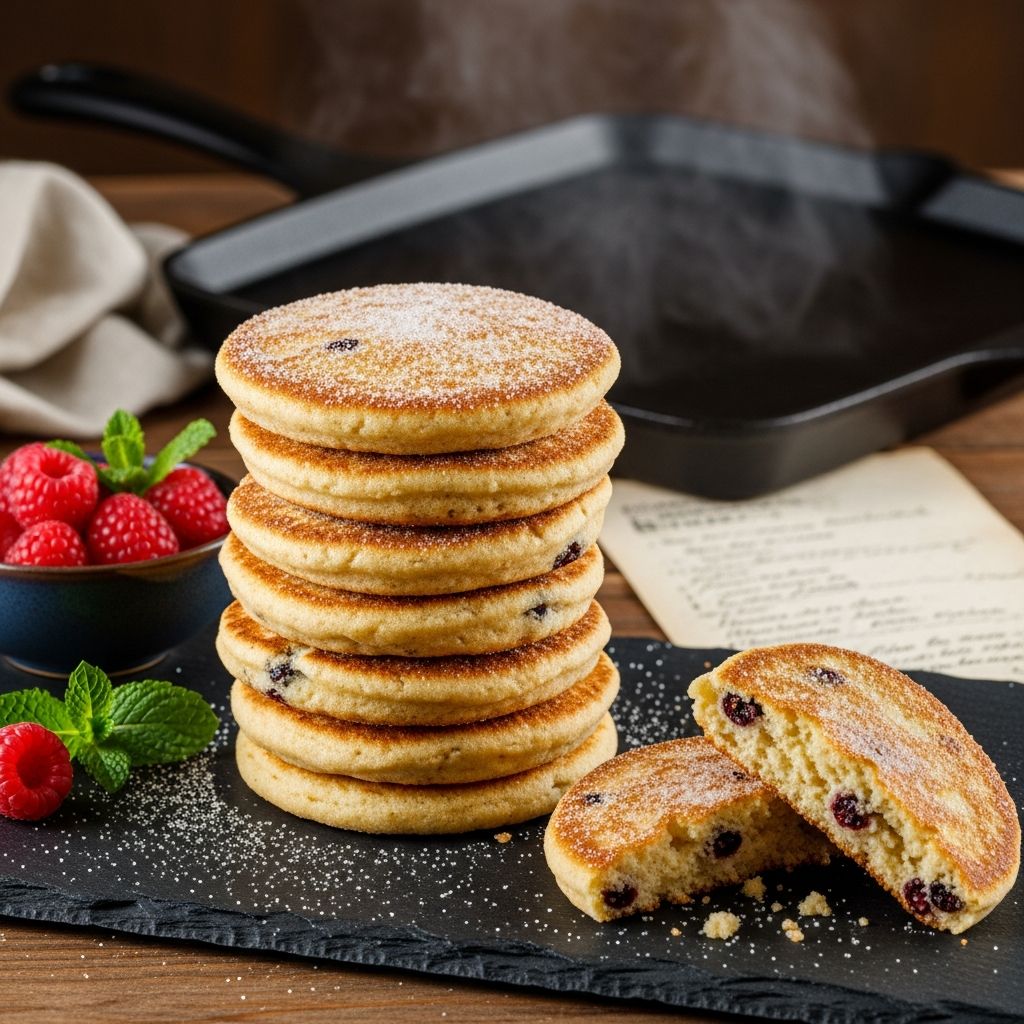
Welsh cakes are small, tender griddled treats that sit somewhere between a scone, a cookie, and a pancake, and they are one of the easiest ways to bring a little corner of Wales into your kitchen.
What Makes Welsh Cakes Unique?
Welsh cakes are individual rounds of lightly sweetened dough enriched with butter and speckled with dried fruit, cooked on a hot surface rather than baked in the oven. This method gives them a delicate balance of a gently crisp exterior and a soft, almost crumbly interior.
They are traditionally prepared on a flat metal plate or heavy pan, then served warm or at room temperature with a simple dusting of sugar, making them ideal for an afternoon break with tea or coffee.
Essential Ingredients and Their Roles
Although recipes vary, most Welsh cakes rely on a handful of pantry staples. Understanding what each ingredient does helps you adjust the recipe to your taste or dietary needs without losing the cake’s characteristic texture.
- Flour: Provides structure and determines how tender or firm the cake will be.
- Fat (usually butter): Adds richness and a short, crumbly texture.
- Sugar: Light sweetness that caramelizes slightly on the hot pan.
- Dried fruit: Traditionally currants or raisins for little bursts of flavor.
- Egg: Binds the mixture and contributes moisture.
- Leavening and spices: Baking powder or self-raising flour for lift, and optional warm spices such as cinnamon or nutmeg.
Because the ingredient list is short, quality matters: using real butter, fresh spices, and plump dried fruit makes a noticeable difference in the final result.
Equipment: From Bakestone to Modern Kitchen
Traditional Welsh households often used a thick metal plate or stone heated over a fire to cook these little cakes. In a modern kitchen, you can achieve a similar effect with common cookware.
Choose a heavy pan that distributes heat evenly so the cakes cook through without scorching on the outside.
| Cookware | Heat Retention | Best For | Notes |
|---|---|---|---|
| Cast-iron skillet or griddle | Excellent | Most authentic feel | Preheat thoroughly; reduce heat if cakes darken too fast. |
| Heavy non-stick frying pan | Good | Beginner-friendly | Requires little or no extra fat for cooking. |
| Flat electric griddle | Very good | Cooking large batches | Easy to control temperature and cook many at once. |
You will also need a rolling pin, a round cutter (or an upturned glass), a mixing bowl, and a spatula for turning the cakes.
Step-by-Step Welsh Cakes Method
The process of making Welsh cakes is straightforward and manageable even for novice bakers. The key is to keep the dough tender and the heat moderate so that the centers cook through without burning the outside.
- Combine dry ingredients.
In a mixing bowl, stir together your flour, a pinch of salt, baking powder (if using plain flour), sugar, and any ground spices you like.
- Rub in the fat.
Add cold butter cut into small cubes. Rub it into the flour mixture with your fingertips until it resembles fine crumbs with a few pea-sized pieces remaining for flakiness.
- Add dried fruit.
Fold in currants, raisins, or your chosen dried fruit so they are distributed evenly through the mixture.
- Bring the dough together.
Beat an egg and add it gradually, mixing until the dough just comes together. If it seems too dry, add a teaspoon or two of milk. The consistency should be soft but not sticky.
- Roll and cut.
Lightly flour your work surface and rolling pin. Roll the dough to about the thickness of your little finger, then cut into rounds with a cutter or glass. Press the scraps together gently and repeat.
- Preheat the pan.
Heat your griddle or pan over medium-low heat. Lightly grease it with a small amount of butter or neutral oil, then wipe away any excess to prevent smoking.
- Cook the cakes.
Place the rounds on the warm surface, leaving a little space between them. Cook for several minutes on the first side until the undersides are golden and the edges look set, then turn and cook the other side. Adjust the heat if they brown too quickly.
- Finish and cool.
Transfer the cooked cakes to a rack. While still warm, you can sprinkle them with a little extra sugar if you like a sweet, sparkling finish.
Once cooled slightly, the cakes will be firm enough to handle but still soft inside, perfect for eating out of hand.
Tips for Perfect Texture and Flavor
Small adjustments in technique can make the difference between dry, tough cakes and ones that are tender and moreish. Paying attention to temperature, handling, and proportions will reward you with a reliably good batch every time.
- Keep the butter cool: Using cool butter and handling it quickly helps create a short, delicate crumb.
- Do not overwork the dough: Stop mixing as soon as the dough holds together to avoid developing too much gluten.
- Use moderate heat: Aim for a gentle sizzle; if the cakes darken before the centers cook, lower the heat.
- Cook in batches: Crowding the pan makes it harder to control browning and can lead to uneven cooking.
Over time, you will learn the ideal heat setting on your particular stove and pan, so make a note once you find the sweet spot for future batches.
Flavor Variations to Try
Once you are comfortable with a basic batch of Welsh cakes, experimenting with flavors is a natural next step. These little rounds are surprisingly versatile and can be adapted for seasons, holidays, or personal preferences.
- Citrus and spice: Add finely grated lemon or orange zest and a pinch of cinnamon or mixed spice for a lively aroma.
- Chocolate chip: Replace some or all of the dried fruit with small chocolate chips, stirring them in gently just before bringing the dough together.
- Mixed dried berries: Use chopped dried apricots, cranberries, or cherries in place of currants for a tangier twist.
- Nutty crunch: Add a handful of finely chopped toasted nuts, such as almonds or hazelnuts, for extra texture.
- Lightly spiced breakfast version: Use warm spices and serve with yogurt and fruit instead of sugar dusting for a less sweet option.
When adding extra ingredients like nuts or chocolate, keep the overall quantity similar to the original dried fruit amount so the dough does not become overloaded and difficult to handle.
Serving Ideas for Any Time of Day
Welsh cakes are most commonly associated with afternoon tea, but they fit easily into many different parts of the day. Their portable size makes them a convenient snack, while their rustic charm suits both casual and more formal gatherings.
- Classic tea-time treat: Serve slightly warm with a pot of tea, with or without butter.
- Breakfast on the go: Pair a couple of cakes with yogurt and fruit for a quick morning bite.
- Dessert plate: Stack several cakes with a spoonful of stewed fruit and a dollop of whipped cream.
- Gift idea: Wrap cooled cakes in parchment and tie with string as a homemade present or party favor.
Because they are not overly sweet, Welsh cakes work well alongside fruit, preserves, or even a little cheese for a contrast of flavors.
Storage and Make-Ahead Options
Welsh cakes keep quite well compared with many fresh baked goods, which makes them practical for busy weeks or for preparing ahead of gatherings. Their texture remains appealing for several days if stored correctly.
- Room temperature: Store fully cooled cakes in an airtight container for a few days; layer them with parchment to prevent sticking.
- Freezing: Freeze in a single layer, then transfer to a bag or container. Thaw at room temperature and warm briefly in a dry pan or low oven.
- Make-ahead dough: Chill the formed dough rounds on a tray, then cook them fresh just before serving.
Refreshing day-old cakes on a warm pan or in a low oven helps restore some of the just-cooked softness and aroma.
Frequently Asked Questions About Welsh Cakes
Are Welsh cakes more like scones or cookies?
Welsh cakes share characteristics with both: they are enriched and slightly crumbly like scones, but they are small and handheld like cookies. The griddled cooking method sets them apart from either category and gives them their own distinct identity.
Can I make them without a special griddle?
Yes, any heavy frying pan will do the job as long as it holds heat evenly and is large enough for several cakes at once. Cast iron is particularly good, but a thick non-stick pan works well if you are just starting out.
What if I do not eat eggs?
The egg can often be replaced with a small amount of milk or a plant-based alternative, added gradually until the dough is soft but not sticky. The texture may be slightly different, but the cakes will still be enjoyable.
Why are my Welsh cakes dry?
Dryness usually comes from either overcooking or using too much flour during rolling. Aim for a gentle heat and use just enough flour on the work surface to prevent sticking, brushing away any excess before cooking.
Can I make mini or extra-large Welsh cakes?
Yes, you can adjust the cutter size, but you will need to alter the cooking time. Smaller cakes cook quickly and can over-brown, while larger ones may need a lower heat and longer time to cook through the center.
Bringing a Piece of Wales to Your Table
Making Welsh cakes at home is an accessible way to explore a beloved regional tradition while enjoying the comfort of freshly cooked, buttery treats. With a simple set of ingredients and a little practice at the stove, you can turn out batch after batch tailored to your own tastes.
Whether you stick with a classic fruit-studded version or branch out into creative variations, these griddled rounds can quickly become a reliable favorite in your baking repertoire.