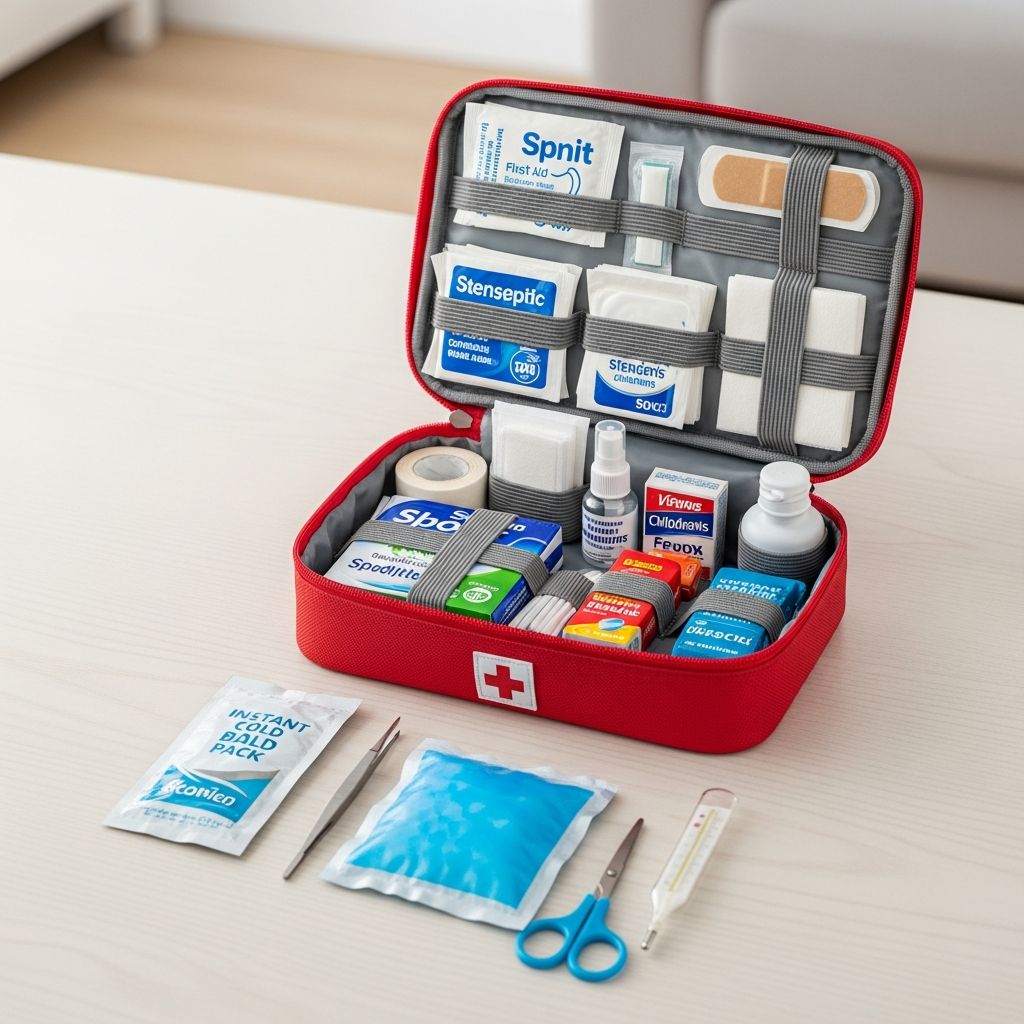
Preparing a family first aid kit equips you to handle everyday mishaps and unexpected health issues effectively. This guide outlines how to create a robust kit customized for household needs, ensuring quick access to vital supplies during crises.
Selecting the Perfect Storage Solution
The foundation of any effective first aid kit starts with its container. Opt for a sturdy, portable option that protects contents from moisture and damage while allowing easy organization.
- Plastic Toolboxes or Bins: These offer compartments for sorting items and are often translucent for quick visibility.
- Waterproof Backpacks or Pouches: Ideal for portability, especially for travel or outdoor family activities.
- Clear Plastic Bags with Labels: Affordable and resealable, perfect for dividing supplies into categories like wound care or medications.
Label the container boldly with “First Aid Kit” and store it in a central, accessible spot like the kitchen cabinet or hallway closet, away from young children’s reach. Regularly check for accessibility to ensure everyone knows its location.
Core Supplies for Wound Management and Hygiene
Stock foundational items to address cuts, scrapes, burns, and infections promptly. These basics form the kit’s backbone for minor injuries common in active families.
| Item | Purpose | Quantity Recommendation |
|---|---|---|
| Adhesive bandages (assorted sizes) | Cover small cuts and blisters | 25+ pieces |
| Sterile gauze pads and roller bandages | Dress larger wounds | 5-10 pads, 2 rolls |
| Antiseptic wipes and antibiotic ointment | Clean and prevent infection | 20+ wipes, 2 tubes |
| Non-latex disposable gloves | Protect caregiver from fluids | 4-6 pairs |
| Tweezers and blunt scissors | Remove splinters, cut tape | 1 each |
Include instant cold packs for swelling reduction and hydrocortisone cream for rashes. These items align with recommendations from health authorities for safe home treatment.
Medications for Pain, Fever, and Common Ailments
Over-the-counter drugs address fever, pain, allergies, and digestive issues. Always include age-appropriate dosages and consult a pharmacist for family-specific advice.
- Pain Relievers/Fever Reducers: Acetaminophen and ibuprofen in child and adult strengths.
- Antihistamines: For bites, stings, or mild reactions.
- Anti-Diarrheal and Rehydration Salts: Essential for stomach bugs.
- Antacids: For heartburn or indigestion.
Store medications in original packaging with expiration dates visible. For families with chronic conditions, add spares like inhalers or epinephrine auto-injectors.
Diagnostic and Support Tools
Beyond bandages and pills, equip your kit with tools for assessment and advanced care.
- Digital thermometer for accurate fever checks.
- Flashlight and extra batteries for low-light situations.
- Whistle for signaling help in emergencies.
- First aid instruction booklet or laminated emergency guides.
- Elastic wraps and triangular bandages for sprains or slings.
These tools enhance response capabilities, particularly useful for parents managing nighttime fevers or outdoor injuries.
Tailoring Your Kit for Family-Specific Needs
No two families are alike, so personalize your kit to match unique risks and demographics.
Infants and Young Children
For little ones, add nasal aspirators, baby-safe pain relievers, and diaper rash treatments. Include bulb syringes and teething gels for comfort.
Allergies and Chronic Conditions
Incorporate EpiPens, allergy meds, or glucose monitors. List family medical histories and allergies on a laminated card.
Outdoor and Activity Enthusiasts
Pack insect repellent, sunscreen, tick removers, and moleskin for hikes or sports.
Review household activities annually to update contents accordingly.
Maintenance and Inventory Best Practices
A kit is only as good as its freshness. Schedule monthly checks and post-use restocking.
- Inspect expiration dates on meds and ointments; replace promptly.
- Replenish used items immediately.
- Test tools like thermometers periodically.
- Conduct family drills to familiarize everyone with contents.
Rotate seasonal items, like extra electrolyte packets in summer. Digital apps can track inventories for efficiency.
Placement Strategies for Maximum Accessibility
Strategic locations ensure swift access without panic.
- Home Base: Kitchen or bathroom for daily use.
- Car Kit: Glove compartment duplicate for road trips.
- Travel Version: Compact bag for vacations.
Teach older kids safe usage rules while restricting access for toddlers.
Training Your Family on Kit Usage
Supplies alone aren’t enough; knowledge saves lives. Enroll in Red Cross first aid courses or use online tutorials.
- Practice scenarios like bandaging a cut or using a cold pack.
- Keep emergency numbers posted: poison control (1-800-222-1222), 911, pediatrician.
- Role-play to build confidence, especially for teens.
Empower family members to act calmly under pressure.
Common Mistakes to Avoid
Steer clear of pitfalls that render kits ineffective.
- Overloading with expired items.
- Forgetting non-latex gloves for allergies.
- Storing in inaccessible spots.
- Ignoring customization for pets or elderly members.
Prioritize quality over quantity for reliability.
Frequently Asked Questions (FAQs)
What should every family first aid kit have?
Essentials include bandages, gauze, antiseptics, gloves, tweezers, scissors, pain relievers, antihistamines, and a thermometer.
How often should I check my first aid kit?
Monthly inspections and immediate restocking after use ensure readiness.
Can I include prescription medications?
Yes, add spares for chronic needs in original packaging with instructions.
What’s best for a car first aid kit?
A compact, waterproof pouch with basics plus road flare and emergency blanket.
Do I need a separate kit for kids?
Integrate child-specific items into the main kit for convenience.
References
- How to Create a Family Emergency First Aid Kit — Accelerated Urgent Care. 2025-03-01. https://acceleratedurgentcare.com/2025/03/01/how-to-create-a-family-emergency-first-aid-kit/
- How to Choose or Build a First Aid Kit — REI Co-op. N/A. https://www.rei.com/learn/expert-advice/firstaid-kits.html
- First-aid kits: Stock supplies that can save lives — Mayo Clinic. N/A. https://www.mayoclinic.org/first-aid/first-aid-kits/basics/art-20056673
- Build a First-Aid Kit: 13 Supplies and Essential Items You Need — GoodRx. N/A. https://www.goodrx.com/health-topic/environmental/build-first-aid-kit
- Building an Emergency Kit — Centers for Disease Control and Prevention (CDC). N/A. https://www.cdc.gov/disability-emergency-preparedness/people-with-disabilities/build-a-kit.html