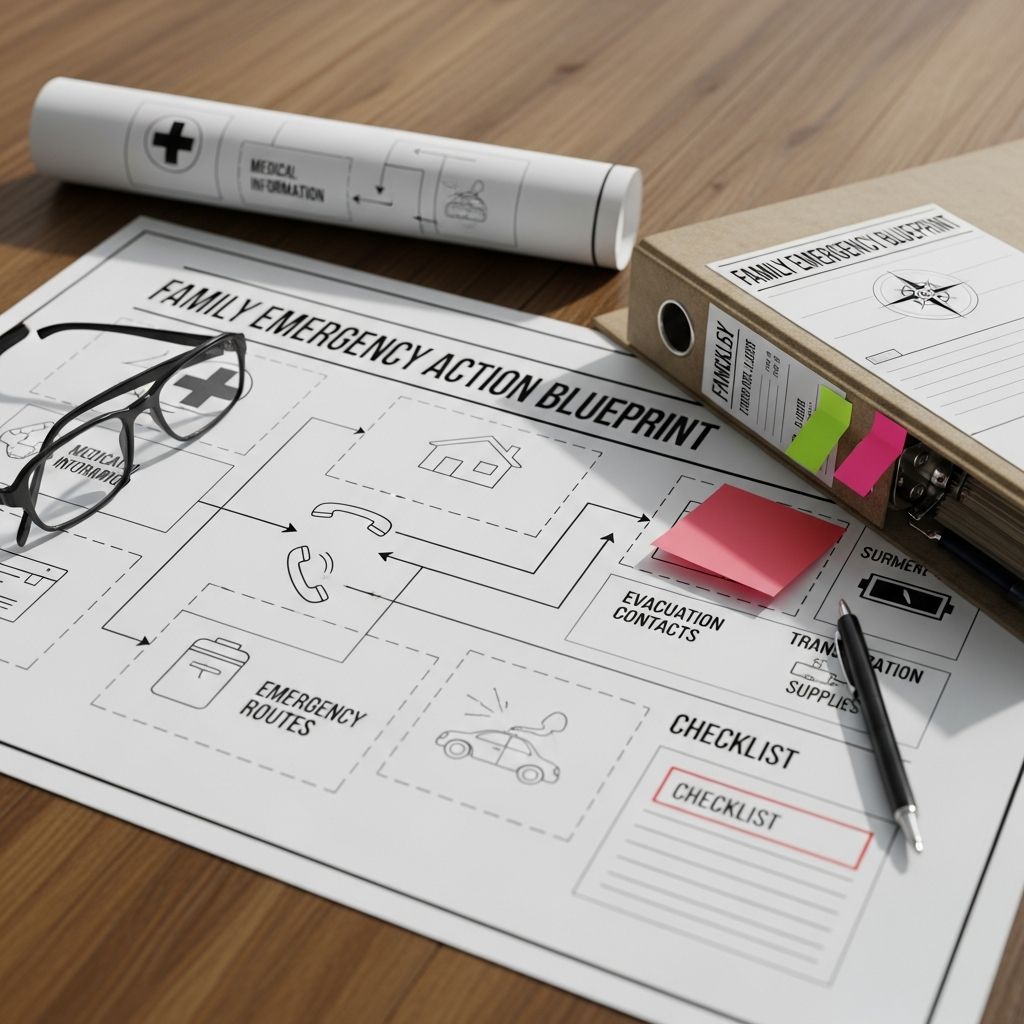
Creating a family emergency action blueprint is essential for protecting your loved ones during unexpected crises like natural disasters, power outages, or medical emergencies. This guide provides a step-by-step framework to customize a plan that addresses your household’s unique needs, ensuring everyone knows what to do, where to go, and how to stay connected.
Understanding the Foundations of Preparedness
Every family faces potential risks based on location, health conditions, and daily routines. A solid blueprint starts with awareness of local hazards such as floods, earthquakes, or severe storms. Discuss these threats openly with all household members, including children, to foster a culture of readiness. Official guidelines emphasize tailoring plans to include vulnerable members like young kids, seniors, or those with disabilities.
Begin by gathering critical information: list all family members’ details, including ages, contact numbers, and special requirements. This forms the core of your blueprint, making it easier to coordinate during chaos.
Building Your Household Contact Network
A reliable contact network is the backbone of any emergency response. Identify at least two out-of-town contacts who can relay messages if local lines are overwhelmed. Include neighbors, friends, and relatives with their addresses, phone numbers, emails, and roles in your plan.
- Primary Family Contacts: Parents, siblings, and immediate caregivers with full details.
- Backup Network: Neighbors for mutual check-ins and out-of-area relays.
- Trusted Adults: For child pickup if parents are unavailable.
Share copies of this network with everyone involved. Practice calling these contacts during drills to ensure accuracy.
Essential Medical and Health Profiles
Document medical histories thoroughly to handle health crises swiftly. For each person, note conditions, prescriptions, dosages, pharmacies, doctors, and hospitals. Include allergies, disabilities, and assistive devices.
| Name | Condition | Medication | Dosage/Frequency | Provider Contact |
|---|---|---|---|---|
| John Doe | Asthma | Inhaler | 2 puffs as needed | Dr. Smith – 555-0123 |
| Jane Doe | Diabetes | Insulin | Daily injection | Pharmacy: 555-0456 |
Also, profile pets: species, vaccinations, microchips, vets, and boarding options. This prevents oversights in evacuations.
Navigating Workplaces, Schools, and Daily Routines
Household members spend time apart, so map procedures for schools, workplaces, and childcare. Note addresses, phones, websites, and pickup protocols. Plan reunification if separated: designate indoor and outdoor meeting spots.
- School Protocols: Emergency dismissal plans and authorized pickups.
- Workplace Drills: Evacuation routes and communication trees.
- Childcare Details: Backup caregivers and authorization forms.
For non-home scenarios, outline: “If we can’t enter the house,” “If we can’t return home,” and “If separated.” This covers pets and accessibility needs.
Strategic Evacuation and Shelter Strategies
Know multiple evacuation routes, avoiding low-risk paths like bridges during floods. Select a nearby shelter and a distant reunification site. Account for pets, as many shelters restrict them—identify pet-friendly options.
During events, prioritize safety: stay informed via battery radios, follow official alerts, and use texts over calls to preserve networks. If sheltering in place, seal rooms and conserve resources.
Assembling the Ultimate Supply Kits
Stock kits for home, car, work, and school with 72-hour supplies. Focus on water (1 gallon/person/day), non-perishables, first aid, sanitation, and multi-tools.
- Water and Food: Stored safely, rotated regularly.
- Medical Essentials: Prescriptions, glasses, hygiene items.
- Communication Tools: NOAA radio, chargers, whistles.
- Comfort Items: Blankets, games for kids, pet food.
Customize for infants (formula), seniors (extra meds), or disabilities (batteries for devices).
Customizing for Special Family Dynamics
Pregnant women need maternity supplies; older adults require mobility aids. Children benefit from age-appropriate explanations and practice runs. People with chronic conditions should have backup power for devices.
Insurance details—policies, agents, account numbers—ensure post-disaster recovery. Utility shutoff knowledge prevents hazards like gas leaks.
Practice Drills and Plan Updates
Conduct quarterly drills: simulate evacuations, role-play scenarios. Review annually or after life changes like new jobs or moves. Involve kids to reduce fear and build confidence.
Post-disaster: check-ins, damage assessments, and plan refinements keep it effective.
Frequently Asked Questions (FAQs)
What should be in a basic family emergency kit?
A basic kit includes water, non-perishable food, first aid supplies, flashlights, batteries, a multi-tool, sanitation items, and important documents for at least 72 hours.
How do I handle pets in an emergency?
Include pet meds, food, leashes, records, and boarding contacts in your plan. Use pet-friendly shelters or trusted neighbors.
What’s the best way to communicate if separated?
Use out-of-town contacts, text messages, or social media. Pre-set meeting points reduce confusion.
How often should we update our blueprint?
Review every 6 months, after drills, or following family changes like births or relocations.
What if a family member has disabilities?
Document specific needs, evacuation aids, and communication methods. Assign buddies for assistance.
Visualizing Your Home for Quick Response
Sketch a home diagram marking exits, utilities, kits, and hazards. This aids firefighters and family navigation.
Your family emergency action blueprint transforms uncertainty into control. Start today—discuss, document, drill, and adapt.
References
- Household Emergency Plan Template — SLCC Emergency Prepare. Accessed 2026. https://i.slcc.edu/emergency-prepare/docs/Personal%20Prepare%20Amature%20radio/Household-Emergency-Plan-template.pdf
- Family Emergency Plan Template — Minnesota Department of Health. Accessed 2026. https://www.health.state.mn.us/communities/ep/family_plan.docx
- Household Emergency Plan Template — Spokane County Emergency Management. 2023. https://www.spokanecounty.gov/DocumentCenter/View/17691/Household-Plan-SCEM
- Make a Plan — Texas Ready (Texas Division of Emergency Management). Accessed 2026. https://texasready.gov/make-a-plan/
- Make a Plan for Emergencies — American Red Cross. Accessed 2026. https://www.redcross.org/get-help/how-to-prepare-for-emergencies/make-a-plan.html