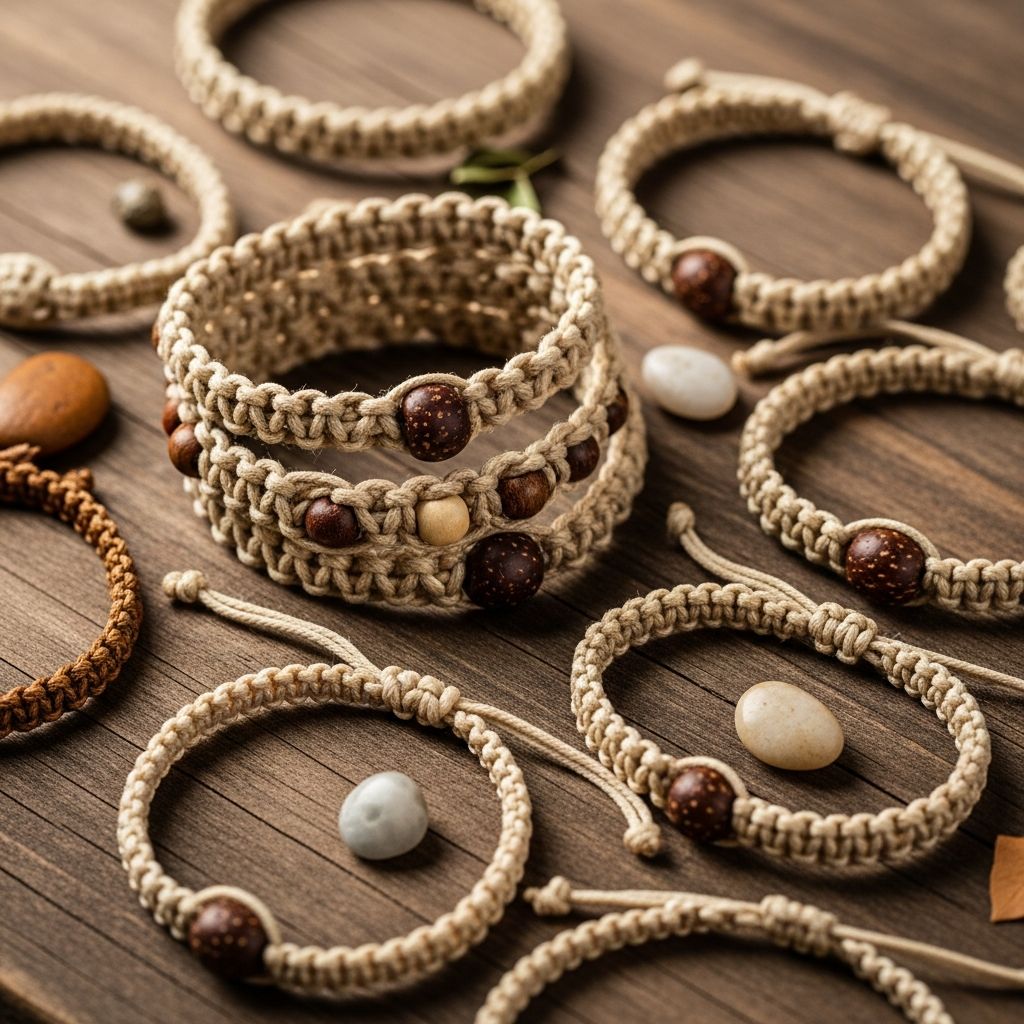
Hemp bracelets make a thoughtful Father’s Day gift because they are simple to create, comfortable to wear, and easy to personalize with colors, knots, and meaningful beads or charms. Unlike store-bought presents, a handmade bracelet carries time, care, and creativity, which many dads value more than anything that comes in a box.
This guide walks you through planning, designing, and making hemp bracelets with kids or on your own, using easy techniques that work for complete beginners. You will find step-by-step instructions, styling options, safety tips, and frequently asked questions, all organized to help you finish a gift in an afternoon.
Why Hemp Bracelets Are Great for Father’s Day
Hemp cord is strong, lightweight, and flexible, so a finished bracelet holds up well to everyday wear while still feeling comfortable against the skin. The natural, slightly rustic look also pairs well with casual clothes, work outfits, and weekend styles, so most dads can wear the bracelet often.
- Hemp is plant-based and biodegradable, making it a more environmentally conscious option than many synthetic cords.
- Bracelets can be adjusted in size, so one design can fit different wrist sizes without complex measuring or metal clasps.
- The knotting process is repetitive and soothing, which makes this project a relaxing activity to share with kids or teens.
Materials and Tools You Need
The basic supply list for a hemp bracelet is short and budget friendly, and many families can reuse tools they already have at home. Choosing slightly thicker cord and larger beads makes the project easier for small hands.
- Hemp cord: Medium weight works well for beginners, usually between 1 mm and 2 mm thick.
- Scissors: Sharp enough to cut cleanly through the cord without fraying.
- Tape or clipboard: Used to anchor your work so it does not slide around while knotting.
- Beads or charms (optional): Choose beads with holes large enough for your hemp cord.
- Ruler or measuring tape: Helpful for cutting consistent cord lengths and checking wrist size.
| Wrist size (approx.) | Bracelet length | Working cord length* | Center cord length* |
|---|---|---|---|
| Small (child) | 14–15 cm | 80–90 cm each | 40–45 cm each |
| Medium (most adults) | 17–18 cm | 90–110 cm each | 45–50 cm each |
| Large (bigger wrists) | 19–21 cm | 110–130 cm each | 50–55 cm each |
*Many common bracelet patterns use two longer working cords that do most of the knotting and two shorter center cords that form the core of the bracelet.
Planning a Bracelet Dad Will Actually Wear
Before cutting any cord, take a moment to think about the dad who will wear the bracelet. His hobbies, job, and favorite colors can guide decisions about pattern, color, and bead choices.
- If dad works in an office, consider a neutral bracelet in brown, black, or dark gray that can blend with business casual clothes.
- If he spends time outdoors, brighter colors or beach-inspired beads may reflect his interests better.
- For a minimalist look, skip beads and focus on neat, consistent knots using a single color.
Design Options for Different Dads
Even simple knots can create very different looks once color and spacing change. Below are a few design ideas you can adapt without learning complicated techniques.
- Classic solid bracelet: One color of hemp and a single row of repeating knots for a clean, subtle style.
- Two-tone braid look: Two colors of hemp alternating in the knotting create a striped or checkerboard impression.
- Beaded accent bracelet: Plain knots at the sides with several beads or one special charm centered in the middle.
- Stacking set: Two or three slim bracelets in coordinating colors that dad can wear together or separately.
Preparing the Cord: Measuring and Cutting
Good preparation makes the actual knotting smoother, especially when crafting with children who may feel frustrated if cords tangle or come up short. Aim for more length than you think you will need because excess cord can be trimmed at the end.
- Measure the wearer’s wrist with a flexible tape or piece of string, then add 2–3 cm to allow for comfort and knots.
- Decide whether you want a fixed knot closure or an adjustable sliding closure, as adjustable styles need slightly more cord.
- Cut two shorter center cords and two longer working cords based on the wrist size table above or your own measurements.
Anchoring Your Project for Easy Knotting
Keeping the starting point still makes the process much easier for beginners. An anchored bracelet also lets kids focus on their hands rather than chasing moving cords.
- Fold all cords in half, line up the centers, and tie a simple overhand knot to form a small loop at the fold.
- Tape the loop down to a table, clipboard, or piece of cardboard so the cords lie straight and separate the two middle cords from the two outer cords.
- Check that the working cords are not twisted and that you can reach the full length without stretching or moving your chair.
Learning a Simple Square Knot Pattern
The square knot is one of the most popular patterns for hemp bracelets because it is sturdy, lies flat, and repeats easily. Once the basic motion is memorized, kids can work independently while adults supervise.
- Place the two shorter cords in the middle; these will stay mostly straight and form the core.
- Bring the left outer cord over the middle cords and under the right outer cord, forming a loose loop.
- Bring the right outer cord under the middle cords and up through the loop on the left side, then gently pull both outer cords to tighten.
- For the next half of the square knot, reverse the process: start on the right side, cross over, and pull the left cord through.
- Repeat these alternating halves, keeping your knots close together and tension even so the bracelet stays neat.
If the bracelet begins to twist rather than lie flat, check whether you are consistently alternating sides. Repeating the same side over and over creates a spiral, which can also be attractive but looks different from a square pattern.
Adding Beads and Charms with Meaning
Personal details help transform a simple macrame bracelet into a keepsake that reminds dad of specific memories or values. Beads and charms offer an easy way to include initials, favorite colors, or symbols tied to important moments.
- Slide a bead onto the two center cords when you reach the middle of the bracelet, then resume knotting to lock it in place.
- Use alphabet beads to spell a short word like “DAD,” a child’s initials, or a special year.
- Choose metal or wood charms that represent hobbies such as guitars, bikes, tools, books, or sports.
- Space beads evenly by counting the same number of knots between each one so the design looks intentional.
Finishing the Ends and Creating a Closure
How you close the bracelet affects comfort, durability, and how easy it is for dad to put it on by himself. Two common methods are a simple tied closure and an adjustable sliding closure.
Option 1: Simple Knot and Loop
This is the quickest closure and works best if someone is available to help tie the bracelet on the wearer’s wrist. It does not adjust, so measuring carefully beforehand is important.
- When the knotted section reaches your desired length, tie all four cords together in a firm overhand knot close to the last square knot.
- Trim the tail ends, leaving a small fringe if you like the look.
- To wear, pass the knot through the starting loop and gently tug until it feels snug but not tight.
Option 2: Adjustable Sliding Closure
A sliding closure lets dad loosen or tighten the bracelet himself, which is practical for daily wear and easy removal. This method uses a short separate cord to create a small series of knots around both bracelet ends.
- Stop knotting a few centimeters from each end so that the two bracelet tails can cross each other.
- Overlap the tails and hold them parallel, then wrap a short new piece of hemp around them several times.
- Tie square knots with this short piece around the two overlapping tails to form a sliding section.
- Trim excess cord from the sliding section, leaving the two tails long enough for gripping when adjusting size.
Making the Project Kid-Friendly and Fun
When children help, the goal is as much about shared time as it is about a picture-perfect final result. Break the process into manageable steps and allow kids to take the lead on choices like color, bead placement, and handwritten gift notes.
- Pre-cut cords and start the first few knots so young kids can practice repeating the motion without worrying about setup.
- Offer a small “practice bracelet” using scrap cord so they can learn the knot before working on dad’s final gift.
- Encourage kids to tell a story about the bracelet, such as “This blue bead is for our beach day” or “This charm is for the time we built a birdhouse together.”
Ideas to Package and Present the Bracelet
Presentation adds a special moment to the gift, even when the bracelet itself is simple and rustic. A small note or creative wrapping helps dad understand the meaning behind each part of the design.
- Place the bracelet in a tiny box lined with scrap fabric or tissue paper in dad’s favorite color.
- Wrap it around a handmade card where children can draw a picture or write a short message about why they are grateful.
- Attach a tag explaining the symbolism of the colors or beads chosen, which deepens the emotional impact of the gift.
Safety and Comfort Tips
Because a bracelet is worn on the skin every day, a few simple checks can prevent discomfort or breakage. These precautions are especially useful when kids plan and assemble the project.
- Make sure beads and charms have smooth edges so they do not scratch or snag clothing.
- Avoid making the bracelet too tight; dad should be able to slide one finger comfortably between the bracelet and his wrist.
- If anyone in the family has sensitive skin, rinse the finished bracelet in mild soapy water, then let it dry fully before gifting.
FAQ: Hemp Bracelets for Father’s Day
How long does it take to make a bracelet?
A single simple bracelet usually takes between 30 minutes and 90 minutes, depending on the complexity of the design and the crafter’s experience. When working with young children, plan for extra time so they can practice knots without rushing.
Can beginners really create a good-looking result?
Yes, beginners can create a neat bracelet by focusing on one basic knot and taking care to keep tension even. Imperfections often add charm, and most dads appreciate the effort and intention behind the handmade gift more than technical perfection.
Is hemp cord durable enough for everyday wear?
Hemp is known for its strength and tends to hold up well when worn daily, especially if knots are pulled tight and the bracelet is not constantly soaked in water. Over time, the cord may soften slightly, which many people find more comfortable against the skin.
What if I do not have beads or charms?
A bracelet made only with knots can still be meaningful and attractive, especially when using interesting colors or a combination of solid and spiral patterns. You can also tie small accent knots at intervals to mimic the rhythm that beads would create.
How do I clean a hemp bracelet?
For light cleaning, gently hand-wash the bracelet in cool water with a little mild soap, then rinse well and let it dry flat on a towel. Avoid harsh detergents or very hot water, which can weaken the fibers or cause shrinkage.
Final Thoughts on This Simple Yet Meaningful Gift
A hemp bracelet may be made from humble materials, but the intention and story behind it can turn it into a treasured Father’s Day keepsake. The process of choosing colors, tying knots, and working side by side offers its own memory, so by the time the bracelet is finished, the gift already holds a quiet history of shared time and care.