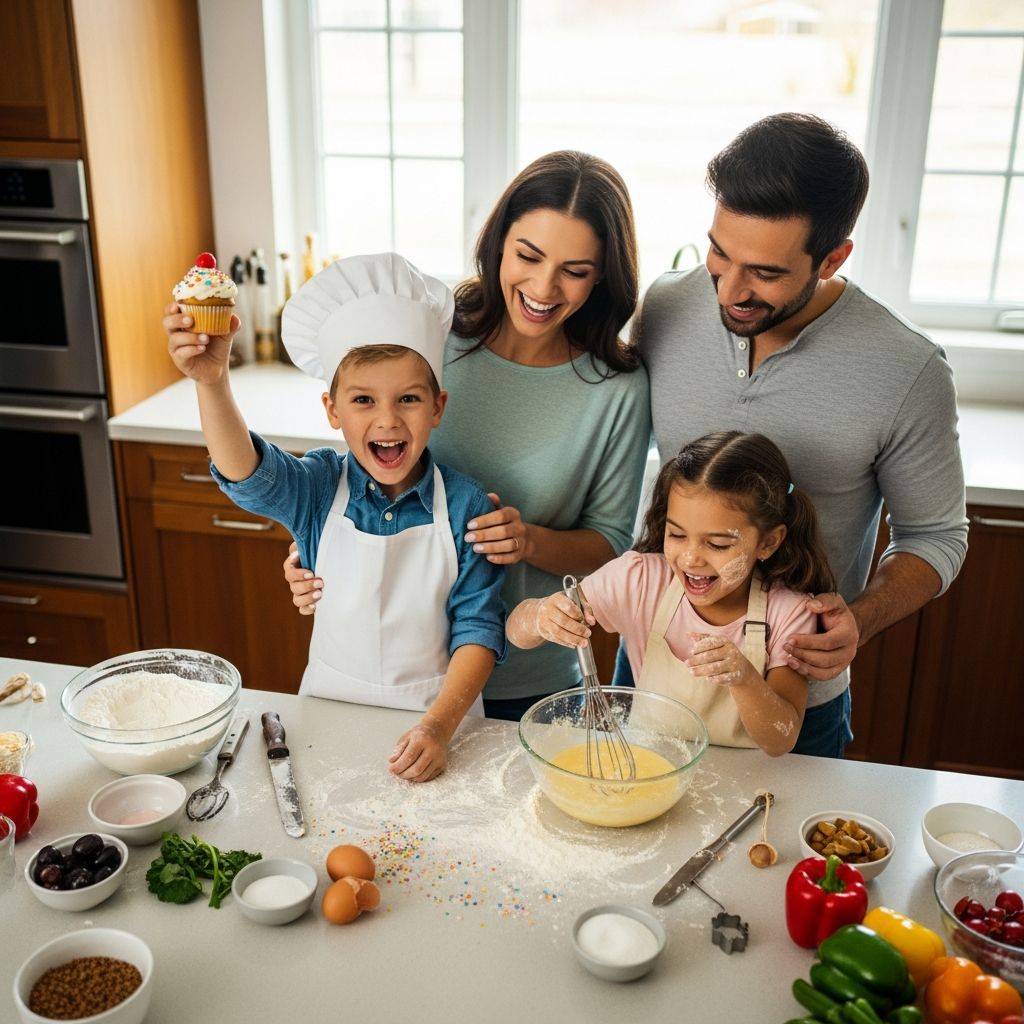
Family cooking competitions blend play, learning, and good food in a way that few other activities can match. When children step into the role of chef, they become more willing to taste new ingredients, especially vegetables, and they gain real-life skills that boost confidence far beyond the kitchen.
Why A Family Cook-Off Is Worth The Effort
Hosting a cook-off at home does more than fill a weekend afternoon. It nudges kids to handle food, follow directions, and make decisions, all while associating healthy eating with fun instead of lectures. Parents get an opportunity to shift the dinner-table conversation away from “eat your veggies” and toward “how did you make that?”
Unlike ordinary mealtimes, a cook-off reframes vegetables and unfamiliar foods as tools for winning a challenge. Children often surprise adults by choosing colorful produce or whole grains when they feel ownership over the recipe and a sense of friendly competition.
Setting A Theme That Excites Kids
A strong theme keeps attention spans from drifting and helps you narrow down ingredients and recipes. When choosing a theme, think about what your kids already love—favorite shows, colors, or meals—and build from there.
- Color challenge: Each dish must feature at least three different colors from fruits or vegetables.
- Around-the-world night: Each team picks a country and creates a simple kid-friendly dish inspired by that cuisine.
- Breakfast-for-dinner: Teams design a balanced breakfast plate that includes protein, whole grains, and at least one fruit or vegetable.
- Veggie upgrade: Take a familiar kid favorite—pizza, pasta, or tacos—and add at least two extra vegetables in creative ways.
Whatever theme you pick, let kids help decide. Giving them a vote at the planning stage builds excitement and reduces resistance once it is time to prep, cook, and taste.
Planning The Big Night
Good planning keeps the cook-off energetic instead of chaotic. Start by choosing a realistic time window and a simple menu that fits your family’s schedule and cooking skills.
- Pick a date when you are not rushed by sports practice, homework, or late work meetings.
- Plan for 60–90 minutes of total activity time for young children, including set-up, cooking, judging, and cleanup.
- Put one adult in charge of safety and timekeeping so kids can focus on creativity.
Sample Cook-Off Structure
Use the table below as a reference when mapping out your own event. Adapt it to your family’s ages and kitchen space.
| Stage | Suggested Length | Main Goal |
|---|---|---|
| Welcome & rules | 10–15 minutes | Explain theme, safety, and judging categories. |
| Planning time | 10–20 minutes | Teams sketch recipes and divide jobs. |
| Cooking time | 30–45 minutes | Prepare dishes with supervision. |
| Plating & presentation | 5–10 minutes | Arrange food and create a short “menu story.” |
| Tasting & scoring | 15–20 minutes | Everyone tastes, gives feedback, and tallies scores. |
| Cleanup & awards | 10–20 minutes | Clean the kitchen and celebrate every team. |
Creating Fair And Fun Rules
Clear rules prevent arguments and tears, especially with siblings who may already be competitive. Post the rules on a sheet of paper so kids can check them without constant reminders from adults.
- Age-appropriate tools: Assign knives, stovetop use, and oven tasks according to age and comfort level.
- Time limit: Decide how long each team has to cook and what happens if they run late.
- Ingredient limits: Provide a shared pantry and produce section so teams start from the same base.
- Respect rule: No making fun of other teams’ food, names, or presentations.
Forming Teams That Work
The way you group family members can shape the whole tone of the competition. Think about both personalities and skills when deciding teams.
- Pair younger children with an older sibling or adult so every team has at least one person who can safely handle heat and sharp tools.
- If sibling rivalry runs high, mix kids and adults so that no team looks like a “dream team” or an “underdog” from the start.
- Rotate teams each time you host a cook-off so everyone gets a chance to work together in different combinations.
Kid-Friendly Jobs In The Kitchen
Even toddlers can contribute if tasks are matched to their abilities. Giving each child a clear job also cuts down on squabbles over who “gets” to stir or pour.
- Ages 3–5: Washing produce, tearing lettuce, sprinkling cheese, arranging toppings.
- Ages 6–8: Measuring ingredients, mixing, using kid-safe knives for soft foods, reading simple recipe cards.
- Ages 9–12: Chopping with supervision, using the stovetop or oven with guidance, managing timers.
- Teens: Leading a recipe from start to finish, teaching younger siblings, and helping with more technical tasks.
Judging Categories That Encourage Healthy Choices
Judging should reward more than just sugar and cheese. When children know that creativity, nutrition, and teamwork matter, they make different choices from the start.
- Taste: Is the food enjoyable, seasoned, and cooked properly?
- Appearance: Does the dish look colorful, neat, and appetizing?
- Nutrition: Does it include vegetables, fruits, whole grains, or lean proteins?
- Creativity: Did the team try something new with flavor, texture, or presentation?
- Teamwork: Did everyone participate respectfully and share tasks?
Sample Scorecard Template
Use this simple scoring framework or adjust the point values to fit your family. Let kids decorate the scorecards with stickers or drawings for extra fun.
| Category | Description | Points (1–5) |
|---|---|---|
| Taste | Flavor, seasoning, and overall enjoyment. | __/5 |
| Appearance | Color, plating, and neatness. | __/5 |
| Nutrition | Use of vegetables, fruits, and whole ingredients. | __/5 |
| Creativity | Original ideas and use of the theme. | __/5 |
| Teamwork | How well everyone participated and cooperated. | __/5 |
| Total | __/25 |
Easy Cook-Off Menu Ideas
Choose recipes that are forgiving, flexible, and simple to customize. The goal is not restaurant-level perfection; it is an experience that kids feel proud of completing.
- Mini pita pizzas: Use whole-wheat pitas, tomato sauce, shredded cheese, and bowls of chopped vegetables so kids can build their own designs.
- Rainbow veggie wraps: Spread hummus or yogurt dip on tortillas and let kids add colorful strips of peppers, carrots, cucumbers, and leafy greens.
- DIY grain bowls: Offer a base of rice, quinoa, or couscous with toppings like roasted vegetables, beans, grilled chicken, and a simple dressing.
- Fruit and yogurt parfaits: Layer yogurt, fruit, and whole-grain cereal or granola for a dessert round that still provides protein and fiber.
Making Vegetables The Star (Without Nagging)
Cook-offs offer a perfect excuse to introduce vegetables in more playful ways. When kids can touch, chop, and arrange produce, it feels less like a command and more like an art project.
- Turn vegetables into toppings and decorations rather than “side dishes” pushed to the edge of the plate.
- Offer a variety of dips—yogurt-based, hummus, or mild salsa—to make tasting new items less intimidating.
- Let kids rename dishes with fun titles, such as “Superpower Stir-Fry” or “Rainbow Power Wraps,” to reinforce positive feelings.
Safety First, Always
Excitement in the kitchen should never come at the cost of safety. Before starting, walk everyone through basic rules while the kitchen is still calm.
- Show children where pot handles should point so they are not bumped or grabbed.
- Remind kids to keep fingers tucked when chopping and to ask for help with tough ingredients.
- Set up a handwashing station and make washing hands part of the official rules, not just a suggestion.
Prizes That Focus On Participation
While everyone enjoys winning, the real value of the cook-off lies in trying new foods and skills. Consider multiple light-hearted awards instead of a single champion.
- Best Use of Color
- Most Surprising Flavor Combo
- Veggie Hero Award
- Teamwork Superstars
Prizes can be simple: homemade certificates, a small kitchen gadget, the right to choose next week’s menu, or extra reading time before bed. What matters is the recognition, not the cost.
Turning The Cook-Off Into A Tradition
Repeating the event every month or each season helps kids steadily build practical cooking skills. Over time, they might move from sprinkling cheese to planning entire meals.
- Rotate themes so the experience always feels fresh.
- Keep a “family recipe journal” where you paste photos, write down winning dishes, and note what you would change next time.
- Invite grandparents or friends to join as guest judges or special teammates for extra excitement.
Cleanup: Making Responsibility Part Of The Game
Teaching kids that cooking includes cleaning shapes healthy habits for adulthood. When cleanup is framed as the final “round” of the competition, children are more likely to handle it without complaint.
- Assign points or small prizes for the team that returns its station to the neatest condition.
- Use age-appropriate tasks: little ones can wipe surfaces, while older kids handle loading the dishwasher or taking out recycling.
- Play music during cleanup to keep the mood light and signal that the party is not over yet.
SEO-Friendly Tips For Sharing Your Cook-Off Online
If you enjoy documenting family life, a cook-off is rich material for photos, blog posts, or social media updates. Highlight the positive aspects of kids cooking and healthy food rather than focusing on perfection.
- Use descriptive phrases such as “family cooking challenge,” “kids cook-off,” and “healthy recipes for picky eaters” in captions and titles.
- Share before-and-after shots of the cooking stations to show the full story, not just the polished final plate.
- Protect kids’ privacy by using first names or nicknames, and avoid posting school logos or address details in the background.
Frequently Asked Questions
How young is too young for a family cook-off?
There is no strict minimum age, but children under three will mostly observe and help with very simple tasks like washing produce or handing over utensils. The important thing is close supervision and realistic expectations about how long they can stay engaged.
What if my child is a very picky eater?
Picky eaters often respond better to ownership than pressure. Let them choose a recipe and handle ingredients with their hands; even if they refuse to taste the dish at first, the sensory experience lays groundwork for later progress.
Do we need special equipment to host a cook-off?
Most families can run a simple event with what they already own: a cutting board, basic knives, mixing bowls, a pan, and an oven or stovetop. If equipment is limited, plan no-cook rounds that focus on assembling, mixing, and decorating.
How can I keep the competition friendly and not stressful?
Emphasize effort, teamwork, and creativity in both the rules and prizes. Use multiple award categories so that each team has something to celebrate, and remind kids that the main reward is enjoying a meal they helped create.
Can we host a virtual version with relatives who live far away?
Yes. Share a simple ingredient list and theme ahead of time so every household can shop in advance, then connect by video call during planning, cooking, and judging. Families can present dishes on camera, trade stories, and vote by show of hands.