Epstein pearls are tiny, whitish-yellow cysts that frequently appear on a newborn’s gums or the roof of their mouth. These benign formations affect 60-85% of infants and resolve spontaneously within weeks, requiring no intervention.
Recognizing Epstein Pearls: Visual Characteristics
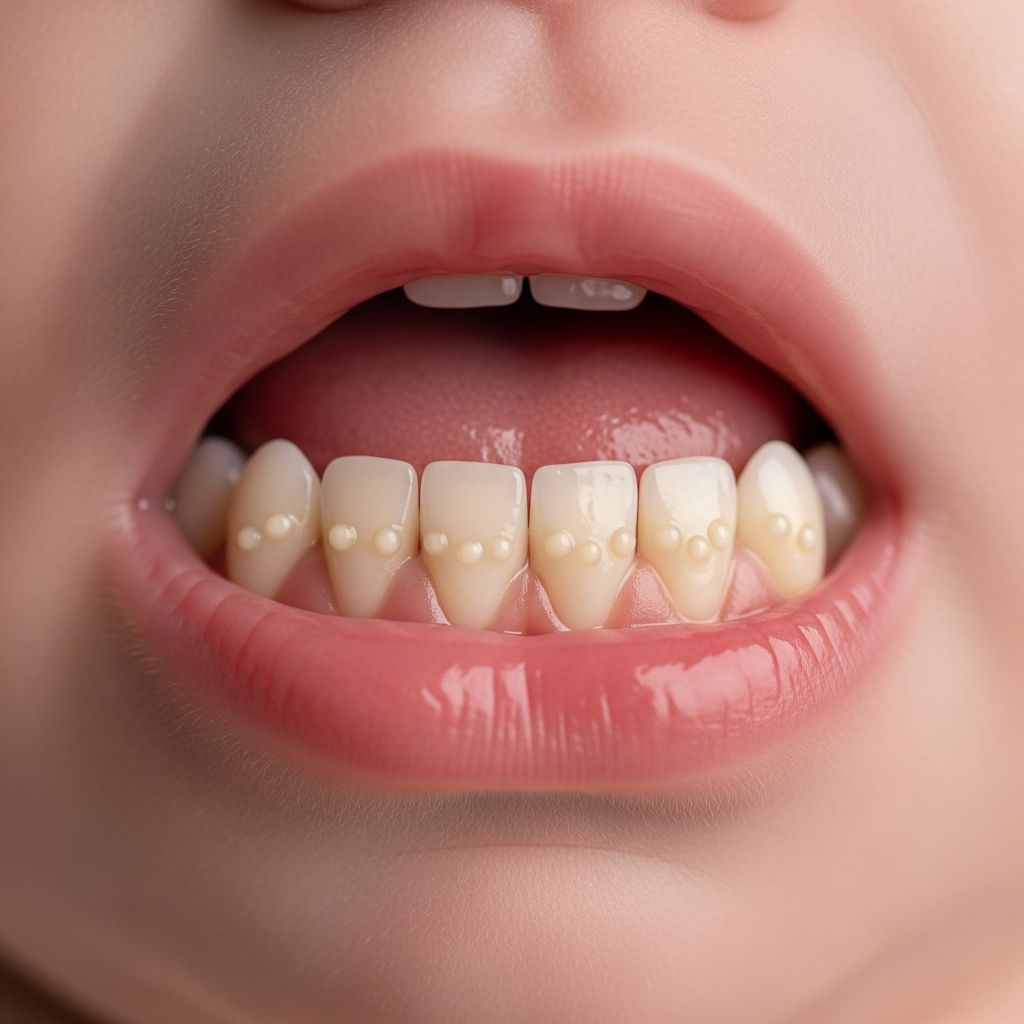
Newborns often present with small, firm bumps in their oral cavity that catch parents off guard. These structures measure 1-3 millimeters in diameter, appearing as opaque white or yellowish nodules embedded just beneath the surface of the gums or along the midline of the hard palate.
Unlike soft lesions, Epstein pearls feel solid to the touch due to their keratin-filled content. They may occur singly or in clusters of up to six, distributed randomly without pattern. Importantly, they do not enlarge over time; stability in size is a hallmark feature distinguishing them from concerning growths.
- Color: Whitish-yellow, semi-translucent in some cases.
- Size: Typically under 3mm, smaller than a grain of rice.
- Location: Primarily gums or palatal raphe (midline of mouth roof).
- Texture: Firm, non-painful, immovable.
During a routine check, gently lifting the upper lip or examining the palate reveals these pearls easily. Parents first notice them while feeding or cleaning the mouth.
Why Do Epstein Pearls Form? The Developmental Origin
These cysts originate in utero during the fusion of palatal tissues. Epithelial cells from the dental lamina—remnants of tooth-forming structures—become trapped and accumulate keratin, a tough protein also found in skin, hair, and nails.
Keratin buildup creates the cyst’s core, akin to milia on the skin’s surface. This process is a normal variation in oral development, not linked to maternal diet, hygiene, or environmental factors. They manifest at birth or shortly after, peaking in the first few weeks and rarely appearing beyond three months.
Prevalence underscores their normality: approximately 80% of newborns exhibit them, with no gender predominance or familial pattern reported.
How Epstein Pearls Differ from Emerging Teeth
A common parental worry is mistaking these for natal teeth. While both appear as oral protrusions, key distinctions exist.
| Feature | Epstein Pearls | Natal Teeth |
|---|---|---|
| Appearance | Soft tissue cysts, white-yellow | Hard enamel/dentin structures |
| Mobility | Fixed, non-mobile | Looser, may wobble |
| Pain/Discomfort | None | Possible irritation during feeding |
| Resolution | Self-resolves in 1-2 weeks | Permanent, may need extraction if hazardous |
Natal teeth, present at birth, affect only 1 in 2,000-3,000 infants and often require pediatric dental evaluation for safety.
Distinguishing from Other Neonatal Oral Lesions
Not all mouth bumps are Epstein pearls. Accurate identification prevents unnecessary alarm.
- Bohn’s Nodules: Similar keratin cysts but located laterally on the palate or buccal to dental ridges; also harmless and transient.
- Dental Lamina Cysts: Transparent, slightly larger gingival versions; resolve similarly.
- Congenital Epulis: Rare benign tumor on gums, pedunculated (stalk-like), more common in girls; may impede feeding and requires surgery.
- Oral Thrush: White plaques from yeast infection, scrapable, causing fussiness; treatable with antifungals.
A pediatrician differentiates via visual exam, confirming cysts versus infectious or neoplastic processes.
No Symptoms, No Worries: Impact on Baby’s Daily Life
Epstein pearls are asymptomatic, causing zero pain, feeding difficulties, or growth interference. Babies feed, sleep, and thrive unaffected.
Unlike thrush, no irritability or refusal to nurse occurs. Monitoring involves casual observation during diaper changes or baths—no special tools needed.
Management Approach: Observation Over Intervention
Treatment is unnecessary; these cysts rupture and disappear within 1-2 weeks to a few months as oral tissues mature.
Resist urges to pop or squeeze them—doing so risks infection or trauma without benefit. Maintain oral hygiene via gentle wiping with a clean cloth after feeds to prevent unrelated issues like thrush.
When to Contact a Healthcare Provider
Most cases self-resolve uneventfully, but prompt evaluation is warranted if:
- Bumps enlarge beyond 3mm or multiply excessively.
- Accompanied by redness, swelling, bleeding, or pus.
- Baby shows feeding refusal, excessive crying, or poor weight gain.
- Persist beyond 3-4 months.
- Appear pedunculated or interfere with latch.
These signs may indicate epulis, infection, or rarely, other pathologies. A quick exam by a pediatrician or dentist rules out concerns.
Insights from Medical Literature and Statistics
Named after Alois Epstein who described them in 1880, these cysts represent entrapped epithelium along the palatal raphe.
StatPearls from NCBI confirms their equivalence to milia, with retention of sebum and keratin in oral mucosa. MedlinePlus notes occurrence in 4 out of 5 newborns, emphasizing harmless prognosis.
Healthline reports 60-85% incidence, reinforcing no preventive measures exist due to prenatal origins.
Parental Reassurance and Long-Term Expectations
Seeing white spots in your newborn’s mouth can spark anxiety, especially resembling teeth. Rest assured, Epstein pearls signal normal development, not defect or poor care.
By 1-2 weeks, many vanish; stragglers fade by 2-3 months. Track via photos if desired, but focus on bonding and milestones. Future dental health remains unaffected.
Forthcoming teeth erupt around 6 months, distinct and harder. This transient phase underscores infancy’s rapid changes.
Frequently Asked Questions About Epstein Pearls
Are Epstein pearls painful for my baby?
No, they cause no discomfort or symptoms beyond visibility.
Can Epstein pearls appear in older infants or adults?
Rarely beyond 3 months in infants; adults may develop similar dental cysts near tooth roots, often asymptomatic unless infected.
Do I need to change feeding routines?
Not at all—they don’t impact nursing or bottle-feeding.
How common are they really?
Up to 90% of newborns, making them extraordinarily routine.
Is there a genetic link?
No evidence supports inheritance; purely developmental.
Supporting Your Newborn’s Oral Health Holistically
Beyond pearls, foster healthy mouths via breastfeeding (natural antibodies), pacifier hygiene, and avoiding sweetened soothers. Regular pediatric visits catch any variances early.
Empowerment comes from knowledge: these pearls are a fleeting, benign footnote in your baby’s story.
References
- Epstein Pearls: Benign but Bothersome — WebMD. 2023. https://www.webmd.com/parenting/baby/what-are-epstein-pearls
- Gingival cyst — Wikipedia (citing primary dental sources). 2024. https://en.wikipedia.org/wiki/Gingival_cyst
- Epstein Pearls: Symptoms, Pictures, Causes, and Treatment — Healthline (medically reviewed). 2018-10-29. https://www.healthline.com/health/epstein-pearls
- Epstein pearls — MedlinePlus Medical Encyclopedia (NIH). 2024. https://medlineplus.gov/ency/article/001603.htm
- Palatal and Gingival Cysts of the Newborn — StatPearls, NCBI Bookshelf (NIH). 2023. https://www.ncbi.nlm.nih.gov/books/NBK493177/