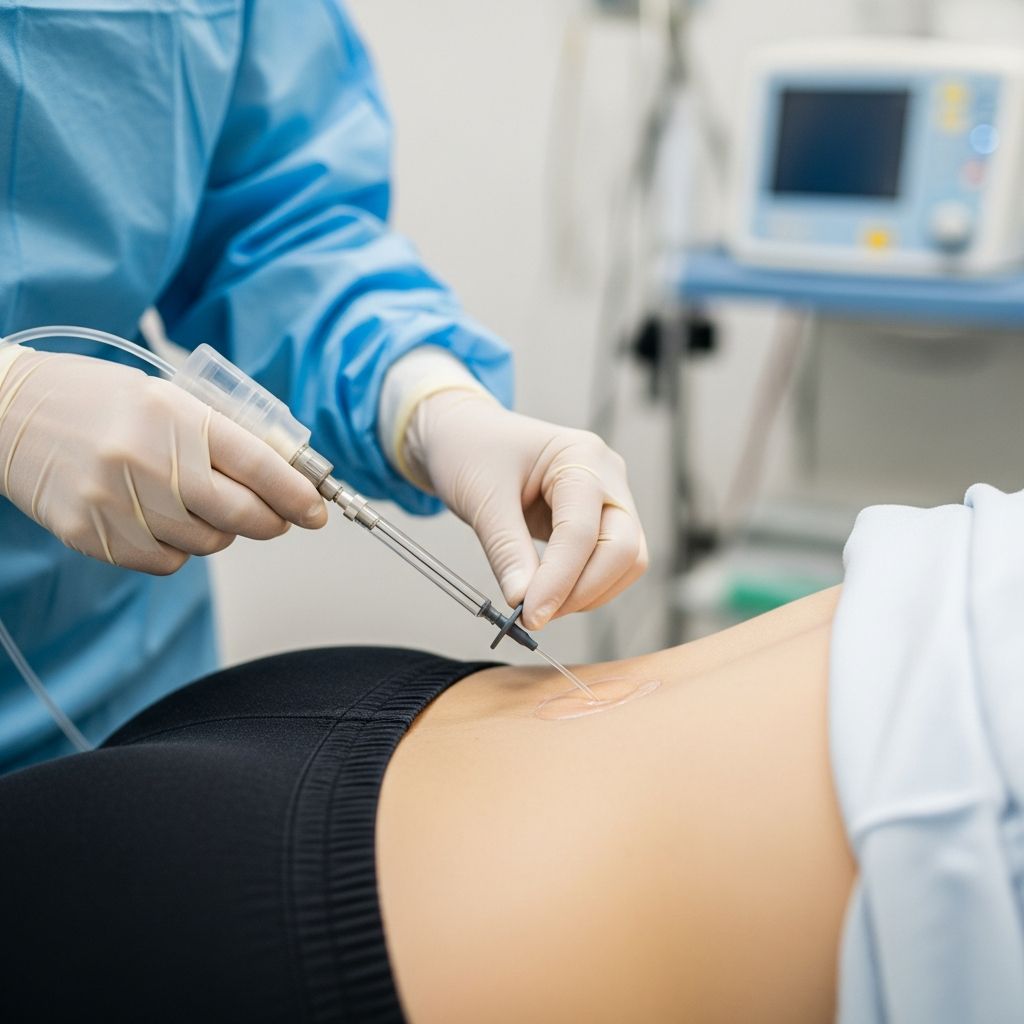
Epidural anesthesia offers a reliable method for managing pain during labor and certain surgeries by delivering medication near the spinal cord to numb the lower body. This technique allows mothers to remain awake and participate in the birthing process while minimizing discomfort.
Understanding Epidural Anesthesia Basics
Epidurals involve injecting local anesthetics into the epidural space, a region surrounding the spinal cord’s dura mater, to interrupt pain signals from the lower body to the brain. Unlike general anesthesia, which affects the entire body, epidurals target specific nerve roots, providing regional numbness.
The epidural space lies just beyond the ligamentum flavum in the spine. Medications spread circumferentially and longitudinally, blocking small unmyelinated nerves first (sympathetic), then sensory fibers (temperature and touch), and finally motor fibers. This sequence ensures pain relief before full muscle relaxation.
Commonly used for labor, epidurals can also support surgeries on the lower abdomen, legs, or pelvis, postoperative pain control, and chronic pain management when other treatments fail.
Why Parents Choose Epidurals During Childbirth
During labor, intense contractions cause significant pain via nerves in the lower spine. An epidural creates a numb band from the belly button to the upper legs, enabling relaxation and pushing without agony. Mothers stay alert to bond with their baby immediately after birth.
- Effective Pain Control: Provides superior relief compared to systemic opioids, reducing stress hormones that might affect labor progression.
- Flexibility: Adjustable dosing allows mobility in early labor stages if a walking epidural is used with lower concentrations.
- Safety Profile: When administered by trained anesthesiologists, epidurals have a low complication rate, making them a standard option in modern obstetrics.
Beyond labor, epidurals aid in cesarean sections as the primary anesthetic, avoiding general anesthesia risks like airway complications.
Step-by-Step: The Epidural Placement Process
Placement occurs in a sterile environment, typically when labor reaches 4-5 cm dilation, though it can be anytime upon request. The mother sits or lies on her side with her back curved to widen spinal spaces.
- Preparation: Skin is cleaned and numbed with a local anesthetic. Vital signs are monitored continuously.
- Needle Insertion: A specialized needle (about 9 cm long) advances using the loss-of-resistance technique. A syringe filled with air or saline detects the epidural space when resistance drops suddenly, confirming position 4-7 cm from the skin.
- Catheter Threading: The needle is removed over a thin, flexible catheter (4-6 cm left in place), connected to a pump for continuous or bolus medication delivery.
- Onset: Relief begins in 10-20 minutes, peaking in 30 minutes. Duration varies; single boluses last hours, while infusions extend to days.
Positioning matters: sitting for labor epidurals, lateral for surgeries. Providers use median (midline) or paramedian (lateral) approaches for optimal access.
Medications and Their Effects
Local anesthetics like bupivacaine or ropivacaine are staples, often combined with opioids (fentanyl) for enhanced analgesia without heavy sedation. Adrenaline may prolong effects by reducing vascular uptake.
| Medication Type | Common Examples | Onset Time | Duration | Primary Use |
|---|---|---|---|---|
| Local Anesthetics | Bupivacaine, Lidocaine | 10-20 min | 1-4 hours (bolus) | Numbness, motor block |
| Opioids | Fentanyl, Sufentanil | 5-15 min | 1-2 hours | Enhanced pain relief |
| Continuous Infusion | Low-dose mix | Ongoing | Days | Labor, post-op |
Low concentrations allow walking; higher ones provide surgical anesthesia.
Potential Side Effects and Management
Most effects are mild and transient. Common ones include:
- Low Blood Pressure: From sympathetic blockade; managed with fluids (200-500 ml IV) and vasopressors like ephedrine.
- Itchiness: Opioid-related; treated with naloxone.
- Slowed Breathing: Rare, monitored closely.
- Shivering: Reduced by epidurals compared to no analgesia.
Serious risks like infection, bleeding, or nerve injury occur in less than 1% of cases, minimized by sterile technique and screening.
Who Cannot Receive an Epidural?
Contraindications ensure safety:
- Patient refusal.
- Skin infection at insertion site.
- Coagulation disorders or recent anticoagulants (e.g., wait 24 hours post-LMWH >5000E).
- Neurological issues or prior spinal complications.
Discuss medical history with your provider beforehand.
Post-Procedure Care and Recovery
After placement, you’ll be monitored for blood pressure, fetal heart rate, and sensation. Catheters are removed post-delivery or surgery. Full sensation returns in 1-2 hours as medications wear off.
Mobility resumes gradually; use assistance initially. Breastfeeding is unaffected, and epidurals may improve satisfaction by reducing exhaustion.
Epidurals in Surgical Contexts
Beyond childbirth, epidurals shine in lower body surgeries like hip replacements or abdominal procedures. They reduce blood loss via controlled hypotension and provide superior post-op pain control over IV opioids, minimizing respiratory depression.
For example, midthoracic epidurals (T6 level) suit nephrectomies, combining with general anesthesia for high-risk patients.
Comparing Epidurals to Other Options
| Method | Onset | Duration | Mobility | Best For |
|---|---|---|---|---|
| Epidural | 10-20 min | Hours-Days | Limited initially | Labor, surgery |
| Spinal | Immediate | 1-3 hours | No | C-sections |
| IV Opioids | Fast | Short | Yes | Mild pain |
Epidurals offer longer, titratable relief ideal for prolonged labors.
Frequently Asked Questions (FAQs)
Does an epidural slow down labor?
No, studies show it does not prolong labor when timed appropriately; it may even aid progress by relaxing muscles.
Can I still push with an epidural?
Yes, motor block is minimized with modern low-dose techniques, preserving pushing strength.
Is an epidural safe for my baby?
Yes, minimal drug crosses the placenta, and fetal monitoring ensures safety.
How soon can I eat after an epidural?
Once sensation returns and nausea is absent, light intake is allowed; follow provider guidance.
Will I feel the catheter?
Most do not; it’s thin and taped securely.
Preparing for Your Epidural Experience
Talk to your obstetrician early. Stay hydrated, as fluids help prevent hypotension. Informed consent covers benefits outweighing rare risks. Post-birth, note any lingering numbness and report concerns.
Epidurals empower parents with control over birth experiences, blending medical precision with natural elements.
References
- Epidural Anesthesia: Mechanism of Action and Indications — UCSF Pain Management. Accessed 2026. https://pain.ucsf.edu/neuraxial-anesthesia/epidural-anesthesia-mechanism-action-and-indications
- Epidural Anesthesia – Technique, Indications and Clinical Use — Anesthesia Guide. Accessed 2026. https://anesthguide.com/topic/epidural-anesthesia/
- Epidural & Spinal Anesthesia — YouTube (Medical Animation). Accessed 2026. https://www.youtube.com/watch?v=69s7NScxd1k
- Spinal and Epidural Anesthesia — MedlinePlus, U.S. National Library of Medicine. 2023-10-01. https://medlineplus.gov/ency/article/007413.htm
- Epidural Anesthesia and Analgesia — NYSORA. Accessed 2026. https://www.nysora.com/topics/abdomen/epidural-anesthesia-analgesia/
- Epidural: What It Is, Side Effects, Risks & Procedure — Cleveland Clinic. 2023-12-15. https://my.clevelandclinic.org/health/treatments/21896-epidural