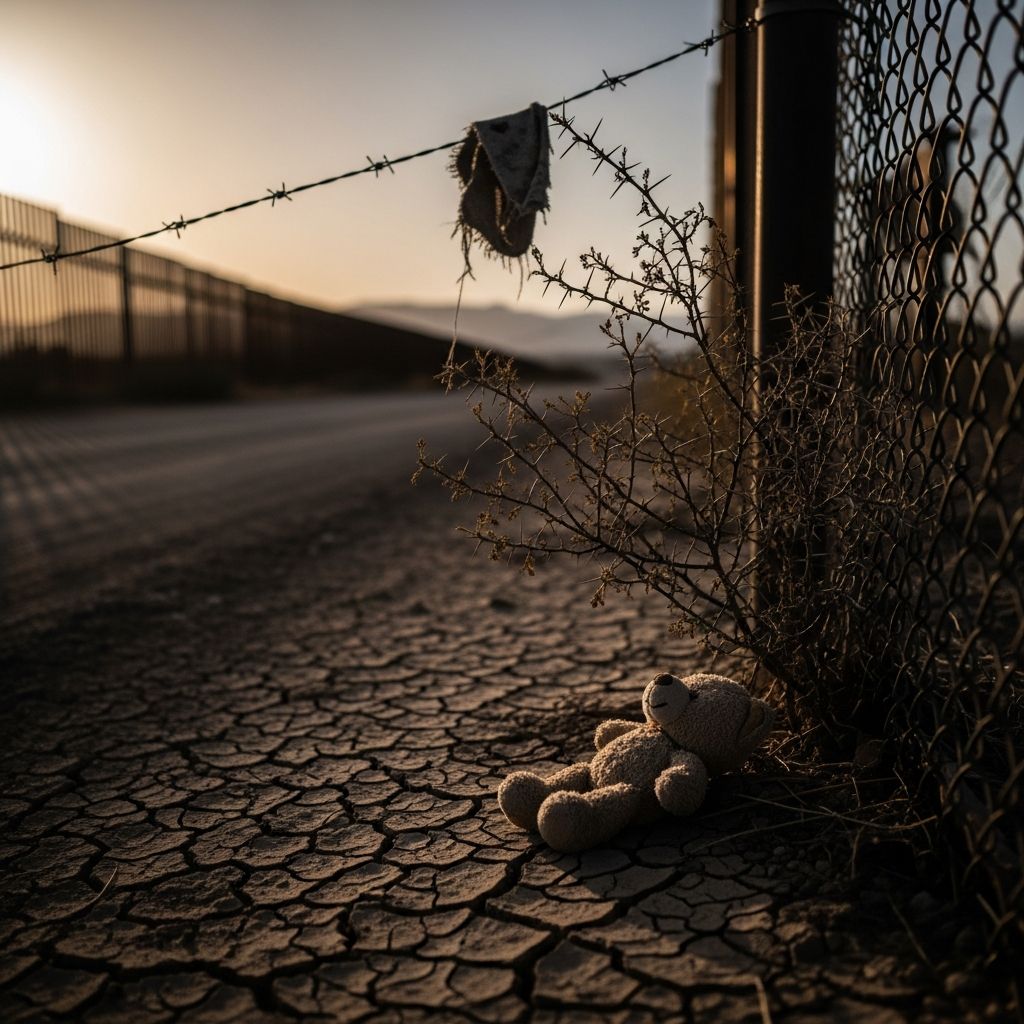
Family separations at the U.S. border have inflicted lasting trauma on thousands of children and parents, with many still unreunited years later. Individuals and communities can take immediate steps to advocate for change, support affected families, and push for systemic reforms grounded in child welfare principles.
The Lasting Impact of Border Family Separations
Since the implementation of policies like the ‘Zero Tolerance’ approach, over 2,600 children were separated from their parents, leading to profound psychological and developmental harm. As of recent reports, approximately 1,360 children remain unreunited with their parents six years after forcible separations by the U.S. government. These separations, often justified under immigration enforcement, have been linked to severe mental health issues, including PTSD, anxiety, and attachment disorders in children.
Research highlights the developmental toll: family detention and separation exacerbate physical health risks and long-term emotional distress for both children and caregivers. Despite court orders and task forces, such as the Biden-era Family Reunification Task Force, many families lack adequate mental health services and permanent solutions. This crisis persists into 2025, with increased enforcement operations risking more separations amid expanded detention infrastructure.
Understanding the Policy Roots and Current Challenges
Policies separating families for misdemeanor entries like ‘illegal entry’ or ‘re-entry’ violate child welfare standards enshrined in agreements like the Flores Settlement. Court injunctions, such as Ms. L v. Sessions, halted widespread separations in 2018 but allowed exceptions for alleged criminal history or unfitness, often applied arbitrarily. FOIA-released documents reveal the chaotic implementation under prior administrations, underscoring the need for accountability.
Today, challenges include arduous reunification processes, where parents must navigate humanitarian parole for temporary status, and ongoing separations tied to deportation surges. Of separated children tracked by courts, many remain in Office of Refugee Resettlement (ORR) custody due to parental deportations or disputed ‘unfitness’ labels, even without serious criminal convictions beyond immigration violations.
Individual Advocacy: Everyday Actions for Change
- Contact Legislators: Call or email your representatives to demand legislation prohibiting family separations as enforcement tools and codifying Flores protections.
- Sign Petitions: Support campaigns from organizations like the ACLU pushing for full reunifications and mental health funding.
- Amplify Stories: Share verified accounts of separated families on social media to build public pressure, focusing on data from credible reports.
- Donate Strategically: Contribute to groups providing pro bono legal aid, such as Kids in Need of Defense (KIND), which has assisted over 800 impacted individuals.
These steps empower citizens to influence policy directly, as collective advocacy has historically led to court-ordered reunifications.
Organizational Roles in Reunification and Support
Non-profits play a pivotal role in matching separated children with attorneys and coordinating trauma-informed care. KIND’s Family Separation Response Team, for instance, provides legal representation, psychosocial services, and medical support to address separation trauma. Similarly, clinics like Yale’s Lowenstein International Human Rights Clinic collaborate with Human Rights Watch to document harms and recommend comprehensive remedies, including permanent residence for affected parents.
| Organization | Key Contributions | Impact Metrics |
|---|---|---|
| ACLU | Litigation for injunctions | Tracked 2,654 separations; advocated for 120+ unreunited children |
| KIND | Legal aid and psychosocial care | Assisted 800+ individuals |
| Lowenstein Clinic/Yale | Reports and policy recommendations | Highlighted 1,360 unreunited children |
| Children’s Equity Project | Policy briefs on prevention | Recommendations for child welfare pros in separations |
Policy Reforms: What Governments Must Do
To prevent future separations, the executive branch should issue rules limiting separations to genuine child safety threats, determined by trained child welfare professionals rather than immigration agents. Congress must legislate bans on separations for immigration prosecutions, fund child welfare experts for screenings, and expand asylum protections.
Biden administration efforts, like reopening asylum cases and providing temporary work authorization, fall short without ongoing mental health access and permanent status pathways. With 2025 enforcement escalations via H.R.1, urgent reforms are needed to embed family unity in law.
Community and Legal Support Strategies
Local communities can host know-your-rights workshops for migrant families and volunteer as sponsors for released children. Legal advocates should challenge ‘unfit parent’ designations lacking due process, as many involve minor or immigration-only offenses. Trauma-informed approaches, combining legal aid with therapy, are essential for healing, as demonstrated by holistic programs reuniting families across borders.
- Train volunteers in child welfare assessments to support ORR releases.
- Partner with schools for mental health referrals for separated youth.
- Monitor local detention centers for compliance with reunification orders.
Global Lessons and Best Practices
While focused on the U.S., similar crises in Europe highlight universal needs: prioritizing family unity, rapid screenings, and international cooperation for reunifications. U.S. models can inform global standards, emphasizing science-backed limits on detention.
Frequently Asked Questions (FAQs)
What caused the surge in family separations?
Policies like ‘Zero Tolerance’ in 2018 separated children to prosecute parents for entry misdemeanors, affecting thousands despite court halts.
How many children are still separated?
Up to 1,360 remain unreunited after six years, per DHS data, with others in ORR custody.
Can individuals help with reunifications?
Yes, by donating to legal aid groups, contacting lawmakers, and volunteering as sponsors.
What laws protect migrant children?
The Flores Settlement sets care standards, but needs codification to prevent separations.
Is family detention safer than separation?
No, research shows both harm child development; prevention is key.
Building a Future Without Separations
Sustainable change requires intertwined efforts: individual voices amplifying data-driven advocacy, organizations delivering frontline aid, and policymakers enacting child-centered laws. By prioritizing welfare over enforcement, the U.S. can heal past wounds and safeguard families. Ongoing monitoring and funding for services will ensure no child endures unnecessary trauma.
References
- Lowenstein Clinic and Partners Publish Report on Family Separations at U.S. Border — Yale Law School. 2024. https://law.yale.edu/yls-today/news/lowenstein-clinic-and-partners-publish-report-family-separations-us-border
- Preventing Family Separations and Detention in the U.S. — Children’s Equity Project, ASU. 2023-03-23. https://cep.asu.edu/sites/g/files/litvpz916/files/2023-03/preventing-fam-separation-detention-032323.pdf
- Family Separation Response — Kids in Need of Defense (KIND). Accessed 2026. https://supportkind.org/what-we-do/family-separation-response/
- Family Separation By the Numbers — American Civil Liberties Union (ACLU). 2018-10-15 (updated). https://www.aclu.org/news/immigrants-rights/family-separation-by-the-numbers
- Child-Family Separation and Immigration Enforcement in the United States — Georgetown University. 2025. https://global.georgetown.edu/events/child-family-separation-and-immigration-enforcement-in-the-united-states
- FOIA Project Details the Chaos Behind Family Separation — American Immigration Council. Accessed 2026. https://www.americanimmigrationcouncil.org/press-release/foia-project-details-chaos-trump-family-separation/