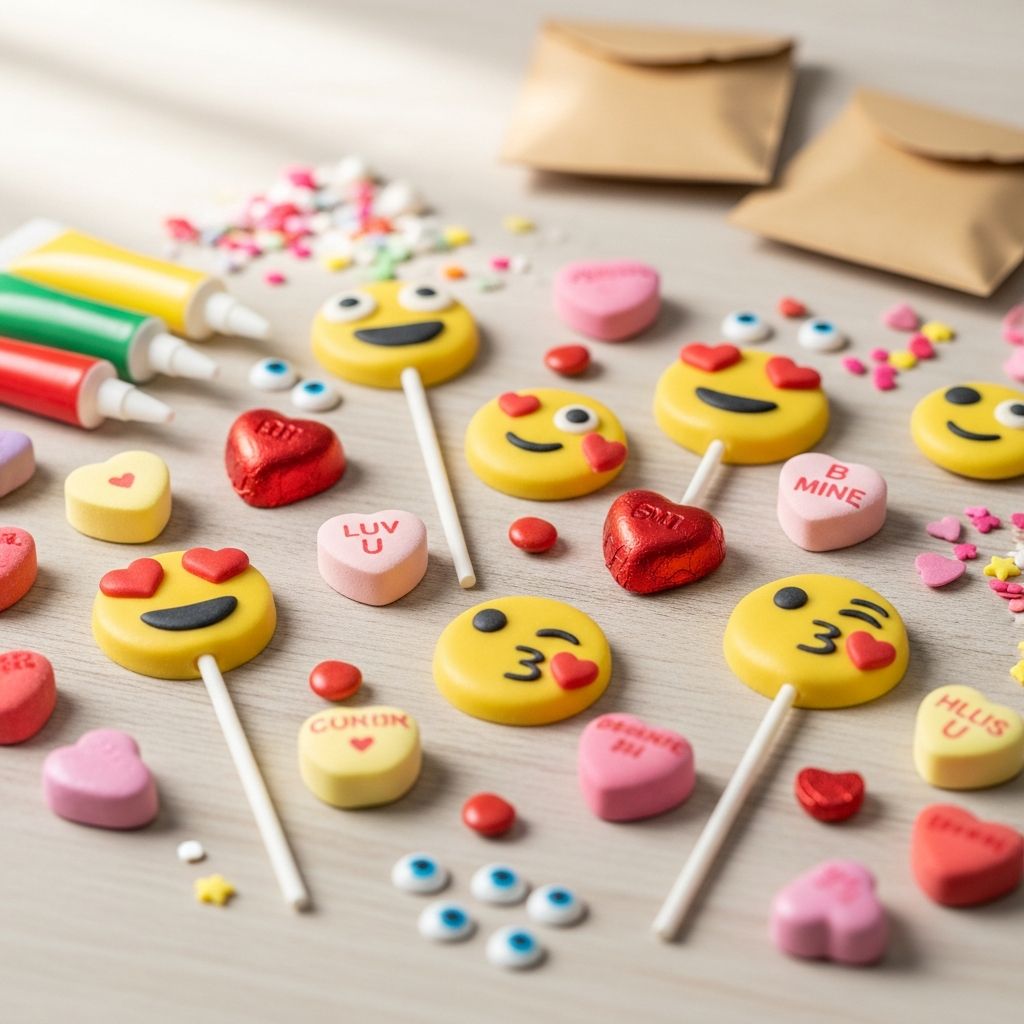
Emoji candy Valentines blend kids’ favorite digital icons with sweet treats, creating cards that feel modern, playful, and personal. This guide shows you how to plan, design, and assemble emoji-themed cards that work for classrooms, playdates, or at-home celebrations.
Why Emoji Candy Valentines Are Such a Hit
Emojis are a familiar language for kids, so using them in Valentine cards makes the tradition feel fresh and relevant. Candy adds a tangible element of excitement, turning each card into a tiny gift as well as a message of friendship or affection.
These projects are flexible: you can keep them simple for younger children or add layers of detail for older kids who enjoy crafting. With a few basic supplies, families can create a whole class set without needing advanced art skills or expensive materials.
Essential Supplies and Helpful Extras
You can adapt this project to whatever you already have at home, but planning a basic supply list keeps the process smooth and stress-free. Choose durable card bases and kid-friendly adhesives so children can participate without frustration.
- Card base: Colored cardstock or construction paper cut into rectangles or squares.
- Emoji faces: Yellow paper circles, round labels, or pre-cut foam shapes.
- Drawing tools: Black pens or markers, red markers or crayons, and optional gel pens for highlights.
- Candy: Wrapped chocolates, lollipops, gummies, or any individually packaged treat.
- Adhesives: Glue sticks, double-sided tape, or removable tape dots for attaching candy.
- Tools: Child-safe scissors, ruler, and optional circle punch for faster emoji shapes.
- Decorative extras: Washi tape, heart stickers, glitter pens, and small ribbon pieces.
Keep all small items in shallow containers or muffin tins so kids can see their options at a glance. If you’re crafting with a group, prepare a few extra emoji faces and card bases in advance to prevent delays.
Designing Your Emoji Candy Card Layout
Before anyone starts gluing, decide where the emoji, message, and candy will sit on the card. A simple, repeatable layout helps kids create multiple Valentines quickly while still making each one feel unique.
| Layout Style | Emoji Placement | Candy Placement | Best For |
|---|---|---|---|
| Centered Face | Single emoji in the middle of the card | Candy taped along the bottom edge | Younger children, quick class sets |
| Emoji Row | Three small emojis across the top | One candy in the lower center | Older kids who like variety |
| Speech Bubble | Emoji on the left side | Candy on the right with a drawn speech bubble above | Cards with puns or longer messages |
| Bookmark Strip | Vertical stack of emojis down the card | Flat candy attached at the top or bottom | Older kids, teacher gifts, or reusable bookmarks |
Invite children to sketch a quick outline in pencil on one card before they commit to a final layout. Once they are happy with the design, they can reuse that card as a template for the rest of the set.
Step-by-Step: Simple Emoji Candy Valentine
This version is ideal for families who want a straightforward project that still feels special. Adjust the steps to match your child’s age and attention span, making the process feel manageable and fun.
- Prepare the card bases.
Cut cardstock into small rectangles or squares that will comfortably fit an emoji, a short message, and one piece of candy. Fold them like mini greeting cards or leave them flat for postcard-style Valentines.
- Create the emoji circles.
Use yellow paper circles or punch them out with a circle cutter for a clean, consistent look. Younger kids can trace around a small cup or lid and then cut out the shapes with help.
- Draw the faces.
Ask each child to pick a few favorite emojis: classic smile, heart-eyes, winking face, cool sunglasses, or laughing tears. They can look at a phone keyboard for reference but should draw in a simple, cartoon style rather than trying to copy every tiny detail.
- Attach emojis to the cards.
Glue one or more emoji faces onto each card using a glue stick. Press firmly so the circles lie flat, especially at the edges.
- Add the candy.
Use removable tape dots or low-tack tape to secure wrapped candy without tearing the paper when it is removed. Place the treat below or next to the emoji so the face is still easy to see.
- Write friendly messages.
Encourage short, kind phrases that match the emoji mood, such as a cheerful greeting or a simple “Happy Valentine’s Day.” Older kids can write the recipient’s name on the front and sign the inside or back.
- Personalize with details.
Invite kids to add hearts, stars, or doodles around the emoji with markers or stickers. This final step gives each card personality, even if you are working from the same basic layout.
Creative Emoji Themes and Candy Pairings
Once the basic process feels comfortable, kids can start matching specific emojis to particular candies or messages. This adds a playful storytelling element that makes each card feel more thoughtful.
- Heart-eyes emoji: Pair with heart-shaped lollipops or chocolates and sweet, appreciative messages for close friends.
- Laughing emoji: Attach to colorful gummy candy or fun-sized candies that feel silly and lighthearted.
- Cool sunglasses emoji: Match with bold-colored candy or sour treats for kids who enjoy a bit of a challenge.
- Winking emoji: Use with wrapped chocolate kisses or small mystery-flavor candies for a playful surprise.
- Starry-eyed emoji: Pair with star-shaped candies or sprinkle-covered treats for an extra festive touch.
Encourage children to brainstorm their own combinations and short phrases to go with each design. The more ownership kids feel over the creative choices, the more meaningful the finished Valentines will be to them.
Options for Food Allergies and Non-Candy Gifts
Not every family is comfortable with candy, and many classrooms have allergy guidelines. Emoji-themed cards adapt easily to non-food treats while keeping all the fun and personality of the original project.
- School-friendly trinkets: Mini pencils, erasers, stickers, or temporary tattoos attached where the candy would go.
- Activity coupons: Simple IOU slips for a game night, a family walk, or extra story time.
- Art supplies: Crayons, small colored-pencil packs, or tiny notepads turned into emoji “fan kits.”
- Self-care gifts: For older kids, consider lip balm, mini hand sanitizer, or small notebooks decorated with emojis.
When in doubt, check any school policies and clearly label non-food items so other families know there are no hidden ingredients. Emoji designs work beautifully with these alternatives, ensuring everyone can join the celebration comfortably.
Adapting the Project by Age and Setting
Emoji candy Valentines can be simplified for preschoolers or expanded into a more detailed art project for tweens. Adapting the steps to different ages helps maintain focus and lets each child work as independently as possible.
- Preschool and early elementary: Pre-cut circles and card bases, offer a small set of face options, and focus on gluing and basic drawing.
- Upper elementary: Let kids design original emojis or invent entirely new faces representing inside jokes or shared hobbies.
- Tweens and early teens: Introduce more layered designs, such as pop-up elements, mixed media, or multi-panel cards with coordinated emoji stories.
- Classroom projects: Prepare kits with one card base, one emoji, and one candy per student to streamline distribution and cleanup.
Consider assigning different workstations for cutting, drawing, and assembling when crafting with a group. Rotating between steps keeps kids engaged and helps avoid crowding around any one supply area.
Practical Tips for a Smooth Craft Session
Planning ahead turns what could be a chaotic table of paper scraps into a pleasant, memory-making experience. A few simple strategies make the day easier for kids and adults alike.
- Cover the work surface with newspaper or a disposable tablecloth to make cleanup quick.
- Limit the color palette to a few coordinated hues so the cards look cohesive when finished.
- Offer sample cards or sketches, but remind kids that their own ideas are welcome and valued.
- Use drying racks, cookie sheets, or large trays to move finished cards aside without smudging.
- Set a realistic goal for how many cards each child will make in one sitting to avoid burnout.
Turn on some light music and keep snacks separate from the craft area to protect both art and food. A calm environment encourages creativity and helps kids stay focused long enough to complete all their Valentines.
Frequently Asked Questions
How far in advance should we make emoji candy Valentines?
It is usually best to make the cards one to three days before they will be handed out. That time frame keeps the candy fresh, allows markers and glue to dry fully, and gives you a cushion for any last-minute additions.
Can we print the emojis instead of drawing them?
Yes, printed emojis are a great option, especially if you are short on time or working with a large group. Print sheets of circles with simple, high-contrast faces and let kids cut and glue them just as they would with hand-drawn versions.
What if my child does not like candy?
You can easily substitute non-food treats without losing the spirit of the project. Small toys, school supplies, or handwritten coupons all pair well with emoji faces and can be attached using the same layout ideas.
How do we transport the finished cards safely to school?
Place completed Valentines in a shallow box or baking tray so cards can lie flat in rows. If possible, avoid stacking heavy items on top, and keep the box level while walking or driving to prevent candy from shifting.
Are there ways to make this project more eco-friendly?
Choose recycled or recyclable paper, avoid glitter that sheds microplastics, and favor candies with minimal packaging. You can also encourage recipients to reuse the emoji faces as bookmarks or mini decorations after the holiday.
Emoji candy Valentines offer a playful twist on a classic tradition, giving kids a chance to express themselves in a visual language they already love. With a bit of planning and a flexible approach, families and teachers can create thoughtful, kid-made cards that are as fun to craft as they are to give.