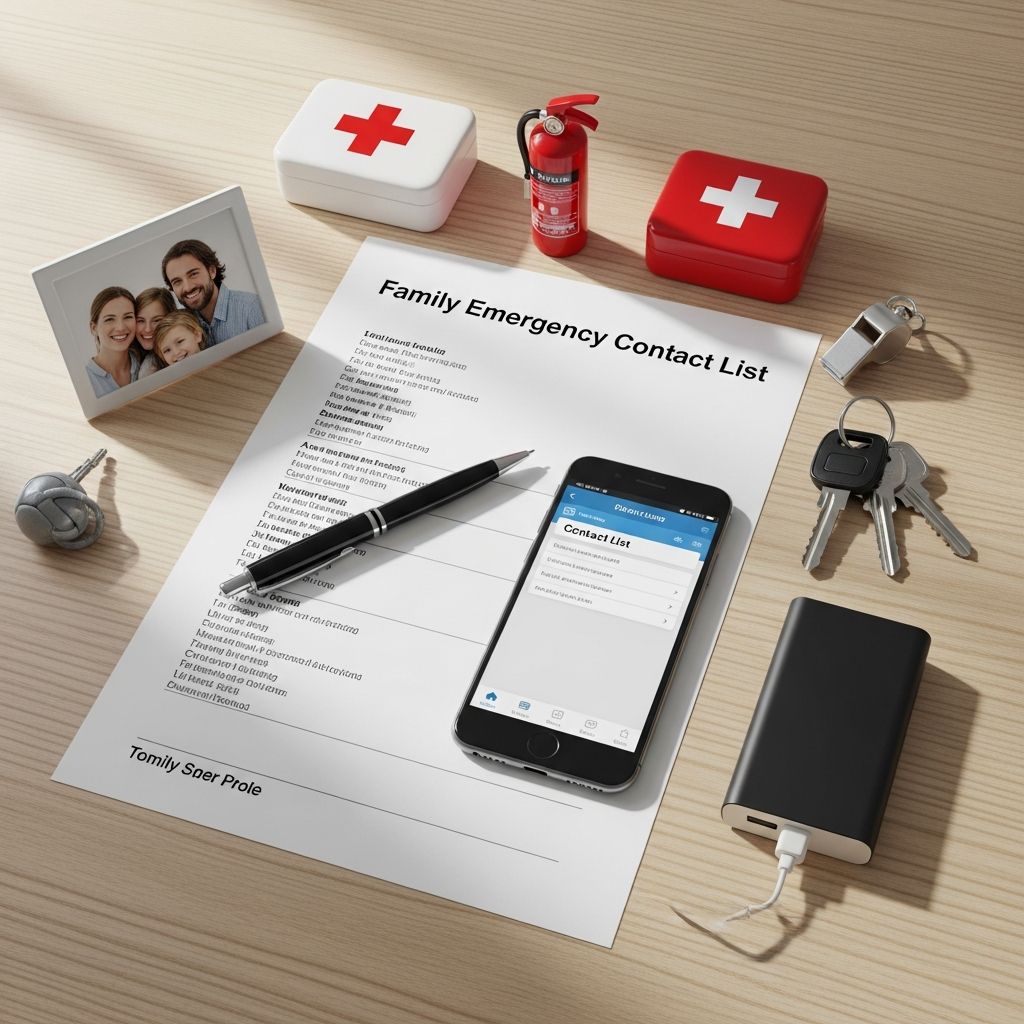
Every home with children should have a clear, easy-to-read emergency contact list posted in a visible place so anyone caring for your kids can quickly call for help and give accurate information. An organized list saves precious time and reduces confusion when stress is high.
Why Every Family Needs an Emergency Contact List
Emergencies rarely happen when it is convenient, and they often occur when a babysitter, relative, or neighbor is watching your children. Having all essential details in one place means caregivers do not have to search phones, dig through papers, or guess how to respond. A good list also helps first responders get the information they need as soon as they arrive.
Where to Post and Store Your List
Choose at least one highly visible, consistent location in your home for your emergency contact list, such as the refrigerator door, near the main house phone, or by the front entrance. Keep the page large, legible, and protected in a plastic sleeve so it is easy to read at a glance. In addition, consider keeping a digital copy in shared notes or cloud storage so parents and older children can access it from their phones.
Key Sections to Include
To make your list easy to scan quickly, divide it into clear sections with bold headings. Below are core sections most families include:
- Primary parents and guardians
- Alternate local contacts
- Emergency services and hotlines
- Medical and health information
- Child-specific notes and permissions
- School, daycare, and work contacts
- Home and utility information
Primary Parent and Guardian Information
Start your list with the adults who are legally responsible for the child and most likely to make decisions. For each parent or guardian, provide enough information so they can be reached through more than one channel. Use clear labels so a caregiver immediately sees who the main contacts are.
| Field | Details to Include |
|---|---|
| Parent/Guardian Name | Full name and preferred name if different |
| Relationship | Mother, father, step-parent, guardian, etc. |
| Mobile Phone | Primary number, clearly labeled as mobile |
| Work Phone | Work number and extension if applicable |
| Best email for non-urgent communication |
Local Alternate Contacts
List at least one or two trusted adults who live or work close enough to reach your children quickly if a parent cannot be reached. This is especially important if parents commute, travel, or work irregular hours. Choose people who understand your expectations and are comfortable taking temporary responsibility in a crisis.
- Trusted neighbor or family friend with a spare key
- Nearby relative such as a grandparent, aunt, or uncle
- Another parent you regularly trade childcare with
Essential Emergency Numbers
Even if everyone knows basic emergency numbers, write them clearly and prominently at the top or center of your list. This keeps a panicked babysitter or older child from doubting themselves in the moment. You can also add special notes for situations where calling a non-police or non-fire number first is more appropriate.
- General emergency number (such as 911 or your local equivalent)
- Non-emergency police line for less urgent concerns
- Local fire department non-emergency number
- Poison control center
- Local nurse advice or medical help line if your area offers one
Medical Providers and Health Details
The medical section of your list should give caregivers everything they need to get care quickly and to answer basic health questions. Include contact details for your child’s regular providers along with any important notes about conditions, medications, or insurance.
| Category | Information to Record |
|---|---|
| Pediatrician | Name, clinic name, phone, after-hours number, address |
| Family Doctor | For adults or older children if different from pediatrician |
| Preferred Hospital / ER | Hospital name, address, and main emergency department phone |
| Urgent Care Clinic | Clinic name, address, phone, hours if relevant |
| Dentist | For dental injuries or severe tooth pain |
| Health Insurance | Provider name, plan number, group number, and main phone |
Child-Specific Health Information
Right below the medical providers, include a clearly labeled block of child-specific information so first responders and medical staff can see key details immediately. If you have more than one child, create a separate mini-section for each child with their name in bold.
- Full name and date of birth
- Known allergies (food, medication, environmental, and insects)
- Current medications with dose and schedule
- Chronic conditions such as asthma, diabetes, seizures, or heart issues
- Special equipment used, such as inhalers, EpiPens, or glucose monitors
Permissions and Medical Consent
Some parents choose to include a short, clearly worded statement granting permission for caregivers or listed contacts to seek emergency medical care for the child if a parent cannot be reached. While a formal consent form may require a signature and may be kept separately, a short note on your list can help caregivers feel confident taking action.
You can also note any limits or preferences, such as a preferred hospital, religious considerations, or instructions to always attempt to reach a parent before non-life-threatening procedures when time allows.
School, Daycare, and Activity Contacts
When a child spends a large portion of the day outside the home, the emergency contact list should show how to reach the places and people responsible for them. This is vital if an issue arises during school hours or if a caregiver needs to confirm a schedule change or pick-up plan.
- School or daycare name, main office phone, and address
- Teacher, caregiver, or classroom name and direct phone or email if allowed
- Bus company or transport service and route number if used
- After-school programs, sports, or club contact details with times and locations
Authorized Pick-Up List
Clearly listing who is allowed to pick up your child helps prevent confusion and protects your child’s safety. This is especially important if there are custody agreements, step-parents, or relatives involved. Make sure the people you list know they are authorized and understand your rules about identification and notification.
| Name | Relationship | Phone Number | Notes |
|---|---|---|---|
| Example: Jamie Smith | Neighbor | (555) 123-4567 | Can pick up from school and activities |
| Example: Pat Johnson | Grandparent | (555) 987-6543 | Available most evenings and weekends |
Home Address and Directions
Even if your address seems obvious to you, always write it out in full on the emergency contact sheet. Caregivers who are new to your home may not remember the exact house number under stress, and children may not know it at all. Having it printed ensures accurate information for emergency dispatchers or taxis.
- Full street address, including apartment or unit number
- Nearest cross streets or landmarks to help responders find your home
- Gate codes, buzzer instructions, or neighborhood entry details if needed
Home Systems and Utility Contacts
Not every urgent situation requires an ambulance or fire truck. Sometimes a burst pipe, gas smell, or power issue is the problem. Including basic utility information on your list helps trusted adults know whom to call and where to shut things off safely.
- Gas company and emergency leak line
- Electric company outage and emergency line
- Water company or building maintenance number
- Landlord or property manager contact details
- Preferred plumber, electrician, or HVAC technician if you have one
Access, Security, and Pet Information
Caregivers may need to enter or exit the home quickly, disable alarms, or manage pets in a way that keeps everyone calm and safe. Note the information that would allow a trusted contact to get in, secure the house, and handle animals without confusion.
- Alarm codes and brief instructions for arming or disarming
- Location of spare keys if you choose to share that information
- Pet names, types, and any important notes (such as “indoor-only cat” or “dog afraid of loud noises”)
- Veterinarian name, clinic, and phone number
Digital Copies and Wallet Cards
While a master list at home is essential, it can be helpful to create smaller versions for different situations. Consider a condensed card that fits in a wallet, diaper bag, school backpack, or glove compartment. For older kids and teens, saving key contacts in their phones under clear names like “Emergency – Mom” or “Emergency – Local Neighbor” can make numbers easier to find.
Tips for Making Your List Easy to Read
In an emergency, simple design choices make a big difference. Use large fonts, generous spacing, and bold headings so the list can be read quickly without confusion. Group related items together, and use bullet points or tables instead of dense paragraphs whenever possible.
- Print in high contrast (dark text on white paper)
- Avoid clutter, unnecessary graphics, or long sentences
- Use consistent formats for phone numbers and names
- Highlight the most critical entries such as general emergency numbers and parents
How Often to Review and Update
An outdated emergency list can be almost as frustrating as having no list at all. Make it part of your routine to check and update your information at regular intervals or whenever you experience a major life change. A simple reminder on a calendar or phone can help keep everything current.
- Review phone numbers and addresses at least every six to twelve months
- Update after moves, job changes, new schools, or new doctors
- Replace worn or damaged printed copies right away
Sample Structure for Your Emergency Contact List
Below is a simple example outline you can adapt for your own family. You can format it as a one-page document and fill in your own details. Adjust sections depending on your child’s age, your household size, and your local resources.
| Section | Main Items |
|---|---|
| Emergency Numbers | General emergency, police, fire, poison control |
| Parents / Guardians | Names, mobile, work, email |
| Local Backup Contacts | Neighbors, relatives, close friends |
| Medical Providers | Pediatrician, family doctor, hospital, dentist |
| Child Information | Allergies, medications, conditions, birthdates |
| School / Daycare | Office numbers, teachers, schedules |
| Home and Utilities | Address, landlord, gas, electric, water |
| Security and Pets | Alarm codes, key locations, vet contact |
Frequently Asked Questions (FAQs)
How many emergency contacts should I list?
Most families do well with at least two parents or guardians plus one or two local backup contacts who can reach the child quickly. Focus on quality rather than quantity; everyone listed should understand your expectations and be comfortable stepping in during a crisis.
Should I include my child’s Social Security number or similar ID?
For most home emergency lists, it is safer not to include sensitive identification numbers that could be misused if the paper is lost or photographed. Health insurance details are usually sufficient for medical care, and additional identification can be provided directly by parents when needed.
Where should I keep a copy for babysitters?
Post the main list in a central spot such as the kitchen, and let babysitters know where to find it as soon as they arrive. You can also leave a smaller printed copy with them that includes Wi-Fi details, house rules, and your estimated return time along with emergency contacts.
Do older kids and teens still need a posted list?
Yes. Even tech-savvy teens can forget numbers or become overwhelmed in a true emergency. A posted list, combined with clearly labeled contacts in their phones, gives them multiple ways to find help fast.
Is a digital list alone good enough?
Digital lists are convenient, but devices can lose power, lock, or go missing. A printed master list in your home acts as a reliable backup and makes it easier for visiting caregivers, relatives, or neighbors who may not have access to your devices.