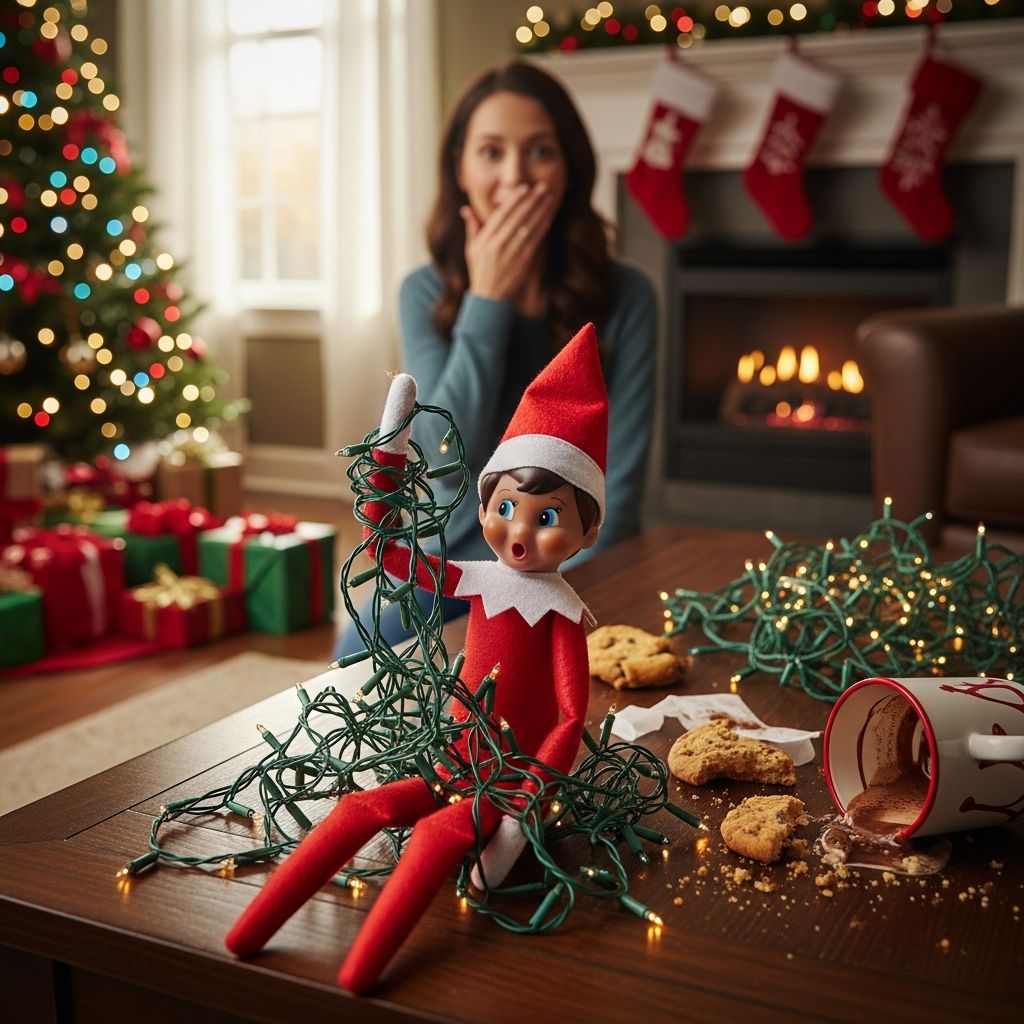
Elf on the Shelf has become a holiday staple in many homes, but one mom’s attempt to use the elf as a creative way to call out naughty kids took an unexpected turn and sparked a heated parenting debate.
Elf on the Shelf in Modern Parenting
For many families, Elf on the Shelf is more than a toy; it is a seasonal tradition that mixes magic, behavior expectations, and a little parental creativity. Parents hide the elf each night, and kids wake up excited to find what the little character is doing next. In some homes, the elf is a playful visitor, and in others, it is presented as a watchful scout who reports to Santa about who has been naughty or nice.
The viral story of a mom using Elf on the Shelf to publicly highlight naughty behavior shows how quickly a fun tradition can become controversial. It raises important questions about shame, motivation, and how children interpret these holiday rituals.
The Mom’s Viral Elf Plan
In the original story, a mom came up with what she thought was a clever strategy: instead of quietly moving the elf each night, she used it to call out naughty behavior. The elf was positioned in ways that clearly showed it had “noticed” when the kids were misbehaving, such as breaking rules, being too loud, or ignoring chores. The idea was that the elf would act like an in-house accountability partner, silently pointing out every slip-up.
The mom shared photos and descriptions of her setup online, expecting other parents to praise the creativity. At first, many found it hilarious and relatable. The concept tapped into a familiar frustration: when kids ignore reminders, parents sometimes lean on Santa, elves, or the “naughty list” to get through the hardest weeks of the year.
How the Plan Backfired
What the mom did not fully anticipate was how her children and the broader online community would respond once the elf crossed the line from playful to punitive. Some of the kids reportedly became anxious, extra clingy, or visibly upset when they realized the elf was documenting mistakes instead of celebrating their good moments. Instead of feeling inspired to improve, they felt watched and judged.
Online, the reaction shifted from amusement to concern. Commenters questioned whether using an elf to call out naughty behavior might embarrass children, make them feel like bad kids, or damage trust between parent and child. The mom’s attempt to keep things lighthearted suddenly looked, to many observers, like public shaming dressed up in holiday tinsel.
Online Reactions: Funny or Too Far?
The viral post quickly drew thousands of reactions, and the comment sections became a snapshot of modern parenting philosophies clashing in real time. Some parents applauded the mom’s approach, saying it was a harmless and even effective way to communicate consequences during the busiest season of the year. They saw the elf as a playful extension of the classic naughty-or-nice idea they grew up with.
Other parents and caregivers, however, were deeply uncomfortable. They worried that publicly documenting misbehavior—even with an elf involved—could humiliate children, especially once the story reached a wider audience. Many argued that using fear of being reported to Santa is a short-term fix that does little to build empathy, responsibility, or genuine understanding of right and wrong.
Common Themes in the Debate
- Supportive voices: Thought the idea was funny, creative, and an effective reminder to listen, clean up, and follow rules.
- Critical voices: Felt the elf’s role as a naughty-behavior spotlight was shaming, anxiety-provoking, and potentially harmful for sensitive kids.
- Mixed views: Liked the elf tradition but urged parents to use it to reinforce positive behavior rather than constantly spotlight missteps.
Why Public Call-Outs Can Hurt Kids
From a behavioral and emotional standpoint, using an Elf on the Shelf primarily to call out naughty behavior leans heavily on external pressure, embarrassment, and fear of losing gifts. While these tactics may produce quick compliance, they rarely build long-term self-control or healthy coping skills. Children may behave when the elf is present but then revert back—or even act out more—once the external threat disappears.
Shame-based strategies send a dangerous message: that a child is “bad” rather than that a specific behavior was unhelpful or hurtful. Over time, kids who internalize that label may either give up trying or hide mistakes more intensely, instead of talking openly about them. A magical holiday figure that constantly points to flaws can easily overshadow the joy and connection that many families want their traditions to create.
| Approach | Message to the Child | Likely Result |
|---|---|---|
| Behavior-focused feedback | “That choice was unsafe/unfair; let’s find a better way.” | Child sees mistakes as fixable and feels supported. |
| Shame-based call-out | “You’re naughty and everyone can see it.” | Child feels defective, embarrassed, and less likely to open up. |
| Elf as gentle reminder | “The elf noticed you trying hard; he’s cheering you on.” | Child connects effort with encouragement, not fear. |
Why Elf Traditions Often Get Messy
Elf on the Shelf began as a simple story about a scout elf who visits homes, observes behavior, and reports back to Santa. Over time, social media turned it into a creativity contest: parents feel pressure to stage elaborate scenes, craft elaborate jokes, or build running storylines every single night. With that pressure can come the temptation to escalate, to keep topping the last idea.
In this environment, it is easy for the elf to slide from fun and silly into sarcastic or critical. A pose that is meant as a lighthearted call-out might land harder than expected, especially when young children are involved or when photos are shared beyond the immediate family. The mom in the viral story ran into exactly this problem; online amplification turned an inside joke into a public referendum on parenting style.
How Kids Might Experience a “Naughty” Elf
To adults, an elf drawing attention to naughty behavior might read as a playful exaggeration. To children, especially younger ones, it can feel much more intense. Many kids still struggle to separate who they are from what they do, so they may hear “the elf says you’re naughty” as “you are not a good person.” The magical nature of elves and Santa only amplifies that feeling.
Children who are already sensitive, anxious, or prone to perfectionism might react strongly to the sense of constant surveillance. Instead of doing better because they understand the reasons behind rules, they may become hyper-vigilant, overly apologetic, or shut down emotionally. When a holiday character fuels those responses, it can chip away at the sense of wonder the season is meant to create.
Lessons in Gentle and Positive Parenting
The backlash to the mom’s Elf on the Shelf idea highlights a growing shift toward gentle and positive parenting approaches. These approaches focus on connection, collaboration, and teaching, rather than on fear, shame, or conditional love. Within that framework, holiday traditions are tools for bonding and storytelling, not for policing every misstep.
Gentle parenting does not mean letting kids do whatever they want; it means holding firm boundaries while also honoring children’s emotions and dignity. In practice, this might look like talking calmly after a meltdown, validating big feelings, and working together to repair harm. A holiday character can support these goals when it celebrates effort, kindness, and accountability instead of emphasizing punishment.
Ways to Make Elf on the Shelf More Positive
- Have the elf leave notes praising small acts of kindness, sharing, or honesty.
- Use the elf to introduce family activities: reading together, baking for neighbors, or donating toys.
- Allow the elf to “make mistakes” too, modeling apologies and repairs when things go wrong.
- Shift the story so the elf reports only the good things the children have done.
Practical Tips if Your Elf Plan Backfires
If a parent realizes that an Elf on the Shelf strategy has gone too far—whether by causing anxiety or prompting backlash—there is plenty of room to adjust. Children are usually quite open to revised rules, new stories, and playful retcons, especially when presented with warmth and honesty. The key is to respond quickly and compassionately when something clearly is not working.
Rather than doubling down on a fear-based storyline, a parent can turn the experience into a teaching moment for everyone. Owning the mistake, changing course, and inviting kids into the conversation models the very flexibility and empathy that many families hope to encourage.
Simple Reset Ideas
- Have the elf “deliver” a letter explaining that they misunderstood their job and now want to focus on encouraging good choices.
- Let kids help decide new elf rules, such as only celebrating acts of kindness or creativity.
- Take a break from the elf for a few days, framing it as a rest period, then reintroduce it with a gentler purpose.
- If needed, retire the elf entirely and replace the tradition with another activity that feels calmer and more connecting.
Elf-Free Holiday Alternatives
Some families who watched the viral debate decided that Elf on the Shelf simply was not a good fit for their values or their children’s temperaments. Fortunately, there are many other ways to build anticipation and structure during the holidays without relying on surveillance or a naughty list. These alternatives can still capture the magic of the season while centering connection over compliance.
Parents can experiment year to year, keeping what works and letting go of what does not. The goal is not to win a creativity contest but to create rituals that feel sustainable and nurturing for the whole family.
Connection-Focused Holiday Ideas
- Kindness calendars where each day highlights a small helpful action.
- Family story nights featuring favorite holiday books and homemade treats.
- Craft projects where kids make decorations or cards for friends, teachers, or neighbors.
- Simple gratitude rituals, like sharing one thing everyone appreciated about the day.
FAQs About Elf on the Shelf and “Naughty” Kids
Is it okay to use Elf on the Shelf to correct misbehavior?
Many parents do tie the elf to behavior, but it is important to focus on guidance rather than shame. If the elf is used only to catch kids doing wrong, children may feel labeled as naughty instead of supported in changing specific behaviors.
What if my child seems scared of the elf?
If a child looks anxious, avoids rooms, or has trouble sleeping because of the elf, it is a sign to change the story or remove the elf entirely. Parents can reassure children that they are loved and safe, and that the elf is meant for fun, not fear.
How can I talk to my kids if a plan like this backfires?
Open, age-appropriate honesty works well: a parent can say that the plan did not feel good and the family is going to try something different. Inviting kids to help redesign the tradition can restore trust and make them feel seen and heard.
Does using an elf or a naughty list ruin trust?
Trust depends less on any one tradition and more on the overall pattern of honesty, repair, and respect in the relationship. If parents notice that a tool is undermining trust, they can adjust quickly and show children that grown-ups are willing to learn too.
Can Elf on the Shelf be purely positive?
Yes. Many families treat the elf as a playful, silly guest who highlights good deeds, starts crafts, or sets up games instead of reporting misbehavior. This approach keeps the magic alive while aligning more closely with positive parenting principles.
Key Takeaways for Parents
- Holiday traditions like Elf on the Shelf can easily shift from playful to punitive when used primarily to call out naughty behavior.
- The viral story of a mom’s backfiring plan shows how quickly kids and onlookers react when a toy becomes a tool for public accountability.
- Gentle, connection-based parenting suggests using characters like the elf to encourage kindness, effort, and empathy instead of relying on fear or shame.
- Parents always have permission to change course, retire a tradition, or reinvent it so that it better reflects their values and their children’s needs.