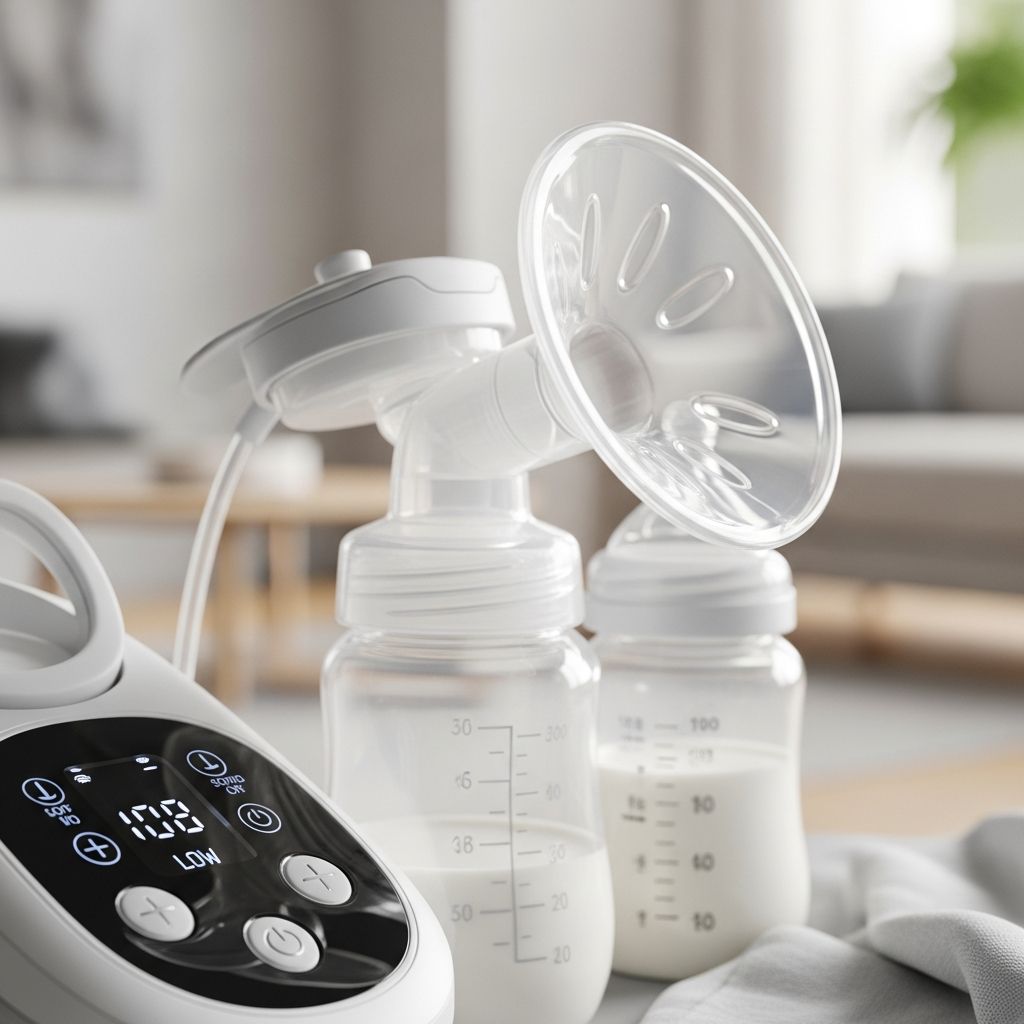
Electric breast pumps have transformed how families approach feeding, giving parents the flexibility to nourish their babies with breast milk while returning to work, sharing feeds with partners, or simply getting more rest. This guide walks through what electric pumps are, how they differ, which features truly matter, and how to get the most out of your pumping routine.
Why Choose an Electric Breast Pump?
An electric breast pump uses a small motor to create rhythmic suction, mimicking a baby’s suckling so you can express milk efficiently with less physical effort than manual pumping. For many families, that efficiency means more milk in less time and more flexibility in day-to-day life.
Electric pumps can be especially helpful if you plan to return to work, exclusively pump, or share nighttime feeds with a partner. They are also useful when a baby struggles with latch, when milk supply needs support, or when you simply want the option to build a freezer stash.
Types of Electric Breast Pumps
Not all electric pumps are designed the same way. Understanding the main categories helps narrow your options and match a pump to your lifestyle instead of forcing your life around your pump.
Standard Plug-In Electric Pumps
Standard electric pumps are the classic tabletop or tote-style models that plug into a wall outlet. They often sit on a flat surface next to you while you pump, connected to bottles and flanges by tubing.
- Generally stronger, more consistent suction compared with smaller portable motors.
- Ideal for regular daily use, especially if you pump at home or have a private pumping room at work.
- Often include a wide range of suction levels and cycle speeds for fine-tuning comfort.
Portable and Battery-Powered Electric Pumps
Portable pumps are compact, lightweight units with built-in rechargeable batteries or battery packs. They are made for parents who do not want to be tethered to an outlet at every session.
- Great for pumping on the go: at work, in the car (safely parked), or while traveling.
- Usually clip to your waistband or fit in a small bag and connect to traditional flanges and bottles.
- Some sacrifice a bit of suction power but gain major convenience and mobility.
Wearable, In-Bra Electric Pumps
Wearable pumps fit directly inside your bra, with the motor and collection cup built into a single unit. Tubing is either minimal or nonexistent, and the milk flows into an internal container that sits against your breast.
- Hands-free design lets you move around, care for older children, or work at a desk while pumping.
- Lower profile than traditional flanges and bottles; often more discreet under clothing.
- Ideal for parents who pump frequently and need to multitask, though they may require more careful positioning and cleaning.
Single vs. Double Electric Pumping
Electric pumps are available as single (one breast at a time) or double (both breasts at once). A double pump can cut pumping time in half and may help stimulate stronger supply for many parents.
- Double electric pumps are recommended for frequent or exclusive pumpers.
- Single pumps can work for occasional use, quick relief, or as a lightweight travel backup.
Key Features That Really Matter
Breast pump product pages are packed with jargon, but only a handful of features make the biggest difference in everyday use. When comparing models, focus on comfort, efficiency, and convenience rather than extra bells and whistles.
Suction Strength and Adjustability
Effective pumping is less about maximum power and more about having enough range to find a comfortable level that still empties the breast well. Look for pumps that offer several suction levels and at least two modes: stimulation (to trigger letdown) and expression (to draw out milk).
- If suction feels painful, it is usually a sign to reduce the level or adjust flange fit.
- Many parents find they produce more milk at a moderate, comfortable suction than at the maximum setting.
Noise Level
Noise might not seem important until you are pumping during video calls, in the middle of the night, or near a sleeping baby. Quieter pumps help you pump more discreetly and maintain a calmer atmosphere.
- Wearable and portable pumps vary widely in sound; some hum softly while others are more noticeable.
- If stealth is a priority, check user reviews specifically for comments about noise.
Closed vs. Open System
A closed-system pump has a barrier between the milk and the pump motor, reducing the risk of milk entering the tubing and motor housing. Open-system pumps can allow condensation and small milk droplets into the tubing that then require more frequent cleaning.
- Closed systems are often easier to keep hygienic and are better choices if multiple caregivers might use the same pump base with separate kits.
- Whichever style you choose, follow the manufacturer’s cleaning instructions carefully to protect both your baby and the pump motor.
Flange Sizes and Comfort
Flanges (the funnel-shaped pieces that fit over your nipples) are central to both comfort and milk output. Using the wrong size can lead to soreness, friction, or reduced milk flow.
- Many pumps ship with one or two default sizes, but you may need a smaller or larger insert.
- Signs your flange may be the wrong size include pinching, rubbing, or your nipple stretching far into the tunnel.
Power Options and Battery Life
If you expect to pump away from home, look closely at battery life and charging options. A pump that dies halfway through a session can cause engorgement and major frustration.
- Rechargeable pumps are more eco-friendly and easier to manage than models that rely only on disposable batteries.
- Some portable units allow charging with a USB cable or car adapter, useful for frequent travelers.
Ease of Cleaning and Assembly
Every detachable piece of your pumping setup needs regular cleaning, so fewer parts can save time. Complex systems are more likely to lead to missed pieces or incorrect assembly when you are exhausted.
- Check how many parts need to be washed after each session and whether they are dishwasher-safe.
- Simple, intuitive designs reduce the chance of unnoticed leaks or poor suction from misaligned valves.
Comparing Common Electric Pump Styles
Instead of focusing on individual product names, it helps to compare pump styles by how they impact your daily routine. The table below highlights typical trade-offs between standard, portable, and wearable pumps.
| Pump Style | Best For | Pros | Considerations |
|---|---|---|---|
| Standard plug-in double pump | Regular daily pumping at home or in an office pumping room |
|
|
| Portable battery-powered pump | Parents who split time between home, work, and travel |
|
|
| Wearable in-bra pump | Busy caregivers who need to multitask while pumping |
|
|
How to Choose the Right Electric Pump for You
There is no single “best” electric pump for everyone—there is only the pump that best fits your body, schedule, and preferences. Taking a few minutes to reflect on your lifestyle can prevent frustration later.
Questions to Ask Yourself
- How often do you expect to pump? Daily, a few times per week, or only occasionally?
- Will you mostly pump at home, at work, while commuting, or some combination?
- Do you value maximum milk output, ultra-quiet operation, or portability most?
- Is budget a major constraint, or are you open to investing more in convenience?
- Do you have reliable access to outlets, or will you depend heavily on batteries?
Balancing Budget and Features
Higher-priced pumps often offer quieter motors, more customization, and wearable options, but mid-range models can still work very well for many families. Insurance or health plans sometimes cover at least one standard double electric pump, which can be used alongside a lower-cost portable or wearable unit.
If cost is a concern, consider starting with a covered or mid-priced double electric and later adding a wearable cup system or simple portable pump once you understand your actual pumping habits.
Setting Up Your Electric Breast Pump
Proper setup has a direct impact on comfort and milk output. Before your first session, take time to assemble the pump correctly and understand the basic controls so you are not fumbling when your breasts are full and your baby is crying.
Basic Setup Steps
- Unpack and wash all parts that come in contact with milk (flanges, valves, membranes, collection cups, and bottles) according to the instructions.
- Allow everything to air dry completely before assembly.
- Connect the flanges to the bottles or cups, attach any valves or membranes, and then connect tubing as directed.
- Plug in or charge the pump and familiarize yourself with the power button, mode settings, and suction level controls.
- Place the flange so your nipple is centered in the tunnel and your breast tissue creates a gentle seal.
Creating a Comfortable Pumping Space
While wearable pumps make it possible to pump almost anywhere, having one or two comfort-focused spots at home can make the process less stressful. A cozy chair, a small side table, and a place to rest parts between sessions can go a long way.
- Keep a water bottle, a snack, and nursing pads within reach to avoid getting up mid-session.
- Use a hands-free pumping bra or bandeau to hold flanges in place, even with non-wearable pumps.
Tips for More Milk and Less Stress
Electric pumps are tools, not magic wands, but small adjustments in routine and technique can make a big difference. Consistency and comfort are usually more important than extreme suction or marathon pumping sessions.
Establishing a Routine
- Try to pump on a predictable schedule, roughly every 2–3 hours if exclusively pumping, or after nursing sessions if you are building a stash.
- Aim for 15–20 minutes per session, or a few minutes after milk flow slows and breasts feel softer.
- Pumping at the same times each day helps your body learn when to expect demand.
Improving Letdown and Comfort
- Spend the first couple of minutes in a stimulation or massage mode to encourage letdown before switching to expression.
- Look at photos or videos of your baby, or listen to soothing music, to help trigger your body’s natural responses.
- Use warm compresses and gentle breast massage while pumping to support more complete emptying.
Protecting Your Skin
- Ensure flanges are the right size and correctly positioned to prevent rubbing and friction.
- If you experience redness, cracking, or persistent pain, pause and reassess suction levels and fit, and consider speaking with a lactation professional.
- Allow nipples to air dry briefly after sessions and use breathable nursing pads in your bra.
Cleaning, Storage, and Safety Basics
Because breast milk is food for your baby, cleanliness matters—but it does not have to be overwhelming. A simple routine protects your baby and your pump without taking over your entire day.
Daily Cleaning Routine
- After each pumping session, rinse all milk-contact parts in cool water first to remove milk residue, then wash with warm soapy water.
- Allow parts to air dry on a clean towel or drying rack rather than wiping with a dish towel that may carry bacteria.
- Follow your pump’s guidelines for occasional sanitizing with boiling water or steam bags, especially for babies under three months or those who are premature.
Milk Storage Guidelines (General)
Always follow your healthcare provider’s recommendations, but general guidelines from major health organizations often suggest storing freshly pumped milk at room temperature for a few hours, in the refrigerator for several days, and in the freezer for longer-term storage. Labeling containers with the date and time helps you use the oldest milk first.
- Store milk in dedicated breast milk storage bags or clean, food-safe containers rather than ordinary household bags.
- When thawing, place frozen milk in the refrigerator or in a container of warm water; avoid microwaving, which can create hot spots.
Common Electric Pump Problems and Simple Fixes
Most pumping frustrations trace back to a few common issues: leaks, loss of suction, and discomfort. Before assuming your pump is broken, check for these quick fixes.
Weak Suction
- Make sure all parts are assembled tightly with no gaps where air can escape.
- Inspect valves and membranes regularly; if they look stretched, torn, or warped, replace them.
- Check that tubing is fully inserted and free of cracks or moisture.
Leaking Milk
- Re-center the flange so the nipple is aligned and your breast forms an even seal.
- For wearable pumps, confirm your bra is snug enough to support the cups but not so tight that it breaks the seal.
- Do not overfill collection cups or bottles; stop and empty when close to capacity.
Pain or Nipple Damage
- Lower the suction level; pumping should feel like strong tugging, not sharp pain.
- Experiment with a different flange size or soft inserts to reduce friction.
- If pain continues or nipples crack or bleed, consult a lactation consultant or healthcare provider for personalized guidance.
Frequently Asked Questions About Electric Breast Pumps
How early should I buy an electric breast pump?
Many parents purchase or arrange their pump during the third trimester so they can pack it for the hospital and practice assembling it beforehand. Ordering a bit early also gives time to confirm coverage with insurance or to exchange parts if the wrong flange size arrives.
Do I really need a double electric pump?
If you expect to pump regularly, a double electric pump saves significant time by expressing from both breasts at once. For very occasional use, a single pump or even a manual pump might be enough, but most working or exclusively pumping parents find a double model more practical.
Can I share or buy a used electric pump?
Closed-system pumps are generally safer to share when each user has their own new collection kit, but many manufacturers still recommend one user per motor for hygiene and warranty reasons. Open-system pumps are best treated as single-user devices because milk or condensation may reach internal components that cannot be fully cleaned.
How long does an electric breast pump last?
Most electric pumps are designed to last through at least one full breastfeeding journey and sometimes longer when properly maintained. Wear-and-tear parts like valves and tubing need periodic replacement, while motors typically have a warranty period that indicates the expected minimum lifespan.
Is pumping supposed to hurt?
You may feel strong tugging or mild sensitivity, especially when starting out, but pumping should not be sharply painful. Persistent pain often points to issues with flange size, suction level, or positioning, and addressing those factors usually brings significant relief.
Final Thoughts: Your Pump, Your Rules
Your electric breast pump is there to serve you, not the other way around. It is perfectly fine to adjust schedules, switch pump styles, or mix breastfeeding, pumped milk, and formula to protect your mental health and meet your family’s needs.
The “best” pump is the one you will actually use comfortably and consistently. With a basic understanding of pump types, key features, setup, and troubleshooting, you can choose gear that supports your feeding goals—and gives you a little more freedom in the process.