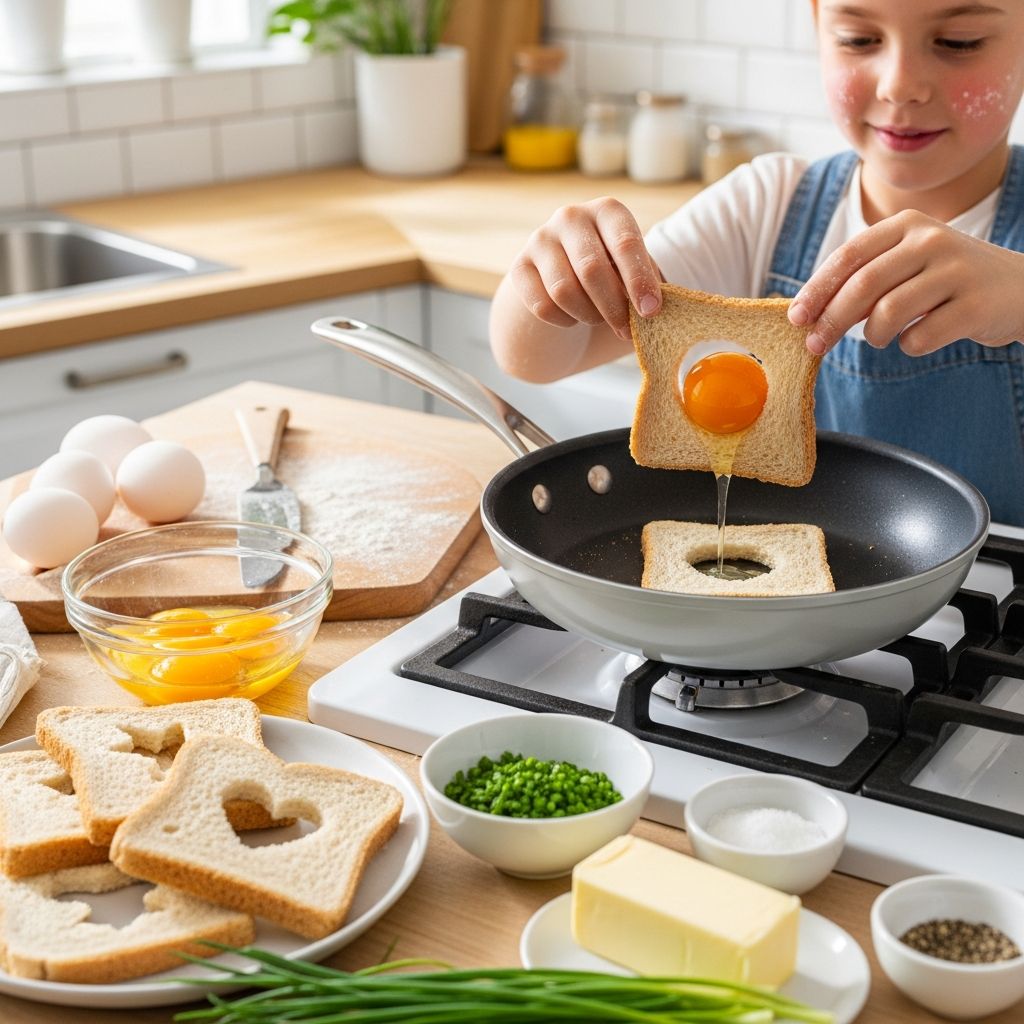
Egg-in-a-hole is more than a nostalgic breakfast; it is an ideal first recipe for kids to learn real cooking skills in a safe, fun, and satisfying way. With just bread, eggs, and a bit of fat for the pan, families can create a breakfast that doubles as a mini cooking class and a shared ritual.
Why Egg-in-a-Hole Is Perfect for Kids
Some recipes are so simple, flexible, and forgiving that they naturally invite children into the kitchen, and egg-in-a-hole sits at the top of that list. It teaches core techniques like cracking eggs, safely using heat, and timing doneness, all without an overwhelming list of ingredients or steps.
- Short ingredient list that keeps kids focused on skills instead of complexity.
- Visual feedback as the egg cooks, making it easy to understand heat and doneness.
- Built-in fun: cutting shapes in bread and watching the egg fill the center feels like a magic trick.
Ingredients and Equipment You Will Need
The base version of egg-in-a-hole relies on pantry staples and common tools, so it is easy to make on busy mornings or relaxed weekends. Preparing your ingredients and equipment before the kids join you will keep the cooking session smooth and stress-free.
Basic Ingredients
- 1 slice of bread per serving (any sandwich bread or sturdy loaf)
- 1 large egg per slice of bread
- Butter, oil, or ghee for the pan
- Salt and pepper for seasoning
Optional Add-Ons
- Shredded cheese, sliced cheese, or crumbled cheese
- Fresh herbs such as chives, parsley, or basil
- Vegetable toppings like tomato slices, spinach, or avocado
- Cooked bacon, ham, sausage, or other proteins
Helpful Tools
- Nonstick or well-seasoned skillet
- Cookie cutter, biscuit cutter, or small glass for cutting the center
- Spatula (preferably thin and wide for easy flipping)
- Small bowl for cracking eggs
- Oven mitts or heat-resistant gloves sized for adults and kids
Age-Appropriate Kitchen Tasks
Children of different ages can safely participate in different parts of the recipe, and matching tasks to abilities helps build confidence. Think of egg-in-a-hole as a recipe you can gradually hand over to your child as they grow and gain skills.
| Age Range | Suggested Tasks | Adult Involvement |
|---|---|---|
| Toddlers (2–3) | Help choose cookie cutter, place bread on a plate, sprinkle a pinch of salt. | Adult handles all knife and heat tasks; toddler observes the stove from a safe distance. |
| Young Kids (4–6) | Press cutters into bread, crack eggs into a bowl with guidance, help stir and season. | Adult controls stove, hot pan, and flipping; child adds egg to the bread with help. |
| Older Kids (7–9) | Cut bread, crack eggs, gently pour eggs, sprinkle toppings. | Adult supervises at the stove, especially when flipping or adjusting heat. |
| Preteens & Teens (10+) | Cook independently with supervision available; manage heat, timing, and cleanup. | Adult checks in about safety, helps with troubleshooting, and shares the meal. |
Step-by-Step: Classic Egg-in-a-Hole
This method keeps things simple yet offers plenty of teaching moments, from cracking the egg to learning how quickly bread can brown in a hot pan. Encourage kids to talk through each step aloud; verbalizing the process helps them remember it next time.
- Prepare the bread. Place a slice of bread on a cutting board and use a cookie cutter, biscuit cutter, or small glass to press out a circle in the center. Save the cut-out piece; it can be toasted in the pan as a mini side.
- Heat the pan. Add a small pat of butter or a drizzle of oil to a skillet over medium heat. Explain that the pan should be warm but not smoking.
- Toast the bread. Lay the bread (and the cut-out piece) in the pan and let it lightly toast on one side until it just starts to turn golden.
- Crack the egg. Have your child crack an egg into a small bowl, then gently pour the egg into the hole in the bread. This makes it easier to catch shell pieces and reduces spills.
- Cook the egg. Reduce the heat slightly and cook until the whites begin to set around the edges. For a runny yolk, leave it as is; for a firmer yolk, poke it gently with the tip of the spatula to break it.
- Flip carefully. Slide the spatula under the bread and egg together and flip in one smooth motion. Cook until the other side is golden and the egg is done to your child’s liking.
- Season and serve. Sprinkle with salt, pepper, and any extra toppings. Serve immediately with the toasted cut-out as a dunker.
Safety First: Teaching Good Habits Early
Inviting kids to cook is an opportunity to build lifelong respect for kitchen safety, not a reason to be fearful of the stove. Establishing clear rules and calm routines makes cooking feel secure, even when heat and sharp objects are involved.
- Always tie back long hair and roll up loose sleeves before approaching the stove.
- Teach kids to keep one hand on the pan handle when stirring or flipping to prevent slipping.
- Show proper spatula use: slide under food gently rather than stabbing at it, which can splatter hot oil.
- Explain what to do if grease splatters: step back, turn off the heat, and call for an adult.
Making Breakfast a Learning Moment
Beyond the fun of helping, egg-in-a-hole offers many small lessons in math, science, and planning. With just a few intentional questions, adults can turn breakfast into a quick, low-pressure learning experience.
- Math skills: Count eggs, practice simple multiplication (“We have three people, so how many eggs do we need?”), or compare sizes of bread slices.
- Science concepts: Talk about how heat changes raw egg into a solid, or why bread browns when toasted.
- Time management: Use a timer so kids learn how long each side cooks and recognize what “ready” looks like in the pan.
Fun Variations Kids Will Love
Once the basic method feels comfortable, try playful variations that keep interest high and invite kids to make creative choices. Changing the bread, adding toppings, or building complete meals around the egg-in-a-hole makes the recipe feel new each time.
Shape and Bread Variations
- Use seasonal cookie cutters (stars, hearts, animals, or holiday shapes) to create themed breakfasts.
- Experiment with whole grain, sourdough, or multigrain bread for different flavors and textures.
- Try mini rolls or slider buns for bite-sized versions perfect for little hands.
Flavor Variations
- Cheesy version: Sprinkle shredded cheese around the egg as it cooks so it melts into the bread.
- Veggie boost: Add spinach, bell pepper, or tomato slices to the pan for a more colorful plate.
- Herb garden twist: Let kids snip fresh herbs with kid-safe scissors and sprinkle them over the finished toast.
- Breakfast sandwich: Layer cooked egg-in-a-hole with sliced avocado, tomato, or bacon between two pieces of bread.
Serving Ideas for Family Mornings
How food looks on the plate can be as important as how it tastes, especially for hesitant eaters. A little creativity in presentation can turn an ordinary breakfast into something kids are excited to sit down and eat.
- Arrange the egg-in-a-hole as a “sun” with fruit slices or veggie sticks radiating outward like rays.
- Serve on colorful plates or with special “chef’s” napkins that only appear when kids cook.
- Offer tiny dipping bowls of salsa, ketchup, or yogurt-based sauce to give children a sense of choice and control.
Encouraging Independence in the Kitchen
Breakfast projects like egg-in-a-hole, when repeated over time, help kids feel capable and trusted around food. The goal is not perfection but building a sense of ownership and pride in what they make.
- Assign recurring roles, such as “egg cracker” or “toast cutter,” so kids know what to expect each time.
- Celebrate small milestones, like cracking an egg with no shells or flipping the toast with less help.
- Encourage cleanup participation: wiping counters, stacking dishes, or putting ingredients back in the fridge.
Storage, Leftovers, and Make-Ahead Tips
Egg-in-a-hole is best served fresh, but planning ahead can make mornings smoother, especially on school days. A few small preparations keep the fun while cutting down on chaos.
- Pre-slice bread and store it in an airtight container so kids can quickly choose their slices.
- Keep a set of cookie cutters in a labeled container so they are easy for kids to find and return.
- Use leftover egg-in-a-hole as part of a snack plate later in the day, paired with fruit and raw vegetables.
Frequently Asked Questions
Can kids really cook at the stove safely?
With close supervision, clear rules, and age-appropriate tasks, kids can gradually learn to work at the stove safely. Begin with them simply observing, then move toward hands-on cooking as they show they can follow directions and stay focused around heat.
What if my child is nervous about cracking eggs?
Start by practicing with a few eggs in a large bowl where mistakes do not matter. Show how to tap the egg gently on a flat surface instead of a sharp edge, then let your child open it over the bowl and fish out any shell pieces together.
How do I avoid burning the bread while the egg cooks?
Use medium to medium-low heat and preheat the pan just until the butter melts and begins to foam. If the bread darkens too quickly, lower the heat and give the egg more time, or cover the pan briefly to help the top cook faster.
Can this recipe work with dietary restrictions?
Yes; use dairy-free margarine or oil instead of butter for those avoiding dairy, and choose gluten-free bread if needed. Adjust seasonings and toppings to fit preferences, focusing on what your child enjoys and can safely eat.
How can I keep kids interested after the first time?
Invite them to help design new versions: themed shapes, different toppings, or “breakfast for dinner” nights where egg-in-a-hole is the star. Giving children a voice in planning makes them more eager to keep cooking and experimenting.
Building Memories One Breakfast at a Time
Egg-in-a-hole may look simple on the plate, but it carries a lot of meaning in the kitchen. Each time kids help crack an egg or flip a piece of toast, they add a small brick to their foundation of confidence, independence, and connection with the family table.
Over time, what begins as a playful breakfast project can become a cherished ritual, complete with favorite shapes, inside jokes, and stories told over the sound of butter sizzling in the pan. Those memories, as much as the meal itself, are what make this humble dish so special.