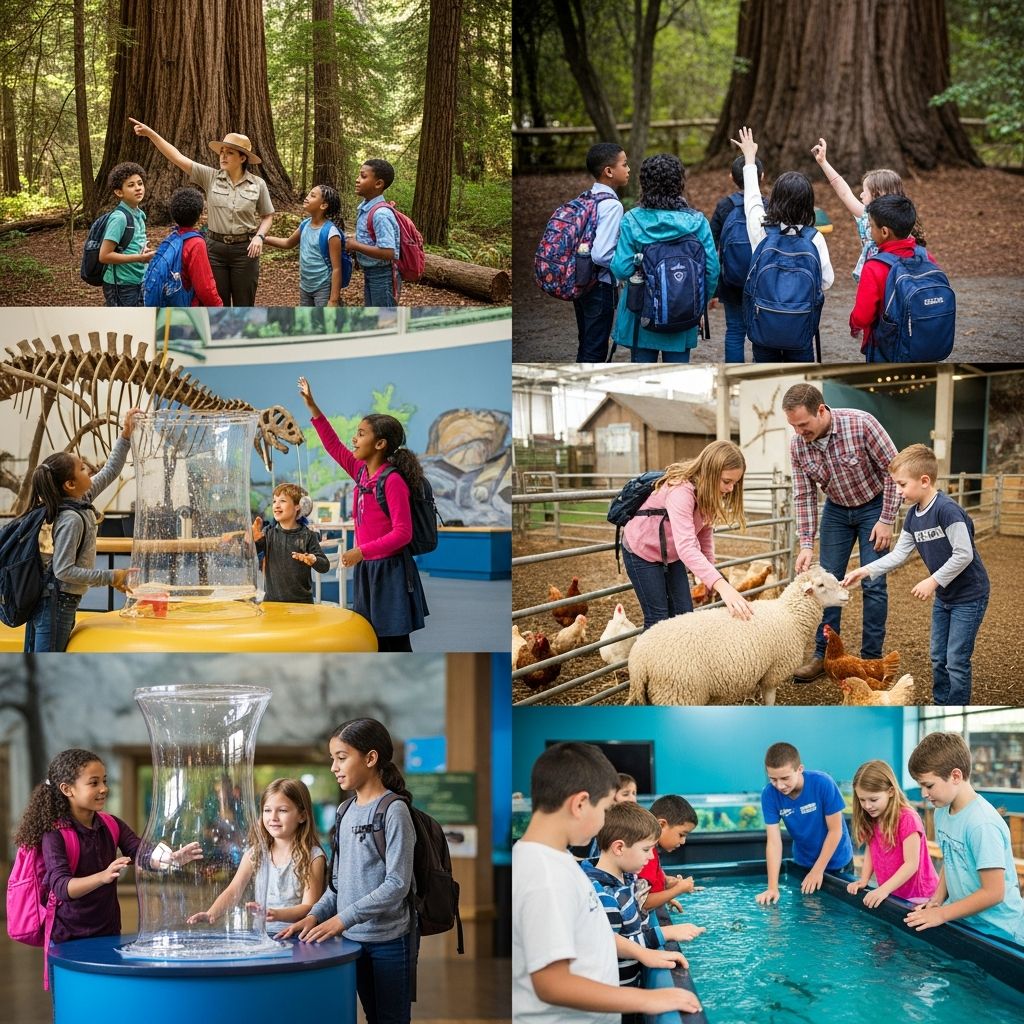
Educational field trips give children the chance to connect what they learn in books to the real world, making lessons more memorable and meaningful. They can be simple local outings or bigger excursions, but all of them help kids see that learning happens everywhere, not just in a classroom.
This article explores the main types of educational field trips, their benefits, how to plan them effectively, and practical tips to keep children safe and engaged throughout the experience.
Why Educational Field Trips Matter
Field trips expose children to new environments, people, and ideas, which strengthens curiosity and critical thinking. They also give students who may struggle in traditional settings the chance to shine through hands-on, visual, and experiential learning.
Beyond academics, field trips build social skills, confidence, and independence, as kids learn to navigate new places, follow instructions in unfamiliar settings, and cooperate with classmates or siblings.
Benefits of Field Trips for Kids
- Hands-on learning: Kids can touch, see, and sometimes even smell or manipulate objects related to what they study, anchoring abstract concepts in concrete experience.
- Stronger memory and understanding: A live demonstration, a museum exhibit, or a conversation with an expert tends to stick longer than a page of notes.
- Motivation and engagement: Real-world settings often spark questions and a desire to learn more, which carries back into classroom or home study.
- Social and emotional growth: Trips naturally require sharing, turn-taking, listening, and problem-solving in groups.
- Cultural awareness: Visits to historical sites, arts venues, or community institutions show children different cultures, traditions, and viewpoints.
Types of Educational Field Trips
Educational outings can be grouped by theme or learning goal. Planning with a clear objective—science, history, art, life skills, or careers—helps ensure every trip has purpose as well as fun.
Science and Nature Trips
Nature-focused trips are ideal for teaching observation, data collection, and respect for the environment. They also let children experience scientific concepts like habitats, weather, or food chains in real time.
- Local parks, forests, or nature reserves
- Zoos, aquariums, and wildlife rehabilitation centers
- Science museums and planetariums
- Environmental centers, farms, or botanical gardens
On these trips, children can identify plants and animals, observe ecosystems, keep a nature journal, and ask questions about conservation and sustainability.
History and Social Studies Trips
History comes alive when kids can walk through the places where events happened or see authentic artifacts from the past. Social studies trips also teach citizenship, community roles, and government functions.
- Historical landmarks, monuments, and heritage sites
- History museums and living-history villages
- Local government buildings such as city hall or courthouses
- Community centers, cultural festivals, or ethnic neighborhoods
Students may role-play historical characters, attend a mock council meeting, or participate in guided tours that explain how communities developed over time.
Arts and Culture Trips
Trips related to the arts introduce children to visual art, music, theater, and dance, expanding their creativity and appreciation for diverse cultural expressions.
- Art museums and galleries
- Theater performances and children’s theaters
- Music halls, symphony rehearsals, or local concerts
- Craft studios, maker spaces, or community art workshops
These outings encourage students to notice color, design, rhythm, and storytelling techniques—and to try creating something of their own afterward.
Career and Community Trips
Career-oriented field trips help kids connect school subjects to real jobs and community roles. They also highlight the many people who keep a town or city running.
- Fire stations, police stations, and emergency services
- Local businesses such as bakeries, farms, or factories
- Hospitals, veterinary clinics, or dental offices
- Media outlets, libraries, and technology firms
Children can see tools and technology in action, learn about safety and teamwork, and ask workers what skills they use each day.
Everyday Errand Trips
Even ordinary errands can become educational when adults take time to explain processes and involve kids in decisions. These mini-trips are especially powerful for younger children and homeschoolers.
- Grocery stores or farmers’ markets to learn about food, budgeting, and nutrition
- Banks or credit unions to introduce the basics of saving and responsible spending
- Post offices to understand mail systems and addresses
- Public transportation rides to practice navigation and map reading
On these outings, children can compare prices, read signs, handle coins or bills, and practice manners in public spaces.
Planning an Effective Educational Field Trip
Thoughtful planning turns a simple outing into a rich learning experience. Before choosing a destination, clarify what children should learn or practice and how you will follow up once you return.
Step-by-Step Planning Process
- Define learning goals: Decide which subject or skills the trip should reinforce, such as ecosystems, local history, or community helpers.
- Choose an age-appropriate location: Match the site’s complexity, walking distance, and content to children’s ages and abilities.
- Contact the site: Ask about group rates, tour options, accessibility, and any hands-on activities available.
- Arrange logistics: Plan transportation, meal times, restrooms, and emergency contacts.
- Prepare children in advance: Discuss expectations, background information, and questions they might ask during the visit.
Pre-Trip Classroom or Home Activities
Preparing children beforehand increases their understanding and participation. It also helps them feel more comfortable in a new environment.
- Read short books or watch brief videos about the topic or location.
- Create a simple vocabulary list related to the trip.
- Brainstorm questions kids want to ask guides or experts.
- Review behavior expectations and safety rules together.
Safety and Behavior Guidelines
Field trips are most successful when children know exactly what is expected of them. Clear rules and consistent supervision minimize stress for adults and keep kids safe.
Essential Safety Tips
- Maintain a clear adult-to-child ratio and assign small groups to each chaperone.
- Use name tags or wristbands with emergency contact information.
- Carry a first-aid kit and check for medical needs, allergies, or required medications in advance.
- Establish a meeting point and procedure if anyone gets separated from the group.
Behavior Expectations
Before leaving, discuss what respectful behavior looks like at the chosen location. Emphasize that students are guests and represent their family or school.
- Listening quietly to guides and waiting for turns to speak
- Walking instead of running, especially in museums or public buildings
- Keeping hands off exhibits unless invited to touch
- Using indoor voices and staying with the assigned group
Maximizing Learning During the Trip
During the outing, children should have chances to explore, ask questions, and record their observations. Adults can gently guide them without turning the experience into a rigid lecture.
Interactive Strategies
- Provide clipboards, simple checklists, or scavenger hunts so kids can find specific items or information.
- Encourage drawing a favorite exhibit, animal, or scene.
- Ask open-ended questions like “What do you notice?” or “Why do you think this works that way?”
- Invite children to compare what they see with what they expected from earlier lessons.
Post-Trip Reflection and Activities
Reflection helps children process what they experienced and link it to their ongoing studies. Simple follow-up activities also highlight that the field trip is part of a larger learning journey.
Follow-Up Ideas
- Have students write or dictate a short reflection about what surprised them most.
- Create a group mural, collage, or photo display of the trip.
- Invite children to share one new fact or skill with family members at home.
- Connect the trip to future lessons, projects, or experiments.
Sample Field Trip Ideas by Subject
The table below highlights examples of field trip locations organized by subject area, along with typical learning goals for each.
| Subject | Example Destinations | Key Learning Goals |
|---|---|---|
| Science | Zoo, aquarium, science center, planetarium, nature reserve | Observe habitats, life cycles, weather, space, and basic scientific methods |
| History & Civics | Historic sites, city hall, courthouse, heritage museum | Understand local history, government roles, and civic responsibility |
| Math & Economics | Grocery store, bank, farmers’ market, factory tour | Practice measurement, budgeting, estimating, and simple economics |
| Language Arts | Library, author visit, theater performance | Explore storytelling, reading, writing, and performance skills |
| Arts & Culture | Art gallery, music concert, craft studio, cultural festival | Appreciate diverse artistic forms and cultural traditions |
Tips for Parents, Teachers, and Homeschoolers
Different adults play different roles in field trips, but they share a common goal: to support children’s learning while keeping them safe and curious.
Tips for Classroom Teachers
- Involve students in planning by letting them vote on possible destinations aligned with the curriculum.
- Coordinate with site staff to tailor tours or activities to current classroom units.
- Assign simple roles—such as map reader or photographer—to encourage responsibility.
Tips for Parents and Guardians
- Offer to chaperone and follow the teacher’s guidelines for supervision and discipline.
- Talk about the trip at home before and after, asking your child what they hope to see and what they learned.
- Turn family outings into informal field trips by adding small learning challenges or questions.
Tips for Homeschool Families
- Collaborate with other homeschoolers to create small group trips and share costs.
- Use local community resources—libraries, nature centers, small businesses—as regular extensions of your curriculum.
- Encourage children to keep a dedicated field trip journal with drawings, ticket stubs, and written reflections.
Frequently Asked Questions (FAQs)
1. How often should kids go on educational field trips?
There is no single correct number, but aiming for a few meaningful trips each year works well for most families and schools. Quality matters more than quantity; a well-planned, focused outing can have more impact than many rushed or unfocused visits.
2. Are educational field trips expensive?
They do not have to be. Many powerful learning experiences happen in free or low-cost places such as public parks, libraries, community centers, or local businesses willing to host a short tour. Planning trips close to home reduces transportation expenses and makes field trips more accessible.
3. What if a child gets overwhelmed or anxious during a trip?
Some children may feel nervous in crowded or unfamiliar environments. Prepare them in advance by explaining what to expect, showing pictures of the site, and setting up a clear plan for what to do if they feel uncomfortable. During the trip, offer quiet breaks and a trusted adult they can stay near.
4. How can teachers and parents measure the learning that happens on a field trip?
Learning is often visible through conversation, drawings, and projects rather than formal tests. Look for signs that children can describe what they saw, connect it to previous lessons, and ask new questions. Simple reflections, presentations, or creative work can showcase their understanding.
5. What are some ideas for quick, local field trips?
Short trips might include a walk around the neighborhood to study architecture, a visit to a nearby garden, or a stop at the local post office to learn how mail travels. Even observing a construction site from a safe distance can lead to discussions about machines, measurement, and teamwork.
6. Can virtual field trips replace in-person trips?
Virtual tours are useful when travel is limited and can introduce children to faraway places they may never visit in person. However, they do not fully replace the sensory, social, and problem-solving experiences of being physically present at a site, so they work best as a supplement rather than a complete substitute.
Final Thoughts
Educational field trips for kids are powerful tools for connecting lessons to life, boosting motivation, and nurturing curiosity. With thoughtful planning, clear expectations, and simple follow-up activities, every outing—whether to a museum, a market, or a neighborhood park—can become a meaningful step in a child’s lifelong love of learning.