Thanksgiving is the perfect moment to slow down, appreciate what you have, and show kids that celebrations do not need to be wasteful or expensive. By turning everyday household items into festive decor and meaningful keepsakes, families can create new traditions that are both budget-conscious and kind to the planet.
Why Craft With Recycled Materials?
Using recycled materials for Thanksgiving crafts teaches children that creativity often starts with what is already on hand, not with what is purchased. It also gently introduces concepts like reducing waste, reusing items, and caring for the environment while still having fun with seasonal projects.
For busy parents and caregivers, these projects offer an affordable way to decorate, entertain kids, and start conversations about gratitude and sustainability. Most of the ideas in this guide can be made with basic tools like scissors, glue, and markers, plus items that typically end up in the recycling bin.
Gathering Your Recycled Craft Stash
Before starting any project, spend a few days collecting potential craft materials from your everyday routine. Invite children to help build a “craft treasure box” and encourage them to look at objects in new ways, imagining what they might become.
- Clean glass jars and bottles (sauce jars, jam jars, baby food jars)
- Cardboard boxes (cereal boxes, shipping boxes, tissue boxes)
- Paper items (junk mail postcards, envelopes, paper bags, catalogs)
- Plastic containers (yogurt cups, clear clamshells, lids)
- Scraps and extras (fabric offcuts, ribbon remnants, twine, buttons)
- Natural finds (dry leaves, twigs, pinecones, acorns, seed pods)
Sort everything into simple categories like “paper,” “cardboard,” “plastic,” and “nature items” so kids can quickly find what they need when inspiration strikes.
Setting Up a Family Craft Zone
Designating a small space for crafting keeps the process relaxed rather than chaotic. Cover a table with a reusable cloth or an old sheet, and keep a trash can and recycling bin nearby for easy cleanup.
- Provide child-safe scissors, glue sticks, and tape dispensers within easy reach.
- Place markers, crayons, and colored pencils in cups or jars for simple access.
- Use shallow boxes or baking trays to keep individual projects contained and portable.
A simple setup makes it easy to craft in short bursts throughout the week leading up to Thanksgiving, instead of trying to complete everything in one long session.
Project 1: Thankful Lights From Recycled Jars
Transform glass jars into warm, glowing reminders of gratitude that can decorate the dinner table or a windowsill. Each family member can design a jar that reflects their personal ideas of thankfulness.
Materials
- Clean glass jars in assorted sizes
- Tissue paper scraps or thin colored paper
- Glue mixed with a little water (for a brush-on adhesive)
- Paintbrushes or foam brushes
- Small strips of paper for messages
- Ribbon, twine, or yarn for decoration (optional)
- Battery-operated tealights or LED candles
Steps
- Tear tissue paper into small pieces and lightly brush glue on the outside of the jar.
- Press tissue pieces onto the glue, overlapping colors to create a stained-glass effect, then seal with another thin layer of glue.
- Write short gratitude messages on the paper strips and roll them loosely.
- Tie a ribbon or twine around the jar’s neck and tuck the rolled messages underneath, or place them inside the jar.
- When dry, place a LED tealight in the jar to illuminate the colors and display your thankful thoughts.
These “thankful lights” become gentle prompts to share what matters most as the family gathers around the table.
Project 2: Cardboard Keepsake Turkeys
Cardboard from pantry boxes and packaging can quickly become whimsical turkey figures that double as name cards or keepsakes. Each bird can preserve a child’s drawings or handwritten notes about what they are grateful for this year.
Materials
- Thin cardboard (cereal boxes, cracker boxes, or folder covers)
- Colored paper or painted scraps from junk mail
- Glue, tape, and scissors
- Markers or crayons
- Optional: cloth scraps or ribbons for extra flair
Steps
- Cut a simple oval or circle from cardboard for the turkey body and a smaller circle or teardrop for the head.
- Create feather shapes from colorful junk mail, painted paper, or cardboard and fan them behind the body.
- Attach the head to the body, then add eyes, a beak, and legs with markers.
- Ask children to write things they appreciate on each feather before gluing them in place.
- Write each guest’s name on the front to turn the turkey into a personalized table marker.
Over time, these turkeys can be stored with holiday decorations and brought out each year as a visual record of your family’s evolving gratitude.
Project 3: Upcycled Gratitude Garland
A gratitude garland is an easy way to decorate a doorway, mantel, or wall while keeping the focus on thankfulness. It also offers a flexible activity that guests can contribute to as they arrive for the holiday meal.
Materials
- Old magazines, catalogs, or paper bags
- String, yarn, or twine
- Hole punch or tape
- Markers or pens
- Clothespins or paper clips (optional)
Steps
- Cut out leaf shapes, hearts, or simple rectangles from magazines or paper bags.
- Invite each family member to write something they appreciate on a paper shape.
- Hole-punch the tops and thread them onto a length of string, or attach them with clothespins.
- Hang the garland where everyone can see and add new pieces throughout the season.
By the end of the holiday, the garland becomes a colorful display of collective gratitude and can be packed away to revisit next year.
Project 4: Nature-Inspired Table Centerpieces
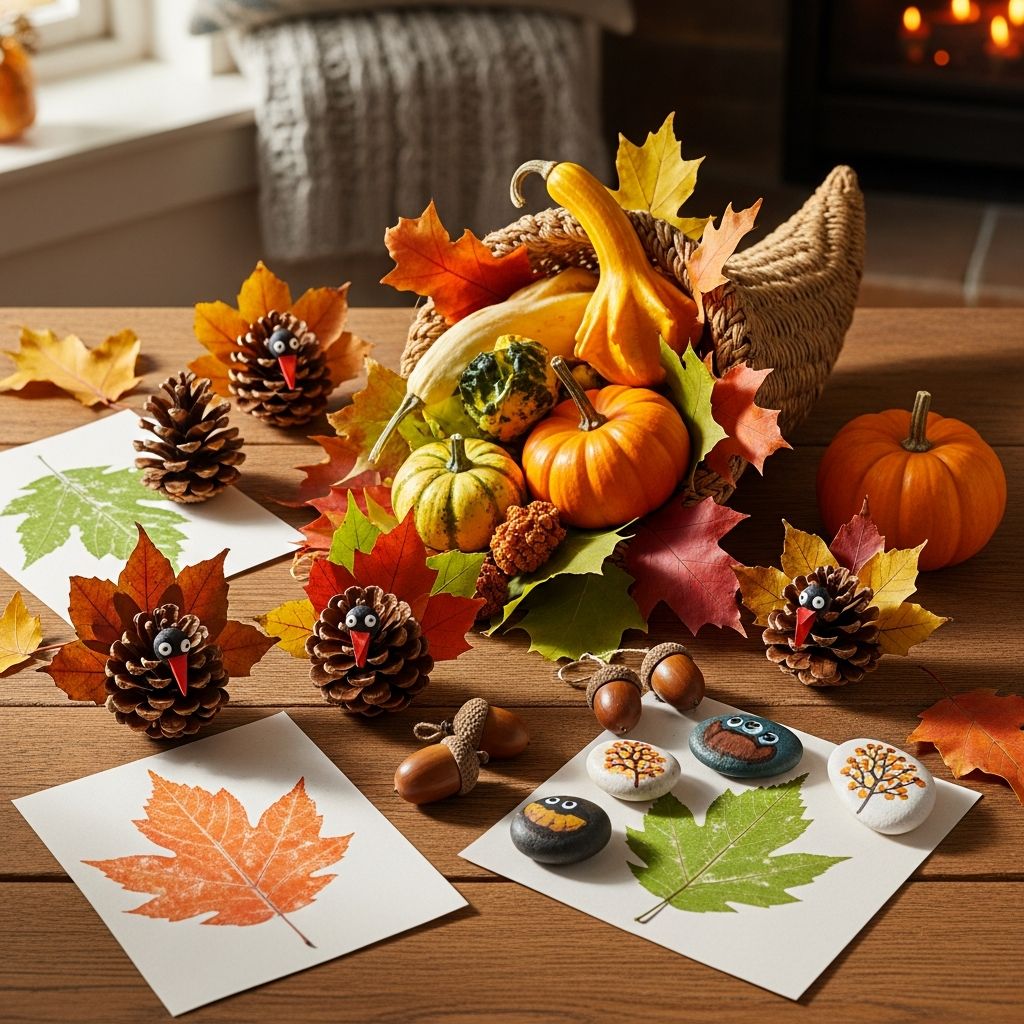
Instead of purchasing elaborate centerpieces, gather natural materials from your yard or neighborhood and combine them with simple recycled bases. This approach reduces waste while giving the table a cozy, handcrafted look.
Materials
- Cardboard or a sturdy box lid for a base
- Pinecones, leaves, acorns, and small branches
- Clean jars or tins to act as vases
- Ribbon scraps, twine, or fabric strips
- Battery-operated tealights (optional)
Simple Arrangement Ideas
- Wrap jars or tins with paper from paper bags and tie with twine, then fill with leaves or small branches.
- Cluster pinecones around jars and nestle LED candles among them for soft light.
- Add handwritten gratitude tags to branches so guests can read and share during the meal.
Children can help choose and arrange the natural items, turning an outdoor walk into part of the crafting experience.
Project 5: Reimagined Place Mats and Napkin Rings
Personalized place settings make guests feel welcome and provide extra space to incorporate gratitude prompts. Using recycled materials keeps the cost close to zero while still looking intentional and festive.
Recycled Place Mats
- Flatten large paper bags or pieces of cardboard to create the base.
- Invite kids to draw borders, leaves, or small turkeys along the edges.
- Add a “Today I’m thankful for…” box at the bottom where guests can write or doodle.
Upcycled Napkin Rings
- Cut empty paper towel or toilet paper tubes into short rings.
- Wrap them with strips of leftover fabric, paper, or ribbon.
- Glue on small cardboard leaves or hearts with handwritten words like “joy,” “family,” or “peace.”
Both projects subtly encourage conversation around gratitude while bringing a cohesive handmade style to the table.
Quick Reference: Craft Ideas by Age
Different age groups enjoy different levels of challenge, so matching the project to the child helps keep everyone engaged and confident. Use the table below as a quick planning guide for mixed-age gatherings.
| Age Group | Recommended Projects | Key Skills Practiced |
|---|---|---|
| Preschool (3–5) | Tissue-covered jars, simple leaf garlands, coloring place mats | Fine motor control, color recognition, basic shapes |
| Early Elementary (6–8) | Cardboard turkeys, gratitude garlands, napkin rings | Cutting skills, writing short words, following sequences |
| Upper Elementary (9–11) | Centerpieces, detailed jar designs, complex garlands | Planning, measuring, more precise drawing and lettering |
| Teens & Adults | Coordinated table settings, multi-jar displays, layered centerpieces | Design, layout, leadership in helping younger crafters |
Tips for Stress-Free Holiday Crafting
Seasonal projects can easily slip from delightful to overwhelming if expectations are too high. Focusing on process over perfection allows kids to explore materials, make creative choices, and feel proud of their results.
- Prepare a small “yes” box of supplies that kids are allowed to use freely without asking.
- Embrace crooked cuts and uneven glue as signs that children are learning and participating.
- Display finished projects at eye level so kids see that their work matters to the whole family.
When adults model flexibility and enjoyment, children associate Thanksgiving crafts with warmth, connection, and fun instead of pressure.
Eco-Friendly Cleanup and Storage
Once the holiday is over, decide which crafts to keep and which to disassemble. Items built from recyclable materials can often be taken apart so that paper, cardboard, and glass can be reused or recycled again.
- Label a box for “Thanksgiving keepsakes” and save a few special pieces from each year.
- Compost natural materials like leaves and small branches if your local system allows.
- Store reusable items such as jars and napkin rings with your fall decor for easy access next season.
Teaching kids to think about where materials go after a celebration is a powerful part of sustainable crafting.
Frequently Asked Questions
Do I need special glue or paint for these crafts?
Most projects can be completed with basic school glue, a glue stick, and washable paints or markers. If jars will be washed and reused later, decorate the outer surface only and avoid permanent adhesives on areas that will contact food or direct heat.
How can I involve very young children safely?
Offer toddlers and preschoolers tasks like sticking pre-cut shapes, tearing paper, or applying glue with a brush while an adult handles any cutting. Choose sturdy materials that are less likely to tear and avoid small parts that could pose a choking risk.
Can these crafts replace store-bought decorations?
Handmade decor can absolutely stand in for purchased items, especially when displayed thoughtfully as a coordinated collection. Many families find that imperfect but meaningful crafts become conversation pieces that guests remember long after the holiday ends.
What if I don’t have much time before Thanksgiving?
Focus on one or two versatile projects, like a gratitude garland and recycled jars, which can be assembled quickly and still have a big visual impact. You can also invite guests to help contribute messages or drawings on the day of the celebration to finish the pieces together.
How do I keep the focus on gratitude instead of just crafting?
Pair each project with a simple question, such as “What made you smile this week?” and encourage kids to answer in writing or drawings. Reading these responses aloud or revisiting them yearly helps anchor the crafts in the deeper meaning of the holiday.
With a bit of planning and a playful attitude, recycled materials can become the foundation for a more meaningful, earth-conscious Thanksgiving. These projects encourage families to create, reflect, and celebrate together while showing that gratitude and imagination are often the best decorations of all.