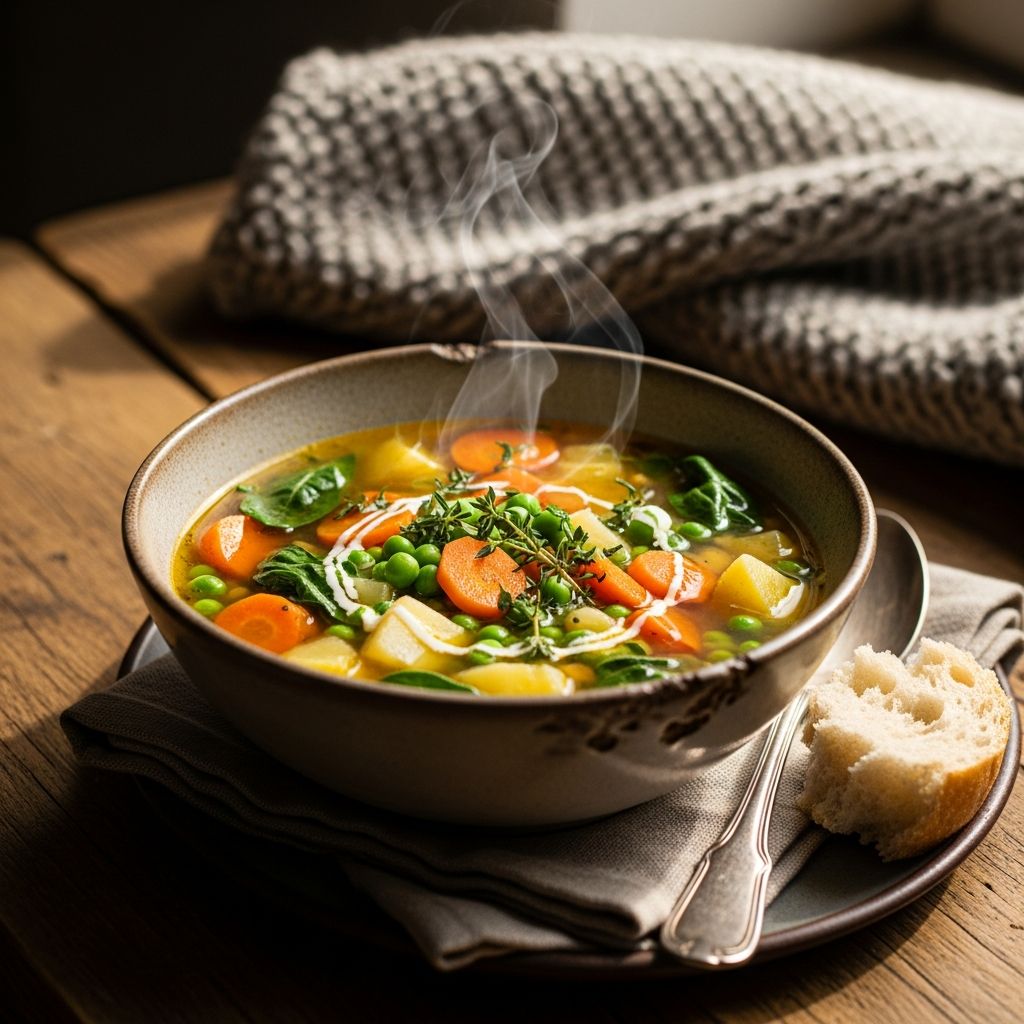
Vegetable soup is one of the easiest ways to turn odds and ends from your fridge and pantry into a warm, nourishing meal. With the right techniques, you can build deep flavor, cook vegetables to their best texture, and serve a pot of soup that feels both comforting and fresh.
Why Vegetable Soup Belongs in Your Weekly Rotation
Homemade vegetable soup is more than a light starter; it can be a complete meal that checks all the boxes: colorful, nutrient-dense, budget-friendly, and endlessly customizable. Unlike many recipes that depend on specific ingredients, this style of soup works with what you have on hand, reducing both food waste and stress.
Whether you cook for one or for a crowd, a big pot of soup is easy to scale, simple to reheat, and ideal for meal prep. Once you understand the basic building blocks, you can riff on the idea all year long with seasonal produce and pantry staples.
The Building Blocks of Great Vegetable Soup
Think of vegetable soup as a simple equation: aromatic base + vegetables + liquid + seasoning + finishing touch. When each part is thoughtfully chosen, the result tastes far more complex than the short ingredient list suggests.
Aromatic base (where flavor begins)
Your aromatic base is usually a mix of chopped vegetables gently cooked in oil or butter until lightly golden and fragrant. This step creates a savory backbone so the soup does not taste watery or flat.
- Classic options: onions, garlic, leeks, shallots, scallions.
- Flavor boosters: celery, carrots, fennel, bell peppers.
- Fat choices: olive oil for Mediterranean notes, neutral oil for a lighter taste, or butter for richness.
Vegetables (the star of the pot)
Use a mix of sturdy vegetables that hold their shape and softer vegetables that cook quickly or melt into the broth. Combining colors and textures makes the soup look inviting and keeps each spoonful interesting.
- Sturdy vegetables: potatoes, sweet potatoes, carrots, parsnips, turnips, winter squash, green beans.
- Quick-cooking vegetables: zucchini, yellow squash, mushrooms, peas, corn, spinach, kale, cabbage.
- Pantry helpers: canned diced tomatoes, jarred roasted peppers, frozen veggie blends.
Liquid (broth and beyond)
The liquid you choose determines much of the overall flavor. Vegetable broth keeps the soup plant-based, while light chicken or bone broth adds extra body. Water can work if the aromatics and seasoning are generous.
- Vegetable broth: great for vegetarian or vegan soups.
- Chicken or light stock: adds richness and a savory note.
- Water with salt and herbs: simple, clean, and budget-friendly.
Seasoning (what makes it memorable)
Salt and pepper are essential, but herbs, spices, and acidic ingredients are what make your soup taste restaurant-worthy instead of bland. Season in layers as you cook instead of dumping everything in at the end.
- Herbs: thyme, rosemary, oregano, bay leaves, parsley, dill, basil.
- Spices: smoked paprika, cumin, coriander, turmeric, red pepper flakes.
- Acid: lemon juice, vinegar, or a spoonful of tomato paste to brighten flavors.
Finishing touches (small effort, big payoff)
Simple additions at the very end can transform a good soup into a great one. They add freshness, richness, or a contrasting texture that keeps each bite exciting.
- Fresh herbs, chopped (parsley, cilantro, basil).
- A swirl of olive oil, pesto, or a spoonful of yogurt.
- Crunchy toppings like toasted seeds, croutons, or grated cheese.
Step-by-Step Method: From Empty Pot to Comforting Bowl
Even with different vegetables, you can follow the same basic method every time. This template is flexible: swap ingredients, change herbs, and adjust liquids, but stick to the overall order for the best texture and depth of flavor.
- Prep and organize your ingredients.
Wash, peel, and chop all vegetables before you turn on the stove. Cut pieces fairly small and uniform so they cook at the same rate. Keep slower-cooking vegetables in one pile and delicate ones in another so you can add them at the right time.
- Build the aromatic base.
Warm oil or butter in a large heavy pot over medium heat. Add onions and other aromatics with a pinch of salt, cooking slowly until translucent and lightly golden. Stir often so they soften rather than brown too quickly.
- Add firm vegetables and dry seasonings.
Stir in carrots, celery, potatoes, or other dense vegetables. Sprinkle in dried herbs and spices so they toast gently in the fat. This helps release their flavor and prevents a raw, sharp taste later.
- Deglaze and pour in the liquid.
If the bottom of the pot has browned bits, splash in a small amount of broth, water, or even a bit of wine to loosen them. Then add enough broth or water to cover the vegetables by at least an inch. Bring to a gentle boil, then reduce to a simmer.
- Simmer until tender.
Let the soup simmer uncovered or partially covered until the firm vegetables are just tender when pierced with a fork. Taste periodically to check seasoning and adjust the heat so it bubbles gently instead of boiling vigorously.
- Stir in quick-cooking vegetables.
Add delicate vegetables such as zucchini, peas, corn, or leafy greens toward the end of cooking so they stay bright and retain their texture. Simmer for just a few minutes more until they are cooked but not mushy.
- Finish, rest, and serve.
Right before serving, stir in fresh herbs, a squeeze of lemon juice, or a splash of vinegar. Let the soup rest off the heat for 5 to 10 minutes so the flavors meld, then taste one more time for salt and pepper before ladling into bowls.
Suggested Ingredient Combinations for Different Moods
Once you grasp the core method, use it as a framework to create different styles of vegetable soup. Here are a few combinations to spark ideas, illustrating how shifts in herbs, spices, and additions can change the mood of the dish.
| Style | Key Vegetables | Seasoning & Herbs | Finishing Touch |
|---|---|---|---|
| Classic cozy | Onion, carrot, celery, potatoes, green beans, peas, corn | Bay leaf, thyme, black pepper | Fresh parsley and a drizzle of olive oil |
| Mediterranean | Onion, garlic, zucchini, tomatoes, chickpeas, spinach | Oregano, basil, smoked paprika | Lemon wedge and grated hard cheese |
| Hearty winter | Leeks, carrots, parsnips, potatoes, kale or cabbage | Rosemary, thyme, pinch of nutmeg | Crusty bread and a knob of butter stirred in |
| Light spring | Leeks, asparagus, peas, small new potatoes, herbs | Dill, chives, lemon zest | Yogurt or crème fraîche swirl |
Tips for Better Texture and Deeper Flavor
Vegetable soup can easily slide into bland or mushy territory, but a few simple habits prevent that. Focus on how you cut the vegetables, how you manage heat, and how you season at multiple stages.
- Cut thoughtfully: Smaller, even pieces cook faster and more predictably. Mix sizes strategically if you like some vegetables to melt into the broth while others stay chunky.
- Sweat, don’t scorch: Cook aromatics over moderate heat until soft and lightly golden. Too much browning can overwhelm delicate vegetables later.
- Season in layers: Add a bit of salt at each stage, then adjust at the end. This builds flavor instead of leaving everything to the final tasting.
- Simmer gently: A low simmer protects vegetables from breaking apart and keeps the broth clear rather than cloudy.
- Use contrast: Pair soft vegetables with something that offers a light bite, like barely cooked green beans or leafy greens added at the end.
Making Vegetable Soup a Complete Meal
While a simple bowl of vegetables and broth can be satisfying, there are many easy additions that turn it into a one-pot dinner. Think of ways to increase protein, fiber, and healthy fats without making the soup feel heavy.
- Beans and lentils: Add canned beans (rinsed) or cooked lentils for plant-based protein.
- Whole grains: Stir in cooked brown rice, barley, quinoa, or small pasta at the end to keep them from soaking up too much liquid.
- Lean meats: For a non-vegetarian option, add shredded chicken or turkey, or simmer small meatballs directly in the broth.
- Healthy fats: Finish with a spoonful of good olive oil, sliced avocado on top, or a sprinkle of nuts or seeds.
Make-Ahead, Storage, and Freezing Guide
Vegetable soup is one of the best dishes to cook in advance. Flavors often deepen after a night in the refrigerator, making leftovers taste even better than the first bowl.
- Refrigerating: Cool the soup to room temperature, then store it in airtight containers. Most versions keep well for 3 to 4 days.
- Freezing: For best texture, freeze soups that do not contain very delicate greens or pasta. Leave a little space at the top of containers for expansion, and label with the contents.
- Reheating: Warm slowly on the stovetop over low to medium heat, adding a splash of water or broth if the soup has thickened. Taste and refresh with salt, pepper, and a bit of acidity before serving.
Common Mistakes to Avoid
Even though vegetable soup is forgiving, a few missteps can leave you with a pot that tastes dull or overcooked. Awareness of these issues makes it easier to fix them on the fly.
- Adding all vegetables at once: This usually overcooks the tender ones before the dense ones are done. Stagger the additions based on how quickly each vegetable cooks.
- Under-seasoning: A soup that looks hearty can still taste flat if it lacks enough salt or acid. Taste multiple times during cooking, not just at the end.
- Boiling too hard: Vigorous boiling jostles vegetables apart and can make the broth cloudy and starchy. Keep the simmer gentle.
- Skipping the rest: Serving the moment you turn off the heat is tempting, but a short resting period helps the flavors come together.
Frequently Asked Questions About Vegetable Soup
Can I make vegetable soup without broth?
Yes. You can use water as the main liquid, as long as you build a strong flavor base with aromatics, herbs, salt, and perhaps a spoonful of tomato paste or a splash of soy sauce for extra savoriness. Taste often and be generous with seasoning so the soup does not taste plain.
How do I thicken vegetable soup naturally?
There are several gentle ways to thicken the texture without adding cream or flour. You can mash a portion of the cooked vegetables directly in the pot, stir in a small amount of cooked grains, or partially blend the soup with an immersion blender while leaving some chunks intact.
What if my soup is too salty?
If the soup is slightly too salty, add more unsalted liquid, extra vegetables, or a serving of cooked grains or beans to help absorb the excess seasoning. A small squeeze of lemon juice can also balance the perception of saltiness without diluting the flavors as much.
Can I use only frozen vegetables?
Frozen vegetables work very well in soup and are often picked at peak ripeness. Add them toward the middle or end of cooking, as they are usually blanched before freezing and need less time to soften. Combining frozen vegetables with a fresh aromatic base gives you the best flavor and texture.
How long should I simmer vegetable soup?
The exact time depends on the size of your vegetable pieces and the types you use, but most vegetable soups are ready in 25 to 40 minutes of gentle simmering. The firmest vegetables should be tender but not falling apart, and any delicate greens or peas should still look bright.
Bringing It All Together
With a simple method and a bit of planning, vegetable soup becomes a reliable, flexible staple you can turn to any night of the week. Keep the basic structure in mind—build flavor at the start, stagger vegetables by cooking time, season thoughtfully, and finish with something fresh—and you will be able to transform almost any group of ingredients into a comforting bowl of homemade soup.