Halloween is one of the few days each year when everyone gets permission to be a little ridiculous, a lot creative, and completely themselves. Costumes do not have to be expensive, complicated, or runway-level impressive to be unforgettable; they just need a clear idea, a bit of personality, and enough comfort that you can actually enjoy the night.
This guide focuses on smart, fun, and realistic Halloween costumes for kids, adults, couples, and whole families. You will find outfit concepts that are easy to move in, simple to assemble with items you may already own, and flexible enough to adapt to different ages and body types.
What Makes a Great Halloween Costume?
Before choosing a specific look, it helps to know what separates a costume that feels awkward from one you never want to take off. Think less about perfection and more about how you want the night to feel.
- Comfort over complexity: If you cannot sit, walk, or use the bathroom without a support team, the costume will be memorable for the wrong reasons.
- Recognizable idea: Clever is good, but you should not have to explain your concept all night unless that mystery is part of the joke.
- Weather awareness: Layer-friendly costumes are always winners because Halloween nights can swing from warm to freezing.
- Photo-friendly details: Simple props or strong color contrasts make costumes pop in pictures without adding bulk.
Kid-Friendly Costumes They Can Actually Play In
Children care far more about running, jumping, and grabbing candy than about costume perfection. Aim for soft fabrics, minimal face paint, and designs that will survive playground-level energy.
Simple Storybook and Cartoon-Inspired Looks
Instead of copying a specific character down to every button, use familiar stories and shows as loose inspiration. This keeps costumes recognizable while giving you room to simplify.
- Color-block heroes: Build a character look using the character’s main colors in T-shirts, leggings, or hoodies, then add one bold accessory like a cape, hat, or badge.
- Animal best friends: Soft pajamas or sweatsuits in one main color, plus a headband with ears and a felt tail, create instant kittens, puppies, bunnies, or foxes.
- Mini explorers: Khaki shorts or pants, a simple button-down, a toy magnifying glass, and a small backpack turn any child into an adventurer.
Costumes Built Around Warm Layers
If you live somewhere chilly, design the costume around a coat or sweatshirt rather than trying to hide it. The result looks more intentional and keeps kids from freezing halfway through trick-or-treating.
- Cozy dragon or dinosaur: A green or purple hoodie with felt spikes sewn or glued along the back and hood instantly becomes a dragon or dino.
- Nighttime ninja: Black leggings, a black hoodie, and a cloth headband make a stealthy costume that doubles as normal clothes.
- Winter athlete: A puffy jacket, goggles, and a beanie transform a child into a skier, snowboarder, or Arctic explorer.
Low-Stress Family and Group Costume Themes
Coordinated costumes look impressive in photos, but they do not need to be perfectly matching to make sense. Choose simple themes that let each person customize their own part according to comfort and available clothing.
Color and Category Based Themes
Instead of tying everyone to a single movie or franchise, think in categories. This gives shy family members and last-minute joiners more flexibility.
- Weather crew: One person as the sun, one as a cloud, one as rain, one as a rainbow. Use solid-colored clothing plus simple cardboard or felt accessories.
- Breakfast table: Family members choose roles like coffee, toast, eggs, fruit, or cereal. Neutral clothes with printed or handmade labels do the heavy lifting.
- Constellation squad: Black outfits decorated with star stickers or glow-in-the-dark paint, with each person named after a different constellation or planet.
Roles That Work for Mixed Ages
Choose themes where babies, toddlers, teens, and adults can all participate without anyone feeling ridiculous.
- City and creatures: Adults dress as buildings or city workers (like a mail carrier or street artist), while kids dress as animals roaming the “city.”
- Garden party: Grown-ups become gardeners or gnomes, kids choose flowers, butterflies, bees, or ladybugs.
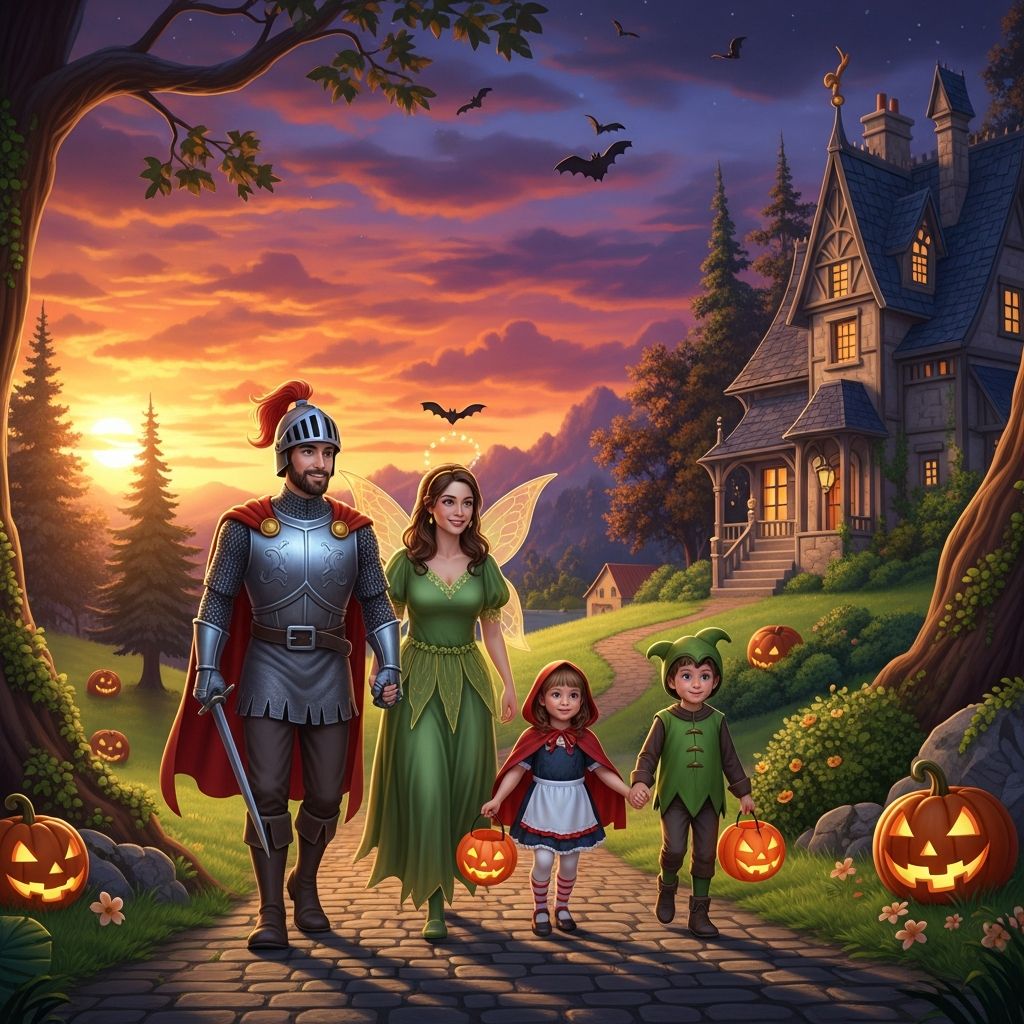
- Storytime cast: One person is the storyteller (with a big book prop), and everyone else chooses a favorite character archetype—dragon, knight, scientist, pirate, or fairy.
Fun and Flattering Costume Ideas for Adults
Adult costumes often get stuck in two extremes: elaborate armor or simple black cat. There is plenty of room in between for outfits that feel flattering, clever, and still easy to manage at work parties or evening events.
Office-Appropriate Looks
If you need a costume that can survive a meeting or commute without raising eyebrows, think about small, smart twists on everyday clothes.
- Color-coded characters: Monochrome outfits paired with a label or prop hinting at the concept: for example, all green with leaf accessories for “houseplant,” or tan clothes and a toy lasso for a “cowhand.”
- Occupation exaggerations: Choose any everyday role—librarian, coach, baker—and exaggerate it with oversized props like giant glasses, a whistle, or an enormous recipe card.
- Minimalist historical nods: A long skirt or trousers, a vest, and a simple hat can hint at decades past without requiring full period-accurate clothing.
Comfort-First Party Costumes
For party settings, prioritize breathable fabrics and pockets. You want an outfit that looks fun yet survives dancing, snacks, and endless photos.
- Galaxy attire: Dark clothing splattered with fabric paint or decorated with iron-on stars, paired with shimmering makeup or face gems.
- Retro athlete: Joggers or shorts, high socks, a vintage-style tee, and a sweatband. Add a foam finger or whistle for emphasis.
- Book or movie fan: A T-shirt referencing a favorite series, a themed accessory, and a handmade badge declaring your chosen character.
Couples Costumes that Avoid Clichés
Couples costumes work best when both people feel equally involved and comfortable. Instead of jokes that rely on one person being the “punchline,” choose pairs where both roles are fun.
Concept Pairs Instead of Characters
Think in metaphors and relationships rather than famous couples. This gives you creative freedom and usually requires fewer specific props.
- Day and night: One partner wears light colors with sun motifs, the other dark tones with moon and stars.
- Art and artist: One person dresses in paint-splattered clothes with brushes and a palette, the other wears a patterned outfit outlined like a “framed painting.”
- Map and explorer: One partner wears neutral clothes covered in drawn or printed map details, while the other carries binoculars, a compass, and a backpack.
Food and Flavor Themes
Matching food costumes are silly without being mean-spirited, and they can be as simple or elaborate as you like.
- Salt and pepper: Black and white outfits with large S and P letters on the front.
- Tea and cookie: One partner as a warm drink (solid color clothing plus a printed “mug” label), the other as a biscuit or cookie using a round cardboard cutout.
- Fruit salad duo: Pick two fruits with bold colors—like strawberry and pineapple—and build outfits with matching hues and simple felt details.
Quick Reference: Costume Ideas by Effort Level
Use this table as a cheat sheet to match your time, budget, and energy level with a costume concept that still feels thoughtful.
| Effort Level | Time Required | Key Materials | Example Idea |
|---|---|---|---|
| Last-minute | 15–30 minutes | Clothes you own, one or two props, marker or printed label | Salt and Pepper, Book Fan, Nighttime Ninja |
| Weekend project | 2–4 hours | Felt, hot glue, headbands, cardboard, fabric paint | Cozy Dragon, Garden Party, Weather Crew |
| Craft lover | Several evenings | Sewing supplies, detailed props, layered accessories | Constellation Squad, Art and Artist, Historical Looks |
DIY Elements that Add Big Impact
You do not need to handmake an entire costume to enjoy DIY satisfaction. A few homemade details layered onto basic clothing often look more thoughtful than a full store-bought outfit.
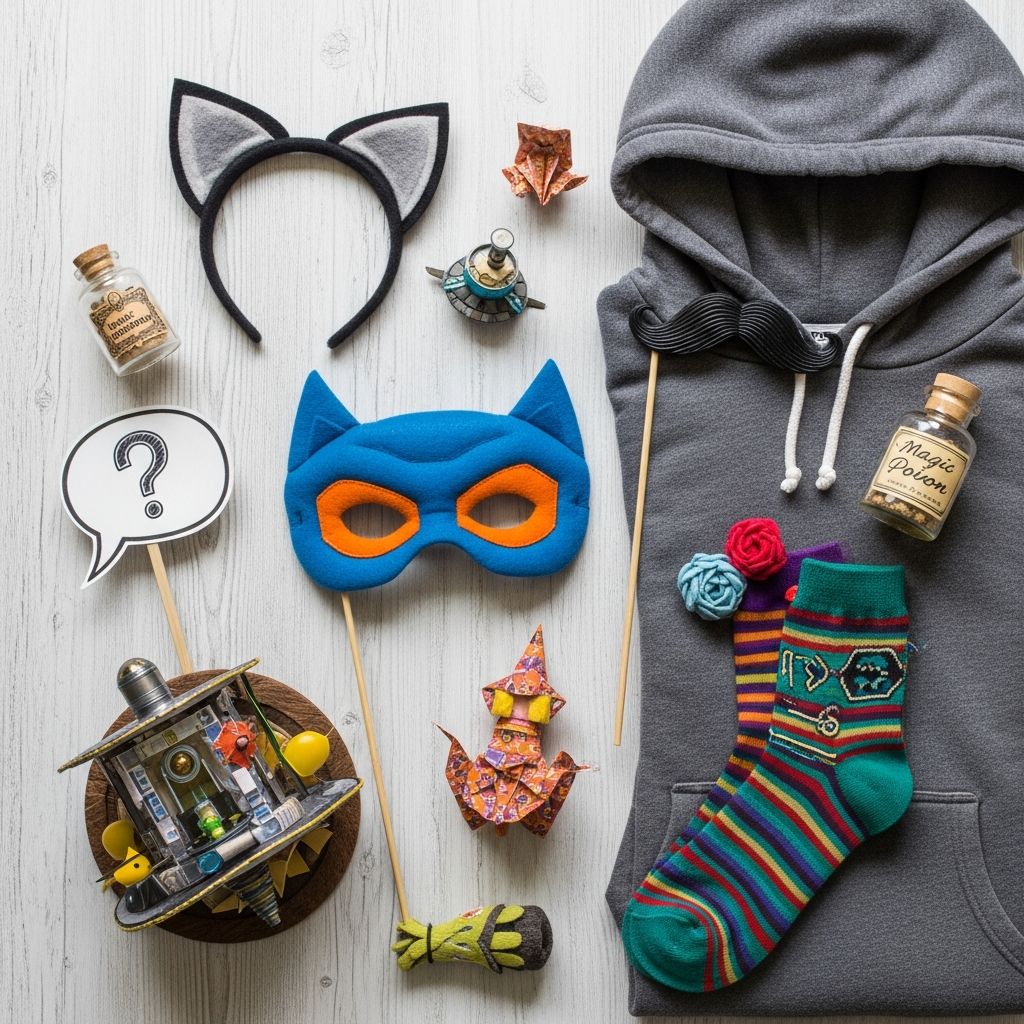
- Headbands and hats: Ears, horns, crowns, and antennae can all be created with felt and hot glue attached to simple headbands or beanies.
- Cardboard shapes: Slices of bread, books, picture frames, or clouds are easy to cut, paint, and attach with ribbons.
- Fabric paint and patches: Add symbols, constellations, or “uniform” details to plain shirts and pants.
- Labels and name tags: A printed name tag with a joke title can transform regular clothes into a costume instantly.
Staying Safe and Comfortable All Night
No matter how clever the costume, safety and comfort must come first—especially for children. A few simple adjustments can prevent headaches, tripping hazards, or meltdowns halfway through the night.
- Keep faces visible: Use light face paint or small masks instead of full-face coverings whenever possible, especially for kids.
- Shorten long hems: If robes, capes, or skirts drag on the ground, adjust them with temporary hem tape or safety pins.
- Choose real shoes: Swap slippery costume shoes for comfortable sneakers or boots in neutral colors.
- Secure accessories: Attach tails, wings, and props so they will not fall off in the first five minutes.
Eco-Conscious and Budget-Friendly Costume Strategies
Halloween can be fun without leaving you with a pile of plastic and a strained budget. With a little planning, you can build costumes that reuse existing items and still feel fresh.
- Shop your closet first: Start by choosing a costume idea that fits clothes you already own, then add only what is necessary.
- Borrow and swap: Coordinate with friends or neighbors to trade costume pieces or host a small costume exchange.
- Choose reusable basics: Buy plain capes, tutus, or hats that can become different characters over multiple years.
- Upcycle packaging: Cardboard boxes become robot bodies, vending machines, or book covers with a bit of paint and creativity.
Frequently Asked Questions About Halloween Costumes
How far in advance should I start planning a costume?
If you want something largely store-bought, a couple of weeks is usually enough to order items, try them on, and make small adjustments. For homemade or group costumes, starting a month ahead helps you gather supplies without stress and gives plenty of time for last-minute changes.
What if my child changes their mind at the last minute?
Build costumes in layers that can be reinterpreted. Solid-colored leggings, T-shirts, and hoodies can quickly switch from animal to superhero to athlete with just a swap of ears, cape, or props. Having a small box of generic accessories—hats, face paint, scarves—makes last-minute pivots less dramatic.
How do I handle costumes at school with strict rules?
Many schools limit masks, weapons, or overly scary designs, so aim for costumes that look like slightly exaggerated everyday clothes. Focus on accessories, color schemes, or humorous name tags that can be removed easily if needed.
What if I am not crafty at all?
You do not need advanced crafting skills to create a great costume. Choose concepts that rely on color and attitude rather than technical construction, and use printed labels or simple store-bought pieces to complete the look.
How can I make my costume look intentional, not random?
Pick one or two main colors and one clear symbol or prop that ties everything together. Even a simple monochrome outfit plus a single bold sign or accessory can read as a deliberate, clever costume instead of an accidental outfit.
With a little imagination and a focus on comfort, anyone can build a Halloween costume that feels fun, expressive, and easy to wear. The best costumes are the ones that let you enjoy the night fully—laughing, walking, dancing, and reaching for just one more piece of candy.