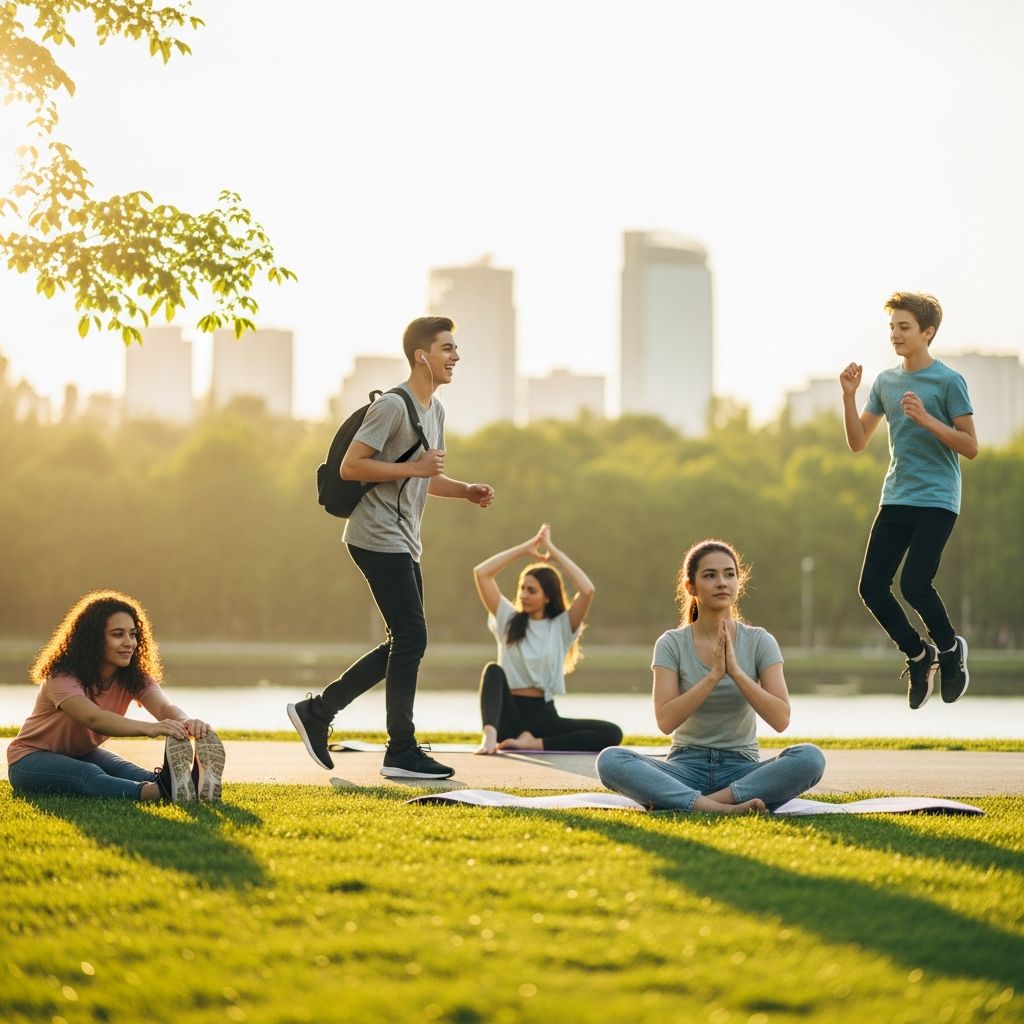
Moving your body does not have to mean long, exhausting workouts or complicated gym routines. With a few simple exercises and a little consistency, teenagers can boost energy, improve mood, and build strength in just a short amount of time each day.
Why Moving Your Body Matters in Your Teens
Your teenage years are a time of big changes for your body and your mind. Regular movement helps your heart, lungs, muscles, and bones grow stronger, while also supporting focus, confidence, and sleep.
Instead of thinking of exercise as something you “have to” do, it helps to see it as a tool: a way to feel more energized for school, sports, hobbies, and time with friends.
How Much Activity Do Teens Really Need?
Health organizations generally encourage teenagers to aim for about 60 minutes of physical activity most days of the week. This does not have to be a full hour at once. You can break it into smaller chunks, like three 20-minute blocks, or even short bursts throughout the day.
A good mix includes:
- Activities that raise your heart rate (like brisk walking, biking, or dancing)
- Muscle-strengthening moves (like squats, wall push-ups, or resistance band work)
- Bone-loading activities (like jumping or hopping)
Before You Start: Safety and Mindset
Easy exercises are still real exercise, so it is important to listen to your body. Warm up for a few minutes first, move with control, and stop if you feel sharp pain, dizziness, or trouble breathing.
Just as important as safety is mindset. Instead of chasing perfection, focus on progress. Even 10 minutes of movement is more than zero, and small daily efforts add up over time.
Quick Warm-Up Ideas (3–5 Minutes)
- March in place while swinging your arms.
- Roll shoulders forward and backward.
- Gently twist side to side, letting your arms swing loosely.
- Circle your ankles and wrists to prepare joints.
Zero-Equipment Cardio You Can Do Anywhere
Cardio exercises are activities that make your heart beat faster and your breathing heavier. Simple cardio moves can be done in a bedroom, hallway, or small living room space.
At-Home Cardio Moves
- March-and-reach: March in place, lifting your knees, and reach your arms overhead as if grabbing something from a shelf.
- Side steps: Step to the right and bring your left foot in, then step to the left and repeat. Add gentle arm swings for extra intensity.
- Low-impact jumping jacks: Instead of jumping both feet out, step one foot out at a time while moving your arms overhead.
- Invisible jump rope: Pretend to swing a rope and hop lightly or step in place if jumping bothers your joints.
Simple Outdoor Cardio Ideas
- Walk the dog or offer to walk a neighbor’s dog.
- Turn a short bus stop walk into a brisk walk by adding a few extra blocks.
- Ride a bike around your neighborhood or a local park.
- Kick a ball around, shoot hoops, or play a quick game of tag with friends or siblings.
Easy Strength Exercises for the Whole Body
Strength exercises help your muscles work against resistance. You can use body weight, a sturdy chair, or simple household items like water bottles instead of weights.
Upper Body Strength (Arms, Chest, Shoulders)
- Wall push-ups: Stand facing a wall, hands on the wall at shoulder height. Bend your elbows to bring your chest toward the wall, then push back.
- Tabletop shoulder taps: On hands and knees, with hands under shoulders and knees under hips, lift one hand to tap the opposite shoulder. Alternate sides while keeping your body steady.
- Seated arm press: Sit tall in a chair. Press your palms together in front of your chest, hold for a few seconds, then release.
Core Strength (Abs and Lower Back)
- Knee hugs: Lie on your back with knees bent. Gently pull both knees toward your chest, hold briefly, then lower back down with control.
- Heel slides: Lying on your back, knees bent, slide one heel away until your leg is almost straight, then slide it back. Repeat on both sides.
- Modified plank on knees: Start on hands and knees, then walk your hands forward and lower your hips so your body forms a straight line from shoulders to knees.
Lower Body Strength (Legs and Glutes)
- Chair sit-and-stand: Sit on a stable chair. Cross your arms in front of your chest and stand up, then slowly sit back down without dropping.
- Supported squats: Stand and lightly hold onto the back of a chair or a wall for balance. Bend your knees as if sitting back into a chair, then return to standing.
- Calf raises: Stand with hands lightly resting on a wall or chair. Rise up onto the balls of your feet, then slowly lower your heels.
Stretching and Flexibility for Tight Muscles
Stretching helps your muscles recover and stay flexible, especially if you spend a lot of time sitting for school, gaming, or scrolling on your phone. A few minutes of gentle stretching can leave you feeling more relaxed and loose.
Gentle Stretches for Teens
- Neck release: Sit or stand tall, tilt your right ear toward your right shoulder and hold, then switch sides.
- Chest opener: Clasp your hands behind your back (or hold a towel), lift slightly, and open your chest.
- Hamstring stretch: Sit on the edge of a chair, extend one leg with the heel on the floor, and lean forward from the hips until you feel a stretch in the back of your thigh.
- Figure-four stretch: Sit on a chair, place your right ankle over your left knee, and gently lean forward to stretch your hip. Switch sides.
Sample 20-Minute Beginner Routine for Teens
This simple routine is designed for beginners and can be done in a small space with no special equipment. Adjust the number of repetitions or sets depending on your comfort level.
| Time | Activity | Details |
|---|---|---|
| 0–3 minutes | Warm-up | March in place, roll shoulders, gentle twists. |
| 3–8 minutes | Cardio | Side steps + low-impact jumping jacks, 30 seconds each, repeated 4–5 times. |
| 8–14 minutes | Strength circuit | Wall push-ups, chair sit-and-stand, modified plank; 8–12 repetitions each, 2 rounds. |
| 14–18 minutes | Core focus | Knee hugs and heel slides, 8–10 repetitions per side. |
| 18–20 minutes | Cool-down stretch | Neck release, chest opener, and hamstring stretch. |
Fitting Movement Into a Busy Teen Schedule
Between school, homework, chores, and social life, it can feel hard to find time to exercise. The key is to sneak movement into moments you already have rather than waiting for the “perfect” time.
Micro-Workouts You Can Add to Your Day
- Do a quick set of chair sit-and-stands during study breaks.
- Walk around the house while talking on the phone.
- Use commercials or loading screens as a cue to do 30 seconds of marching or stretches.
- Take the stairs when possible instead of the elevator.
Staying Motivated Without Pressure
Many teens stop exercising because it feels boring, too hard, or tied to pressure about appearance. Focusing on how movement makes you feel—calmer, stronger, more awake—can be more motivating than focusing on looks alone.
Motivation Tips That Actually Help
- Choose activities you enjoy: Dancing in your room or kicking a ball around still “counts.”
- Set small, realistic goals: For example, “move for 10 minutes three times this week.”
- Track your wins: Keep a simple log of what you did and how you felt afterward.
- Move with others when you can: Ask a friend to join via video call or walk together after school.
Common Exercise Challenges for Teens and Simple Fixes
It is completely normal to run into obstacles when trying to be more active. What matters is learning how to adjust and keep going in a way that works for your life and your body.
| Challenge | What It Might Look Like | Simple Strategy |
|---|---|---|
| No time | Homework, clubs, and screens fill your day. | Use 5–10 minute sessions, like quick walks or mini circuits between tasks. |
| Low energy | You feel tired and unmotivated after school. | Start with gentle movement like stretching or a slow walk to wake up your body. |
| Feeling self-conscious | Worried about how you look while exercising. | Exercise at home, use online videos, or move in your room with the door closed. |
| Unsure what to do | Overwhelmed by complicated workout plans. | Pick 3–4 simple moves and repeat them. Keep it basic and consistent. |
When to Talk With a Health Professional
Most teens can safely start with gentle, easy exercises. However, if you have a medical condition, a recent injury, breathing problems, or chest pain, it is important to talk with a health professional before increasing your activity level.
If you ever feel dizzy, faint, or have sharp pain while exercising, stop right away and let a parent, guardian, or trusted adult know what is happening so you can get the right help.
Teen Exercise FAQs
1. Do I have to play a sport for my activity to “count”?
No. Any movement that makes your body work a bit harder than usual can benefit your health. Walking, dancing, biking, and home workouts are all valid ways to stay active, even if you never join a team.
2. What if I am not very fit right now?
Everyone starts somewhere, and being “out of shape” simply means your body is not used to certain movements yet. Start slowly, choose simple exercises, and increase time or intensity gradually as you feel stronger and more confident.
3. How many days per week should I exercise?
A helpful goal is to move your body in some way most days of the week, even if some days are lighter than others. You might combine a few more active days with gentler days focused on stretching, walking, or short bursts of movement.
4. Will easy exercises actually make a difference?
Yes. Even light to moderate activity can improve your energy, mood, and stamina over time, especially if you are consistent. As your body adapts, you can choose to make your workouts a little longer or more challenging if you want bigger fitness gains.
5. Is it okay to exercise if I am feeling stressed or anxious?
Gentle movement is often helpful when you are stressed or anxious because it can release muscle tension and shift your focus. If feelings of anxiety or sadness are intense or ongoing, it is also important to reach out to a trusted adult or health professional for support.
Bringing It All Together
You do not need a gym membership, expensive equipment, or hours of free time to start moving more as a teen. With simple exercises, short routines, and a focus on how movement makes you feel, you can build a realistic, healthy habit that supports your body and your mind.
Start small, be kind to yourself, and remember that every bit of movement you add to your day is a step toward a stronger, more energized version of you.