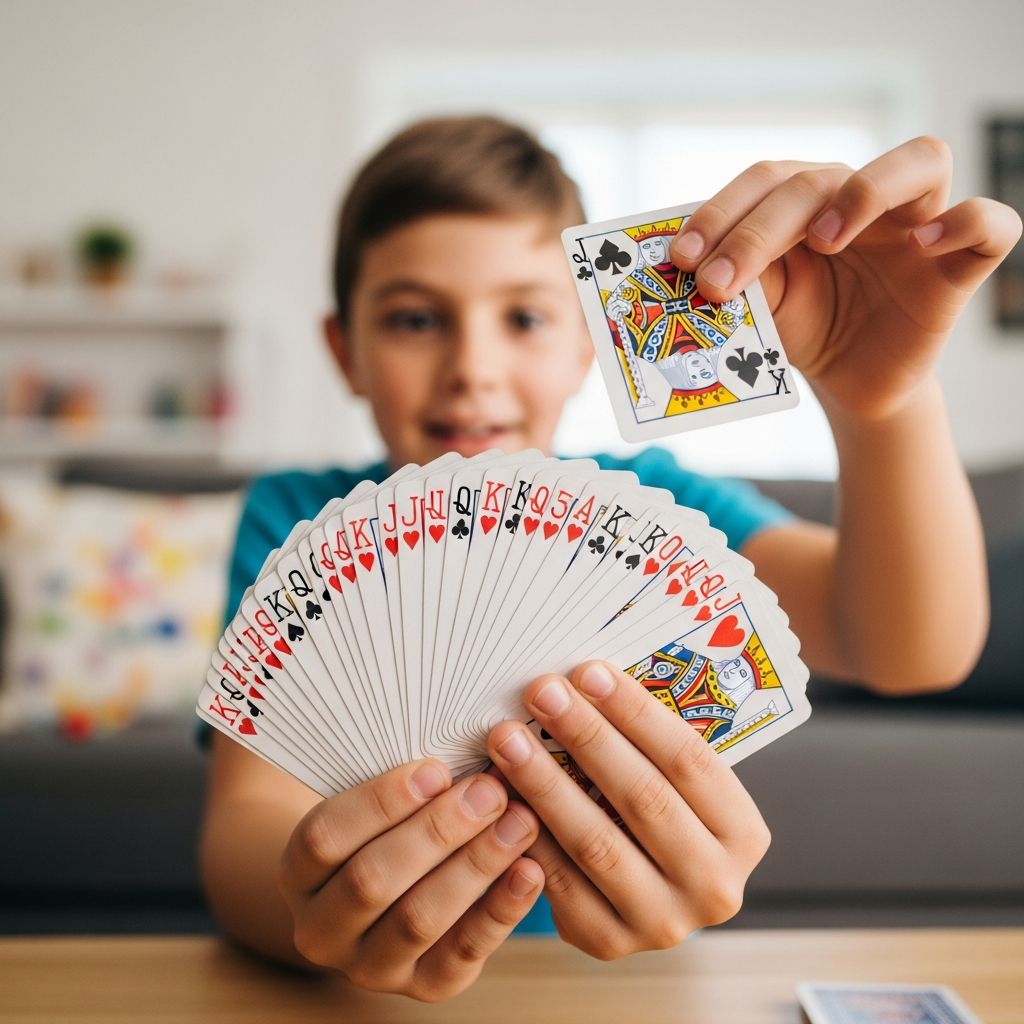
Card tricks are a simple way to add wonder to everyday family time. A single deck of cards can turn a shy child into a confident performer and transform a rainy afternoon into a mini magic show.
This guide introduces easy, low-pressure card tricks that children can learn quickly, practice safely, and perform proudly for friends and relatives.
Why Card Tricks Are Great for Children
Card magic offers more than a quick laugh or gasp. It quietly builds skills that benefit kids in school, social situations, and everyday problem solving.
- Confidence: Performing even a very simple trick gives kids a sense of achievement and pride.
- Focus and memory: Remembering steps, numbers, and story lines strengthens attention and recall.
- Communication: Kids learn to speak clearly, make eye contact, and hold an audience’s attention.
- Creativity: Children customize patter, stories, and presentations to make each trick their own.
Choosing the Right Tricks by Age
Not every card trick is suitable for every age. Younger children benefit from self-working tricks that rely on counting and simple patterns, while older kids enjoy tricks that involve light sleight of hand and storytelling.
| Age Range | Type of Trick | Key Skills Practiced |
|---|---|---|
| 4–6 years | Very visual, self-working tricks using small packets of cards and clear colors. | Following 2–3 steps, speaking in short sentences, basic counting. |
| 7–9 years | Simple prediction and mind-reading style tricks using counting and spelling. | Memory, sequencing, reading/spelling practice, audience awareness. |
| 10–12 years | Basic sleight of hand, secret set-ups, and tricks with choices and multiple outcomes. | Fine motor control, misdirection, planning and rehearsal. |
| Teens | Multi-phase routines combining several simple tricks into one performance. | Show structure, stage presence, creative scripting, improvisation. |
Getting Started: Setting Up for Success
Before teaching specific tricks, prepare the environment and mindset. Children learn magic best when the process feels playful and forgiving.
- Choose a quiet, comfortable spot where your child can practice without distractions.
- Provide a dedicated practice deck so bent or worn cards do not cause frustration.
- Keep early sessions short and positive, ending on a win rather than pushing through fatigue.
- Remind your child that every magician makes mistakes and that rehearsal is part of the fun.
Foundations of Kid-Friendly Card Magic
Most card tricks for children rely on clear steps, gentle secret moves, and a strong story. Teaching these building blocks early makes every trick easier to learn.
Basic Handling Skills
- Holding the deck: Show your child how to grip cards lightly so they do not slip or bend.
- Simple overhand shuffle: A loose, messy shuffle works fine and looks natural.
- Spreading cards on the table: Practice fanning cards in a line so a spectator can freely choose one.
- Turning cards over cleanly: Encourage slow, clear motions so the audience sees what is happening.
Performance Habits to Encourage
- Speak clearly and face the audience, not the cards.
- Pause after important moments to give spectators time to react.
- Look up and make eye contact instead of staring at the deck.
- Practice a short introduction line, such as “Want to see something magical?”
Five Easy Card Trick Ideas for Kids
The tricks below are described in general terms so you can create your own patter and handling. They are designed to be simple to learn yet impressive enough to delight an audience.
1. The Color Surprise
This trick uses a small group of cards to create a color-based surprise. It suits young magicians who are still mastering basic counting.
- Use a mix of red and black cards placed in a secret order.
- The child lets a spectator decide where to stop while moving cards from one pile to another.
- At the end, the magician reveals that all the cards in one pile are one color and all the cards in the other pile are the other color.
- The secret relies on the starting arrangement, not on difficult moves, making it ideal for beginners.
2. The Counting Prediction
This idea turns simple counting into a mind-reading effect. It works well for school-age children who can reliably count and follow a series of steps.
- The magician writes a prediction number on a piece of paper and sets it aside.
- A spectator freely stops the child while cards are dealt into a pile.
- After a short shuffle or cut, the child counts down to the prediction number and reveals the spectator’s chosen card.
- Because the cards are secretly arranged before the show, the final card always matches the choice.
3. The Story Deck Adventure
This trick focuses on storytelling instead of hidden moves. It is perfect for imaginative children who like to act or dramatize events.
- The child chooses a few characters from the deck, such as kings, queens, and jacks.
- Each card becomes part of a short adventure story involving castles, treasure, or space travel.
- As the story unfolds, cards are switched, hidden, or moved around.
- The surprise comes when the final layout of cards matches the story’s ending in a way the audience did not expect.
4. The Friendly Detective
This trick frames the magician as a detective searching for a missing card. The approach makes the performance playful and draws kids into a narrative.
- A spectator selects a card, remembers it, and returns it to the deck.
- The magician pretends to be a detective, asking funny questions or listening to the “clues” the deck gives.
- Using a simple control or preset arrangement, the child guides the chosen card to a known position.
- With a flourish, the detective reveals the “culprit card”, often by flipping it from the center or making it appear in a special place.
5. The Guessing Game Switch
This routine feels like a fair guessing game but ends with a twist. It is best for slightly older kids comfortable with basic shuffles.
- The magician invites a friend to guess whether each card is red or black as it is placed onto the table.
- Guesses appear random, but the deck is arranged so that the majority of guesses end up correct.
- At the end, the child reveals that almost all the guessed colors match the face-up cards.
- This trick teaches kids about patterns and preparation while still feeling free to the audience.
Helping Your Child Practice Like a Magician
Most children are excited by a new trick but may become discouraged if they try to perform it perfectly right away. Gentle guidance helps transform practice into a game instead of a chore.
- Break the trick into parts: Learn the set-up first, then the moves, then the story.
- Use a mirror: Let your child watch how the trick looks from the audience perspective.
- Record a rehearsal: A short video shows small habits such as looking at the floor or fidgeting.
- Praise effort, not just success: Celebrate each stage mastered, even if the trick is not fully polished.
Staging a Family Magic Night
Once your child knows one or two tricks, encourage them to put on a mini show at home. A simple performance builds confidence and turns practice into a shared memory.
- Set up a “stage area” such as a cleared space in the living room with a small table.
- Make simple tickets or invitations for siblings or grandparents, even if they live online.
- Let your child create a show name and introduce themselves with flair.
- Encourage them to perform the same trick several times for different people to build fluency.
Safety and Respect in Kids’ Magic
Card magic is generally safe, but it is still important to set clear boundaries. Good habits learned early help children treat magic with respect and kindness.
- Explain that magic should never involve sharp objects, fire, or risky stunts without adult supervision.
- Teach children not to force tricks on unwilling spectators; it should always be fun for both sides.
- Encourage them to keep secrets kindly, never teasing others for not knowing how the trick works.
- Remind them that magic is about sharing wonder, not about making people feel foolish.
Frequently Asked Questions About Kids and Card Magic
What is a good age to start teaching card tricks?
Most children can begin learning very simple, self-working tricks around age five or six, especially ones that use small groups of cards and do not require strong hand control. Younger children may prefer magic with larger props, while older kids can move into more complex routines and sleight of hand.
Do we need a special deck for kids’ card tricks?
Most beginner tricks can be done with a standard deck of playing cards, which makes practice easy and affordable. Some children, however, enjoy using colorful or themed decks because the pictures help them remember stories and keep them engaged.
How long does it take a child to learn a simple card trick?
A straightforward, self-working trick can often be learned in one short session and performed the same day, especially if the child is excited and focused. More elaborate routines may take several days of relaxed practice to feel natural and confident.
How can shy kids benefit from card magic?
Shy children often enjoy having a structured way to interact with others, and a card trick provides exactly that. The routine gives them words to say, actions to follow, and a clear beginning and ending, which makes social situations feel safer and more predictable.
How can parents support without revealing secrets?
Parents can help by acting as a friendly audience during practice, offering feedback on clarity and pacing rather than focusing on the secret method. It also helps to remind onlookers not to insist on explanations, so children feel safe protecting the mystery of their magic.
Encouraging a Lifelong Love of Magic
When card tricks are framed as playful challenges rather than tests, children are more likely to stick with them and feel proud of their progress. A small routine learned today can become the first step toward a lifetime hobby that blends creativity, performance, and problem solving.
With patience, praise, and a simple deck of cards, families can create magical moments that children remember long after the show is over.