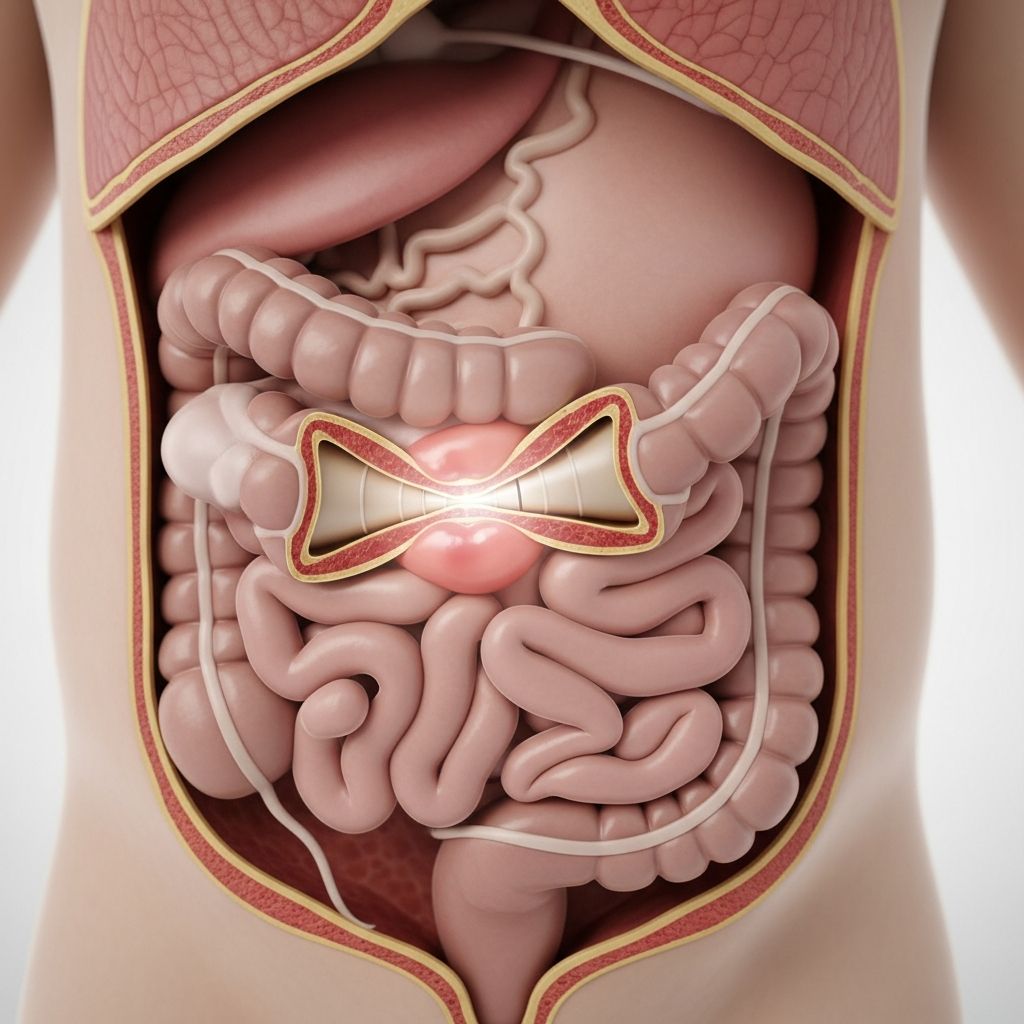
Intussusception is a serious intestinal problem that can affect infants and children, but prompt care usually leads to an excellent outcome. This guide explains the condition in clear language so parents know when to worry, what to expect at the hospital, and how to support recovery at home.
What Is Intussusception?
Intussusception happens when one section of the intestine slides into an adjacent segment, a bit like the way the pieces of a collapsible telescope can slide into one another. This inward folding blocks the normal flow of food and gas through the bowel and can squeeze the blood supply to the affected area.
Because it can cut off circulation to part of the intestine, intussusception is considered a medical emergency. Early treatment usually relieves the blockage quickly and helps prevent permanent damage, infection, or other serious complications.
- Most cases occur in babies and young children.
- The condition can appear suddenly in an otherwise healthy child.
- It requires urgent evaluation in an emergency department or similar setting.
How the Intestine “Telescopes” Inward
The intestine is a long, flexible tube divided into the small intestine and large intestine. In intussusception, a segment of bowel pushes into the neighboring segment, pulling the attached blood vessels and tissue along with it. This trapped portion can swell and become increasingly compressed.
As the swelling increases, blood flow may decrease, and the intestinal wall can become irritated and inflamed. Without treatment, this process can lead to tissue death, bleeding, or a hole in the bowel, which is why quick action is so important.
Who Is Most at Risk?
Although intussusception can occur at almost any age, it is most common in infants and toddlers. Many children who develop the condition were previously healthy and had no known digestive problems.
Certain patterns have been seen in large groups of patients, which helps doctors stay alert for the diagnosis in specific age ranges.
| Factor | Common Pattern |
|---|---|
| Age | Most frequently affects infants around late infancy and toddlers; can still occur in older children and rarely in adults. |
| Sex | Slightly more common in boys than in girls. |
| Overall health | Often appears in otherwise healthy children with no previous bowel problems. |
| Season | Some regions report more cases during times when viral illnesses of the gut and respiratory tract are common. |
Possible Causes and Triggers
In many children, a single clear cause for intussusception is never identified. The condition is often described as “idiopathic,” which means the exact trigger is unknown. Still, doctors have discovered several factors that may contribute to the bowel sliding into itself.
A small bulge or structural change in the intestine can act as a “lead point,” drawing the bowel inward when normal movements of the gut push against it. Infections or inflammation can sometimes cause swelling in the intestine that plays a similar role.
- Swollen lymph tissue in the intestinal wall after a viral or bacterial infection.
- Benign growths, polyps, or other abnormal tissue in the bowel.
- Congenital pouches or structural differences in the intestine.
- Very rarely, more serious conditions such as tumors in older children or adults.
Key Symptoms Parents Should Watch For
Intussusception often begins suddenly in a child who seemed completely fine earlier in the day. Because the symptoms can resemble common tummy troubles at first, it helps to know the warning signs that make intussusception more likely.
A child may have only a few of these symptoms, especially early on, but the pattern of pain and the child’s behavior during episodes can offer important clues.
Abdominal Pain and Behavior Changes
- Sudden, intense episodes of belly pain that come in waves.
- During painful episodes, the child may cry loudly, appear very distressed, or become unusually fussy.
- Infants often pull their knees up toward the chest or curl up while crying.
- Between episodes, some children appear tired or listless, while others may briefly look almost normal.
Digestive and Stool Changes
- Vomiting that may begin soon after the pain starts.
- Reduced interest in feeding or refusal to eat or drink.
- Belly that appears swollen or feels firm to the touch.
- Stools that contain blood and mucus, sometimes described as having a jelly-like appearance.
Signs of Worsening Illness
- Extreme sleepiness, limpness, or difficulty waking the child.
- Pale or grayish skin and cool hands or feet.
- Fast heart rate or breathing.
- High fever or a child who seems very unwell overall.
Any combination of sudden, severe abdominal pain and vomiting in a young child should be treated as urgent. If there is blood or mucus in the stool, or the child seems unusually drowsy or weak, emergency care is needed right away.
When to Seek Emergency Help
Parents do not need to be certain that a child has intussusception before heading to the hospital. It is enough to recognize that the symptoms suggest a serious problem that requires prompt professional attention.
If a child has repeated bouts of intense abdominal pain, you should contact emergency services or go directly to an emergency department, especially if the child is very young, vomiting, or passing bloody stools.
- Do not wait for symptoms to “settle down” if they keep returning.
- Do not give food or drinks until a medical professional advises it, because the child may need tests or procedures that require an empty stomach.
- Bring a sample of any unusual stool if possible, or take a clear photo to show the medical team.
How Doctors Diagnose Intussusception
At the hospital, the medical team will first focus on stabilizing your child, checking vital signs, and asking detailed questions about the symptoms. A physical examination of the abdomen helps the doctor feel for tenderness, swelling, or an abnormal lump of bowel.
Imaging tests are usually needed to confirm the diagnosis. These tests allow doctors to see the position of the intestines and to look for signs of blockage.
Common Diagnostic Tests
- Abdominal ultrasound: A painless test that uses sound waves to create pictures of the organs. It is often the first choice in children because it does not use radiation and can show the characteristic “telescoping” of the bowel.
- X-ray: May be used to look for signs of blockage, air in abnormal places, or other complications such as a hole in the intestine.
- Contrast or air enema: A special type of X-ray in which air or contrast fluid is gently pushed into the large intestine through the rectum. This test can both confirm the diagnosis and sometimes fix the problem at the same time.
Treatment Options and What Parents Can Expect
Treatment depends on how long the intussusception has been present, how sick the child is, and whether the bowel appears damaged. In many children, the condition can be reversed without surgery using an enema performed under close monitoring.
If less invasive measures do not work, or if there are signs of severe damage to the intestine, surgery may be needed to correct the problem and prevent complications.
Non-Surgical Treatment (Enema Reduction)
- A radiologist and pediatric team perform the procedure, usually in a specialized imaging suite.
- Air or contrast fluid is introduced into the colon through a small tube inserted into the rectum.
- The pressure created by the air or fluid can gently push the folded section of bowel back into its normal position.
- The procedure is monitored in real time with imaging to guide the process and check that the bowel has fully unfolded.
Surgical Treatment
- Surgery is recommended if the bowel looks damaged, if the child is very unwell, or if the enema does not work.
- The surgeon carefully unfolds the affected segment of intestine and checks its blood supply.
- If part of the bowel has died or is too damaged, that section is removed and the healthy ends are reconnected.
- Children are monitored in the hospital afterward for pain control, infection, and return of normal bowel function.
Recovery, Hospital Stay, and Outlook
Most children treated promptly for intussusception recover well. After a successful enema reduction, some children are observed in the hospital for a period of time to ensure that symptoms do not return and that they are tolerating fluids and food.
Following surgery, the hospital stay is usually longer, as the intestines need time to begin working normally again. Pain relief, fluids through a vein, and sometimes antibiotics are used during the recovery period.
- Children usually return to regular activities gradually, as their energy and appetite improve.
- A follow-up visit is often scheduled to make sure healing is progressing as expected.
- A small number of children may experience a repeat episode and will need evaluation again if symptoms recur.
Possible Complications if Treatment Is Delayed
Without timely treatment, the squeezed portion of intestine may lose its blood supply. This can cause the tissue to die and can lead to a tear or hole in the bowel wall. When this occurs, bacteria and waste can leak into the abdominal cavity, causing a severe infection.
The good news is that, with prompt recognition and modern medical care, these serious outcomes are much less common than in the past. Parents play a crucial role by seeking help quickly when symptoms appear.
- Dead bowel tissue requiring surgical removal.
- Peritonitis, a dangerous infection in the abdomen.
- Sepsis, a severe whole-body response to infection.
- Dehydration and shock from fluid loss and poor circulation.
How Parents Can Support a Child With Intussusception
Having a child rushed to the hospital is frightening, and the medical terms and tests can feel overwhelming. Understanding how you can help before, during, and after treatment can make the process a bit less stressful.
Parents are valuable members of the care team and can comfort their child while also providing important information to the medical staff.
- Keep track of when symptoms started, how long painful episodes last, and any vomiting or changes in stool.
- Bring a list of all medications, allergies, and any recent illnesses or vaccinations.
- Offer comfort with gentle touch, calm words, or a favorite toy or blanket.
- Ask questions whenever you are unsure about a test, treatment, or instruction.
Practical Tips for Aftercare at Home
Once your child is discharged, the health care team will provide specific instructions based on the treatment received and your child’s overall condition. Following these directions closely helps reduce the risk of problems and supports healing.
Parents should continue to watch for any return of symptoms, especially during the first days and weeks at home.
- Start with small, frequent sips of clear fluids if recommended, then gradually reintroduce regular foods as tolerated.
- Offer easy-to-digest meals and avoid heavy, greasy foods until your child’s appetite is fully back.
- Encourage quiet play at first, adding more active play only when your child feels ready and the doctor approves.
- Call the doctor or return to the hospital if severe pain, vomiting, bloody stools, fever, or unusual sleepiness returns.
Frequently Asked Questions About Intussusception
Is intussusception always an emergency?
Yes. Because it can quickly cut off the blood supply to part of the intestine, intussusception is treated as an emergency. The sooner it is diagnosed and treated, the easier it usually is to correct and the lower the risk of serious complications.
Can intussusception go away on its own?
In rare cases, a mild episode may briefly improve, but parents cannot safely assume it will resolve without care. Children need medical evaluation even if the pain comes and goes, especially if there is vomiting or blood in the stool.
Will my child need surgery?
Many children are successfully treated with an air or contrast enema and do not need an operation. Surgery is recommended if the bowel appears damaged, the child is very ill, or the enema does not fully correct the problem.
Can intussusception happen again?
There is a chance of recurrence, especially in the period shortly after successful treatment. If similar symptoms return, your child should be seen promptly so that doctors can check for another episode and treat it quickly.
Did I do something to cause my child’s intussusception?
In most cases, parents did nothing to cause the condition. The exact reason it happens is often unclear, and it commonly affects children who were healthy and active before the episode.
Can intussusception be prevented?
There is no guaranteed way to prevent intussusception because the cause is often unknown. The best protection is early recognition of symptoms and quick access to medical care, which greatly improves outcomes.
Intussusception is a frightening diagnosis for any family, but modern treatments are highly effective when the condition is caught early. By learning the warning signs and understanding the steps involved in diagnosis and care, parents can act quickly and confidently to protect their child’s health.