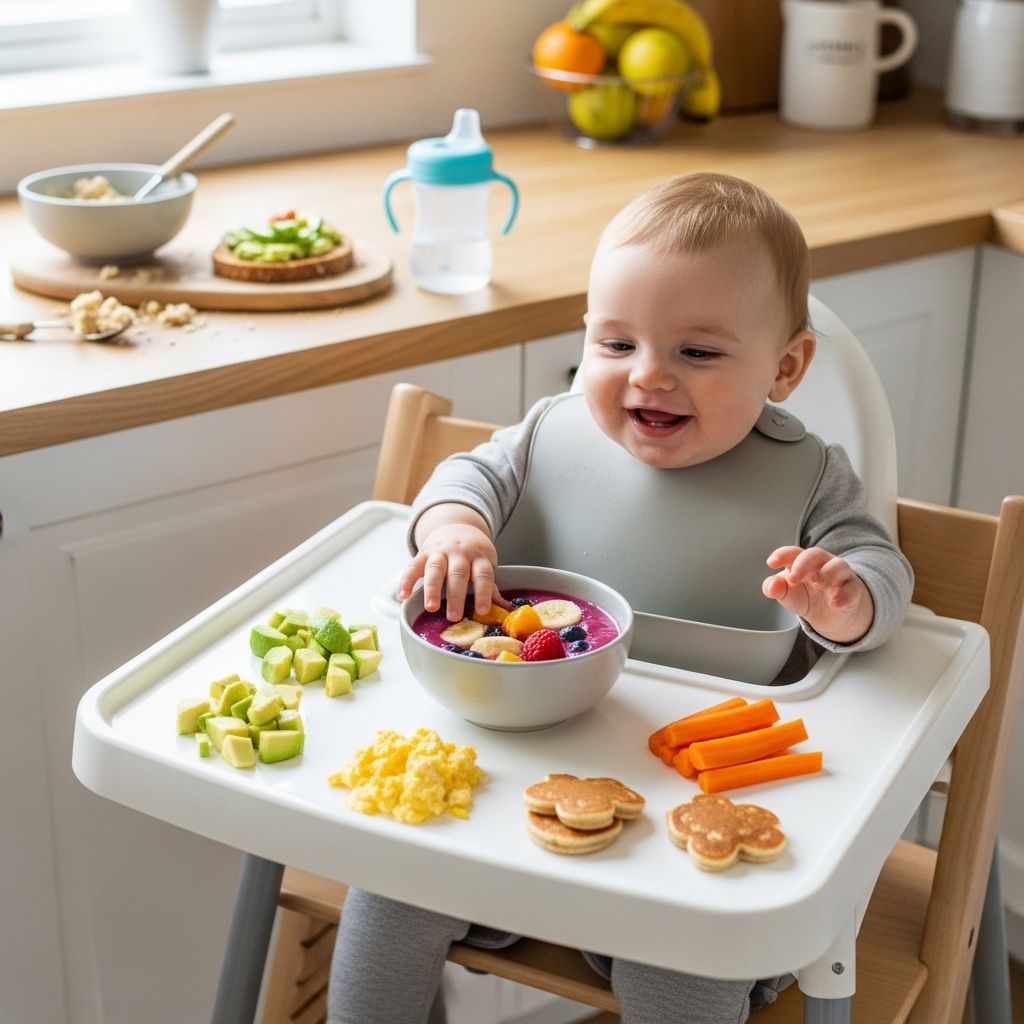
Breakfast with a baby should not feel like a cooking show audition. It can be simple, predictable, and still give your little one the nutrients needed to grow, learn, and explore. This guide walks through baby-friendly breakfast ideas, how to balance nutrients, and realistic shortcuts that work on real mornings, not just weekends.
What Makes A Great Baby Breakfast?
A solid baby breakfast does not need to be fancy. The goal is to offer a mix of nutrients in textures your baby can handle, served in a calm, safe environment where they can practice eating skills.
- Balance over perfection: Aim for a combination of carbohydrates, protein, healthy fats, and some color from fruits or veggies over the course of the day rather than obsessing over each plate.
- Soft, mashable textures: Foods should squash easily between your fingers for younger babies, gradually moving toward more texture as skills grow.
- Variety without overwhelm: Rotate a handful of favorite staples instead of reinventing breakfast every morning.
Age Guide: 6–18 Months At A Glance
Every baby develops at a different pace, but it helps to have a rough roadmap for breakfast expectations. Always follow your pediatrician’s guidance and your baby’s cues.
| Age Range | Main Breakfast Goals | Good Texture Targets |
|---|---|---|
| 6–8 months | Introduce flavors, practice sitting and self-feeding, keep portions small. | Very soft, mashable foods, thick purees, soft strips that bend without snapping. |
| 9–12 months | Encourage self-feeding, increase variety, explore mixed dishes. | Soft bite-sized pieces, thicker textures, gently seasoned family foods. |
| 12–18 months | Move toward family-style breakfasts, build confidence with utensils. | Small, soft chunks; tender finger foods; more complex textures. |
Building A Balanced Baby Breakfast Plate
A simple way to think about baby breakfast is to cover four basic building blocks. You do not need every category at every meal, but including at least two or three makes the plate more satisfying and nutritious.
- Carbohydrates: Oats, soft bread, pancakes, porridge, potatoes, or fruit for quick energy.
- Protein: Eggs, yogurt, cottage cheese, beans, lentils, or finely shredded meats to support growth.
- Healthy fats: Nut or seed butters (thinned), avocado, olive oil, or full-fat dairy to help nutrient absorption and satiety.
- Color from produce: Soft fruits or cooked vegetables to round out fiber and vitamins.
Soft Starts: Breakfast Ideas For 6–8 Month Babies
At this stage, your baby is learning how to move food around the mouth and how to chew and swallow safely. Think “soft, simple, and slightly messy.”
- Creamy grain bowls: Thick oatmeal, millet, or other baby-friendly grains cooked in water or milk, thinned to a safe consistency and topped with mashed fruit or a drizzle of nut butter thinned with extra liquid.
- Yogurt mash-ups: Full-fat plain yogurt mixed with mashed banana, pear, or avocado, served in a bowl with a pre-loaded spoon or as a dip for soft fruit strips.
- Soft fruit sticks: Ripe banana quarters, very ripe peach or pear slices, or lightly steamed apple wedges that can be squashed easily between fingers.
- Egg for beginners: Very soft scrambled egg or a thin, tender omelet cut into strips, cooled, and served without added salt.
Finger Food Fun: 9–12 Month Breakfast Ideas
Many babies in this range love to feed themselves. Breakfast can become a small tasting plate of soft, simple foods they can pick up easily.
- Mini toast soldiers: Strips of soft whole-grain toast spread with mashed avocado, thin hummus, or very thin nut butter.
- Fruit and yogurt bites: Small pieces of soft fruit alongside a small bowl of yogurt; let your baby dip or use a spoon with help.
- Bite-size egg pieces: Soft scrambled egg or an egg-and-vegetable patty cut into small pieces that your baby can grab with thumb and forefinger.
- Soft pancakes or waffles: Tender, lightly browned pieces made from simple batters (such as banana-egg or oat-based mixes) cut into strips or small squares.
Joining The Family Table: 12–18 Month Breakfast Ideas
As your child approaches toddlerhood, breakfast can look more like the rest of the family’s plate, with minor tweaks for safety and size. This is a perfect time to model your own balanced morning meals.
- Deconstructed family plates: If the family is eating eggs, toast, and fruit, serve your toddler a soft version: smaller toast pieces, scrambled egg, and cut fruit.
- Simple breakfast bowls: Layers of yogurt, soft fruit, and finely crushed cereal or soft granola to add texture without hard chunks.
- Leftovers for breakfast: Soft roasted vegetables, bits of tender meat, or rice from dinner can be repurposed with eggs or yogurt on the side.
- Quick snack-style plates: A few cubes of cheese, fruit pieces, a half slice of toast, and a few beans can come together in minutes.
Sample Baby Breakfast Combinations
Use these ideas as templates rather than strict recipes. Swap fruits, grains, and proteins based on what you have and what your baby tolerates well.
| Age | Example Plate | Why It Works |
|---|---|---|
| 6–8 months | Thick oatmeal with mashed banana + a few soft avocado strips. | Soft textures support early eating skills while offering carbs, healthy fats, and fiber. |
| 9–12 months | Soft scrambled egg pieces + toast strips with thin hummus + ripe pear slices. | Mix of finger foods encourages self-feeding and covers protein, carbs, and produce. |
| 12–18 months | Yogurt parfait with fruit chunks and crushed cereal + a small piece of soft cheese. | More complex textures and flavors build confidence and keep your toddler satisfied. |
Baby Breakfast Safety Essentials
Safety matters more than creativity when it comes to baby meals. A few simple habits dramatically reduce the risk of choking and help your baby stay comfortable while eating.
- Always supervise: Stay close, with your baby sitting upright in a secure high chair, not walking or lying down while eating.
- Adjust size and texture: Avoid round, hard, or sticky pieces. Cut foods into thin strips or small, soft cubes and cook until easily squashed.
- Limit added salt and sugar: Babies’ kidneys and taste buds are still developing, so keep seasonings gentle and skip sweeteners where you can.
Allergens And New Foods At Breakfast
Many families use breakfast as a calm, predictable time to introduce new foods or common allergens such as egg, dairy, or peanut in carefully prepared forms. Talk to your healthcare provider if your baby has risk factors for allergies.
- Introduce one new allergen at a time: Offer a small amount and watch for reactions over the next few hours.
- Use baby-safe forms: For example, thin nut butters with water, milk, or yogurt so they are not sticky, and avoid whole nuts or large globs.
- Repeat exposures: If tolerated, serve that food regularly in small amounts so it becomes a normal part of your baby’s diet.
Busy Morning Hacks For Parents
No one has unlimited time in the morning, especially with a baby. A little planning can turn breakfast from stressful to almost automatic.
- Prep once, eat multiple times: Cook a batch of grain porridge, pancakes, or egg muffins on a quieter day and refrigerate or freeze portions for later in the week.
- Keep a breakfast “capsule pantry”: Stock a few reliable items like oats, yogurt, ripe bananas, frozen berries, and whole-grain bread so you always have a simple option.
- Use the freezer wisely: Freeze small portions of cooked fruit, vegetables, or pancakes in labeled containers to reheat quickly.
Signs Your Baby Has Had Enough
Babies are surprisingly good at regulating their intake when given the chance. Learning their signals helps prevent mealtime battles and keeps breakfast pleasant.
- Subtle cues: Turning the head away, pushing the spoon, closing the mouth, or dropping food can mean your baby is done.
- Respect the “no”: Rather than coaxing more bites, end the meal gently and try again at the next scheduled feeding.
- Track patterns, not single meals: Some mornings your baby will eat a lot and some barely anything. Look at intake over several days.
Common Baby Breakfast Mistakes To Avoid
A few small shifts can make breakfast smoother. Many parents fall into these patterns without realizing it, especially when tired or rushed.
- Relying only on pouches or bottles: These can be convenient but do not offer the same practice with chewing and self-feeding as real foods.
- Serving the same meal every day: Favorites are helpful, but occasionally rotating fruits, grains, or proteins builds flexibility and nutrient variety.
- Overfilling the plate: A crowded tray can overwhelm a baby. Start with small portions and add more if needed.
Simple FAQs About Baby Breakfast
Does my baby really need breakfast every day?
Once babies are on a feeding routine that includes solids, breakfast becomes a valuable opportunity to practice eating skills and offer nutrients after a night of sleep. The exact timing and amount will depend on how often your baby still breastfeeds or takes formula, but offering something in the morning helps build a predictable rhythm.
How much should a baby eat at breakfast?
Portions for babies are much smaller than adult servings. Start with just a few bites of each food and let your baby guide how much to eat by following hunger and fullness cues. It is normal for intake to vary from day to day, so focus more on variety and consistency over time than precise volumes at a single meal.
Is it okay to serve eggs every morning?
Eggs can be a nutritious, convenient breakfast option because they provide protein, fat, and important vitamins. If your baby tolerates eggs and your healthcare provider has not advised otherwise, they can appear frequently on the menu, paired with fruits, vegetables, or grains for balance.
What if my baby refuses breakfast?
Occasional refusal is common, especially during teething, minor illness, or growth changes. Offer breakfast at around the same time each day, keep the atmosphere relaxed, and avoid pressure. If your baby consistently refuses most meals or seems uncomfortable, reach out to a pediatrician or feeding specialist for guidance.
Can I offer family cereals to my baby?
Some cereals can work for older babies and young toddlers if they are low in added sugar, not too hard, and served in a safe way, such as softened with milk or yogurt. Always check ingredient lists, avoid hard or round shapes that pose a choking risk, and introduce new items one at a time to watch for any reactions.
Making Breakfast Enjoyable For Everyone
When breakfast becomes a predictable part of your routine instead of a test of creativity, it can be a calm start to the day for both you and your baby. Keep a short list of go-to ideas, offer gentle variety, and give your child space to explore, squish, and learn. Those sticky fingers and crumb-covered high-chair trays are signs that important skills are growing right alongside your baby.