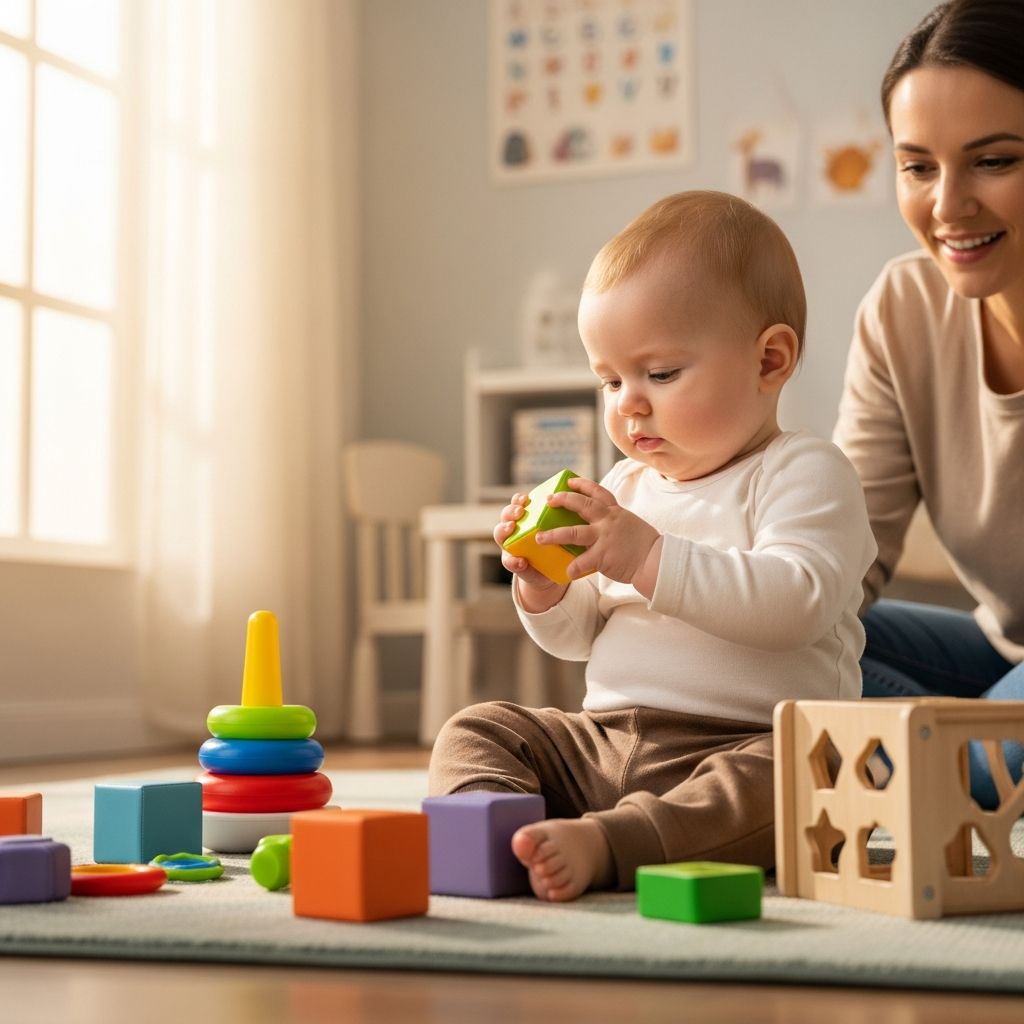
Research in developmental neuroscience reveals that subtle behaviors observed in babies as young as seven months can offer remarkable insights into future cognitive abilities. These early indicators, ranging from a preference for new toys to sustained attention during play, correlate with intelligence scores decades later. Understanding these signs empowers parents and caregivers to foster environments that maximize brain development from the start.
Understanding Cognitive Milestones in the First Year
The first 12 months of life represent a critical window for brain growth, where neural connections form at an unprecedented rate. During this period, infants exhibit behaviors that reflect emerging cognitive skills, such as object recognition, social responsiveness, and problem-solving attempts. Studies tracking thousands of children longitudinally demonstrate that these early patterns are not random but predictive of later academic and intellectual performance.
- Novelty Preference: Babies who show interest in unfamiliar objects over familiar ones display higher curiosity and memory retention, key components of intelligence.
- Task Orientation: Infants capable of focusing on activities without frequent distraction indicate better executive function, which underpins learning and self-regulation.
- Vocalization Patterns: Frequent and varied babbling correlates with verbal IQ development in preschool years.
These milestones are universal yet influenced by individual differences in genetics and surroundings, highlighting the interplay between nature and nurture in shaping young minds.
Landmark Studies Tracking Infancy to Adulthood
Longitudinal research provides the strongest evidence for early prediction of cognition. One prominent investigation followed over 1,000 twins from seven months through age 30, using standardized cognitive assessments at multiple intervals. Results showed that infancy tests accounted for 13% of variance in adult cognitive scores, a modest but significant link. Novelty preference and tester-rated task orientation emerged as the top predictors, with correlation coefficients of 0.16 and 0.18 respectively.
Another population-based cohort in Ireland analyzed data from 8,858 infants at nine months to predict low cognitive ability at age five. A random forest machine learning model, using 15 perinatal features like maternal education and birth weight, achieved an AUROC of 0.77. This model identified 72% of at-risk children with 66% specificity, demonstrating feasibility for early screening.
Earlier work on maternal-infant interactions at four months found that positive maternal affect and vocalizations predicted verbal and performance IQ at ages 4.5 and 7. Regression models explained up to 15% of variance in IQ scores, underscoring the role of emotional bonding.
How Machine Learning Enhances Early Detection
Advancements in artificial intelligence are revolutionizing developmental predictions. Traditional assessments rely on clinical observation, but machine learning processes vast datasets to uncover patterns invisible to the human eye. In the Irish cohort study, models were trained on participant-reported data, excluding invasive measures to ensure scalability.
| Model Type | AUROC | Sensitivity | Specificity | Key Features |
|---|---|---|---|---|
| Random Forest | 0.77 | 72% | 66% | 15 perinatal variables |
| Other ML Models | 0.70-0.75 | 65-70% | 60-65% | Expanded feature sets |
These tools prioritize features available shortly after birth, such as socioeconomic status and early learning environment, enabling interventions before delays become entrenched. While not yet ready for universal rollout, they represent a promising step toward personalized pediatric care.
Genetic vs. Environmental Influences on Early Cognition
Debates in behavioral genetics highlight that while DNA sets a foundation, environment amplifies or dampens potential. Twin studies disentangle these factors: genetic influences on general cognitive ability (GCA) stabilize by age three, capturing 22% of adult variance, while shared environment in the first two years explains an additional 10%.
Polygenic scores derived from large genomic datasets (nearly 1 million individuals) aligned closely with infancy predictions, validating the signals. However, environmental inputs—like responsive parenting—emerge as modifiable levers. For instance, infants in stimulating homes show stronger novelty responses, buffering genetic risks.
Practical Strategies for Parents to Boost Infant Cognition
Armed with this knowledge, caregivers can implement evidence-based practices:
- Provide diverse toys to encourage novelty seeking; rotate items weekly to spark exploration.
- Engage in face-to-face play with exaggerated expressions and vocal variety to model positive affect.
- Maintain consistent routines to build task orientation and reduce overstimulation.
- Read daily, even to newborns, to enhance vocalization and language precursors.
- Monitor perinatal risk factors like low birth weight and seek early evaluations if present.
These actions align with findings that early environments influence up to 10% of lifelong cognitive variability, offering a high return on simple investments.
Limitations and Ethical Considerations in Prediction
Despite excitement, early prediction tools have boundaries. Infant signals explain only 13-15% of adult outcomes, leaving much to later experiences. Over-reliance risks labeling children prematurely, potentially creating self-fulfilling prophecies. Ethical deployment demands transparency, as in explainable AI models that rank feature importance.
Moreover, cultural biases in data could skew predictions; diverse cohorts are essential. Experts advocate for these as supportive tools, not deterministic labels, emphasizing interventions over prognosis.
Future Directions in Developmental Neuroscience
Emerging research explores motor experiences and predictive processing in infants, suggesting active movement refines cognitive forecasts. Wearable tech and home-based AI apps may soon enable real-time monitoring. Integrating genomics, neuroimaging, and behavior promises refined models with higher accuracy.
Ultimately, these advancements could mitigate cognitive disparities by targeting at-risk infants early, promoting equity in educational outcomes.
Frequently Asked Questions (FAQs)
Can a 7-month-old’s intelligence be accurately predicted?
Simple tests at 7 months predict about 13% of adult cognitive variance, mainly through novelty preference and focus. Genetics and later environments play larger roles.
What perinatal factors predict low cognition?
Machine learning identifies 15 factors like low maternal education, preterm birth, and poor home learning environment as key risks for low ability at age 5.
How does parenting affect early predictions?
Positive maternal affect and vocalizations at 4 months predict higher IQ at school age, explaining up to 3% added variance.
Are these predictions fixed or changeable?
No—early signals are modest; enriching environments can enhance trajectories significantly, per twin and environmental studies.
Should parents test their baby’s cognition early?
Pediatric checkups include developmental screens; consult professionals for concerns rather than self-testing to avoid anxiety.
References
- Predicting low cognitive ability at age 5 years using perinatal data — Growing Up in Ireland Cohort Study. 2024. https://pmc.ncbi.nlm.nih.gov/articles/PMC11126385/
- Early Baby Behavior Predicts Adult Cognition and Intelligence — University of Colorado Boulder, PNAS. 2025. https://neurosciencenews.com/neurodevelopment-intelligence-neuroscience-29296/
- Maternal and Infant Affect at 4 months Predicts Performance and Verbal IQ — PMC. 2017. https://pmc.ncbi.nlm.nih.gov/articles/PMC5401788/
- Infants’ predictive minds: The role of motor experience — Society for Research in Child Development. 2024. https://srcd.onlinelibrary.wiley.com/doi/full/10.1111/cdep.12506