Genes form the foundation of every child’s development, influencing everything from eye color to disease susceptibility. As a parent, grasping these biological building blocks equips you to make informed health decisions and anticipate potential challenges.
Foundations of Genetic Science: From DNA to Traits
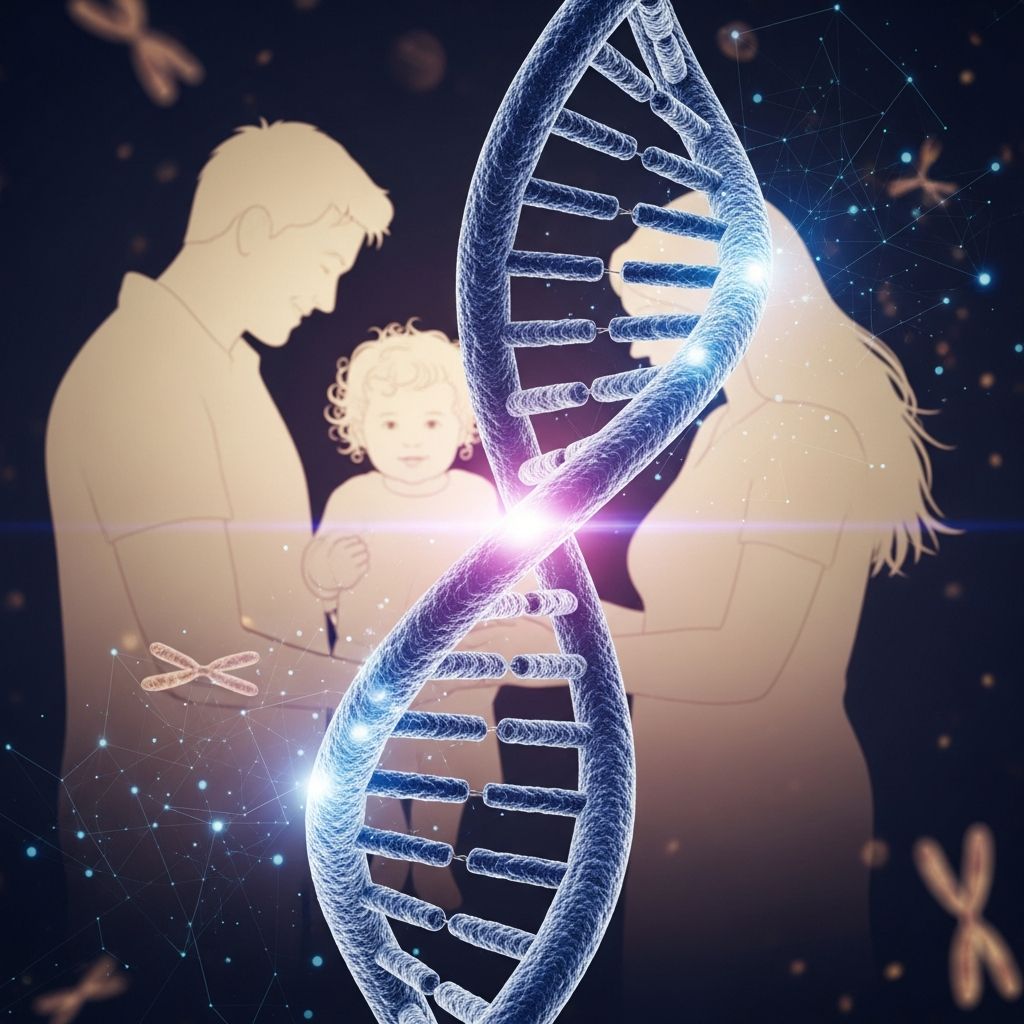
At the core of genetics lies **DNA** (deoxyribonucleic acid), a molecule that stores genetic instructions in every cell nucleus. DNA resembles a twisted ladder, with rungs made of four nucleotide bases: adenine (A), thymine (T), cytosine (C), and guanine (G). These bases pair specifically—A with T, C with G—forming the genetic code.
DNA organizes into **chromosomes**, thread-like structures in the cell nucleus. Humans typically have 46 chromosomes: 23 pairs, with 22 pairs called autosomes and one pair of sex chromosomes (XX for females, XY for males). Each chromosome carries numerous **genes**, segments of DNA that provide recipes for proteins— the molecules driving bodily functions like growth, repair, and immunity.
Genes determine traits through **gene expression**, where DNA instructions are transcribed into RNA and translated into proteins. Variations in gene sequences, known as alleles, create diversity. For instance, different alleles dictate blood types or height ranges. Most alleles are neutral, but some lead to health issues if they disrupt protein function.
- Key Genetic Components:
- DNA: The blueprint molecule.
- Genes: Protein-coding units, about 20,000-25,000 in humans.
- Chromosomes: DNA organizers, 46 total.
- Alleles: Gene versions inherited from each parent.
Understanding these elements helps parents recognize how genetics interacts with environment and lifestyle to shape a child’s health profile.
How Genetic Information Passes Through Families
Children inherit half their genes from each parent, creating a unique genetic mix called the **genotype**. This transmission follows predictable patterns, crucial for spotting hereditary risks.
| Pattern | Description | Examples | Risk to Offspring |
|---|---|---|---|
| Autosomal Dominant | One altered gene copy causes the trait; affects males/females equally. | Huntington’s disease | 50% chance per child |
| Autosomal Recessive | Two altered copies needed; carriers unaffected. | Cystic fibrosis | 25% if both parents carriers |
| X-Linked Recessive | Affects males more (one X chromosome); females often carriers. | Hemophilia | Sons: 50%; Daughters: carriers |
| Mitochondrial | Inherited from mother via egg cell mitochondria. | Some muscle disorders | All children at risk |
Family health history acts as a genetic roadmap. Shared alleles among relatives explain common traits or conditions, guiding preventive care.
Not all traits are purely genetic; **multifactorial** conditions like diabetes blend genes, diet, and environment. Advances like the Human Genome Project enable **personalized medicine**, tailoring treatments to individual genetics.
Spotting Genetic Variations and Their Health Impacts
Genetic changes, termed **variants** or mutations, alter DNA sequences. Most are harmless, but some impair proteins, causing disorders. Categories include:
- Point Mutations: Single base changes, e.g., sickle cell anemia.
- Deletions/Insertions: Missing or extra bases, shifting reading frames.
- Chromosomal Abnormalities: Extra/missing chromosomes, like Down syndrome (trisomy 21).
These can arise spontaneously (de novo) or inherit. Early detection via prenatal screening or newborn tests prevents complications.
Genes influence nearly every trait and disease, from rare syndromes to common allergies. Variants heighten risks for conditions like cancer or heart disease, but lifestyle modifications mitigate many.
Genetic Testing: Tools for Parental Insight
**Genetic testing** analyzes DNA for specific variants, offering clarity on risks, carrier status, or diagnoses. Tests range from blood draws to saliva samples, with results guiding care.
Types of Tests:
- Carrier Screening: Detects silent mutations for family planning.
- Prenatal Testing: Amniocentesis or noninvasive methods check fetal DNA.
- Newborn Screening: Routine heel-prick tests 30+ disorders.
- Diagnostic Testing: Confirms suspected conditions post-symptoms.
- Pharmacogenomics: Predicts drug responses.
Consult genetic counselors—experts interpreting results, discussing implications, and outlining options like IVF with preimplantation diagnosis.
Testing empowers proactive steps: early interventions, specialized diets, or surveillance for at-risk children.
Integrating Genetics into Family Health Strategies
Armed with genetic knowledge, parents can partner with providers for holistic care. Start with a **pedigree chart**—a family tree noting health patterns—to highlight risks.
Regular check-ups incorporate genomic insights, personalizing vaccines, nutrition, or therapies. For example, BRCA variants prompt breast cancer monitoring.
Ethical considerations abound: privacy, discrimination fears, and emotional impacts. Laws like GINA protect against genetic bias in insurance/employment. Discuss results age-appropriately with children to foster health literacy.
Future horizons include **gene therapy**, editing faulty genes (e.g., CRISPR for sickle cell), and AI-driven risk prediction—transforming pediatric care.
Common Myths and Facts About Child Genetics
- Myth: Genetics predetermine destiny. Fact: Environment modulates 70-90% of complex traits.
- Myth: All mutations are bad. Fact: Many confer advantages, like malaria resistance in sickle cell carriers.
- Myth: Genetic tests are 100% accurate. Fact: False positives/negatives occur; counseling clarifies.
Frequently Asked Questions (FAQs)
Should every family pursue genetic testing?
Not routinely; prioritize if family history suggests risks or during pregnancy. Consult providers for tailored advice.
Can lifestyle override bad genes?
Often yes—exercise, diet, and screenings reduce many genetic risks significantly.
What if testing reveals a serious risk?
Counselors help navigate options, from monitoring to therapies, ensuring informed choices.
Is genetic counseling covered by insurance?
Many plans cover it for high-risk cases; verify with your provider.
How do I build a family health history?
Interview relatives on conditions, ages, and patterns; use CDC tools for guidance.
References
- Basic Genetics and Genomics: A Primer for Nurses — American Nurses Association, OJIN: Online Journal of Issues in Nursing. 2009-05-28. https://ojin.nursingworld.org/table-of-contents/volume-14-2009/number-2-may-2009/articles-on-previously-published-topics/basic-genetics-and-genomics/
- Genetics Basics | Genomics and Your Health — Centers for Disease Control and Prevention (CDC). 2024-01-15. https://www.cdc.gov/genomics-and-health/about/index.html
- Genetics Essentials — Harvard Medical School, HMX Online Learning. 2025-06-10. https://learn.hms.harvard.edu/programs/genetics-essentials
- A Guide for Understanding Genetics and Health — CARES Foundation. 2018-01-01. https://caresfoundation.org/wp-content/uploads/2018/01/A-guide-to-understanding-genetics-and-health.pdf
- GENETICS 101 – Understanding Genetics — National Center for Biotechnology Information (NCBI), National Institutes of Health (NIH). 2023-11-20. https://www.ncbi.nlm.nih.gov/books/NBK115568/
- Understanding Genetics: The Basics — Platelet Disorder Support Association (PDSA). 2024-03-05. https://pdsa.org/genetics-basics