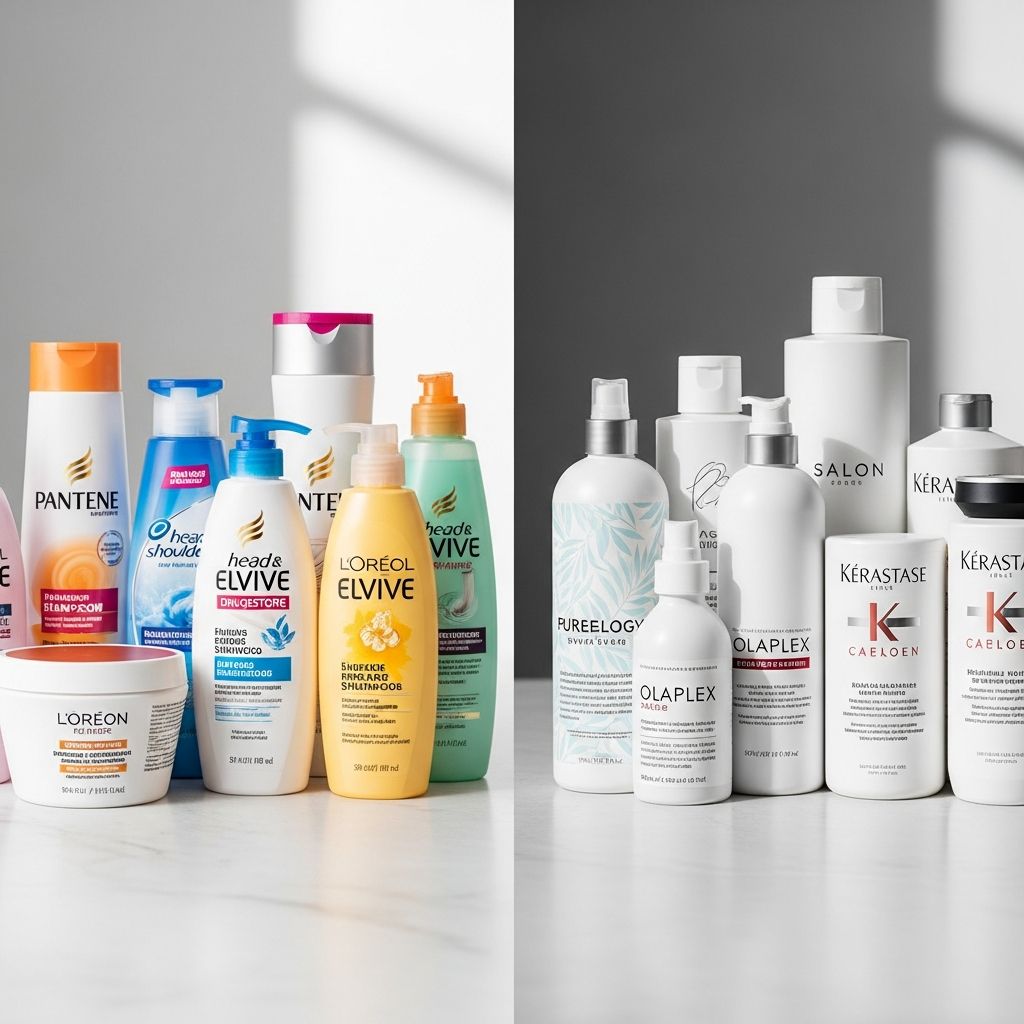
Walk into any store that sells shampoo and you are instantly hit with a wall of promises: more shine, more volume, stronger, smoother, thicker, longer. Some bottles cost the same as a sandwich, others rival a nice dinner out. It is easy to assume that a higher price must mean better hair, but that is not always how shampoo works. This guide breaks down what you are really paying for with drugstore and salon shampoos so you can choose based on facts, not just marketing.
How Shampoo Actually Works
Before comparing price tags, it helps to understand what shampoo is supposed to do. At its core, shampoo is a blend of cleansing agents, conditioning ingredients, and additives that change how the hair looks and feels. The goal is to remove oil, sweat, and product buildup from the scalp without stripping the hair so aggressively that it becomes brittle or frizzy.
- Cleansers (surfactants): These are the ingredients that create lather and break up oil and dirt so they rinse away easily.
- Conditioning agents: These coat the hair shaft to reduce friction, add softness, and help with detangling.
- Additives: Proteins, oils, plant extracts, and other ingredients are added to support specific results such as color protection or frizz control.
Both drugstore and salon shampoos use these same basic building blocks. The real question is how much of each, what quality level, and how well the overall formula is balanced.
Price vs. Value: Looking Beyond the Sticker
At first glance, a drugstore shampoo that costs a fraction of a salon bottle seems like the obvious win for your budget. The catch is that price per bottle is not the same as price per wash. Concentration, how much you have to use, and how often you wash your hair can all change the real cost.
| Factor | Typical Drugstore Shampoo | Typical Salon Shampoo |
|---|---|---|
| Upfront price | Low | High |
| Concentration | More diluted; often need a larger handful | More concentrated; smaller amount can be enough |
| Cost per wash | May be low or moderate, depending on how much you use | Can end up similar to mid-range drugstore options |
| Longevity of one bottle | Often runs out quickly if overused | Can last months if you use small amounts and do not wash daily |
| Impact on long-term hair health | Ranges from fine to damaging depending on formula and frequency | Often designed with long-term condition and color protection in mind |
When you think in terms of cost per wash and long-term condition, the price difference between drugstore and salon shampoo becomes less dramatic. The question shifts from “Which is cheaper?” to “Which gives better value for my hair’s needs?”
Ingredients: What You Are Really Paying For
Two bottles can share similar claims on the label but be very different on the inside. To understand where your money is going, look at three broad ingredient categories: cleansers, conditioning agents, and extras like proteins or plant extracts.
Cleansers and Suds
Many shampoos, especially older or cheaper formulas, rely heavily on strong surfactants. These create big, satisfying lather and remove oil quickly but can also strip the scalp and hair of too much natural moisture. More balanced or gentle formulas may mix milder cleansers, sometimes at higher cost, to keep hair clean without that squeaky, dry feeling.
- Drugstore shampoos often emphasize strong cleansing and big lather because that immediately feels effective to the user.
- Salon shampoos often favor a blend of surfactants designed to clean thoroughly while minimizing irritation and dryness, especially for processed hair.
Conditioning Agents and Slip
Most shampoos include ingredients that make hair feel instantly soft and slippery, but not all slip is created equal. Some conditioning agents sit on the surface and build up over time, while others are lighter and rinse more cleanly.
- Budget formulas may rely on heavier, cheaper ingredients that coat the hair to create the illusion of health.
- Higher-end formulas often use smaller or more advanced conditioning molecules that are designed to smooth without creating as much buildup.
Active Add-Ons: Proteins, Oils, and Extracts
Here is where two products that look similar on paper can diverge. Nearly every shampoo can list a trendy oil or botanical on the bottle, but the actual amount and quality matter. A single drop included for marketing purposes will not perform the same as a thoughtfully measured dose in a well-tested formula.
- Drugstore lines sometimes feature buzzword ingredients at very low concentrations just to make the front label more appealing.
- Salon formulas are more likely to rely on specific proteins, lipids, or oils in concentrations chosen to support repair, strength, or moisture balance.
Performance on Different Hair Types
Not every head of hair needs a high-end formula. Hair that is healthy, unprocessed, and fairly easy to manage may respond just fine to simple, affordable shampoos. On the other hand, hair that has been colored, bleached, straightened, or curled chemically usually needs gentler cleansing and more focused care.
| Hair Type / Situation | When Drugstore Can Work | When Salon May Be Better |
|---|---|---|
| Natural, untreated hair | Simple formulas can keep hair clean and manageable, especially if you are not using many styling products. | Useful if you want specific benefits such as smoothing, curl definition, or reduced frizz in a humid climate. |
| Color-treated hair | Some drugstore lines offer color-safe options, but they may not protect vibrancy for as long. | Color-focused formulas can help minimize fading and dryness between salon visits. |
| Bleached or highlighted hair | Mild, sulfate-conscious drugstore formulas can be okay if hair is in good shape and you use masks regularly. | Stronger emphasis on repair, moisture, and cuticle protection can prevent breakage and straw-like texture. |
| Curly or coily hair | Curl-specific drugstore options can be perfectly usable, especially if you co-wash or deep-condition routinely. | Moisture-rich, low-lather, curl-specific professional lines often give better definition and less frizz. |
| Fine, oily-prone hair | Lightweight, clarifying drugstore shampoos can keep roots fresh at a low cost. | Targeted volume formulas can lift without over-drying or roughening the cuticle. |
If your hair is resilient and low-maintenance, you may not see a dramatic payoff from expensive shampoo. If your hair is fragile, heavily processed, or very textured, the difference in formula design is more likely to show up in how your hair feels and behaves.
Scalp Health: The Often Ignored Piece
Shampoo is for the scalp first and the hair second. If your scalp is unhappy, your hair will eventually show it. Over-cleansing can lead to itching, flaking, or rebound oiliness when the scalp tries to compensate for stripped oils. On the other hand, under-cleansing or too much buildup from heavy conditioners can clog follicles and make roots look limp and greasy.
- If you have a sensitive or easily irritated scalp, formulas with harsh surfactants or strong fragrances, which are common in many mass-market products, may cause discomfort over time.
- Shampoos that aim to respect the skin’s natural balance, regardless of price category, tend to perform better in the long run because they support a healthier environment for hair growth.
When comparing products, consider how your scalp feels a day or two after washing, not just how your hair feels in the shower. Redness, tenderness, or persistent itch are signals that the formula might be too aggressive or not well-matched to your needs.
Marketing Myths to Stop Believing
Haircare advertising thrives on big promises and half-truths. To make smart choices, it helps to separate myth from reality. Here are some common assumptions that deserve a second look.
- Myth: Price always equals quality. A higher price can reflect better ingredients and more research, but it can just as easily reflect packaging, branding, or celebrity endorsements.
- Myth: Drugstore shampoos are all harsh. Plenty of affordable formulas now avoid some of the stronger surfactants and include gentler cleansing systems.
- Myth: Salon shampoos are just the same thing in a fancier bottle. There can be real differences in concentration, pH balance, and ingredient quality, even if a few items on the ingredient list look similar at a glance.
- Myth: You must stick to one brand forever. Hair and scalp needs can change with seasons, hormones, and styling habits. It is perfectly reasonable to rotate between products as those needs evolve.
How to Read a Shampoo Label Like a Pro
Learning to decode the back of the bottle is one of the most valuable skills for making budget-friendly and hair-friendly decisions. You do not need to be a chemist, but a few patterns are worth watching for.
- Look at the first five ingredients: These typically make up the bulk of the formula. If water is followed by strong cleansers and very little else, expect a more astringent feel.
- Notice where the star ingredients appear: If that exotic oil or plant extract is buried near the end, it is probably included at low levels mainly for marketing.
- Watch for strong fragrance: If fragrance is high on the list or your nose is overwhelmed, the formula may be more likely to irritate sensitive scalps.
- Pay attention to claims vs. reality: Terms like “repair” or “strengthen” do not turn a shampoo into a miracle treatment. Think of shampoo as the cleanser and rely on masks or leave-ins for deeper repair.
The more you practice comparing labels across both drugstore and salon aisles, the easier it becomes to spot patterns and find formulas that align with your hair goals and budget.
When to Save and When to Splurge
It is completely possible to build a smart routine that mixes both affordable and premium products. The key is knowing where spending more tends to pay off and where it is safe to economize. Think in terms of priorities rather than loyalty to one price range.
Good Times to Save
- Your hair is healthy, undamaged, and air-dries well without much frizz.
- You wash your hair frequently because of workouts or a naturally oily scalp.
- You use masks, conditioners, or leave-in treatments to handle most of the repair and hydration work.
- You have short hair that is cut often and does not carry damage for long.
Smart Times to Splurge
- You invest in professional color services and want to minimize fading and dryness.
- Your hair has been bleached, relaxed, permed, or otherwise chemically altered.
- You have curls or coils that are prone to dryness, tangling, or breakage.
- Your scalp is sensitive, easily irritated, or prone to discomfort with heavily fragranced formulas.
Think of shampoo not as a status symbol but as a tool. Sometimes a basic, inexpensive tool is all you need. Sometimes the job is delicate enough that a more specialized tool really does work better and saves you trouble later.
Building a Balanced Hair-Wash Routine
Whether you choose drugstore, salon, or a mix, how you use your shampoo makes a big difference. Technique, frequency, and supporting products all affect how your hair and scalp respond over time.
- Focus shampoo on the scalp: Most of the product should go near the roots where oil and sweat accumulate. The lather running through the lengths is usually enough for the ends.
- Use the right amount: A small, coin-sized amount of a concentrated formula can be more effective than a large handful of a diluted one.
- Rinse thoroughly: Residue from either cheap or expensive shampoos can leave hair dull and scalp itchy.
- Pair with the right conditioner: Even the best shampoo needs support. Choose a conditioner that matches your hair’s texture and damage level.
- Adjust with the seasons: You may need more clarifying in hot, humid months and more moisture in dry or cold weather.
A thoughtful routine can help an affordable shampoo perform much better, and it allows high-end formulas to show their full potential instead of being sabotaged by poor habits.
Frequently Asked Questions
Is salon shampoo always better than drugstore shampoo?
No. Some salon shampoos are noticeably more refined in terms of ingredients, concentration, and long-term performance, but others are mainly about branding. Likewise, some drugstore shampoos are harsh, while others are well-balanced and gentle enough for daily use. The key is how your hair and scalp respond over several weeks, not just the first wash.
Can I mix drugstore and salon products in the same routine?
Absolutely. Many people use an affordable clarifying shampoo to remove buildup occasionally and a higher-end, targeted shampoo on the days they want to baby their hair. You can also invest in a salon conditioner or mask while keeping shampoo on the cheaper side, or vice versa, depending on your priorities.
What if I do not notice a difference when I switch to a pricier shampoo?
If your hair is relatively undamaged and easygoing, you might not feel a dramatic change, especially right away. That does not necessarily mean the formula offers no benefits, but it does mean you are free to prioritize your budget. If there is no clear improvement after a few weeks, there is no reason to keep paying extra just for the label.
How often should I wash my hair?
There is no single rule. Some scalps are happiest with daily washing, while others prefer every few days. A good guideline is to wash when your scalp feels oily, itchy, or weighed down, not simply out of habit. If you need to wash very frequently, choosing a gentler shampoo becomes more important to avoid irritation and dryness.
What matters more: shampoo or conditioner?
Shampoo impacts the scalp and sets the stage by removing buildup, while conditioner directly influences how soft, smooth, and manageable the hair feels. In many cases, a decent shampoo combined with a truly effective conditioner or mask offers more visible results than splurging on shampoo alone. Ideally, they work together, but if you must choose one to upgrade, conditioner is often the better investment for mid-lengths and ends.
Final Thoughts: Your Hair, Your Priorities
The battle between drugstore and salon shampoo is not about declaring one side the universal winner. It is about figuring out where your hair, scalp, lifestyle, and budget intersect. Some people genuinely benefit from professional formulas with carefully chosen ingredients and higher concentration. Others get perfectly good results from affordable options and prefer to invest their money in treatments, styling tools, or something completely unrelated to beauty.
Once you understand how shampoo works, how to read a label, and what your particular hair actually needs, you are free to walk past the marketing wars and pick a bottle with confidence—whether it comes from the drugstore shelf or the salon counter.