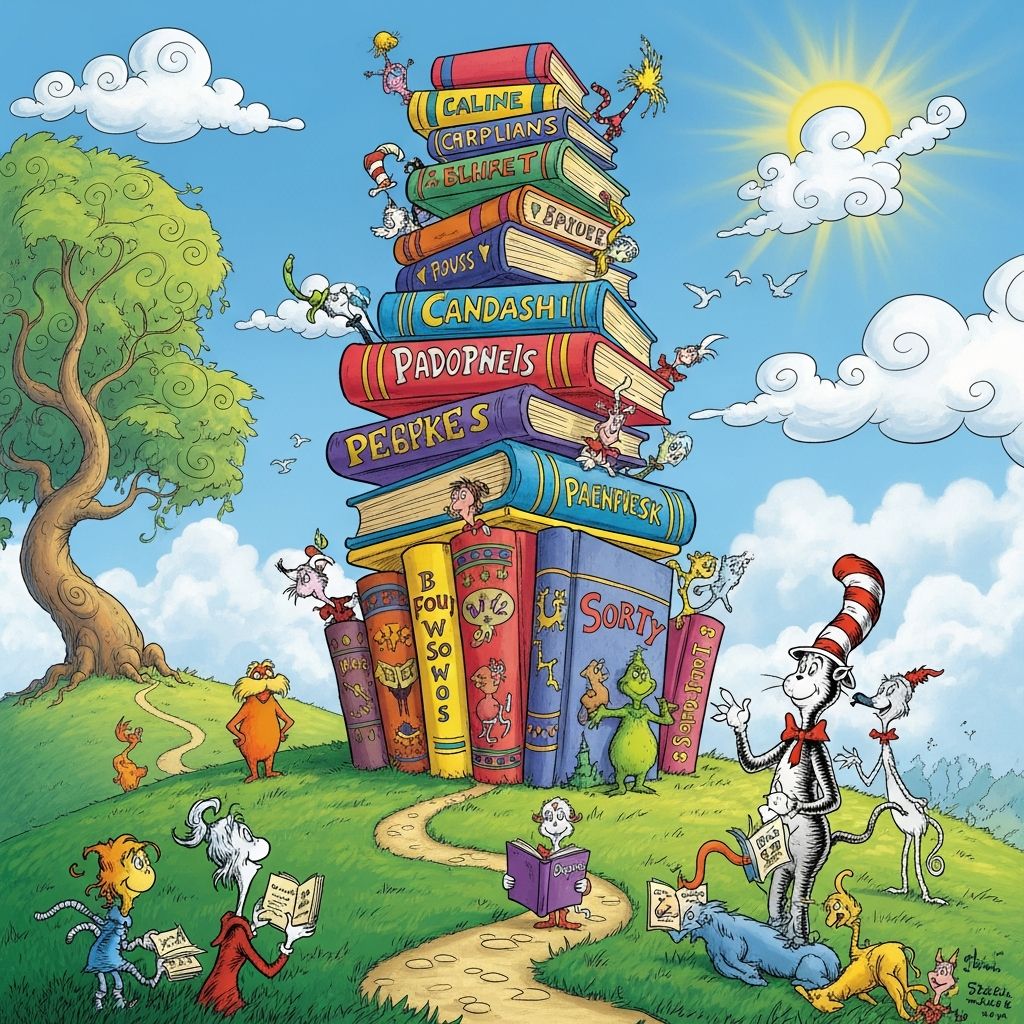
Dr. Seuss picture books are playful, rhyming, and often downright silly, yet behind the whimsical creatures and invented words sit surprisingly deep lessons about courage, empathy, fairness, and personal responsibility.[web:1][web:3] When parents understand those themes, every bedtime story can double as a gentle, age-appropriate ethics class.[web:2]
Why Dr. Seuss Still Matters for Modern Families
Many Dr. Seuss books tackle complex topics like prejudice, environmental stewardship, and perseverance in ways that children can grasp without feeling lectured.[web:2][web:4] They also invite parents into honest conversations about how to treat others, how to handle mistakes, and how to make thoughtful choices in a confusing world.[web:3]
Instead of simply entertaining, these stories model critical thinking and moral imagination, helping kids see that their actions have consequences and that even small voices can matter in big ways.[web:3] That blend of fun and depth is what keeps these books in heavy rotation across generations.[web:1]
Key Themes in Dr. Seuss Books
While each title has its own flavor, certain themes appear again and again across Dr. Seuss’s work, making his books valuable tools for parents who want to raise thoughtful, kind kids.[web:1][web:2]
- Respect for differences: Stories about characters who look or live differently often challenge prejudice and social exclusion in a child-friendly way.[web:2][web:4]
- Environmental and social responsibility: Several books show how unchecked greed or carelessness can damage communities and ecosystems.[web:3][web:4]
- Perseverance and courage: Characters who keep going when things are hard help kids learn that effort and resilience matter.[web:1][web:3]
- Honesty and accountability: Some tales show the cost of selfishness or denial and highlight the power of saying “I was wrong” and making amends.[web:1]
Big Lessons in Well-Known Seuss Stories
The following books are widely available and frequently recommended when adults talk about the deeper messages in Dr. Seuss’s work, especially around empathy, fairness, and personal growth.[web:2][web:4] Each sub-section focuses on the kinds of conversations parents can spark rather than on retelling the plot.
The Lorax: Caring Beyond Yourself
The Lorax is often described as a parable about over-consumption and environmental damage, showing what can happen when profit outruns respect for nature.[web:2][web:4] The figure of the Lorax speaks up for trees and animals that cannot defend themselves, emphasizing the importance of using one’s voice on behalf of vulnerable beings.[web:2]
- Ask children who, or what, might need someone to “speak for” them in real life, such as animals, younger kids, or classmates who are being ignored.[web:2]
- Connect the story to daily habits: wasting paper, littering, or choosing reusable items can all be discussed through the lens of responsibility.[web:4]
Horton Hears a Who!: Listening to Small Voices
In Horton Hears a Who!, an elephant protects a tiny community that others refuse to believe exists, illustrating the idea that every person has inherent worth regardless of size or power.[web:3][web:4] Horton’s repeated insistence that a person is important “no matter how small” has become a widely cited phrase around dignity and inclusion.[web:3]
- Use the story to talk about how it feels to be ignored and why children should pay attention to quiet classmates or siblings.[web:3]
- Highlight Horton’s persistence as an example of standing up for others even when it is unpopular.[web:3]
The Sneetches and Other Stories: Moving Beyond Appearance
The title story in The Sneetches and Other Stories centers on birdlike creatures split into groups based on who has a star on their belly, offering a clear, child-level critique of discrimination based on looks or status.[web:2][web:4] As the characters chase status symbols, the story also questions consumerism and the idea that worth comes from external markers.[web:1][web:4]
- Invite kids to name ways people are treated differently in the real world due to clothing, skin color, or toys, and why that feels unfair.[web:2]
- Discuss how chasing the “right” brand or look can leave everyone exhausted and unhappy, just like the Sneetches after their repeated changes.[web:1]
Green Eggs and Ham: Curiosity Over Fear
Green Eggs and Ham centers on a character who insists he will not try a new dish, no matter how it is offered, until persistence and curiosity finally win out.[web:1] The book is often used as a simple way to talk about being open-minded, trying new experiences, and questioning snap judgments.[web:1]
- Link the story to picky eating, new activities, or meeting new friends, showing that it is okay to be cautious but worth giving things a fair chance.[web:1]
- Focus on the idea that you can still say “no” after you try something, but saying “never” shut down learning.[web:1]
How the Grinch Stole Christmas!: Rethinking What Matters
How the Grinch Stole Christmas! challenges the belief that celebrations are mainly about gifts and decorations, suggesting instead that belonging and shared joy are what truly count.[web:2] The story shows a character whose bitterness softens when he witnesses a community finding happiness without their material trappings, making it a natural fit for holiday conversations.[web:2]
- Ask children what they think makes a good holiday or birthday: presents, people, traditions, or something else.[web:2]
- Explore why the main character might have been so closed off in the first place, opening space for empathy toward grumpy or lonely people.[web:2]
Thidwick the Big-Hearted Moose: Healthy Boundaries
In Thidwick the Big-Hearted Moose, a kind animal allows more and more guests to occupy his antlers until his generosity becomes a burden, which readers and commentators often interpret as a lesson about setting limits and not letting others take advantage.[web:4] The story can help both children and adults think about the balance between kindness and self-respect.[web:4]
- Talk about situations where saying “yes” too often has made your child feel overwhelmed or resentful and brainstorm polite ways to say “no.”[web:4]
- Frame boundaries as a way of protecting one’s ability to help in sustainable ways instead of as selfishness.[web:4]
Oh, the Places You’ll Go!: Navigating Ups and Downs
Oh, the Places You’ll Go! is frequently mentioned in discussions of life transitions because it addresses both exciting opportunities and inevitable setbacks.[web:2] Unlike some children’s books, it acknowledges confusion, loneliness, and waiting, while still affirming the reader’s ability to keep moving forward.[web:2]
- Use this book around times of change—starting school, moving, or graduating—to talk openly about mixed feelings.[web:2]
- Highlight the message that progress is not a straight line, and that pauses and detours are part of growth rather than signs of failure.[web:2]
Quick Reference: Seuss Books and Their Central Messages
Parents often want a simple way to match a book to a particular value or life skill they hope to emphasize in a given season.[web:1][web:2] The table below summarizes commonly discussed themes associated with several popular Dr. Seuss titles.
| Book Title | Core Message | Best For Conversations About |
|---|---|---|
| The Lorax | Responsibility for the environment and the impact of unchecked greed.[web:2][web:4] | Pollution, conservation, speaking up for vulnerable beings.[web:2] |
| Horton Hears a Who! | Respecting every individual and defending those who are easily ignored.[web:3] | Bullying, inclusion, standing up for others.[web:3] |
| The Sneetches and Other Stories | Rejecting prejudice based on appearance or status symbols.[web:2][web:4] | Diversity, stereotypes, consumerism.[web:2] |
| Green Eggs and Ham | Trying new things before deciding you dislike them.[web:1] | Food fussiness, new activities, open-mindedness.[web:1] |
| How the Grinch Stole Christmas! | Finding joy in relationships and community rather than possessions.[web:2] | Holidays, generosity, empathy for lonely people.[web:2] |
| Thidwick the Big-Hearted Moose | Balancing kindness with the need for boundaries.[web:4] | Saying no, emotional labor, fairness in friendships.[web:4] |
| Oh, the Places You’ll Go! | Facing life’s ups and downs with resilience and flexibility.[web:2] | Transitions, growth mindset, dealing with setbacks.[web:2] |
Turning Story Time into Growth Time
Dr. Seuss books become even more powerful when parents pair the reading with small rituals that encourage reflection and dialogue.[web:1][web:3] Simple questions and actions can reinforce the ideas without making the experience feel like a lesson plan.
- Ask open questions: “What do you think this character should do?” or “How would you feel in that situation?” invite children to reason through moral choices.[web:3]
- Connect to daily life: After finishing a book, help kids find one tiny action they can take that week based on the story’s theme, like picking up litter or checking on a lonely classmate.[web:2]
- Revisit the same story: Returning to the same book at different ages lets children notice new angles and deepens understanding over time.[web:1]
Frequently Asked Questions About Dr. Seuss and Life Lessons
Are Dr. Seuss books too heavy for young kids?
Despite the serious ideas embedded in many of these titles, the playful language and visual humor keep the tone light enough for even preschoolers.[web:1][web:3] Parents can adjust how deeply they discuss the themes based on age, focusing on simple notions like kindness or trying new things with the youngest readers.[web:2]
How often should families read these books?
There is no strict rule, but regularly rotating a few message-rich titles into your usual reading stack helps keep the ideas fresh without feeling repetitive.[web:1] Some families like to align certain books with specific seasons or milestones, such as reading Oh, the Places You’ll Go! before school starts or at the end of the year.[web:2]
Can older children still benefit from Dr. Seuss?
Older kids often enjoy revisiting these stories with a more analytical lens, spotting satire, symbolism, or social commentary they missed when they were younger.[web:1][web:5] Inviting them to compare a Seuss story to current events or personal experiences can turn a quick read into a thoughtful conversation about values and choices.[web:3]
How do these books compare to other moral tales?
Unlike some didactic stories that simply label behavior as good or bad, many Dr. Seuss books allow room for ambiguity and growth, which can feel more realistic to kids.[web:2][web:3] That nuance encourages children to think critically rather than just memorize rules, aligning with modern approaches to social-emotional learning.[web:2]
Helping Kids Write Their Own Stories
Perhaps the greatest gift of reading Dr. Seuss is that children begin to see themselves as protagonists in their own unfolding stories, capable of making wiser, kinder choices as they grow.[web:1][web:3] When families treat these books as springboards for reflection rather than just quick entertainment, they help young readers connect delight with responsibility and imagination with integrity.[web:2]