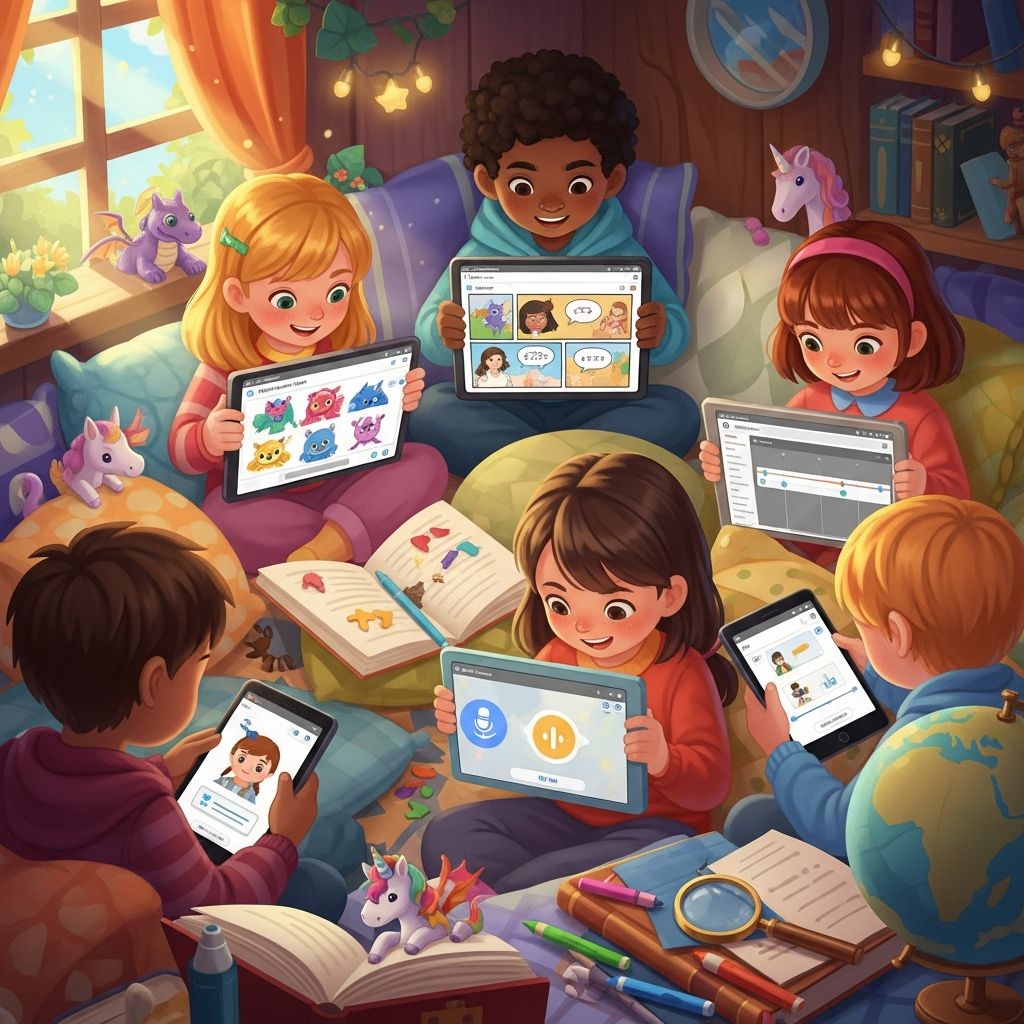
Storytelling stands as a cornerstone of early childhood development, weaving together imagination, language mastery, and emotional growth. In today’s digital era, innovative apps transform this timeless activity into interactive journeys that captivate young minds. These tools empower children to craft their own tales, explore vivid narratives, and build essential skills like vocabulary expansion and problem-solving. Drawing from research, such apps not only entertain but also deliver measurable cognitive benefits, making them invaluable for parents and educators alike.
Why Storytelling Matters for Young Minds
From boosting literacy to fostering empathy, storytelling offers profound advantages. Regular exposure to narratives helps children grasp new words, sharpen listening skills, and develop phonemic awareness—key precursors to reading and writing. It sparks imagination, allowing kids to visualize characters and events, which in turn hones creative thinking and problem-solving abilities.
Structurally, stories with clear beginnings, middles, and ends aid memory retention by sequencing events logically. Emotional ties to characters make details stick, enhancing recall and overall cognitive progress. Moreover, interactive elements like rhymes or repetition predict outcomes, reinforcing language patterns and making sessions memorable.
Research underscores these gains: A study from Florida International University’s Center for Children and Families confirms educational apps, particularly those targeting math and language, support early learning effectively. Children using such apps show improved letter knowledge, phonological awareness, and vocabulary—foundational for academic success.
Key Benefits of Digital Storytelling Tools
Unlike passive media, these apps promote active participation. Kids don’t just watch; they shape stories, select paths, and voice characters, blending multisensory inputs—visuals, sounds, and touch—for deeper engagement. This interactivity revolutionizes learning: Children absorb language actively, practice communication, and extend skills offline.
- Language Enhancement: Navigating tales exposes kids to rich vocabulary and prompts verbal interaction, building grammar and expression.
- Cognitive Boost: Following plot twists trains focus, analytical thinking, and memory through challenges embedded in narratives.
- Creativity Spark: Customizable stories let children co-create, visualizing scenes dynamically and inventing outcomes.
- Social-Emotional Growth: Exploring characters’ feelings cultivates empathy, conflict resolution, and emotional literacy.
- Memory and Comprehension: Multisensory cues ensure better retention, with play-linked stories yielding detailed retellings.
High-quality apps supplement traditional methods with feedback, rewards, and independent practice, addressing subjects like math while building digital fluency. Immersive graphics and audio create adventure-like experiences, sustaining interest and comprehension.
Curated Selection of Top Storytelling Apps
Here are standout apps tailored for children aged 3-8, each blending education with delight. These picks prioritize safety, personalization, and proven engagement, inspired by apps like Smart Tales and ToyPal that combine stories with STEM and values.
1. Narrative Weaver Pro
This app turns kids into story architects with drag-and-drop scenes, character customizers, and voice recording. Children build tales from templates or scratch, adding animations and sounds. Ideal for ages 4-7, it fosters sequencing skills and expressive narration. Parents note improved confidence in sharing stories at school. Features include 50+ themed worlds and progress trackers.
2. TaleTwist Adventures
Featuring branching narratives, this app lets users choose hero paths in fantasy realms. Touch-activated dialogues teach vocabulary, while puzzles unlock chapters. Backed by literacy research, it excels in phonological awareness and comprehension for 3-6-year-olds. Offline mode and parental controls ensure safe play.
3. StorySpark Creator
Aimed at budding authors, StorySpark offers AI-assisted prompts where kids input ideas, generating illustrated drafts. They edit plots, rhymes, and endings collaboratively. With 500+ activities, it mirrors comprehensive platforms supporting math and values alongside stories. Great for family bonding sessions.
4. ImaginaTales Interactive
This multisensory gem uses AR to overlay stories on real-world objects—turn a toy into a dragon! Interactive choices drive emotional story arcs, building empathy. Studies link such immersion to better recall and creativity. Suited for 5-8-year-olds, with rhyme-heavy tales for memorization.
5. Epic Yarn Spinner
Personalized paths adapt to skill levels, weaving education into fun yarns. Kids record narrations, remix tales, and share safely. Like top-rated apps, it provides hours of STEM-infused content, aiding early math and literacy. Rewards motivate repeated use, enhancing independent learning.
| App Name | Age Range | Key Skills | Unique Feature |
|---|---|---|---|
| Narrative Weaver Pro | 4-7 | Sequencing, Narration | Voice Recording |
| TaleTwist Adventures | 3-6 | Vocabulary, Comprehension | Branching Paths |
| StorySpark Creator | 4-8 | Creativity, Editing | AI Prompts |
| ImaginaTales Interactive | 5-8 | Empathy, Recall | AR Overlays |
| Epic Yarn Spinner | 3-7 | Literacy, Math | Adaptive Paths |
Maximizing App Impact: Parental Strategies
To harness these apps fully, integrate them thoughtfully. Limit screen time to 30-60 minutes daily, pairing with physical play. Co-play: Discuss choices, predict endings, and act out scenes to amplify benefits. Track progress via built-in analytics, adjusting for interests.
Encourage post-app creation: Have kids draw or retell stories offline, solidifying gains. For group settings, use multiplayer modes to practice cooperation and social skills. Always verify age ratings and privacy—opt for COPPA-compliant apps.
Potential Drawbacks and Smart Choices
While beneficial, apps aren’t substitutes for books or conversation. Overuse risks reduced attention; balance is key. Select ad-free versions with research-backed designs, like those studied for math and language efficacy. Monitor for frustration—scaffolded difficulty prevents discouragement.
Frequently Asked Questions (FAQs)
What age group benefits most from storytelling apps?
Ages 3-8 thrive, as apps target early literacy, vocabulary, and creativity during peak developmental windows.
Do these apps replace traditional reading?
No, they complement books by adding interactivity, enhancing comprehension and retention when used alongside.
Are storytelling apps safe for young children?
Choose COPPA-compliant ones with parental controls, no ads, and offline options for secure, focused play.
How do apps improve cognitive skills?
Through multisensory engagement, problem-solving challenges, and narrative sequencing that boost memory, focus, and analytical thinking.
Can parents track learning progress?
Yes, most feature dashboards showing skill milestones, usage stats, and personalized recommendations.
Future of Storytelling in the Digital Age
As technology evolves, expect AI-driven personalization and VR integrations to deepen immersion. Yet, the core—igniting imagination—remains timeless. By selecting quality apps, parents equip kids with tools for lifelong learning, blending digital innovation with human creativity. Start with one app today, watch narratives unfold, and witness your child’s storytelling spark ignite.
References
- Educational apps can benefit young children, study finds — Smart Tales. 2025-08-06. https://smarttales.app/2025/08/06/educational-apps-can-benefit-young-kids-study-finds/
- Beyond Books: How Storytelling Apps Are Transforming Kids Learning — ToyPal. N/A. https://www.toypal.ai/blogs/news/beyond-books-how-storytelling-apps-are-transforming-kids-learning
- The Benefits of Storytelling in Early Childhood — Aspire Early Education. N/A. https://www.aspireearlyeducation.vic.edu.au/resources/the-benefits-of-storytelling-in-early-childhood/
- Elements of Play: The Benefits of Storytelling — SCCLD. N/A. https://sccld.org/blogs/post/elements-of-play-the-benefits-of-storytelling/
- Pros and Cons of Educational Apps for Toddlers — Wilson College. N/A. https://online.wilson.edu/resources/educational-apps-for-toddlers/
- Educational apps can benefit young children, study finds — FIU News. 2019. https://news.fiu.edu/2019/educational-apps-can-benefit-young-children,-study-finds