Sending a teenager off to college means trusting them to manage late nights, heavy workloads, and their own health for the first time. A well-planned dorm first aid kit gives them the tools to handle minor illnesses and injuries without panicking or waiting in long clinic lines.
This article walks parents and students through what to pack, how to organize it, and how to teach a young adult to actually use what’s inside. Think of it as a mini health hub for the dorm room—simple, practical, and tailored to real student life.
Why Every Dorm Needs a Health Kit
College students deal with new germs, shared bathrooms, irregular sleep, and stress—all of which can lead to more frequent minor illnesses. Having basic supplies within arm’s reach turns a late-night sore throat or small cut into a manageable inconvenience instead of a crisis.
- Reduces stress: Your student won’t need to scramble for supplies or wait for a campus store to open.
- Encourages independence: They learn to assess minor problems and treat them responsibly.
- Saves time and money: Fewer unnecessary clinic visits or overpriced last-minute purchases.
Core Components of a Dorm First Aid Kit
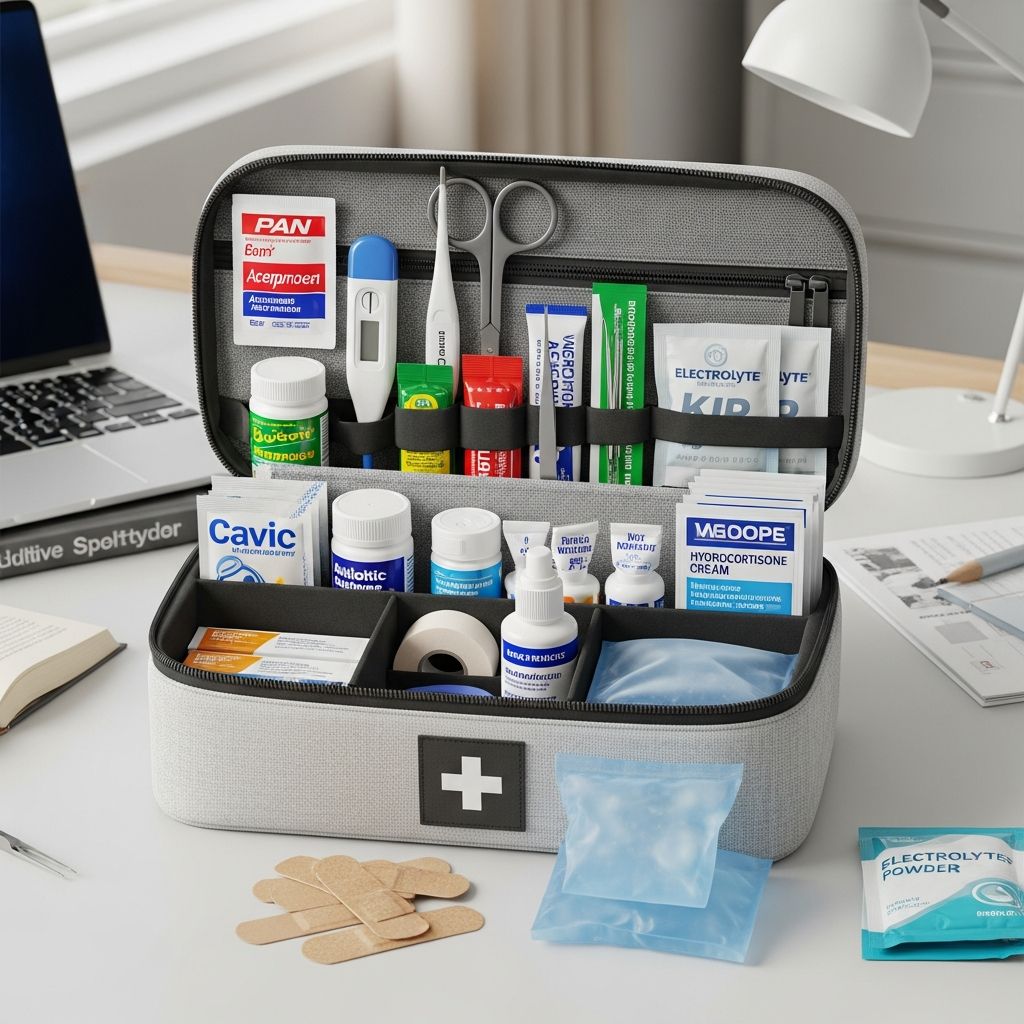
A useful dorm kit doesn’t need to be huge. Focus on a mix of basic wound care supplies, common over-the-counter medications, and comfort items your student will realistically use. You can always restock or add to it during breaks.
Start by choosing a sturdy container with a lid that fits easily on a shelf or under the bed. A small toolbox, locking cosmetic case, or clear plastic bin works well. Add labels so your student can quickly find what they need when they’re tired or not feeling well.
Quick-Glance Essentials Table
| Category | Examples | Primary Purpose |
|---|---|---|
| Wound care | Bandages, gauze, antiseptic wipes | Treat cuts, blisters, scrapes |
| Pain & fever | Acetaminophen, ibuprofen | Headaches, cramps, mild fevers |
| Cold & allergy | Decongestant, antihistamine, throat lozenges | Colds, seasonal allergies |
| Skin care | Hydrocortisone cream, aloe, antibiotic ointment | Rashes, bug bites, sunburn, minor wounds |
| Monitoring | Digital thermometer | Check for fever or illness severity |
Wound and Injury Basics
Small injuries are a normal part of dorm life—think paper cuts, blisters from walking around campus, or a minor kitchen mishap in the residence hall lounge. Stocking simple wound-care items helps your student handle these without a special trip to the health center.
- Assorted adhesive bandages: Include several sizes, plus a few designed for heels and toes to handle blisters from new shoes.
- Gauze pads and medical tape: Useful for slightly larger scrapes that need breathable coverage.
- Elastic wrap: Helpful for minor sprains or to support a sore wrist or ankle after sports or an awkward misstep.
- Antiseptic wipes or solution: For cleaning small cuts when soap and water aren’t convenient.
- Antibiotic ointment: Helps protect minor wounds and scrapes while they heal.
- Cold pack (instant or reusable): Good for bumps, bruises, or mild muscle strains.
- Tweezers and small scissors: For removing splinters or trimming tape and bandages.
Talk through basic wound care steps with your student—clean, cover if needed, and watch for signs of infection such as redness, warmth, or worsening pain. Many teens have never had to do this without a parent nearby.
Pain and Fever Relief
Headaches, muscle soreness after the gym, and menstrual cramps are common complaints in college. Including over-the-counter pain relief helps your student manage these issues without overreacting—but they should still use medication carefully and only as directed on the package or by a healthcare professional.
- Acetaminophen: Often used for headaches and fever reduction.
- Ibuprofen or another anti-inflammatory: Helpful for muscle soreness, sports injuries, and menstrual cramps.
- Heat pack or heating pad (with auto shut-off): Great for cramps, stiff necks from studying, or back discomfort from dorm mattresses.
Label each bottle with large, clear instructions and remind your student never to mix medications without checking for overlap in active ingredients.
Cold, Flu, and Allergy Supplies
Dorms are ideal environments for sharing germs. When one roommate gets sick, the rest of the floor often follows. A small stash of cold and allergy supplies can make those inevitable days more tolerable.
- Non-drowsy antihistamine: For daytime allergy symptoms like sneezing, runny nose, or itchy eyes.
- Nighttime or sedating antihistamine (if appropriate): Can help with severe allergies or congestion at night but should be used cautiously.
- Nasal decongestant: For stuffy noses that make it hard to sleep or study.
- Throat lozenges or cough drops: Soothing for sore throats and mild coughs.
- Saline nasal spray: A gentle option for dryness or mild congestion.
- Tissues: Keep a small box near the bed or desk—students often forget how essential this is until they’re sick.
Remind your student that severe or persistent symptoms—especially high fever, shortness of breath, chest pain, or symptoms lasting more than a few days—should be evaluated by a healthcare professional rather than self-treated.
Stomach and Digestive Helpers
New food, late-night meals, and stress can upset even a strong stomach. A few basic stomach remedies reduce discomfort and help students get back to class faster.
- Antacid tablets: For occasional heartburn or indigestion after heavy or spicy foods.
- Anti-diarrheal medication: For short-term relief during mild stomach bugs or food-related upsets.
- Electrolyte packets or rehydration drinks: Useful after vomiting, diarrhea, or a day outdoors in the heat.
- Mild anti-nausea or motion-sickness remedy: Optional, but can help some students during travel or occasional nausea.
Encourage your student to pair any medication use with basic care: clear fluids, bland foods, and rest. If stomach symptoms are severe, involve blood in vomit or stool, or come with strong abdominal pain, they should seek medical help right away.
Skin, Bite, and Rash Care
From bug bites on outdoor quads to irritation from shared laundry machines, minor skin issues are common on campus. A few targeted products can prevent small irritations from becoming distracting or infected.
- Hydrocortisone cream: Reduces itching from mild rashes and insect bites.
- Aloe vera gel: Soothes mild sunburn or skin that has been irritated by heat or friction.
- Antifungal cream or powder: Helpful if your student is prone to athlete’s foot or irritation from shared showers.
- Sunscreen: At least SPF 30 for everyday use when walking between classes or attending outdoor events.
- Lip balm with SPF: Often overlooked but important in both sunny and cold climates.
Remind your student to seek care if a rash is spreading quickly, painful, or accompanied by fever or difficulty breathing.
Monitoring Tools and Health Information
Along with supplies, a dorm first aid kit should include simple tools for monitoring health. These items help a student decide whether to rest, take over-the-counter medication, or contact a medical provider.
- Digital thermometer: Essential for checking fever, especially during cold and flu season.
- Small notepad or card: For writing down allergies, current medications, and important phone numbers.
- Copy of health insurance information: A photocopy or printed card, kept in a resealable plastic bag.
- List of campus and local clinics: Include phone numbers, after-hours lines, and emergency contacts.
Encourage your student to note when symptoms start, any medications they take, and their temperature if they are sick. This information is very helpful if they end up speaking with a nurse or doctor.
Medication Safety and Storage
Even non-prescription medications should be treated with respect. Before move-in, sit down with your student to review safe use and storage habits so they feel confident and prepared.
- Review labels together: Show them how to find active ingredients, dosages, and warnings.
- Set boundaries: Clarify that sharing medications with roommates or friends is not safe, even if symptoms look similar.
- Check expiration dates: Replace outdated items at winter break or between school years.
- Store in a cool, dry place: Avoid leaving medications near steamy bathrooms or sunny windowsills.
- Consider a small lockbox: Particularly for prescription medications or if roommates frequently have guests.
Make sure your student understands that “more” is not better when it comes to medicine. Taking more than recommended, mixing multiple products with the same ingredient, or using alcohol alongside certain medications can be dangerous.
Customizing the Kit to Your Student
No two students are alike. A track athlete, an art major with sensitive skin, and a student with chronic migraines will all need slightly different kit contents. Use a basic list as a starting point, then personalize it.
- Consider known conditions: Asthma, allergies, migraines, or chronic skin issues may require specific extras or prescriptions.
- Account for climate: Cold climates may call for more lip balm, hand cream, and cold-weather skin care; hot climates may require extra sunscreen and aloe.
- Think about personality: A very organized student may appreciate neatly labeled containers; a more laid-back teen might do better with a simple, low-maintenance setup.
Invite your student to help choose brands and formats they actually like—flavors of lozenges, preferred types of bandages, or familiar pain relievers. The more ownership they feel, the more likely they are to use the kit.
How to Organize for Real-Life Use
A first aid kit that looks impressive but is impossible to navigate will gather dust. Organize around the problems your student is most likely to have rather than by strict medical categories. Clear dividers or resealable bags can help.
Simple Organization Ideas
- “Sick Day” pouch: Thermometer, tissues, cold medicine, throat lozenges, electrolyte packets.
- “Ouch” pouch: Bandages, antiseptic wipes, antibiotic ointment, gauze, tape, elastic wrap.
- “Skin & Sun” pouch: Sunscreen, aloe, hydrocortisone cream, antifungal cream, lip balm.
- “Everyday aches” pouch: Pain relievers, heating pad, small cold pack.
Place the kit somewhere obvious, like on a shelf near the bed or in a desk drawer, and show roommates what each section is for. A visible kit is more likely to be used than one hidden behind suitcases under the bed.
Teaching Your Student When to Seek Help
A first aid kit is not meant to replace professional care. One of the most valuable conversations you can have before move-in is about when self-care is enough and when it is time to call a nurse, visit the clinic, or go to urgent care.
- Talk about red flags: Difficulty breathing, chest pain, confusion, severe headache with sudden onset, uncontrolled bleeding, or signs of severe allergic reaction all require immediate medical attention.
- Review campus resources: Many schools offer nurse advice lines, on-campus clinics, and after-hours support.
- Encourage early action: Students should not wait until symptoms are unbearable before asking for help.
Reassure your teen that reaching out for medical help is a sign of maturity, not weakness. The first aid kit is there to handle simple issues and bridge the gap until they can see a professional when needed.
Move-In Day Checklist: First Aid Edition
To keep things practical, use a short checklist as you pack. You can print this or copy it into a shared note on your phone so your student can refer to it later.
- Assorted bandages, gauze, tape, antiseptic wipes, antibiotic ointment
- Elastic wrap and a small cold pack
- Pain and fever relievers (labeled clearly)
- Cold, flu, and allergy supplies (including tissues and lozenges)
- Stomach remedies and electrolyte packets
- Skin care items: sunscreen, aloe, hydrocortisone, antifungal if needed
- Digital thermometer and a note card with important health information
- Copy of insurance details and campus clinic contact information
- Organized container with simple labels or pouches
Frequently Asked Questions (FAQs)
Do college dorms already provide medical supplies?
Most dorms do not provide personal medical supplies beyond occasional basic items from resident assistants or the campus health center. Students are expected to bring and maintain their own first aid and over-the-counter items, just as they bring toiletries and school supplies.
How big should a dorm first aid kit be?
The kit should be compact enough to fit in a desk drawer, under-bed bin, or closet shelf. It does not need to be as extensive as a home medicine cabinet; a shoebox-sized container is often sufficient if you pack thoughtfully and avoid duplicates.
Should my student bring prescription medications in the same kit?
Prescription medications can be stored near the first aid kit, but consider a separate, secure container—especially for medications that should not be shared or that require stricter control. Always send prescriptions in original labeled containers so your student and medical providers can easily identify them.
How often should we restock the kit?
Plan to check the kit at least once a year, ideally at the start of each academic year or during a long break. Replace anything expired, used up, or damaged, and add items your student discovered they needed during the previous semester.
What if my student feels overwhelmed by using medications alone?
Encourage them to start with simple steps: reading labels, following directions carefully, and tracking how they feel after taking anything. Remind them they can always call you, speak with campus health staff, or use a nurse advice line if they’re unsure what to do.
Is it really necessary if the campus has a health center?
Even with an excellent campus health center, students benefit from having immediate supplies for minor issues. A first aid kit allows them to treat simple problems promptly while still seeking professional care when the situation calls for it.
Turning a Box of Supplies into Confidence
A dorm first aid kit is more than bandages and bottles; it is a quiet reminder that your student is capable of caring for themselves. By choosing the right items, organizing them well, and having a few honest conversations before move-in day, you give your teen both practical tools and the confidence to use them.
They may not thank you the first time they open that kit at midnight with a sore throat or aching head—but they will feel just a little more prepared, a little less alone, and a lot more ready to handle college life on their own terms.