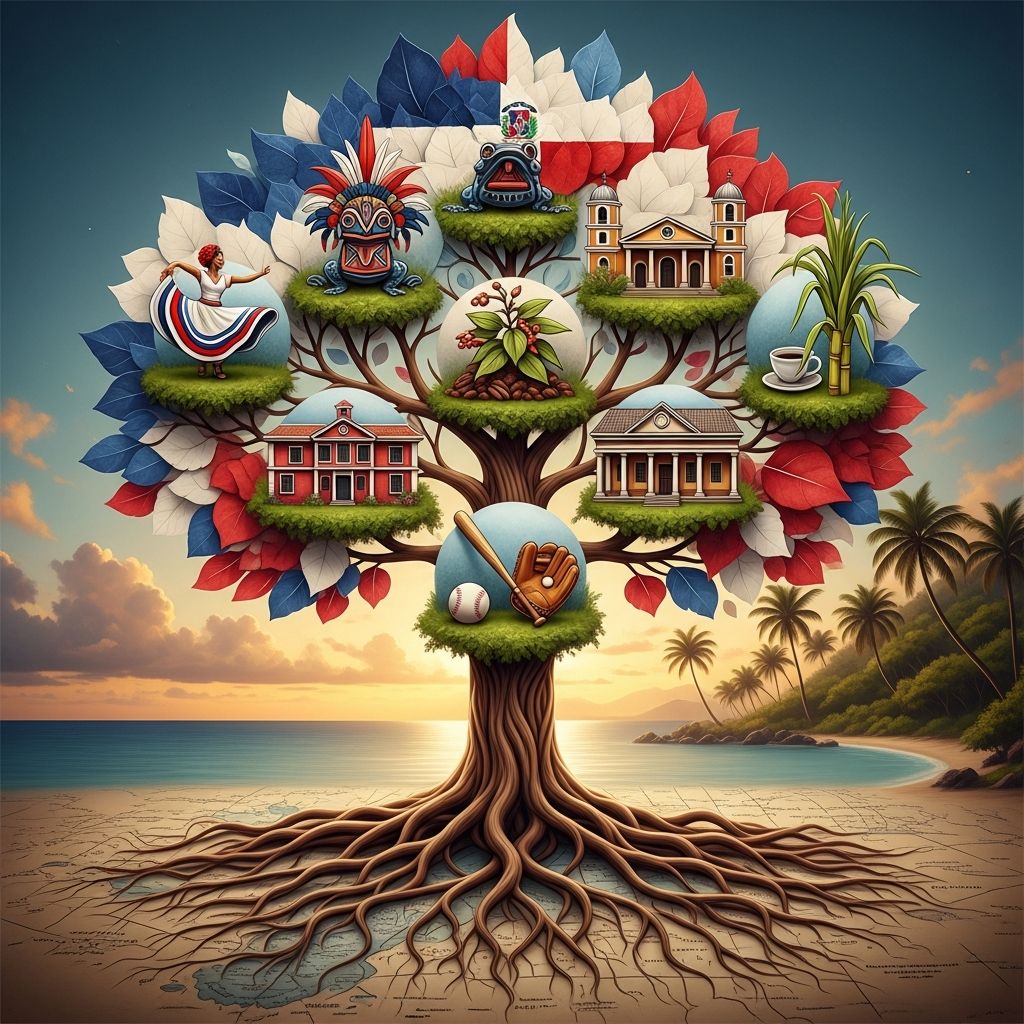
Dominican last names carry centuries of history, blending Spanish, African, and Indigenous Taíno roots into a rich tapestry of identity. Whether you are choosing a name for a baby, writing a story, or exploring your family tree, understanding these surnames opens a window into Dominican culture and the wider Hispanic world.
How Dominican Last Names Developed Over Time
The story of Dominican surnames begins long before the modern Dominican Republic existed. It is closely tied to colonization, migration, religion, and evolving naming customs.
- Pre-colonial era: Indigenous Taíno communities used their own naming systems, which did not follow European-style inherited surnames.
- Spanish colonization: When Spain colonized the island in the late 15th century, Spanish hereditary surnames were brought to Hispaniola and became the legal norm.
- Christianization and baptism: Missionaries often assigned Spanish given names and surnames to Indigenous children during baptism, replacing or reshaping earlier Taíno identities.
- Slavery and African heritage: Enslaved Africans frequently received the surnames of slave owners or Spanish saints; after emancipation, some families kept those surnames, while others modified or combined them.
- Immigration and mixing: Over centuries, additional European, Middle Eastern, and Caribbean influences introduced more diversity into Dominican family names.
Because of this layered history, many Dominican last names look Spanish, but the stories behind who carries them and how they were adopted are far more complex.
The Basic Structure of Dominican Names
In the Dominican Republic, naming follows the broader pattern of Hispanic American customs, with some local particularities.
Two-surname tradition
Most Dominicans legally use two last names:
- The first surname is typically the father’s first surname (paternal line).
- The second surname is typically the mother’s first surname (maternal line).
This convention highlights both sides of a child’s family and preserves maternal surnames across generations, not just paternal ones.
| Element | Spanish Term | Example |
|---|---|---|
| First given name | Primer nombre | María |
| Second given name | Segundo nombre | Isabel |
| First surname (father) | Primer apellido | García |
| Second surname (mother) | Segundo apellido | Núñez |
| Full legal name | Nombre completo | María Isabel García Núñez |
Informal vs. legal use
- In formal documents (birth certificates, passports, school records), both surnames are used.
- In everyday speech, Dominicans may shorten their name by using only the first surname, especially in casual situations or outside Spanish-speaking contexts.
Why Many Dominican Surnames Sound Spanish
Because Spanish rule lasted for centuries, the large majority of Dominican last names have Spanish origins. These names follow patterns shared across Spain and much of Latin America.
Common linguistic patterns
- -ez endings such as Fernández, Rodríguez, González, Ramírez originally meant “son of” a man named Fernando, Rodrigo, Gonzalo, or Ramiro.
- Place-based surnames like Navarro, Jerez, Montilla point back to Spanish regions, towns, or landscapes.
- Occupational surnames such as Herrera (related to blacksmithing) or Pastor (shepherd) reference traditional trades.
- Religious surnames like De la Cruz, Bautista, Del Rosario reflect the strong influence of Catholicism.
Even when a surname is clearly Spanish in form, the family’s lived history may include African, Indigenous, or mixed heritage.
Layers of Heritage Within Dominican Last Names
Dominican surnames do not come from one single source; they show how different communities have interacted on the island over time.
Spanish and Iberian roots
Most Dominican surnames trace directly to Spain or the broader Iberian Peninsula. Hereditary surnames were already well established there before colonization began in the Americas, and those practices were imported almost intact.
Indigenous Taíno echoes
Many original Taíno family-designation systems were lost or replaced. However, some Taíno names survived as:
- Place names that later inspired surnames.
- Given names that occasionally became fixed as family names across generations.
Modern Dominican last names thus sometimes carry indirect Taíno connections, even when they look Spanish on the surface.
African and Afro-Caribbean contributions
People of African descent have been central to Dominican society since the early colonial era. Enslaved Africans were often recorded with the surnames of slave owners, Iberian saints, or Spanish place names. Over time, families adapted these surnames or blended them with new influences, especially after slavery was abolished in the 19th century.
Later migrations
Dominican surnames today also reflect:
- Canary Island and other Spanish regional migrants who brought local variants of surnames.
- French and Haitian influences in border and northern regions.
- Middle Eastern and other immigrants whose surnames have been hispanicized in spelling or pronunciation over time.
Patterns and Meanings in Popular Dominican Surnames
Many Dominican last names are shared with other Hispanic countries, but their local popularity or associations can be distinct. Below is a sample of types you may encounter, with approximate meanings or themes.
| Type | Example Surnames | General Meaning/Origin |
|---|---|---|
| Patronymic (-ez) | Martínez, Sánchez, Pérez | “Son of” Martín, Sancho, or Pedro |
| Nature-inspired | Del Río, Rosado, Campos | Linked to rivers, colors, fields, or landscapes |
| Religious | Cruz, Bautista, Del Rosario | Connected to Christian symbols, rites, or devotions |
| Place-based | Jerez, León, Montilla | Refers to a town, city, or region (often in Spain) |
| Occupational | Herrera, Pastor | Originally referred to a profession or craft |
When you see a Dominican surname, it often reflects one of these familiar Spanish patterns, even if the people who carry it are part of a distinctly Caribbean story.
Using Dominican Last Names for Babies and Characters
If you love Dominican culture or have Dominican heritage, last names can inspire meaningful choices for first or middle names, pen names, or fictional characters.
Ideas for honoring Dominican roots
- Use a family surname as a middle name. For example, a baby could carry a grandmother’s last name as a second given name.
- Combine lineages. Some families create a compound surname or hyphenate to preserve both lines, especially when moving to countries that typically use one surname.
- Revive a rare surname. If there is an uncommon name in your family tree, using it for a child or character can keep it alive.
- Choose names that pair well rhythmically. Many Spanish names have a musical flow; pronounce the full name aloud to hear how the syllables interact.
Tips for writers and creators
When writing Dominican characters:
- Use two surnames in legal or formal contexts to match real naming customs.
- Allow nicknames and abbreviations in dialogue; friends and family might drop the second surname or shorten a first name.
- Match names to generational styles. Older generations may have more traditional Spanish given names, while younger people might carry creative or English-influenced first names paired with Dominican surnames.
How Dominican Surnames Are Passed to Children
Transmission of last names follows rules common to much of Spanish-speaking America, with some room for parental choice.
Traditional order
- Children typically receive the father’s first surname followed by the mother’s first surname.
- All siblings in a family usually share the same two surnames, in the same order.
Modern flexibility
Several Hispanic countries allow parents to reverse the surname order if they wish, as long as they are consistent across all children. Practices can vary and may evolve with new legal reforms; parents living abroad sometimes adapt their naming patterns to local laws while trying to preserve both family lines.
Researching Dominican Family Names and Genealogy
If you are tracing Dominican ancestry, understanding surname customs is essential, because the presence of two last names provides valuable clues about both parental lines.
Why two surnames help genealogists
- Each surname points to a different branch of the family, offering double the leads in historical records.
- Documents may list names differently (for example, using only one surname or abbreviations), so recognizing the patterns helps you recognize your relatives even when the format changes.
- Surname combinations can be distinctive to specific regions or communities, helping narrow down places of origin.
Strategy for exploring your Dominican surnames
- Start with recent generations. Collect names from parents, grandparents, and great-grandparents, including all their surnames in order.
- Look at civil and church records. Birth, marriage, and baptism records often preserve the full two-surname structure and may mention grandparents or places of origin.
- Note spelling variants. Over time, names can shift due to handwriting, transcription, or migration to non-Spanish-speaking countries.
- Compare with regional surname lists. Some name databases and historical sources highlight surnames common to the Caribbean and the Dominican Republic, which can support your research.
Respectful Use of Dominican Last Names
Whether you are choosing a name for a baby or a fictional character, it is important to approach Dominican surnames with respect.
- Avoid stereotypes. Do not use a surname only to signal a cliché about Caribbean or Latino identity.
- Understand context. Many Dominican families carry names that reflect painful histories of colonization and slavery; they are also names of pride, resilience, and cultural creativity.
- Do basic research. If you use a less familiar surname, look up how it is pronounced in Spanish and how it is typically written in full.
Frequently Asked Questions About Dominican Last Names
Why do Dominicans usually have two last names?
Most Dominicans follow Hispanic naming customs, which assign a child one surname from each parent. Traditionally, the father’s first surname comes first, followed by the mother’s first surname. This system honors both family lines and helps trace ancestry on both sides.
Are all Dominican last names Spanish?
No. While the majority are Spanish in origin due to centuries of colonization, Dominican surnames also reflect African, Indigenous, French, and other influences. Some names have been adapted or respelled locally over time.
Can a Dominican person legally use only one surname?
Legally, Dominican documents customarily record two surnames. However, when living or working in countries that expect a single last name, some Dominicans choose to use only their first surname for simplicity, especially on informal documents or in everyday use.
Are Dominican naming customs the same as in all Latin American countries?
They are very similar, because most Spanish-speaking countries were shaped by the same Iberian naming system. However, details can vary by country, such as how flexible parents are in choosing the order of surnames or how names are recorded on identity documents.
How can I choose a Dominican-inspired last name for a character respectfully?
Research common Dominican surnames, pair them with realistic given names for the character’s generation, and keep the two-surname structure in formal contexts. Avoid using names as jokes or stereotypes, and consider how the name might connect to region, class, or migration in the character’s backstory.
References
- Dominican Republic Naming Customs — FamilySearch. 2019-03-27. https://www.familysearch.org/en/wiki/Dominican_Republic_Naming_Customs
- Dominican Last Names and Meanings — FamilyEducation. 2023-06-01. https://www.familyeducation.com/baby-names/surname/origin/dominican
- Dominican Names, Where Do They Come From? — The Bronx Journal. 2012-03-08. https://thebronxjournal.com/2012/03/08/dominican-names-where-do-they-come-from/
- Naming Customs of Hispanic America — Wikipedia (summary of Spanish-language legal and cultural sources). 2024-01-15. https://en.wikipedia.org/wiki/Naming_customs_of_Hispanic_America
- Unraveling the History Behind “Weird” Dominican Names — Remezcla. 2016-07-01. https://remezcla.com/features/culture/yahaira-junot-unraveling-history-behind-weird-dominican-names/