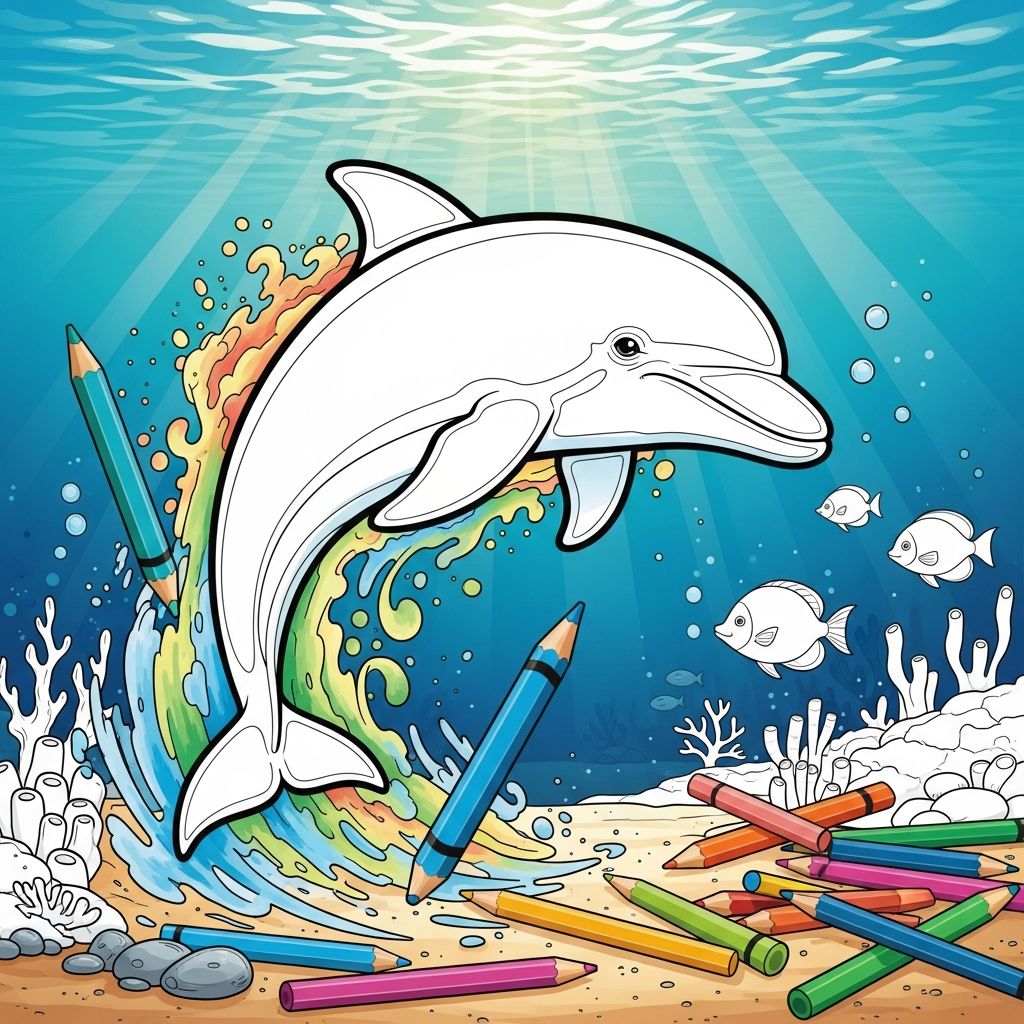
Dolphin coloring pages are more than cute ocean pictures – they are powerful tools for creativity, relaxation, and early learning. Whether you are printing a few sheets for a rainy afternoon or planning a full ocean-themed activity, dolphin designs can engage kids of all ages while quietly building important skills.
This guide walks through the benefits of dolphin coloring pages, ideas for using them with different age groups, and creative ways to turn simple outlines into memorable learning moments at home or in the classroom.
Why Kids Love Dolphins
Dolphins capture children’s imaginations because they look friendly, move gracefully, and live in a mysterious underwater world. These features make them ideal subjects for coloring pages that keep kids interested for longer than a random shape or pattern.
- Playful personalities: Dolphins are often shown leaping, splashing, or playing with friends, which naturally suggests stories and pretend play while kids color.
- Simple but expressive shapes: Smooth curves, big eyes, and smiling faces are easy to recognize and fun to decorate with bright colors.
- Endless settings: A dolphin can appear above waves, in coral reefs, under the moonlight, or with other sea animals, so you can match scenes to your child’s interests.
Benefits of Dolphin Coloring Pages
Coloring is often seen as a quiet pastime, but it supports a surprising number of developmental skills. Dolphin pages combine these benefits with a gentle introduction to marine life and ocean conservation.
Skill Building Through Coloring
- Fine motor control: Holding crayons, pencils, or markers and staying inside curves strengthens the small hand muscles needed for writing.
- Hand–eye coordination: Kids learn to guide their hands carefully as they fill in fins, tails, waves, and bubbles.
- Color awareness: Choosing and combining blues, grays, purples, and other hues builds familiarity with color names and mixing.
- Focus and patience: Finishing a detailed dolphin scene encourages persistence, especially when children take time to add patterns or backgrounds.
Emotional and Creative Benefits
Coloring has a calming effect for many children and adults, making dolphin pages a helpful tool for transitions, quiet time, or stress relief.
- Relaxation: Repetitive coloring motions and soothing ocean themes can help settle busy minds after school or during travel.
- Self-expression: Kids can create rainbow dolphins, neon oceans, or starry night skies, learning that there is no single “right” way to be creative.
- Confidence: Completing a page and displaying it on the fridge or classroom board gives a clear sense of accomplishment.
Age-Appropriate Dolphin Coloring Ideas
The same dolphin theme can be adapted for toddlers, preschoolers, and older children simply by changing the level of detail and the way you present the activity.
Toddlers (1–3 Years)
At this age, the goal is exploration, not neatness. Choose simple outlines and focus on fun, sensory experiences rather than staying inside the lines.
- Use large, bold dolphin shapes with plenty of open space.
- Offer chunky crayons or washable markers that are easy for small hands to grip.
- Talk about basic words like “dolphin,” “water,” “blue,” and “big splash” while your child scribbles.
- Celebrate any mark-making as success; the picture does not need to look like a dolphin when it’s done.
Preschoolers (3–5 Years)
Preschool kids can handle a bit more detail and enjoy simple challenges. Coloring pages become both an art activity and a language-learning tool.
- Introduce pages with waves, fish, or seashells around the dolphin to keep children engaged.
- Encourage naming objects and colors: “Can you find the tail? What color will the ocean be?”
- Try guided prompts such as “Color the dolphin gray and the starfish orange” to practice listening skills and following directions.
- Let kids add simple patterns like stripes, dots, or hearts on the dolphin’s body.
Early Elementary (6–8 Years)
School-age children often appreciate more detailed scenes and enjoy connecting art with facts about the real world. Dolphin pages can support reading, writing, and science.
- Look for more intricate designs featuring coral reefs, other sea animals, or multiple dolphins.
- Encourage kids to blend colors (for example, mixing blue and green for the ocean or adding soft shading to the dolphin’s back).
- Invite them to write a short caption or name for their dolphin under the picture.
- Use the page as a starting point to read a short article or book about dolphins and then color what they learned.
Using Dolphin Pages for Learning
With a few small tweaks, a coloring sheet can become a mini-lesson in science, vocabulary, or even math. Parents and teachers can adapt these ideas to fit any setting.
Ocean Science Connections
Turn coloring time into a gentle introduction to marine life and conservation without turning it into a formal lesson.
- Point out dolphin body parts as your child colors: fins, flippers, tail, beak, and dorsal fin.
- Discuss the ocean habitat: warm vs. cold water, coral reefs, open sea, or coastal areas.
- Introduce simple ideas about protecting the ocean, like not throwing trash into water and respecting wildlife.
Language and Reading Skills
Dolphin pages can be paired with words and stories to build vocabulary and early literacy skills.
- Write the word “dolphin” at the top of the page and ask children to trace or copy it.
- Create a mini word list on the side: “dolphin, wave, sea, fish, splash” and read them together.
- After coloring, invite children to tell a short story about what the dolphin is doing or where it is going.
Math and Sorting Ideas
Simple instructions can turn a coloring page into a counting or classification activity.
- Ask kids to count objects in the picture, such as “How many fish do you see?” or “How many bubbles are near the dolphin?”
- Give color-by-number directions, like “Color 3 waves blue and 2 waves green.”
- Group finished pages by themes (night scenes, coral reefs, baby dolphins) and have your child sort them.
Types of Dolphin Coloring Pages
Choosing the right style of page helps match your child’s age, mood, and interests. Here is a quick overview of common dolphin coloring page styles and how they are typically used.
| Page Style | Best For | Key Features | Activity Ideas |
|---|---|---|---|
| Simple dolphin outline | Toddlers, early preschoolers | Bold lines, large shapes, minimal details | Finger painting, crayon scribbling, color naming |
| Dolphin in the waves | Preschoolers and early elementary | Medium detail with water, sun, and clouds | Talk about weather, time of day, and ocean movement |
| Underwater reef scene | Elementary-age kids | Dolphin plus coral, fish, shells, and plants | Introduce sea life vocabulary and habitats |
| Mandala or patterned dolphin | Older kids, teens, adults | Intricate shapes, repeating designs, fine details | Mindful coloring for relaxation and focus |
| Cartoon or themed dolphin | All ages who enjoy stories | Dolphins with costumes, props, or holiday themes | Storytelling, seasonal crafts, party activities |
Fun Ways to Use Finished Pages
Once the coloring is done, the pages do not need to stay stuck in a drawer. Completed dolphin art can become part of your home decor, party themes, or learning displays.
- Gallery wall: Hang several dolphin pictures together to create an “under the sea” display in a bedroom or classroom.
- DIY bookmarks: Cut a colored dolphin into strips, laminate if possible, and punch a hole for a ribbon to make ocean-themed bookmarks.
- Party decorations: Use colored dolphins as banners, placemats, or cupcake toppers at an ocean or beach-themed party.
- Homemade gifts: Glue a finished dolphin page onto a folded card and let your child write a message inside.
Tips for Parents and Teachers
A little preparation can turn simple dolphin printables into a smooth, engaging activity. These practical tips help you get the most out of coloring time.
- Print multiple difficulty levels: Mix simple and detailed pages so kids can choose based on their mood and attention span.
- Offer varied coloring tools: Provide crayons, colored pencils, thin markers, and maybe a few gel pens for older children.
- Set up a coloring station: Keep pages, coloring tools, and a hard surface in a basket or tray ready to grab at any time.
- Model creativity: Color your own dolphin page alongside children to show that adults enjoy art time too.
Frequently Asked Questions
What age are dolphin coloring pages best for?
Dolphin coloring pages can work for toddlers through adults, depending on the level of detail. Simple outlines suit very young children, while patterned or highly detailed designs appeal to older kids and grown-ups who enjoy mindful coloring.
How can I make dolphin coloring pages more educational?
You can add short facts about dolphins, label body parts, or ask kids to describe what is happening in the scene. Combining coloring with conversation about habitats, ocean safety, or animal behavior helps turn art time into a light, enjoyable learning experience.
What materials work best for dolphin coloring sheets?
Crayons are sturdy and forgiving for younger children, while colored pencils allow older kids to add shading and details. Washable markers are great for bold color but may bleed through thin paper, so consider thicker paper or a protective sheet underneath.
Can dolphin coloring pages help with emotional regulation?
Many children find the repetitive motion of coloring and the gentle ocean imagery soothing. Offering a quiet dolphin coloring activity during transitions, after a busy event, or before bedtime can create a calming routine.
How do I store or display finished dolphin pages?
You can keep favorites in a binder, rotate them on a bulletin board, or photograph them to create a digital album. Letting children help decide which artworks to keep and display can make them feel proud and respected as creators.