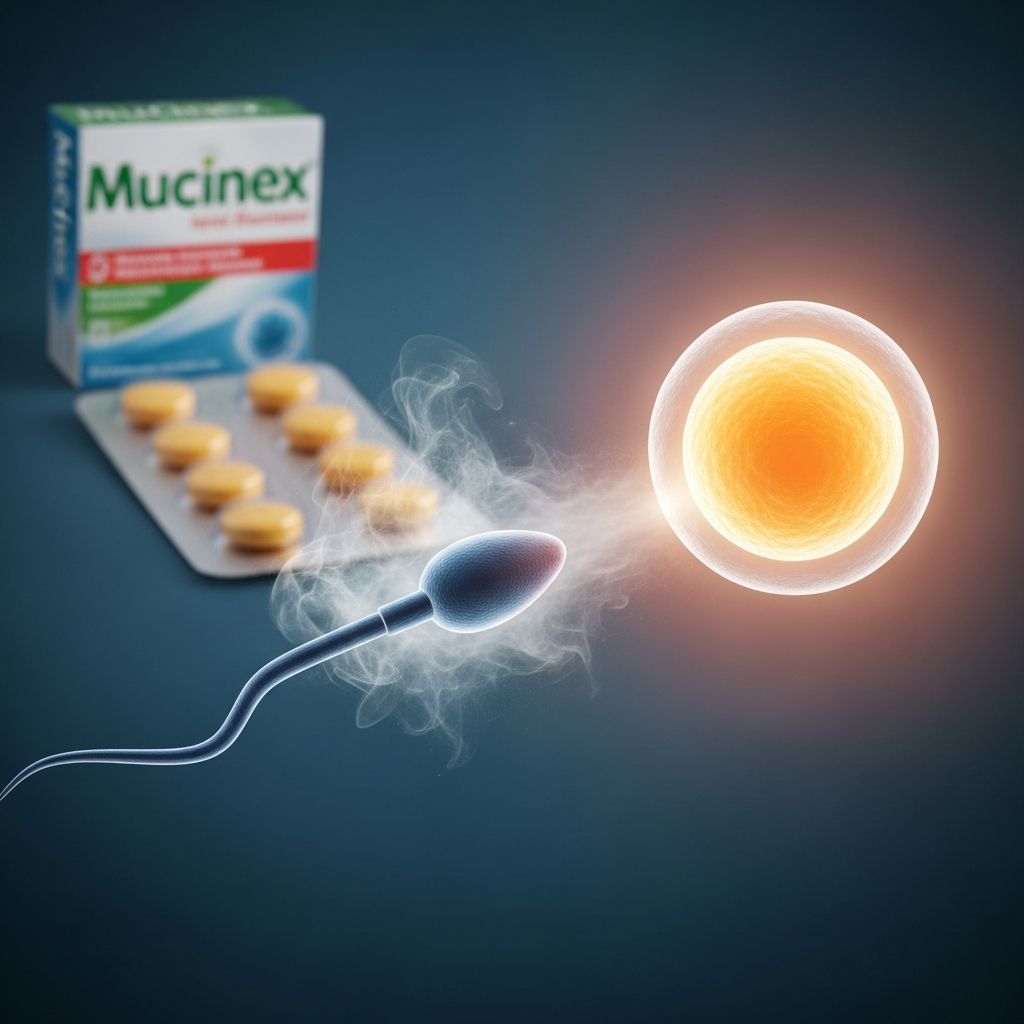
Mucinex, primarily known as an over-the-counter expectorant for respiratory relief, has gained attention in fertility circles for its potential to aid conception. The core idea revolves around its active ingredient, guaifenesin, which thins mucus in the airways. Advocates suggest it might similarly affect cervical mucus, creating a more favorable environment for sperm to travel toward the egg. While anecdotal reports abound, scientific backing remains limited, prompting caution from medical professionals.
Understanding Cervical Mucus and Its Role in Conception
Cervical mucus plays a pivotal role in the reproductive process. Throughout the menstrual cycle, its consistency changes due to hormonal fluctuations. In the days leading to ovulation, estrogen levels rise, transforming mucus into a clear, stretchy, egg-white-like substance. This fertile-quality mucus nourishes sperm, protects them from the vagina’s acidic environment, and facilitates their swift movement through the cervix.
However, some women experience “hostile” cervical mucus—thick, sticky, or scant—which can hinder sperm motility and survival. Factors like dehydration, stress, age, or certain medications contribute to suboptimal mucus. This is where the Mucinex theory emerges: by thinning respiratory mucus, guaifenesin might extend its effects to cervical secretions, potentially improving sperm transport.
The Science Behind Guaifenesin and Fertility
Guaifenesin works by increasing hydration in respiratory tract secretions, making mucus less viscous and easier to expel. Theoretically, this mechanism could apply to cervical mucus, reducing barriers for sperm. But does evidence support this?
The most referenced study dates to 1982, published in Fertility and Sterility. Researchers administered 200 mg of guaifenesin three times daily to 40 women with cervical factor infertility from cycle day 5 until ovulation. Results showed marked cervical mucus improvement in 23 participants, with 15 pregnancies during the study. Notably, two-thirds exhibited enhanced sperm-mucus interaction, suggesting better sperm penetration.
Despite these findings, the study lacked a control group, limiting its rigor. No large-scale, modern randomized controlled trials (RCTs) have replicated it. A 2010 case report noted improved sperm parameters in one male patient after two months of 600 mg extended-release guaifenesin twice daily, but this is anecdotal. Recent reviews, including those from OB-GYNs, conclude that while the concept is plausible, data do not confirm significant fertility gains.
Anecdotal Evidence from Fertility Communities
Online forums, social media, and fertility apps buzz with success stories. Women report taking Mucinex (plain guaifenesin formula, avoiding DM variants with dextromethorphan) from cycle day 5 or just before ovulation through the fertile window. Dosages typically mirror the 1982 study: 200-400 mg multiple times daily. Some claim conception after months of trying with poor mucus quality.
Men occasionally use it too, hypothesizing thinner seminal fluid aids sperm release. However, these accounts are self-reported and uncontrolled, prone to placebo effects or coincidence. Experts like Dr. Christine Greves note that while hypothetically sensible, fertility involves multiple factors—ovulation timing, sperm quality, uterine receptivity—beyond mucus alone.
Safety Considerations When Trying to Conceive
Mucinex (guaifenesin-only) is generally safe for short-term use in non-pregnant adults. Common side effects include nausea, dizziness, or vomiting, but these are rare at recommended doses. It does not interact with hormonal birth control, preserving contraceptive efficacy if accidentally taken while protected.
Key caveat: Avoid use if pregnancy is possible, especially early stages. Previously FDA category C, guaifenesin lacks robust pregnancy safety data. First-trimester exposure links to potential risks like inguinal hernias or cardiovascular defects in some analyses, though evidence is not conclusive. Wait at least 6-10 days post-conception for reliable pregnancy tests before resuming.
| Formulation | Active Ingredients | Suitable for Fertility? | Reason |
|---|---|---|---|
| Plain Mucinex | Guaifenesin only | Yes (theoretically) | Targets mucus thinning without additives |
| Mucinex DM | Guaifenesin + Dextromethorphan | No | Cough suppressant unnecessary; potential side effects |
| Mucinex Fast-Max | Multiple actives (e.g., acetaminophen) | No | Added pain relievers risky preconception |
Practical Guidelines for Use
- Timing: Start on cycle day 5 (post-period) or 3-5 days pre-ovulation, continue until ovulation day. Track via apps, BBT, or OPKs.
- Dosage: 200-400 mg guaifenesin 2-3 times daily, with ample water to hydrate mucus glands.
- Monitoring: Check mucus daily—aim for stretchy, clear consistency.
- Duration: Limit to one cycle unless consulting a doctor; not a long-term solution.
- Alternatives: Hydration, evening primrose oil, or fertility-friendly lubricants like Pre-Seed.
Consult a healthcare provider before starting, especially with conditions like asthma, kidney issues, or persistent non-conception (over 6-12 months trying).
Expert Opinions on the Mucinex Fertility Hack
OB-GYNs offer balanced views. Dr. Jessica Shepherd acknowledges social media trends but stresses absent robust data on mucus quality or conception rates. Dr. Alan Ross views it as low-risk but unlikely to transform outcomes. Danielle Hicks, APRN-NP, affirms no fertility harm but minimal benefit.
Overall consensus: Harmless trial for those with identified mucus issues, but not a substitute for comprehensive fertility evaluation. Lifestyle optimizations—balanced diet, exercise, stress reduction—yield broader impacts.
When to Seek Professional Fertility Help
If under 35 and trying 12 months without success (6 months over 35), see a reproductive endocrinologist. Tests assess ovulation, semen analysis, hormone levels, and imaging for blockages. Evidence-based treatments like Clomid, IUI, or IVF far surpass unproven hacks.
Mucus-focused interventions include guaifenesin under supervision or estrogen therapy for hostile mucus.
Frequently Asked Questions
Is Mucinex proven to increase fertility?
No large modern studies confirm it significantly boosts conception rates, though a small 1982 trial showed mucus improvements and pregnancies in some participants.
Can men take Mucinex to improve sperm motility?
Anecdotal reports exist, with one case study noting gains, but evidence is scant and not robust.
Does Mucinex reduce birth control effectiveness?
No, it does not interfere with hormonal contraceptives.
Is Mucinex safe while trying to conceive?
Likely safe if not pregnant, but stop if pregnancy is possible due to first-trimester risks.
What if Mucinex doesn’t improve my cervical mucus?
Consult a doctor for underlying issues; consider tracking ovulation more precisely or professional evaluation.
Holistic Approaches to Optimize Fertile Mucus
Beyond medications, enhance mucus naturally:
- Drink 8-10 glasses of water daily.
- Eat omega-3 rich foods (salmon, walnuts).
- Avoid antihistamines that dry mucus.
- Practice fertility yoga or acupuncture.
Combining these with precise timing maximizes chances without relying solely on supplements.
References
- Can You Take Mucinex to Get Pregnant? — The Bump. 2023 (approx., based on content). https://www.thebump.com/a/mucinex-to-get-pregnant
- Women are taking Mucinex to get pregnant. Does it work? — ABC7NY. 2024-10-15. https://abc7ny.com/post/women-are-taking-mucinex-get-pregnant-does-work/15355333/
- Does Mucinex affect your birth control, and can it make you more… — Nebraska Medicine. 2023 (approx.). https://www.nebraskamed.com/health/questions-and-answers/pregnancy-and-birth/you-asked-we-answered-does-mucinex-affect-your
- Mucinex for Pregnancy: Does It Help with Conceiving? — Healthline. 2023-05-12. https://www.healthline.com/health/mucinex-for-pregnancy
- Improvement of cervical factor with guaifenesin — PubMed (Fertility and Sterility). 1982. https://pubmed.ncbi.nlm.nih.gov/6896190/