Parents often hear that crawling is a crucial milestone, and worry if their baby seems uninterested in getting on all fours. In reality, there are many normal ways for babies to move, and crawling is just one of them—not a mandatory step to healthy development. This article explores the variety of pre-walking movement patterns, why some babies never crawl, and how to support your baby’s growth with confidence and calm.
The Big Picture: Movement Before Walking
Long before a baby takes that first wobbly step, their body and brain are hard at work mastering smaller skills. These early stages build strength, balance, coordination, and body awareness that eventually support walking—even if crawling never happens.
Instead of focusing on a single milestone, it helps to look at the whole journey your baby takes from lying on their back to exploring your living room. Every roll, wiggle, and scoot is part of that journey.
Common Paths Babies Take (With or Without Crawling)
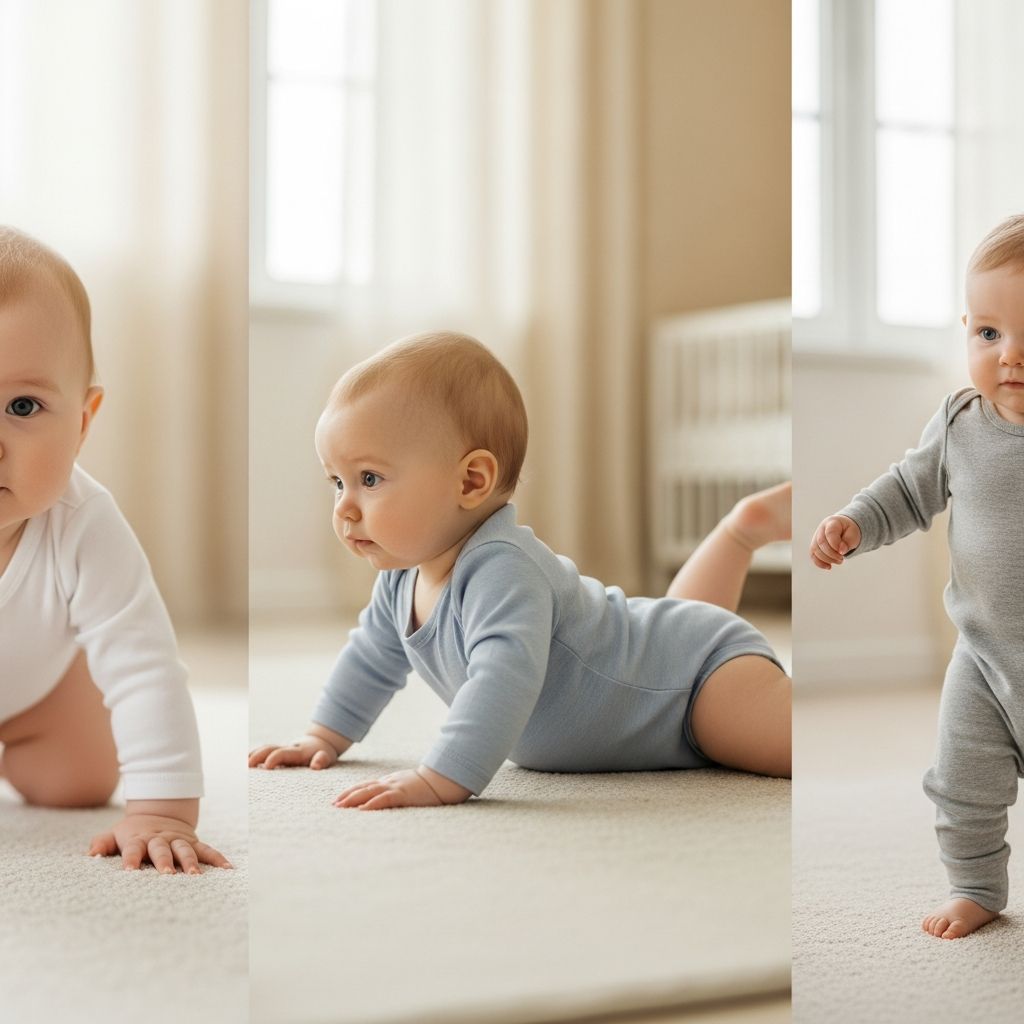
Babies are individuals, and they discover their own favorite way to get from point A to point B. Some babies try many methods before settling on one, while others pick a single style and stick with it.
- Classic hands-and-knees crawl: Baby moves forward on all fours, alternating opposite hand and knee.
- Commando or army crawl: Baby drags the body forward on the belly using arms and sometimes one leg.
- Bear crawl: Baby moves on hands and feet with knees off the floor, hips in the air.
- Bottom scoot: Baby sits upright and shuffles using legs and hands to push or pull.
- Rolling or pivoting: Baby rolls across the floor or spins in circles to reach toys.
- Straight to cruising and walking: Some babies mostly sit, then pull to stand, cruise along furniture, and begin walking with little or no crawling in between.
Typical Age Ranges (Not Deadlines)
Age ranges for gross motor skills are wide. They describe when many babies do a skill, not when all babies must do it. Remember that prematurity, temperament, body type, and daily opportunities to move all affect timing.
| Skill | Common Age Range | Notes |
|---|---|---|
| Lifting head in tummy time | 1–3 months | Short, frequent sessions are enough early on. |
| Rolling over | 3–6 months | May roll front-to-back before back-to-front or vice versa. |
| Sitting with little support | 5–8 months | Balance and core strength improve quickly once sitting begins. |
| Crawling or alternative mobility (scooting, army crawl) | 6–12 months | Some babies skip this phase entirely and still develop normally. |
| Pulling to stand and cruising | 8–13 months | Often appears soon after baby figures out how to move independently. |
| Independent steps | 9–18 months | Anywhere in this range can be typical for healthy children. |
Is Crawling Required for Healthy Development?
It is very common to hear that crawling is essential for brain development, reading skills, or coordination. While crawling can support strength and coordination, there is no solid evidence that skipping crawling alone causes long-term problems in otherwise healthy children.
Babies who never crawl often learn the same underlying skills in other ways. A baby who bottom-scoots, for example, practices balance, visual tracking, and planning how to move in space, even if their knees never touch the floor.
What Crawling Does Help With
Crawling can be beneficial and, for many babies, fun. It typically supports:
- Upper body strength: Weight on the hands strengthens shoulders, arms, and wrists.
- Core stability: Holding the trunk steady while moving limbs builds abdominal and back muscles.
- Coordination across the body: Opposite arm-and-leg movements encourage communication between both sides of the brain.
- Spatial awareness: Moving through space helps babies judge distance, depth, and speed.
These benefits can also come from other activities such as climbing over cushions, reaching during tummy time, or cruising along furniture.
Why Some Babies Don’t Crawl
There are many reasons a baby might skip or minimize crawling while still developing normally. Often, it is simply a matter of personality and preference. Some babies are observers who wait until they are sure of a skill before trying it; others are determined to stand and may have little interest in life on all fours.
Environment and equipment can also shape movement. Babies who spend long periods in supportive devices may have fewer chances to experiment with the floor, while those who have open space and floor time may explore a wider variety of motions.
Normal Variations vs. Developmental Concerns
Skipping crawling by itself is usually not worrisome. What matters more is the overall pattern of development: strength, symmetry, curiosity, and progress over time. A baby who does not crawl but is learning new ways to move, reach, and control posture is often right on track.
In contrast, red flags are less about the lack of crawling and more about consistent difficulty using one side of the body, very floppy or very stiff muscles, lack of interest in moving, or loss of skills that were previously present. In these situations, a professional evaluation is important.
How to Support Movement (With Less Stress)
Parents cannot force a baby to crawl, but they can create an environment that makes movement safe, interesting, and achievable. The goal is to offer opportunities and encouragement without pressure or comparison.
- Prioritize floor time: Give your baby daily supervised time on a firm surface, free from restrictive gear.
- Make it playful: Place toys, books, or your own face just out of reach to spark motivation.
- Change positions often: Alternate between back, tummy, side-lying, and supported sitting.
- Model movement: Get on the floor and move with your baby; your presence is the best invitation.
- Dress for success: Bare feet and flexible clothing make it easier to grip the floor and move.
Gentle Tummy Time Ideas
Tummy time is often the foundation for later crawling and other skills, but it does not have to mean long stretches on the floor with a frustrated baby. Short, frequent bursts that feel playful work best for many families.
- Start with your baby lying on your chest while you recline, so they lift their head to look at your face.
- Use a rolled towel under the chest for brief support, reducing the effort required to lift the head.
- Lie on the floor face-to-face, tapping or shaking a small toy within sight.
- Offer a mirror at floor level to encourage visual exploration.
Reassuring Yourself When Others Compare
Family members, social media, and even playgroups sometimes turn milestones into competitions. It can be hard not to worry when another baby the same age is zooming across the floor while yours is content to sit and observe.
Instead of comparing, ask: “Is my baby gaining new skills over time?” and “Do they seem curious and engaged with the world?” Steady progress matters far more than whether they crawled at eight months or shuffled at eleven.
Practical Safety Tips for Mobile Babies
Regardless of how your baby moves, mobility brings safety challenges. A baby who rolls quickly, scoots, or cruises can reach hazards just as efficiently as a fast crawler. Preparing your home early can prevent accidents and give you peace of mind.
- Install gates near stairs and block off unsafe areas like kitchens or home offices with many cords.
- Secure furniture to walls to prevent tipping when baby pulls to stand or climbs.
- Store small objects, batteries, magnets, and medications well out of reach and sight.
- Cover electrical outlets and manage loose cords that can be pulled or tugged.
- Place non-slip mats under area rugs where babies may crawl, scoot, or toddle.
When to Talk to a Professional
Regular well-baby visits provide a built-in opportunity to discuss motor milestones. Pediatricians and pediatric therapists look at the big picture of development rather than focusing on one missing skill.
Consider raising concerns if you notice that your baby is not just skipping crawling but also:
- Seems very stiff or very floppy most of the time.
- Consistently uses only one side of the body to reach, roll, or move.
- Does not show interest in toys, faces, or exploring the environment.
- Stops doing skills they used to do, such as rolling or bearing weight on legs.
Early evaluation does not mean something is wrong; it can simply provide ideas and reassurance. Many families leave a consultation with only home exercise suggestions and renewed confidence.
Supporting Yourself as a Parent
Caring for a baby during the first year is demanding, and milestone anxiety can add a layer of invisible stress. It is normal to worry, especially when information and opinions are everywhere.
Try to filter advice through these questions: “Is this source trustworthy?” “Does this information apply to my individual child?” and “Does following this suggestion feel safe and respectful to my baby?” Trust that you are the expert on your child’s temperament and needs, even while you seek guidance from health professionals.
Quick Reference: Myths and Realities About Crawling
| Common Belief | What Evidence and Experience Suggest |
|---|---|
| “Every baby must crawl to be healthy.” | Many healthy, typically developing children skip crawling and walk without issues. |
| “Skipping crawling causes future learning problems.” | There is no strong proof that missing this single milestone alone causes academic difficulties. |
| “If a baby doesn’t crawl by a specific month, something is wrong.” | Age ranges are broad; development should be evaluated as a whole pattern, not by one date. |
| “Parents can teach crawling with the right gadget.” | No device can create a skill before a baby’s body and brain are ready; practice and play work better. |
| “Floor time is optional because modern gear provides enough stimulation.” | Supervised floor time remains one of the simplest ways to build strength, coordination, and confidence. |
FAQs About Crawling and Baby Movement
1. What if my baby never crawls at all?
Some babies never crawl and still develop normally. As long as your baby is gaining new motor skills, using both sides of the body, and seems curious about the environment, skipping crawling is usually just a variation, not a problem. If you are unsure, asking your pediatrician can give tailored guidance.
2. Can I teach my baby to crawl sooner?
You cannot speed up your baby’s internal timeline, but you can create conditions that make movement easier and more appealing. Providing safe floor space, engaging toys just out of reach, and plenty of interactive play gives your baby chances to practice without pressure or force.
3. Does my baby’s preferred way of moving say anything about personality?
Movement style can sometimes mirror temperament. A bold, energetic baby may crash enthusiastically into new skills, while a more cautious baby might sit and watch until feeling secure. However, these patterns are not destiny—personality continues to unfold over many years.
4. Should I worry if my baby crawls in an unusual way?
Many babies invent their own signature crawl, from one-legged pushes to lopsided scoots. If your baby appears comfortable, is progressing, and can use both sides of the body in other activities, a quirky style is usually harmless. If one side seems consistently weaker, more stiff, or avoided, a professional opinion is reasonable.
5. How much tummy time is enough?
Rather than counting specific minutes, focus on building a habit of short, frequent tummy sessions spread throughout the day. If your baby dislikes tummy time on the floor, start with them on your chest or supported over your lap and gradually transition as their strength and comfort improve.
6. Does early crawling mean early walking?
Early crawlers do not always become early walkers. Each major skill—rolling, sitting, crawling, standing, walking—has its own timetable, influenced by many factors. Some babies crawl for months before walking, while others walk shortly after learning to move across the floor in any style.
Key Takeaways for Parents
- Crawling is helpful but not mandatory; many healthy children skip it.
- The overall pattern of progress matters more than any single milestone.
- Safe, playful floor time is one of the best supports you can offer.
- If something about your baby’s movement worries you, seeking professional input is a sign of care, not panic.
Your baby’s path to movement is uniquely theirs. By offering support, staying curious, and avoiding rigid expectations, you create space for your child to grow with confidence—on hands and knees, on their bottom, or straight onto two feet.