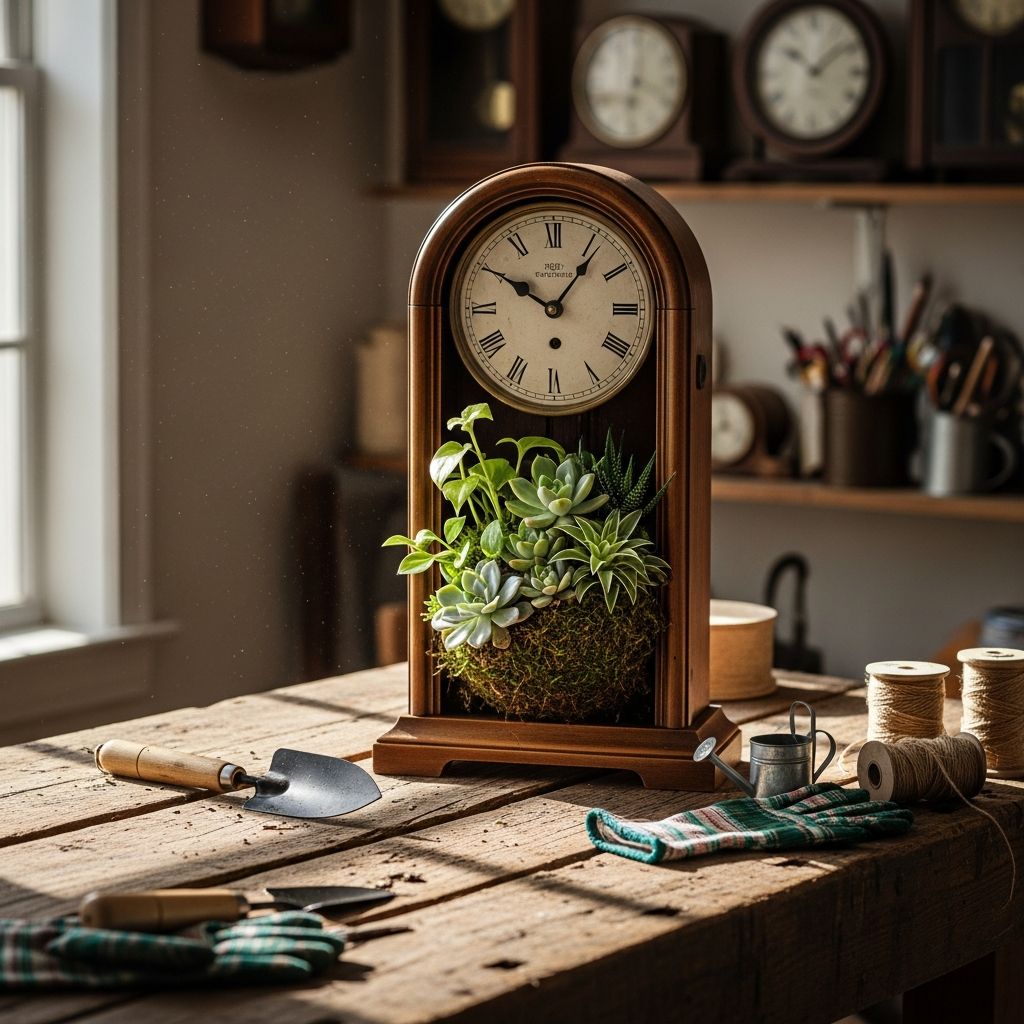
Old clocks often end up on a shelf or in a box, too sentimental to toss but not special enough to display. A vintage clock planter project gives those forgotten pieces a second life while creating a Father’s Day gift that feels personal, practical, and surprisingly stylish.
This guide walks through how to transform a clock into a small planter, with ideas for customizing it to match your dad’s interests, décor style, and favorite plants. The goal is not perfection but personality: a handmade object that tells a story every time he checks the time or waters a plant.
Why a Clock Planter Makes a Great Father’s Day Gift
There is something meaningful about combining time and greenery in a single object. A clock reminds your dad of the time you have shared, while a plant represents growth and care. Put together, they become a symbolic and useful gift that looks at home on his desk, workbench, or nightstand.
- It upcycles an existing object instead of buying another mass-produced gift.
- It can be tailored to your dad’s personal style: industrial, retro, minimalist, or playful.
- It doubles as home décor and a conversation starter.
Choosing the Right Clock and Plant
Nearly any clock style can be transformed into a planter as long as there is a hollow cavity to hold a small plant container or soil. Before you begin, think about where your dad might display it and how much maintenance he is willing to take on.
Best Types of Clocks to Upcycle
- Vintage alarm clocks: Classic twin-bell designs look charming as small succulent planters.
- Retro clock radios: Their boxy shape often leaves a perfect recess for a small planting space.
- Desk or mantle clocks: These can be partially hollowed or fitted with a small removable planter cup.
- Wall clocks (deep frame): If they have a shadow-box-style frame, you can convert a section into a shallow planting area.
Low-Maintenance Plant Options
Because clock planters are usually small and sometimes shallow, choose plants that tolerate tight quarters and modest watering. Succulents and certain hardy foliage plants are ideal for this kind of project.
- Mini succulents (echeveria, haworthia, or small aloe varieties).
- Air plants that require only misting and no soil.
- Tiny trailing plants such as baby tears planted in a separate insert pot.
- Faux greenery if your dad prefers zero maintenance.
Materials and Tools You May Need
You can adapt this list depending on the clock’s construction and your desired finish. Always prioritize safety: if a process feels risky, simplify the design rather than forcing a complex modification.
- Old clock (alarm clock, clock radio, desk clock, or similar)
- Small plastic nursery pot, metal cup, or recycled container to act as an inner planter
- Potting mix appropriate for your chosen plant (cactus/succulent mix for succulents)
- Small rocks or gravel for drainage (optional but helpful)
- Screwdriver set (flat-head and Phillips)
- Wire cutters or pliers (for removing internal mechanisms)
- Craft knife or small saw (if you need to enlarge an opening)
- Painter’s tape and sandpaper for surface preparation
- Acrylic paint or spray paint to refresh the finish
- Masking materials (newspaper, scrap cardboard) for painting
- Protective equipment: safety glasses, dust mask, and gloves
Safety and Preparation Tips
Before diving into the creative part, take time to prepare the clock and your workspace. Some clocks contain sharp metal edges, glass faces, and small mechanical pieces that require careful handling.
- Unplug any electric clock and remove batteries before starting.
- Work on a stable surface covered with cardboard or an old towel.
- Wear safety glasses when removing glass or cutting into metal or plastic.
- Keep small screws and parts in a labeled container in case you want to reuse them for decoration.
Step-by-Step: Turning a Clock into a Planter
Use these steps as a flexible roadmap rather than strict rules. Each clock is constructed differently, so adapt the process as needed. The key is to create a safe cavity for the plant while preserving enough of the clock’s character to show its origins.
1. Disassemble the Clock
Start by gently opening the clock’s housing. Often there is a removable back panel secured with small screws. Remove the panel and carefully lift out the internal movement, wires, and speaker (for a clock radio) or mechanical gears (for wind-up clocks).
- Set aside any pieces you might reuse, such as knobs, dials, or decorative elements.
- Dispose of electronic components responsibly according to local e-waste guidelines.
2. Plan the Planting Space
Once the interior is emptied, decide how much room you can allocate for a plant container without compromising stability. In many cases, it is easier and cleaner to place a separate inner pot inside the clock instead of filling the housing directly with soil.
- Measure the depth and width of the open cavity.
- Test different small containers (yogurt cups, metal tins, nursery pots) until one fits snugly.
- If needed, mark an opening on the front or top of the clock where the plant will be visible.
3. Modify the Opening (If Necessary)
If the clock’s original opening is too small or in the wrong position, carefully enlarge it. For plastic housings, a craft knife or rotary tool on a low setting can work; for thin metal, a small hand saw or metal snips may be necessary.
- Always cut slowly and support the surface from behind to reduce bending.
- Sand any sharp edges to prevent injury when handling or watering the plant.
4. Prepare and Paint the Exterior
A fresh coat of paint can transform a tired clock into a striking display piece. Before painting, lightly sand glossy surfaces and wipe away dust. Tape off any areas you want to preserve, such as number dials or labels that add character.
- Use spray paint for even coverage or acrylic craft paint for more control and brushwork detail.
- Consider vintage-inspired colors like muted teal, mustard, cream, or charcoal.
- Add subtle distressing by lightly sanding corners after the paint dries.
5. Create the Inner Planter
Line the bottom of the inner container with small rocks or gravel to help with drainage, especially if there are no drainage holes. Add potting mix appropriate to your plant, leaving space at the top so soil will not spill over when you water.
- For succulents, use a fast-draining mix labeled for cactus and succulent plants.
- For air plants, skip soil entirely and instead add decorative stones or moss as a base.
6. Insert the Plant and Assemble the Planter
Gently remove your plant from its nursery pot, loosen the roots, and position it into the inner container. Fill in with soil and press lightly to secure. Then place the planted container inside the clock’s cavity.
- If the container is loose, wedge it with bits of cork, folded cardboard, or foam so it stays level.
- Reattach any clock panels or trim pieces that help frame the planting area.
Styling Ideas for Different Types of Dads
The fun of this project lies in customizing the clock planter to match your dad’s personality. A few thoughtful touches can turn a simple craft into something that feels made just for him.
| Dad Style | Color & Finish Ideas | Plant & Accent Suggestions |
|---|---|---|
| Retro music lover | Soft mint, cream, or faded orange with a slightly distressed finish | Small succulent with miniature record-shaped charms or music note stickers |
| Minimalist desk worker | Matte black, white, or gray with clean lines | Single sculptural succulent or air plant with white gravel |
| Gardening enthusiast | Olive green or earthy brown with brushed metal highlights | Tiny trailing plant, mini plant label, or seed packet tucked behind |
| Tech fan or tinkerer | Metallic silver, gunmetal, or copper accents | Compact succulent with small exposed gears or circuit pieces as décor (kept away from soil) |
Personalizing the Gift for Father’s Day
To make the clock planter truly feel like a Father’s Day offering, incorporate small details that speak to shared memories or inside jokes. These can be subtle visual cues that only the two of you understand, or overt messages that are visible at a glance.
- Paint or stencil a short phrase on the side, such as “Time to Grow” or “Best Dad.”
- Attach a small tag with care instructions and a handwritten note.
- Print a tiny photo and tuck it behind the inner planter so it peeks through the opening.
- Use numbers on the clock face to mark important dates (birthdays or anniversaries) with tiny dots or symbols.
Care Tips to Share with Dad
When you present the gift, include simple care instructions. Clock planters tend to be small, so they can be sensitive to overwatering or extreme sunlight. Clear, straightforward guidance can help the plant thrive and keep the gift looking good for longer.
- Place in bright, indirect light rather than harsh direct sun (which can overheat the small container).
- Check the soil moisture before watering; only water when the top layer feels dry.
- Use a small squeeze bottle, straw, or narrow-spout watering can for precise watering.
- If the plant outgrows the space, transplant it to a bigger pot and replace with a new starter plant.
Common Mistakes and How to Avoid Them
Every DIY project comes with a few potential missteps. Anticipating them can save time and frustration, especially if you are crafting on a schedule before Father’s Day.
- Skipping drainage entirely: Without some way for excess water to escape or soak into rocks, roots may rot. If you cannot drill holes, keep watering very light and use stones at the bottom.
- Using a fragile clock frame: Very thin plastic or brittle metal can crack during cutting. If the structure feels delicate, consider a design that uses the original opening instead of enlarging it.
- Rushing paint drying time: Handling freshly painted surfaces leads to smudges and fingerprints. Build in extra time so each coat can fully dry.
Alternative Variations if You Don’t Have a Vintage Clock
If there is no suitable clock at home, try checking thrift stores, yard sales, or online marketplaces. You can also adapt the concept by using other household objects that evoke a sense of time or nostalgia while still providing a spot for a small plant.
- Use a small wooden box decorated with a printed clock face decal.
- Attach a non-working clock face to the front of a basic planter to mimic the look without modifying electronics.
- Repurpose a broken watch case as a miniature air plant holder for a humorous “pocket time-garden.”
SEO-Friendly Questions and Answers (FAQs)
Can I keep the clock working and still add a plant?
It is sometimes possible to keep a simple battery-operated clock running if the movement and battery compartment remain intact and separate from the planting area. However, moisture from soil and watering increases the risk of corrosion, so many crafters prefer to remove the mechanism and treat the clock strictly as a decorative planter.
What is the easiest plant to use in a clock planter?
Small succulents are generally the easiest choice because they thrive in tight containers and do not need frequent watering. Air plants are another low-stress option, since they require only occasional misting and no soil, which keeps the interior of the clock cleaner.
Do I need to drill drainage holes in the clock?
Drainage holes are ideal, but not always necessary if you use a separate inner pot and water sparingly. If you are comfortable drilling into metal or plastic, add a few small holes at the lowest point of the inner container rather than the clock housing itself to protect surfaces from drips.
How long does a clock planter project take?
The total time depends on how much disassembly and painting is involved. A simple makeover with minimal painting can be done in an afternoon, while more elaborate designs that require multiple coats of paint may be easier to spread over a weekend to allow adequate drying time.
What if my dad is not a “plant person”?
If your dad is not confident about plant care or travels frequently, consider using realistic faux plants instead of live ones. You still capture the charm of the vintage clock planter while giving him a completely maintenance-free piece of décor that he can display anywhere without worrying about light or water.
Giving the Gift: Presentation Ideas
The final step is presentation. The way you reveal the clock planter can heighten the sense of surprise and sentiment. A few simple touches can turn the handoff into a small celebration of the time you have shared with your dad.
- Place the planter on a small tray along with packets of his favorite snacks or coffee.
- Wrap the clock in tissue paper and tuck it into a recycled wooden crate or gift box.
- Include a short note explaining why you chose to combine time and plants in this gift.