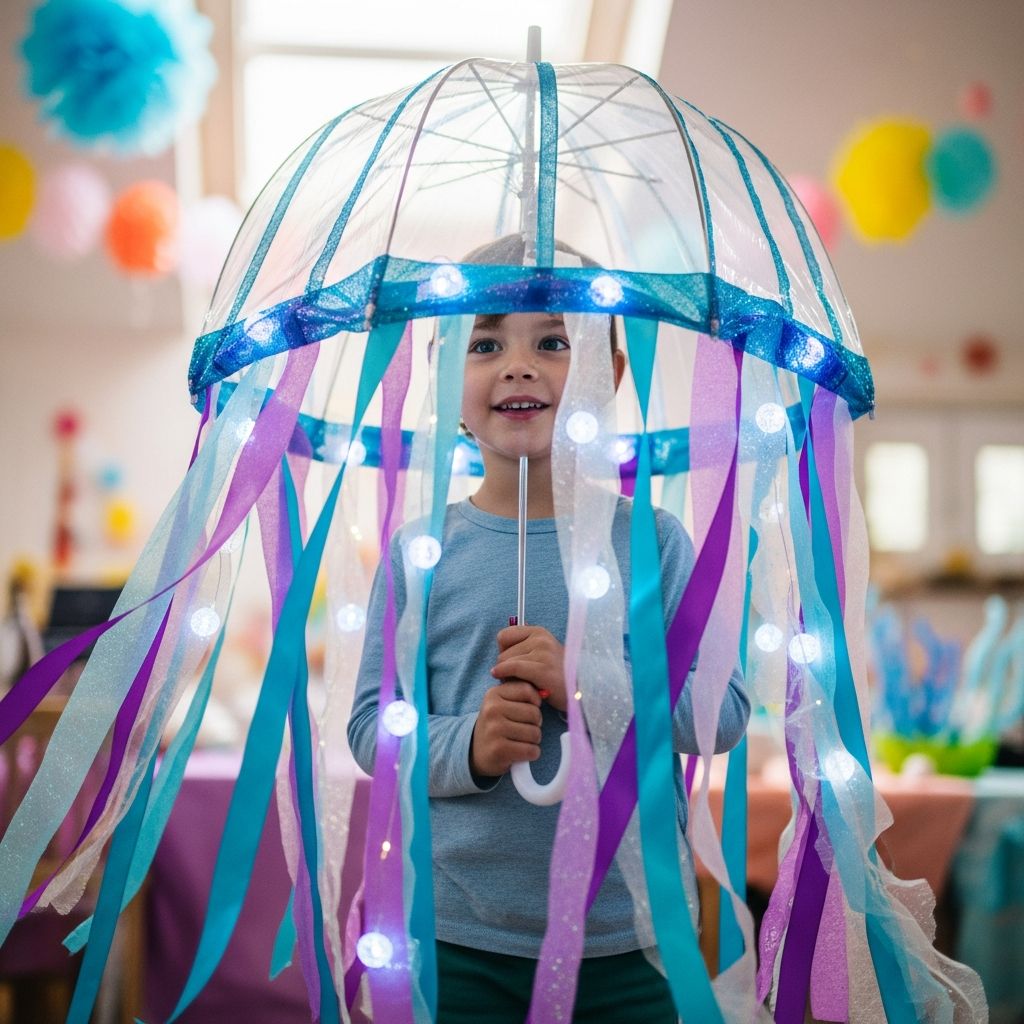
Transform your child into a shimmering jellyfish using everyday craft supplies and a bit of imagination. This no-sew guide walks you through everything from planning the look to attaching glowing tentacles, all without touching a sewing machine.
Why a Jellyfish Costume Is a Great Choice
A jellyfish costume is a fun alternative to classic Halloween outfits and works beautifully for school plays, aquarium visits, and under-the-sea themed parties.
- Comfortable: Uses soft clothing and a lightweight topper instead of bulky masks.
- Customizable: Works in any color—pastel, neon, or realistic ocean tones.
- Budget-friendly: Many materials can be found at discount or craft stores.
- High visibility: Optional lights or reflective materials make kids easier to spot in the dark, which supports safer trick-or-treating at night.
Planning Your Jellyfish Look
Before gathering supplies, decide on the style and setting for your costume so you only buy what you really need.
Choose a Jellyfish Style
- Glow-in-the-dark jellyfish: Add LED lights or glow tape for evening events.
- Soft pastel jellyfish: Use tulle and ribbons in pale pinks, blues, or purples for younger kids.
- Ocean-realistic jellyfish: Incorporate translucent plastic and clear ribbons to mimic real jellyfish textures.
- Bold party jellyfish: Mix bright neon colors and metallic streamers for a high-impact costume.
Pick a Base Outfit
Because children can overheat or trip in heavy costumes, comfort and mobility should come first.
- Leggings or soft sweatpants in a matching or neutral color.
- Long- or short-sleeve T-shirt, leotard, or fitted top.
- Closed-toe shoes or sneakers that your child can safely run in.
Choose fabrics that are breathable and flexible so kids can walk, sit, and play easily.
Supply List for a No-Sew Jellyfish Costume
You can adapt the materials to whatever you already have at home, but the list below covers the basics.
| Component | Suggested Materials | Notes |
|---|---|---|
| Jellyfish cap (topper) | Clear or colored umbrella, umbrella hat, or large foam bowl | Umbrellas create a natural dome shape similar to a jellyfish bell. |
| Tentacles | Ribbons, tulle strips, plastic tablecloth strips, curling ribbon, or fabric trims | Use mixed textures for a more organic, underwater look. |
| Glow & sparkle (optional) | Battery-powered LED light strings, reflective tape, glow-in-the-dark fabric paint | Battery packs should be securely attached and out of the child’s reach. |
| Attachment tools | Clear packing tape, strong craft glue, low-temp hot glue (adult use), safety pins | No sewing required; test adhesion on a small area first. |
| Finishing touches | Face paint, glitter gel, sparkle stickers (for clothing, not skin) | Use non-toxic, child-safe cosmetics only. |
Step-by-Step: Building the Jellyfish Top
The top (or “bell”) is the most recognizable part of the costume. Using an umbrella makes this simple and lightweight.
1. Prepare the Umbrella or Hat Base
- Open the umbrella and check that there are no sharp edges or broken spokes.
- If using an adult-sized umbrella for a small child, consider trimming any loose metal pieces and covering ends with tape.
- For an umbrella hat, adjust the headband so it fits snugly but comfortably on your child.
If you want a more dome-like jellyfish shape, gently push the umbrella ribs downward. Make small adjustments; bending too far can weaken the structure.
2. Add the Shimmering “Bell” Layer
The bell mimics the soft, translucent body of a jellyfish.
- Drape iridescent cellophane, sheer fabric, or a pale plastic tablecloth over the open umbrella.
- Secure at the tips of each rib with small pieces of clear packing tape or glue.
- Let extra material hang slightly over the edges to hide the frame and add movement.
Choose lightweight materials so the topper does not become heavy or unbalanced for your child.
3. Create and Attach Tentacles
The tentacles are what turn a simple umbrella into a jellyfish.
- Cut long strips of your chosen materials (ribbons, tulle, or plastic) in varying lengths from about mid-chest to ankle height.
- For a wavy effect, gently stretch plastic strips with your thumbs to make them curl and ripple.
- Attach strips around the rim of the umbrella using clear tape or glue, spacing them evenly.
- Mix textures: alternate between wide tulle strips, narrow ribbons, and a few thicker pieces for visual interest.
Make sure nothing drags under the child’s feet; trim any tentacles that fall below ankle level to reduce trip hazards.
Adding Lights and Glow (Optional)
Lighting makes this costume stand out at dusk and in low light, and can help with visibility when walking outside.
Choosing Safe Lighting
- Use battery-powered LED strands that stay cool to the touch.
- Avoid plug-in lights or anything that requires an electrical outlet.
- Check that the battery case closes securely and cannot be easily opened by young children.
Placing the Lights
- Turn on the lights before attaching to check for any faulty sections.
- Tape or tie the battery pack high inside the umbrella near the handle, where an adult can reach it but a child cannot.
- Run the light strand either:
- around the inner frame of the umbrella, or
- down among the tentacles, loosely looping it and securing with small pieces of clear tape.
- Ensure wires are not near the child’s face and are secured so they cannot swing into their eyes.
Check the lights periodically during use to make sure the wiring and batteries remain intact and cool.
Creating the Under-the-Sea Outfit
Once the topper is finished, complete the jellyfish look with a simple, coordinated outfit underneath.
Color and Texture Ideas
- Monochrome: All-white or all-blue clothing makes the tentacles and lights pop.
- Ombre effect: Dress your child in darker colors on the legs and lighter colors on top to mimic deep-sea lighting.
- Soft and flowy: Add a tutu, tulle skirt, or lightweight cape to echo the drifting motion of a jellyfish bell.
Comfort and Safety Tips
- Ensure the costume does not restrict movement—kids should be able to climb steps and sit down easily.
- Avoid long, trailing fabric that can catch on objects or be stepped on.
- For outdoor events at night, add reflective tape to shoes or pants for extra visibility.
- Use non-toxic face paint and test a small area of skin ahead of time for sensitivity.
Customizing for Different Ages
This jellyfish concept can be modified for toddlers, school-age kids, and even older siblings or adults.
For Toddlers
- Use a smaller umbrella or a lightweight foam bowl attached to a soft hat.
- Keep tentacles short—no lower than the knees.
- Skip lights if your child dislikes flashing or glowing objects, or if they might chew on wires.
For School-Age Kids
- Let them help choose colors and materials to encourage creativity.
- Add lights and layered tentacles for extra drama.
- Consider a simple matching accessory, like a small sea-themed bag for treats.
For Older Kids or Adults
- Upgrade to more detailed lighting patterns or multiple color zones.
- Pair the costume with ocean-themed makeup or glittery eye shadow (using cosmetics safe for the intended age group).
- Create group costumes—pair your jellyfish with a fish, sea turtle, or scuba diver for a themed look.
Quick Troubleshooting Guide
If something does not work as planned, these simple fixes can help.
- Top feels heavy: Remove some fabric or tentacles and reduce the number of light strands.
- Umbrella slips on the head: Add a soft hat or headband under the handle to stabilize it, or switch to an umbrella hat.
- Tentacles tangle together: Use fewer very thin ribbons and mix in some wider strips to prevent knotting.
- Child is nervous about visibility: Lift or thin out the front tentacles to keep their line of sight clear.
SEO-Friendly Tips for Sharing Your Costume Online
If you post your jellyfish creation on a blog or social media, a few small steps can help others find your project.
- Use clear phrases like DIY jellyfish costume, no-sew jellyfish costume, and under the sea kids costume in captions and descriptions.
- Include close-up photos of the tentacles, lights, and the inside of the umbrella to help other parents recreate the look.
- Mention if the costume is glow-in-the-dark, light-up, or specifically designed for toddlers or school-age children.
Frequently Asked Questions (FAQs)
Q1: How long does it take to make a no-sew jellyfish costume?
Plan for about 1–2 hours, depending on how many tentacles and lights you add. Cutting strips and taping them to the umbrella is the most time-consuming step, but you can speed it up by leaving materials folded while you cut.
Q2: Is this costume safe for young children?
With supervision and a few precautions, it can be made safe. Use cool-touch LED lights, avoid small detachable pieces that could pose a choking hazard, keep tentacles above ankle length to prevent tripping, and make sure the child’s vision is not blocked.
Q3: Can I wash any part of the costume?
The clothing layers underneath (leggings, shirts, tutus) can usually be machine-washed according to their care labels. The umbrella portion with taped tentacles and lights should be spot-cleaned only, using a damp cloth and mild soap on non-electronic areas.
Q4: What if I don’t have an umbrella?
You can adapt this idea using a wide-brim hat, a foam bowl attached to a headband, or a lightweight plastic colander covered with fabric. The main goal is to create a dome-shaped top with enough surface to attach tentacles.
Q5: How can I make the costume more visible at night?
In addition to LED lights, add reflective tape on the back of the topper and along the bottom of pants or shoes. Visibility is an important safety factor for pedestrians outdoors at night.
References
- Halloween Safety — U.S. Centers for Disease Control and Prevention. 2022-10-26. https://www.cdc.gov/family/halloween/index.htm
- Costume Safety Tips — U.S. Consumer Product Safety Commission. 2023-10-10. https://www.cpsc.gov/Newsroom/news-releases/2023/CPSC-Releases-Halloween-Safety-Tips-to-Help-Prevent-Burns-Falls-and-More
- Pedestrian Safety — National Highway Traffic Safety Administration. 2023-04-01. https://www.nhtsa.gov/road-safety/pedestrian-safety
- Safe Costumes — American Academy of Pediatrics. 2022-10-18. https://www.healthychildren.org/English/safety-prevention/on-the-go/Pages/Halloween-Safety-Tips.aspx
- Battery Safety for Children — U.S. Consumer Product Safety Commission. 2023-03-23. https://www.cpsc.gov/Safety-Education/Safety-Education-Centers/Battery-Safety
- Choosing Safe Toys and Products for Children — U.S. Food and Drug Administration. 2022-11-15. https://www.fda.gov/consumers/consumer-updates/choosing-safe-toys-and-products-kids-holiday-season-and-beyond