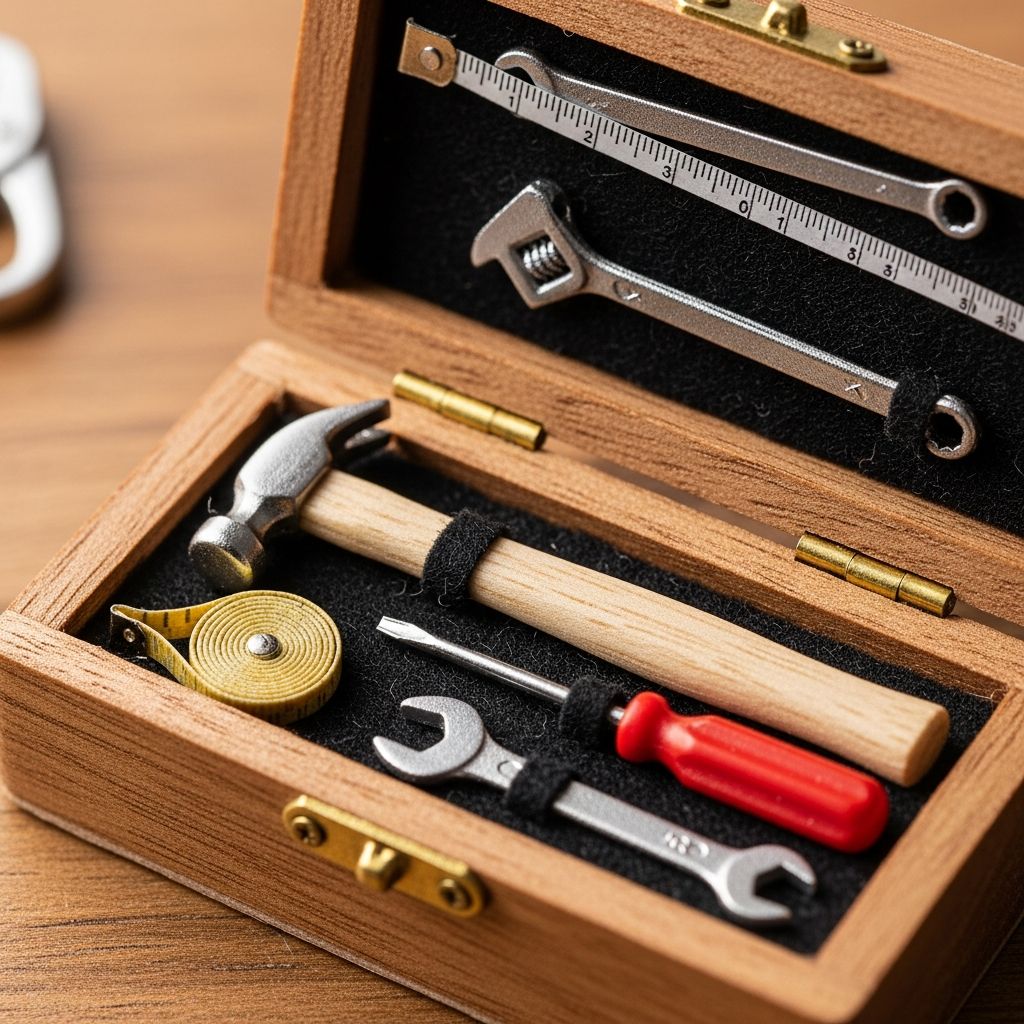
A miniature toolbox stuffed with tiny mementos is an easy, funny and meaningful way to celebrate the dad in your life. Instead of another tie or mug, this project turns simple household items into a keepsake packed with memories, gratitude and inside jokes.
This guide walks you through planning, building and filling a tiny “toolbox of love” that kids can help make. You can adapt it for Father’s Day, a birthday or any moment when Dad deserves something special.
Why a Mini Toolbox Makes Such a Great Dad Gift
Many dads are known for fixing things—broken toys, wobbly chairs, even bad days. A toolbox-themed gift plays on that image in a playful way, while also celebrating the emotional “tools” Dad uses every day: patience, humor, creativity and love.
- Personal: Each item can stand for a specific memory or quality you appreciate.
- Kid-friendly: Children can help choose, decorate and explain the items.
- Budget-conscious: Most supplies can be found at home or in a basic craft aisle.
- Versatile: Works for dads, stepdads, grandfathers or other father figures.
Psychologists note that tangible tokens connected to specific memories can strengthen emotional bonds and help people feel appreciated, especially in close relationships like families.1
Gathering Your Supplies: Toolbox and Tiny Treasures
You can build this project with almost any small container. The goal is to suggest a toolbox shape and then transform it with color and details.
Choosing the “Toolbox” Base
- Small metal lunch box or pencil box
- Recycled tin or sturdy cardboard box
- Mini craft crate or wooden box from a craft store
- Empty mint tin or tea tin for an ultra-tiny version
If you use recycled containers, clean and dry them thoroughly before decorating. Reuse and crafting together can help children learn about waste reduction and resourcefulness, which research identifies as valuable environmental habits to develop in childhood.2
Basic Craft Supplies
- Acrylic paint and brushes (or paint pens)
- Strong craft glue or double-sided tape
- Colored paper or cardstock
- Markers or gel pens
- Stickers, washi tape or alphabet stickers for labels
- Ribbon, string or twine (optional, for tags and decoration)
Filler Ideas: Symbolic “Mini Tools”
The heart of this gift is the tiny items inside, each linked to a short message. You can mix practical little objects with sentimental keepsakes.
- Small screws, nuts or washers (for real-tool dads)
- Paper hearts, folded notes or mini envelopes
- Coins or play money (for jokes about “Dad’s savings”)
- Rubber bands, paper clips or binder clips
- Mini flashlight, key, or measuring tape from a travel or office section
- Photos printed small, ticket stubs or travel mementos
- Candy or gum (if Dad has a favorite treat)
Designing the Outside: Turning Any Box into a Toolbox
You can keep the outer design simple or go all-out. Let kids take the lead where possible—research on family rituals shows that when children actively participate in making gifts or cards, it can increase their sense of connection and self-worth.3
Step-by-Step Decoration Guide
- Prep the surface: Lightly sand shiny surfaces and wipe clean so paint or glue will stick.
- Paint a base color: Classic toolbox colors include red, black, gray, or bright blue. Let dry fully.
- Add details: Use a contrasting color for “metal” corners, pretend hinges or a handle outline.
- Lettering: Add words like “Dad’s Tiny Toolbox,” “Fix-It Kit,” or a nickname.
- Finishing touches: Stickers, painted screws or drawn-on bolts can make it look more mechanical.
| Style | Color Ideas | Decoration Tips |
|---|---|---|
| Classic Toolbox | Red, black, silver | Paint faux metal edges, add drawn-on handle and name label. |
| Workshop Chic | Gray, navy, wood tones | Use woodgrain contact paper or markers, label drawers with mini stickers. |
| Cartoon Fun | Bright primary colors | Add cartoon nuts, bolts and speech bubbles with funny phrases. |
| Travel Toolbox | Teal, mustard, cream | Decorate with mini maps, faux luggage tags, and city stickers. |
Filling the Toolbox: Symbolic Items and Their Meanings
Each tiny object becomes a “tool” with a double meaning. Attach a short explanation so Dad understands the symbolism.
Example Symbolic Items
- Paper clip: “For all the times you keep our family together when things get messy.”
- Rubber band: “To remind you how flexible you are when plans change.”
- Mini screw: “For fixing toys, shelves, and everything we accidentally break.”
- Teabag or coffee pod: “For the energy that keeps you going on long days.”
- Candies: “For the sweetness you bring to our everyday life.”
- Small photo: “Because the best thing you’ve ever built is this family.”
Write each explanation on a small tag or strip of paper and either:
- Tie it directly to the item with string, or
- Place all notes in a stack labeled “Toolbox Instructions for Dad” inside the lid.
Involving Kids of Different Ages
One of the strengths of this project is that it scales to different skill levels. Family craft activities have been associated with better communication and emotional closeness, particularly when adults adjust tasks to children’s age and abilities.3
Toddlers and Preschoolers
- Choose colors of paint and stickers.
- Help glue large items inside the toolbox.
- Dictate what they want to tell Dad while an adult writes it down.
School-Age Kids
- Write short notes in their own handwriting.
- Design a logo or label for the box (e.g., “Super Dad Co.”).
- Pick items that connect to specific shared memories.
Teens
- Create more elaborate artwork on the box (comic-style art, patterns, or inside jokes).
- Add thoughtful letters or longer messages about what they appreciate.
- Include tiny but practical gadgets Dad might genuinely use.
Adding Words That Matter: Notes, Coupons and Jokes
The emotional impact of this gift comes mainly from the words that go with the objects. Research on gratitude suggests that specific, concrete expressions of thanks—naming actions and qualities—are particularly powerful in close relationships.4
Short Prompts Kids Can Finish
- “One thing you always fix for me is…”
- “You’re the best at…”
- “My favorite memory with you is…”
- “You make me laugh when…”
- “I feel safe when you…”
DIY Dad Coupons
Cut cardstock into small rectangles and create a stack of “Dad coupons” to tuck into the toolbox:
- “Good for one car wash (done together).”
- “Good for choosing the movie tonight.”
- “Good for breakfast in bed.”
- “Good for one chore-free evening.”
Fun Extras
- Print a few of Dad’s favorite jokes on tiny strips of paper.
- Hide a secret message under the bottom layer of items.
- Add a “user manual” page explaining how to use this toolbox on rough days.
Customizing for Different Types of Dads
Every dad is different. Tailor the toolbox to match his interests so it feels truly made for him rather than generic.
| Dad Type | Item Ideas | Note Suggestions |
|---|---|---|
| The Handy Dad | Mini screws, nuts, hex key, tape measure | “For fixing more than just furniture—thanks for fixing our worries too.” |
| The Chef or Griller | Spice packet, recipe card, tiny wooden spoon | “For seasoning our lives with your amazing cooking and company.” |
| The Gamer or Techie | Old game tokens, USB drive, tiny controller charm | “For always letting us have Player Two and teaching us new tricks.” |
| The Outdoors Dad | Small compass, leaf, photo from a hike | “For guiding us on trails and in life.” |
| The Book-Lover | Mini bookmarks, quote cards | “For reading stories and helping us write our own.” |
Presentation Day: Making the Reveal Special
How you give the toolbox can become a memory all on its own. Rituals like shared meals or dedicated celebration time help create stronger family traditions and long-term memories.3
- Breakfast surprise: Place the toolbox next to Dad’s plate at breakfast.
- Treasure hunt: Leave simple clues that lead Dad to the final “toolbox” prize.
- Storytime: Take turns explaining each item out loud as Dad opens it.
- Photo moment: Snap a picture of everyone holding the tiny toolbox together.
Safety and Practical Tips
A few small precautions keep this project fun and safe, especially with younger children involved.
- Avoid very small loose parts if there are toddlers or babies in the house, due to choking risk. Public health guidance recommends keeping small items away from children under three.5
- Use non-toxic, child-safe paints and glues, and supervise closely during crafting.
- Skip sharp screws or blades; choose rounded or plastic alternatives where possible.
- If you include food, label it clearly and avoid ingredients Dad is allergic to.
Frequently Asked Questions (FAQs)
What if I’m not crafty at all?
Keep it simple. Use a plain box, write a heartfelt note for the lid, and place symbolic items and store-bought stickers inside. The meaning matters far more than the artistic skill.
How many items should go inside the tiny toolbox?
Aim for 6–12 items so each one still feels special and not overwhelming. Fewer objects with thoughtful explanations are better than a crowded box with no clear meaning.
Can this work for stepdads, grandfathers or other caregivers?
Yes. Adjust the name on the box and the notes inside to match the relationship. The idea is to honor whoever “fixes” problems, offers support and shows up for the family.
How far in advance should we make the toolbox?
You can complete a simple version in an hour or two, but giving yourself a day or weekend allows paint and glue to dry properly and gives kids time to think of meaningful items.
What if my child has difficulty writing?
Let them dictate while you write, or encourage them to draw pictures instead of words. You can add a small caption underneath to explain the drawing for Dad.
References
- Chaplin TM, Sinha R, Simmons J, Healy S, Mayes LC. Parent–child emotional communication in families. — Published in Developmental Psychology. 2012-01-01. https://doi.org/10.1037/a0025994
- United States Environmental Protection Agency. Reduce, Reuse, Recycle. — U.S. EPA. 2024-01-10. https://www.epa.gov/recycle/reducing-waste-what-you-can-do
- Fiese BH, Tomcho TJ, Douglas M, Josephs K, Poltrock S, Baker T. A review of 50 years of research on naturally occurring family routines and rituals. — Journal of Family Psychology. 2002-06-01. https://doi.org/10.1037/0893-3200.16.4.381
- Algoe SB. Find, Remind, and Bind: The Functions of Gratitude in Everyday Relationships. — Social and Personality Psychology Compass. 2012-01-01. https://doi.org/10.1111/j.1751-9004.2012.00442.x
- U.S. Consumer Product Safety Commission. Toy Safety Business Guidance & Small Parts Regulations. — CPSC. 2023-09-15. https://www.cpsc.gov/Business–Manufacturing/Business-Education/Toys/Business-Guidance/Small-Parts-Regulations