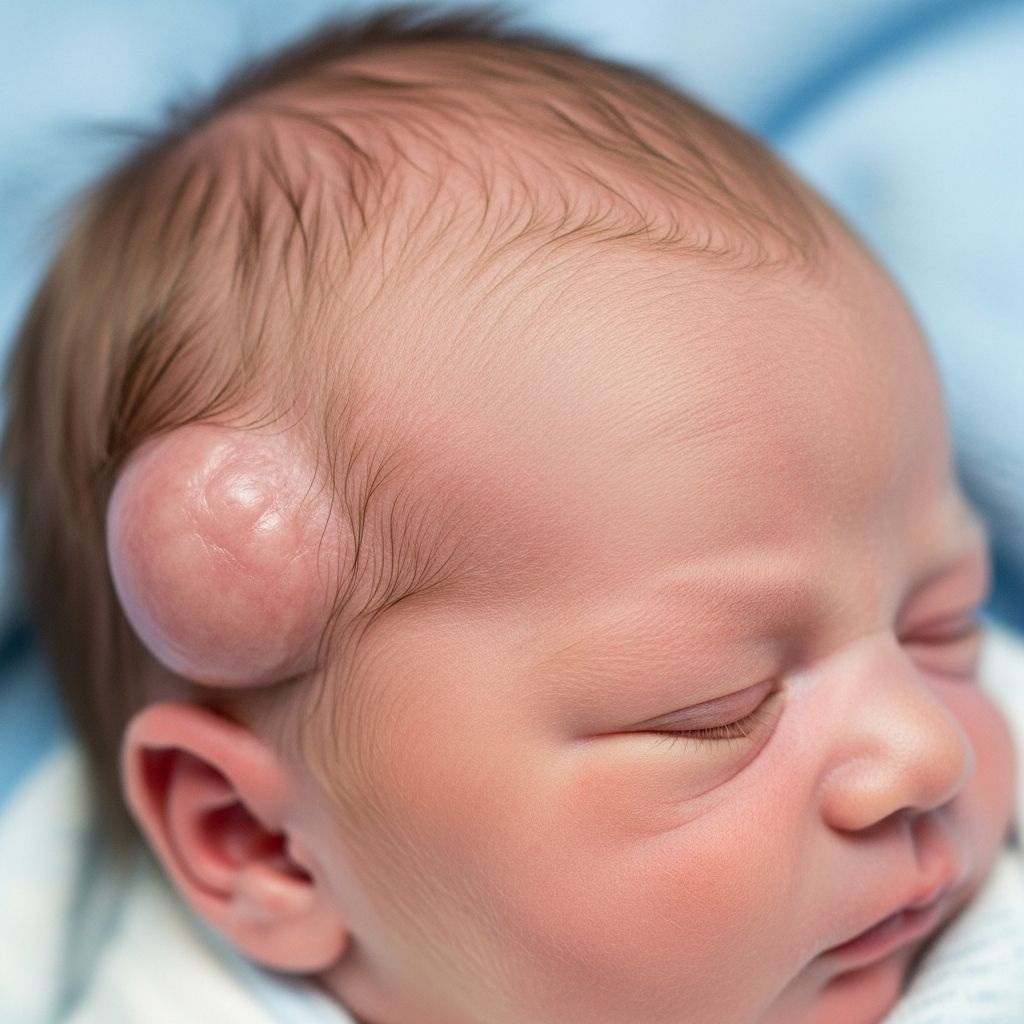
A cephalohematoma is a collection of blood under a newborn’s scalp, often appearing as a soft, raised bulge on the head shortly after birth. It results from ruptured blood vessels due to birth pressures and typically resolves without intervention, though monitoring is essential to prevent complications like jaundice.
Understanding the Nature of Cephalohematoma
This condition involves bleeding between the skull and the periosteum, the thin membrane covering the bone. Unlike caput succedaneum, which crosses suture lines, cephalohematoma is confined to one bone plate, creating well-defined edges. It affects approximately 2.5% of vaginal deliveries, rising to 10% with vacuum or forceps assistance.
The bulge forms because pressure during labor shears delicate vessels crossing the periosteum. Blood pools, forming a spongy mass that may initially feel soft and become firmer as it clots. Discoloration, such as bruising or redness, often overlays the area.
Risk Factors During Childbirth
Several delivery-related elements heighten the chance of cephalohematoma development:
- Prolonged or difficult vaginal births applying sustained skull pressure.
- Assisted deliveries using vacuum extractors or forceps, impacting 1 in 10 cases.
- Large newborns over 8 pounds, 13 ounces, increasing mechanical stress.
- Multiple births like twins, where positioning adds friction.
- Epidural use, potentially prolonging labor stages.
These factors emphasize the role of birth mechanics in vessel rupture, though most cases occur without long-term harm.
Recognizing Key Symptoms in Infants
Parents often first notice a soft, egg-shaped lump on the parietal or occipital regions. The mass feels boggy due to pooled blood and may enlarge slightly over 24-48 hours before stabilizing.
| Symptom | Description | Timeline |
|---|---|---|
| Head Bulge | Raised, spongy mass on one side; bruise-like color | Appears within hours of birth |
| Skin Changes | Redness, warmth, or firmness over lump | Days 2-5, signals possible infection |
| Jaundice | Yellowing of skin/eyes from bilirubin rise | Week 1 as blood breaks down |
| Anemia Signs | Pallor, rapid heart rate, fatigue | If significant blood loss |
Behavioral cues include irritability, high-pitched cries, feeding refusal, lethargy, or fever, warranting immediate medical review.
Potential Complications and Health Risks
While 90% resolve spontaneously within 1-2 months, complications arise from blood breakdown or secondary issues:
- Jaundice: Absorbed hemoglobin elevates bilirubin, risking kernicterus (brain damage) if severe.
- Anemia: Substantial blood pooling depletes red cells, causing pallor and tiredness.
- Infections: Rare but serious; cellulitis, sepsis, or osteomyelitis if bacteria enter.
- Skull Fractures: Underlying linear fractures in some cases, heightening brain injury risk.
- Developmental Delays: Untreated jaundice or infections may impair motor skills, hearing, or cognition.
Vigilance prevents escalation; most infants recover fully with prompt care.
Diagnostic Approaches for Confirmation
Diagnosis begins with physical exam: the bulge doesn’t cross sutures and may transilluminate (glow under light) due to fluid blood. Ultrasound confirms fluid collection without deeper hemorrhage. Skull X-rays detect fractures, while blood tests assess anemia or bilirubin levels.
No routine imaging suffices for uncomplicated cases; escalation occurs if size increases or symptoms emerge.
Treatment Strategies and Management
Conservative management suits most: observation allows natural reabsorption over weeks. The lump calcifies, shrinks, and fades as body metabolizes blood.
Interventions target complications:
- Phototherapy for jaundice to break down bilirubin.
- Blood transfusions for severe anemia.
- Antibiotics for infections like sepsis.
- Aspiration or drainage only in extreme, infected cases to avoid recurrence.
Follow-up monitors resolution and neurodevelopment.
Home Monitoring Tips for Parents
Empower parents with daily checks:
- Measure lump size weekly; alert if growing.
- Track jaundice progression; note yellowing extent.
- Observe feeding, sleep, cry patterns for distress.
- Check skin over lump for redness, heat, pus.
- Attend all pediatric visits for growth tracking.
Avoid squeezing the area to prevent rupture spread. Most vanish by 8 weeks, but consult if persisting beyond 3 months.
Long-Term Prognosis and Developmental Outlook
Prognosis excels: over 95% heal without sequelae. Rare persistent calcification may cause asymmetry, rarely needing surgery.
Monitor milestones to catch delays:
- 0-6 months: Rolling, grasping, babbling.
- 6-12 months: Crawling, responding to name.
- 1-3 years: Walking, speech clarity, social play.
Early intervention therapies mitigate any issues from kernicterus or fractures.
Frequently Asked Questions About Cephalohematoma
Does cephalohematoma always require surgery?
No, surgery is rare and reserved for infected or non-resolving cases after months; most resolve naturally.
Can cephalohematoma cause brain damage?
Directly, no, as it’s subperiosteal. Indirectly, yes via untreated jaundice (kernicterus) or rare skull breaches.
How long does a cephalohematoma last?
Typically 2-8 weeks for reabsorption, up to 3 months; firmness peaks early, then fades.
Is cephalohematoma painful for babies?
Usually not acutely, but irritability suggests discomfort; monitor and comfort as needed.
Can C-section babies get cephalohematoma?
Rarely, mainly from vacuum use or malposition, but vaginal births predominate risk.
References
- Causes & Symptoms of Cephalohematoma — McMinn Law Firm. 2023. https://www.mcminnlaw.com/blog/causes-symptoms-of-cephalohematoma/
- Infant Cephalohematoma Attorneys in Louisville — KY Trial. 2024. https://kytrial.com/birth-injuries/cephalohematoma/
- Connecticut Cephalohematomas Lawyer — Berkowitz Law Firm. 2023. https://berkowitzlawfirm.com/connecticut-birth-injury-lawyer/cephalohematomas/
- Causes & Symptoms of Cephalohematoma — KL Niven Law. 2024. https://www.klnivenlaw.com/blog/causes-symptoms-of-cephalohematoma/
- Cephalohematoma Developmental Delay — Childbirth Injuries. 2023. https://www.childbirthinjuries.com/birth-injury/newborn-cephalohematoma/developmental-delays/
- Cephalohematoma – StatPearls — NCBI Bookshelf. 2023-08-07. https://www.ncbi.nlm.nih.gov/books/NBK470192/
- Newborn Cephalohematoma – Causes, Symptoms, and Treatments — Birth Injury Center. 2024. https://birthinjurycenter.org/types-of-birth-injuries/newborn-cephalohematoma/
- Causes and Symptoms of Cephalohematoma — MVM Law. 2023. https://www.mvmlaw.com/blog/causes-and-symptoms-of-cephalohematoma/
- Cephalohematoma Birth Injury: Causes and Complications — Cleveland Clinic. 2024-10-22. https://my.clevelandclinic.org/health/articles/22229-cephalohematoma