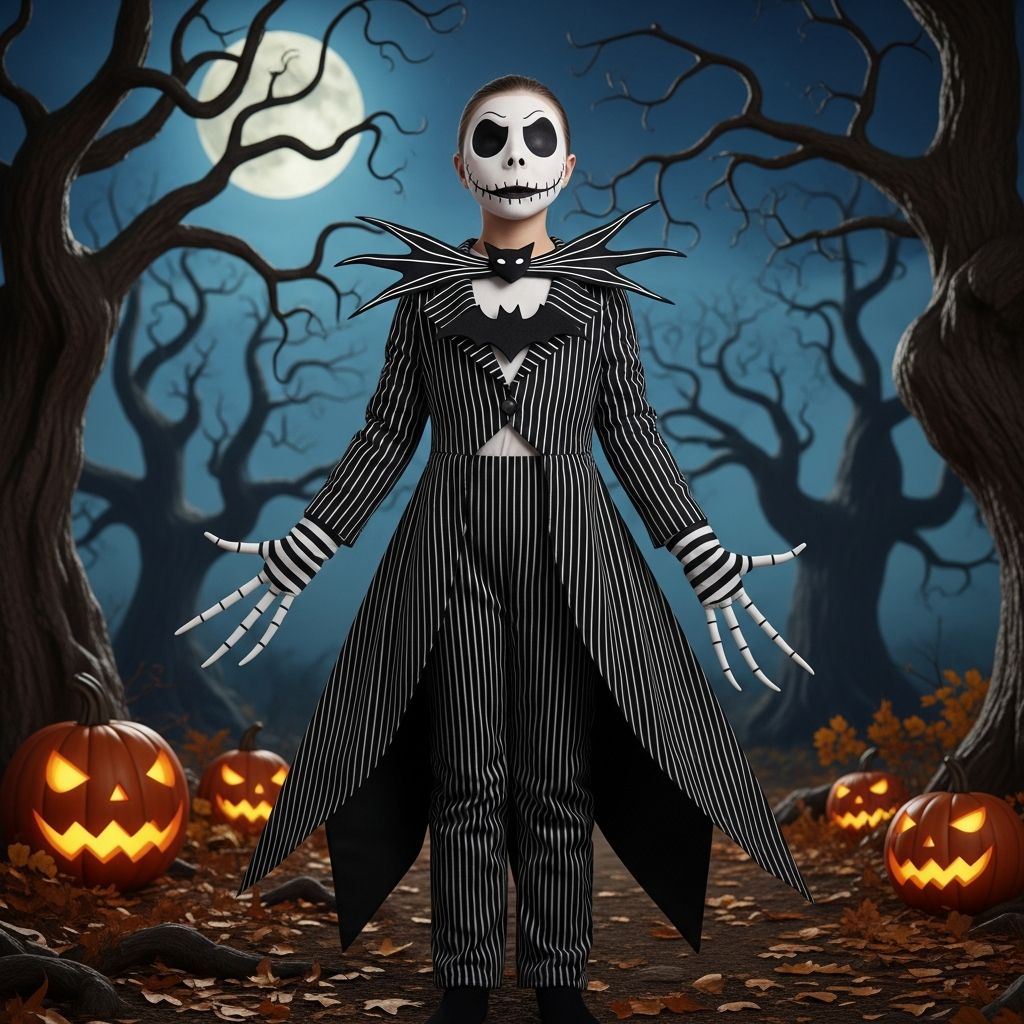
Jack Skellington remains one of the most recognizable Halloween icons, and creating a costume inspired by this character at home is easier than it looks. This guide walks through a completely original approach to building a Jack-style outfit with flexible options for kids, teens, and adults.
Instead of relying on a store-bought costume, you will learn how to adapt simple clothing, add iconic details like pinstripes and a spooky bow tie, and finish the look with makeup or a mask. The result is a distinctive, comfortable costume that can be reused or reshaped for future dress-up days.
Core Elements of a Jack Skellington Look
Before gathering materials, it helps to understand which visual details make Jack Skellington immediately recognizable. Thinking about these features first will guide every choice from clothing to accessories.
- A black suit or coordinated black outfit with high-contrast white pinstripes.
- A white shirt or chest panel to suggest a classic formal look.
- A bold bow tie in a bat- or wing-shaped style positioned high at the collar.
- A stylized skull face, created with makeup or a simple mask.
- Tall, lean proportions emphasized with vertical lines and fitted pieces.
Materials and Tools Checklist
This project can be completed mostly with items you already have at home, with a few inexpensive craft additions. Adjust fabrics and tools according to age and comfort level.
- Clothing base
- Black pants or leggings (solid color, no logos).
- Black long-sleeve shirt, blazer, or cardigan.
- Optional: black skirt or dress for a stylized version.
- Detail materials
- White or silver fabric paint or permanent fabric marker.
- White felt, cotton, or an old T-shirt for a chest insert.
- Black felt, foam, or cardboard for the bow tie.
- Elastic, ribbon, or safety pins for attaching accessories.
- Face and head options
- White face paint and black eyeliner or face crayon.
- Or a white craft mask to decorate like Jack’s face.
- Optional: bald cap or snug black beanie if hair coverage is desired.
- Tools
- Fabric-safe glue or hot glue (for adults only).
- Scissors reserved for fabric or craft use.
- Painter’s tape or masking tape for guiding stripes.
Choosing and Preparing the Base Outfit
The base outfit establishes the silhouette long before stripes and makeup are added. Prioritize comfort and mobility, particularly for children who will walk, play, and sit in the costume for hours.
- Pick items that already fit well instead of oversized pieces; slim lines evoke Jack’s tall, slender look.
- If you lack a full suit, pair black leggings with a black long-sleeve T-shirt or light jacket to simulate a coordinated set.
- Launder clothing and smooth out major wrinkles before decorating to prevent paint cracking or uneven lines.
Adding DIY Pinstripes to the Suit
Pinstripes are the most iconic detail of Jack’s suit, but they do not need to be perfect. A hand-painted or drawn look often feels more charming and character-like.
- Lay garments flat on a protected surface, such as an old sheet or large trash bag.
- Slide cardboard inside each clothing piece to prevent paint from bleeding through.
- Use painter’s tape as rough guides for straight, vertical lines if you prefer more uniform stripes.
- Apply thin lines with white or silver fabric paint, or draw directly with a fabric marker.
- Allow paint to dry thoroughly according to the product instructions before flipping and repeating on the back.
Creating the White Chest Detail
Jack’s outfit typically includes a distinct white area at the chest, suggesting a formal shirt beneath the dark suit. You can replicate this feature without sewing by attaching a removable panel.
- Cut a rounded or rectangular shape from white felt or an old white T-shirt that roughly frames the upper chest.
- Place the panel on the front of the shirt or jacket to test size and shape, trimming as needed.
- Attach with fabric-safe glue along the edges, or use small pieces of double-sided fabric tape for a removable option.
- Add painted or drawn “buttons” for extra formality, spacing them vertically down the center of the panel.
Designing a Statement Bat Bow Tie
The dramatic bow tie is a focal point of the costume and a fun chance to customize the character. This accessory can be playful and exaggerated without needing precise realism.
- Draw a bat-like shape with spread wings on a sheet of black felt, foam, or sturdy cardboard.
- Cut out the shape and test the size by holding it at the collar; it should be wide enough to be noticed but not so large that it covers the entire chest.
- Optional: cut a small separate piece for a head or central knot and glue it to the middle of the wings.
- Use white paint or metallic markers to add minimal details, such as small eyes or accent lines on the wings.
- Attach a loop of elastic or a strip of ribbon to the back, forming a choker-style band that can tie or fasten at the back of the neck.
Face Makeup Versus Mask: Choosing a Style
There are two main approaches to completing the Jack-inspired face: makeup or a mask. Both have benefits, and the choice depends on comfort level, time, and weather.
| Option | Pros | Cons |
|---|---|---|
| Face paint |
|
|
| Decorated mask |
|
|
Simple Jack-Inspired Face Paint Steps
If you prefer makeup, a minimal design still creates a strong effect without requiring professional skills. Use cosmetic-grade products only, particularly on children’s skin.
- Apply a thin, even base of white face paint to the entire face, avoiding the immediate eye area.
- Use a black eyeliner pencil or face crayon to outline large circular or oval “eye sockets” around each eye.
- Gently shade the area inside the outlines with more black paint or shadow, leaving enough room for comfortable blinking.
- Draw two small curved nostril shapes on the nose to suggest a skull-like structure.
- Extend a thin black line from each side of the mouth toward the cheeks, then add short vertical “stitches” across the line.
Creating a Quick Jack Mask
A sturdy, lightweight mask can be a practical alternative in colder weather or for those who prefer not to wear face paint. The design can be simplified for younger children.
- Start with a plain white mask form, or paint a neutral craft mask white and let it dry.
- Use a pencil to lightly sketch large eye shapes, a small nose, and a stitched mouth line.
- Trace over the sketches with permanent marker or acrylic paint, keeping features bold and easy to recognize.
- Ensure eye holes are large enough for clear vision, enlarging them carefully with small scissors if needed.
Optional Extras: Hands, Feet, and Height Tricks
Once the core costume is complete, consider adding a few optional extras for a more theatrical effect. These enhancements are not required but may be fun for cosplay events or themed parties.
- Long black gloves decorated with white bone lines can mimic skeletal hands.
- Black shoes or boots can be painted or taped with subtle white accents to coordinate with the suit.
- Adults or older teens might add height with platform shoes, but safety and stability should always come first.
Comfort and Safety Considerations
Costumes are often worn in crowded, dimly lit environments, so planning for safety is essential. A comfortable, easy-to-move-in outfit will make the entire evening more enjoyable.
- Avoid placing thick paint or bulky decorations on areas where joints bend, such as knees and elbows.
- Choose breathable fabrics and layer appropriately if the weather is cool; a thin base layer under the costume can prevent itchiness.
- Make sure masks or makeup do not obstruct vision and that children can drink water and eat snacks without complicated removal.
- If trick-or-treating after dark, add subtle reflective tape to the back of the jacket, shoes, or candy bag.
Adapting the Costume for Different Ages
One of the biggest advantages of a DIY Jack Skellington costume is how easily it can be scaled for different ages and body types. The same core ideas can work for toddlers, older kids, and adults with minor adjustments.
- For toddlers, use soft cotton pieces and minimal makeup, focusing on a bold bow tie and gentle stripes.
- For school-age kids, provide more involvement by letting them help paint stripes or design the bow tie.
- For adults, refine fit by using blazers or tailored pieces and consider more detailed face paint or shading.
Eco-Friendly and Budget-Friendly Tips
This project lends itself well to upcycling and cost-saving strategies. Many elements can be made from items already in your home, reducing waste and expense.
- Repurpose old black clothing with minor wear, since small imperfections disappear under paint and low lighting.
- Cut bow ties and chest panels from fabric scraps, old shirts, or even reusable shopping bags with a fabric-like texture.
- Share materials like face paint and fabric markers among family members making multiple costumes.
FAQs About DIY Jack Skellington Costumes
How long does this costume take to make?
The time required depends on how many details you include and how quickly your fabric paint dries. A simple version with stripes, a basic bow tie, and light makeup can often be assembled in an afternoon, while a more elaborate version with a decorated mask and detailed suit might span a weekend.
Can this project be done without any sewing?
Yes, the entire costume can be created with no sewing at all by relying on fabric glue, tape, and existing clothing pieces. Sewing is helpful for reinforcement but not mandatory, and beginners can still achieve a polished look using only adhesives and careful cutting.
What if my child finds the face makeup uncomfortable?
If makeup feels itchy or overwhelming, switch to a lightweight mask with a soft backing around the edges. Another alternative is to keep makeup minimal, perhaps just a stitched smile and light eye shading, while letting the bold suit and bow tie carry the character recognition.
Is fabric paint washable, and will the outfit be reusable?
Most fabric paints become permanent after heat-setting as directed on the label, allowing the costume to be worn again in future years. If you prefer a reversible option, use removable tape or detachable panels for stripes so the base clothing can return to everyday use.
Can this costume work for group or family themes?
Absolutely. One person can dress as a Jack-inspired character while others choose complementary roles such as a rag-doll figure, a ghostly friend, or a pumpkin-themed outfit. Repeating the same basic color palette—black, white, and a hint of eerie accent shades—helps unite the group visually.
Bringing Your Jack Skellington Vision to Life
By combining a simple black outfit with hand-drawn stripes, a dramatic bow tie, and a stylized skull face, almost anyone can create a distinctive Jack-inspired costume at home. This approach is flexible enough to suit last-minute planners and detail-oriented crafters alike, while remaining budget-friendly and customizable.
Once complete, your costume can serve for Halloween, themed movie nights, cosplay events, or school dress-up days, and the individual pieces can often be reused or adapted for new characters later. With a bit of creativity and basic materials, the Pumpkin King look becomes a surprisingly approachable DIY project for the whole family.