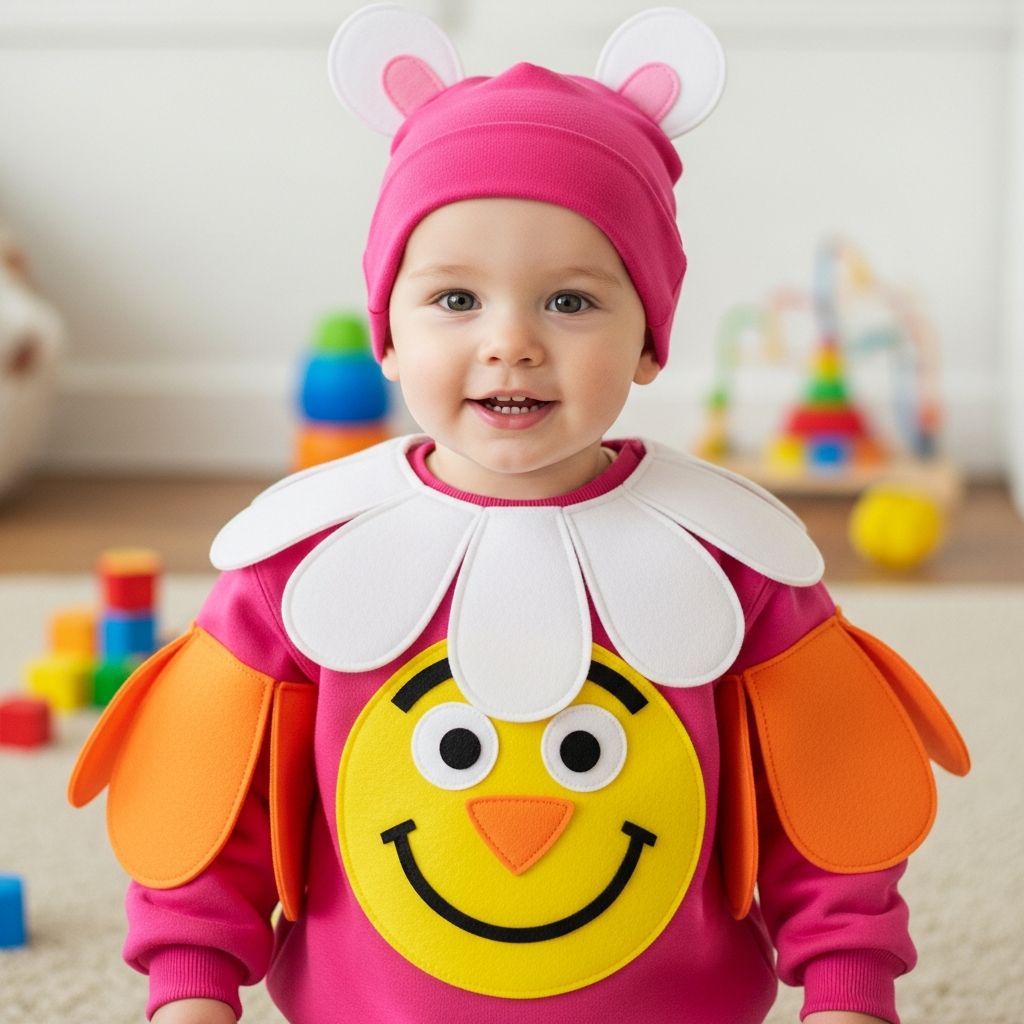
If your toddler adores bright colors, silliness, and singing along with Yo Gabba Gabba!, creating a Foofa-inspired costume from a simple sweatsuit is a fun, budget-friendly project. Instead of relying on store-bought outfits, you can build a soft, comfortable costume that is easy to play in, warm enough for trick-or-treating, and customizable for any character your child loves.
This guide walks you through how to turn a plain toddler sweatshirt and pants into a bubbly, pink Foofa-style costume using felt, glue, and basic craft tools. The same approach can be adapted for many other characters, animals, or color themes, making it a great starter project for parents who are new to DIY costumes.
Why Choose a DIY Foofa-Inspired Costume?
Foofa is the sweet, pink flower-topped character from Yo Gabba Gabba!, a children’s show that emphasizes music, movement, and positive social lessons. Many young children are drawn to her bright color palette and gentle personality, making her a popular costume choice.
Creating your own costume instead of buying a pre-made version offers several advantages:
- Comfort: Using a sweatshirt and sweatpants means the costume feels like everyday clothes, which many toddlers tolerate better than stiff or scratchy outfits.
- Warmth: In cooler climates, layering with a sweatsuit keeps children warmer than thin commercial costumes, which are often made of lightweight polyester.
- Budget control: You can use items you already own, pick up secondhand basics, and buy only a small amount of felt and craft supplies.
- Customization: You are free to adjust colors, textures, and details based on your child’s preferences or sensory needs.
- Reusability: Felt decorations can sometimes be removed so the sweatsuit returns to regular wardrobe duty later.
Planning the Look: Breaking Down Foofa’s Signature Style
Before you start cutting felt, it helps to identify the most recognizable elements of Foofa’s design so you can decide what to include and what to simplify for a toddler costume.
- Overall color: Foofa is primarily pink from head to toe.
- Petal collar: Around her neck is a flower-like petal shape that softens the transition between head and body.
- Round body: Her shape is simple and smooth rather than detailed or realistic.
- Face details: Large eyes, simple mouth, and a friendly expression.
- Flower on top: A small daisy-like flower on her head is a key identifying feature.
For toddlers, it is often better to simplify. Focusing on pink clothing, a petal collar, and a headpiece with a flower will usually be enough for other parents and kids to recognize who your child is meant to be.
Materials and Tools You Will Need
You can complete this entire project with beginner-level supplies. Adjust the colors and materials as needed for your child’s comfort and any allergies or sensitivities.
| Item | Suggested Details | Notes |
|---|---|---|
| Pink sweatshirt | Solid, long-sleeved, slightly roomy | Cotton or cotton-blend can be more breathable for kids. |
| Pink sweatpants or leggings | Matching or similar shade to the top | Choose something your toddler already finds comfortable. |
| Felt sheets | Pink, white, black, yellow, and green | Used for petals, face details, and flower accent. |
| Fabric glue or hot glue gun | Non-toxic, washable fabric glue preferred | Hot glue should be handled only by adults; supervise carefully. |
| Needle and thread (optional) | Matching pink thread | For extra durability or if you prefer sewing to gluing. |
| Child-sized beanie or soft headband | Pink if possible | Base for the flower on top of the head. |
| Scissors and paper | Craft scissors and simple printer paper | Paper is helpful for tracing patterns before cutting felt. |
Step-by-Step: Turning a Sweatsuit into a Foofa-Inspired Outfit
The following steps will help you go from basic clothing to a full costume. Plan to work in short bursts if you have limited time or if you need to pause to tend to your toddler.
1. Create the Petal Collar
The petal collar is a simple way to capture Foofa’s flowery look without making the costume bulky.
- Lay the sweatshirt flat and mark roughly where your child’s shoulders are.
- Cut a ring of pink felt that will sit around the neckline of the sweatshirt like a wide necklace.
- Cut large, rounded petals around the outside edge of the felt ring.
- Test the collar on top of the sweatshirt to ensure it does not block the neck opening.
- Attach the collar with fabric glue or a few small hand-stitches around the neckline, leaving enough stretch for the head to fit through.
2. Add Belly and Body Details
Foofa’s body is simple, but adding a slightly lighter pink oval on the front evokes her cartoon shape.
- Cut an oval of lighter or contrasting pink felt for the front of the sweatshirt.
- Center it on the torso area and glue or stitch it in place.
- If desired, cut small simple shapes (such as dots or tiny petals) from darker pink felt and place them around the belly for extra texture.
- Press firmly and allow glue to dry completely before your child wears it.
3. Decorate the Pants
You can keep the pants simple or add subtle decorations that won’t bother your toddler while walking or playing.
- Cut a few small petal or dot shapes from pink felt.
- Place them on the lower legs or the sides of the pants.
- Attach with small spots of fabric glue, avoiding the knee bend area to keep movement free.
- Let everything dry flat according to the glue manufacturer’s instructions.
4. Build the Headpiece with the Flower
The flower on top of Foofa’s head is one of her most recognizable features, so this small detail has a big impact.
- Use a soft pink beanie or a stretchy headband as the base.
- From white felt, cut 5–6 rounded petals.
- Cut a small yellow circle for the center of the flower, and a green strip if you’d like to suggest a stem.
- Glue the petals around the yellow center to form a daisy-like shape.
- Attach the finished flower to the top or front of the beanie/headband using fabric glue or by stitching through the center.
For toddlers who dislike hats, consider attaching the flower to a clip or barrette instead, so you can place it gently in their hair and remove it quickly if they protest.
5. Optional: Simple Face Details
If you want to push the costume closer to the original character without using face paint (which some children do not enjoy), you can add a small face element to the beanie.
- Cut two white circles of felt for eyes and two smaller black circles for pupils.
- Cut a curved pink or black felt smile.
- Arrange these low on the beanie so that when the hat is worn, the face sits above your child’s forehead.
- Secure with fabric glue and allow the hat to dry fully.
Skip this step entirely if your child is sensitive to anything near their eyes or prefers a more subtle look.
Safety and Comfort Considerations for Toddler Costumes
Costumes for very young children should always be designed with safety and comfort as the highest priorities. Many safety organizations note that costumes should be free of small detachable parts that pose choking risks, should not impair vision, and should avoid long, trailing pieces that could cause tripping.
- Breathable fabrics: Choose cotton or cotton-blend sweatsuits when possible, particularly if your child will be active or indoors for long periods.
- Secure attachments: Ensure that felt decorations are firmly glued or sewn and cannot easily be pulled off and put in the mouth.
- Avoid restricted movement: Do not add thick padding around knees or armpits; free movement helps prevent falls.
- Check for allergies: Some children may react to wool, certain dyes, or adhesives; test materials on a small patch of skin first if you are unsure.
- Flame awareness: Many costume materials are not flame-resistant; keep your child away from open flames, candles, or lit pumpkins regardless of what they are wearing.
Adapting This Method for Other Characters
One of the best parts of this sweatsuit-and-felt approach is that you can reuse the same basic technique to create a whole range of characters. Once you understand how to layer felt shapes onto comfortable clothing, you can design costumes that match your child’s changing interests from one year to the next.
Here are a few variations you might consider:
- Other Yo Gabba Gabba friends: Change the color scheme, face shapes, and accessories (horns, teeth, stripes) while keeping the sweatshirt base.
- Simple animals: Use brown for a bear, gray for an elephant, or orange for a tiger, adding ears and patterns with felt.
- Fantasy creatures: Turn the sweatsuit into a dragon, unicorn, or dinosaur by attaching spines, tails, and wings from felt or lightweight fleece.
- Color-themed costumes: Instead of a character, you can make a “pink flower” or “friendly cloud” using soft shapes and coordinating colors.
This flexibility makes the project a useful go-to method whenever a costume event pops up at preschool, daycare, or a themed birthday party.
Keeping Costs Low and Reusing Supplies
Homemade costumes are often more economical than brand-new licensed outfits, especially if you incorporate clothing and supplies you already own. Parents frequently report that buying multiple costumes or accessories each year can be expensive, especially for fast-growing toddlers who may only wear an outfit once.
Here are a few cost-conscious strategies:
- Shop your closet first: Look for pink tops and pants your child already has, even if the shades are slightly different.
- Visit thrift stores: Secondhand children’s clothing shops often have inexpensive sweatsuits and hats that are ideal for costume bases.
- Buy felt in bulk: Larger sheets are often more economical than many small ones and can serve multiple future projects.
- Share with friends: Swap leftover felt colors, glue, or patterns with other parents who are also making costumes.
- Plan for reuse: Design detachable felt pieces that can be removed so the sweatshirt returns to normal use after the event.
Photo Tips: Capturing Your Toddler’s Costume
Once your Foofa-inspired outfit is complete, you may want a few special photos before it gets covered in playground dust or snack crumbs. Photographing toddlers can be challenging, but a few simple tactics help.
- Take pictures during play: Let your child dance, jump, or hug a favorite stuffed animal while you snap candid shots.
- Get down to their eye level: Kneel or sit on the floor so the costume details are shown from the child’s perspective.
- Use natural light: Take photos near a window or outside in the shade to avoid harsh flash and keep colors true to life.
- Keep sessions short: A few minutes is usually more than enough for a toddler; move quickly and make it fun.
Frequently Asked Questions (FAQs)
Q: How long does it take to make a Foofa-inspired toddler costume?
A: If you have all the materials ready, many parents can complete this project in 2–3 hours, including drying time for glue. Spreading the work over a couple of evenings often feels more manageable.
Q: Can I make this costume without sewing?
A: Yes. Using a strong, non-toxic fabric glue is usually sufficient for attaching felt shapes to a sweatshirt and hat. Sewing is optional but can increase durability, especially if your toddler is very active.
Q: Is felt safe for toddlers to wear?
A: Standard craft felt is generally safe when used as an outer decoration, but pieces should be firmly attached so they cannot be pulled off and mouthed. If your child has sensitive skin or allergies, choose soft, high-quality felt or fleece and keep it off areas that directly contact the skin.
Q: How do I wash the costume after use?
A: If pieces are sewn on, you can usually wash the sweatsuit inside out on a gentle cycle and air-dry. If you have used fabric glue, spot cleaning the decorated areas is safer; always follow the care instructions on both the clothing and the glue container.
Q: What if my child refuses to wear the hat or headband?
A: Many toddlers dislike headgear. You can still convey the character through the pink clothes and petal collar alone. Alternatively, attach the flower to a clip that can quickly be added or removed, or place a small flower badge on the sweatshirt instead.
References
- Halloween Safety Tips — U.S. Consumer Product Safety Commission. 2015-10-15. https://www.cpsc.gov/Safety-Education/Safety-Education-Centers/Halloween-Safety
- Choosing Safe Fabrics for Children’s Clothing — HealthLinkBC. 2020-07-10. https://www.healthlinkbc.ca/healthlinkbc-files/infant-and-childrens-wear-safety
- Textile Dermatitis: An Update — Hatch KL, Maibach HI. Current Allergy and Asthma Reports. 2000-09-01. https://doi.org/10.1077/s11882-000-0003-8