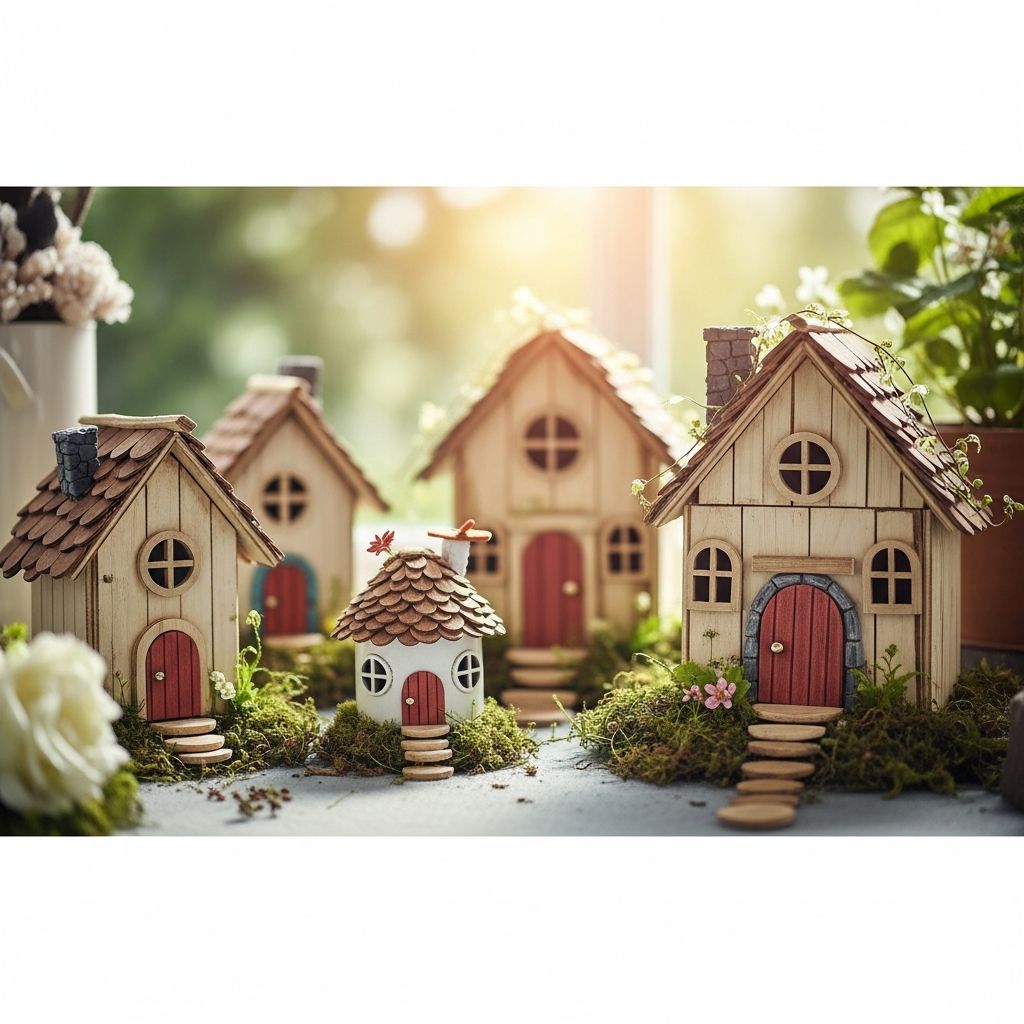
DIY fairy houses are a wonderful way to spark a child’s imagination while encouraging creativity, problem-solving, and time outdoors. These tiny homes can be built from recycled containers, natural treasures, or basic craft supplies, making them accessible, affordable projects for any family.
Why Fairy Houses Are Great for Kids
Building fairy houses offers a blend of art, STEM skills, and imaginative play. Children experiment with balance, structure, and design while inventing stories about the tiny residents of their creations.
- Encourages open-ended, imaginative play.
- Uses inexpensive, often recycled materials.
- Can be adapted for indoor or outdoor play in any season.
Essential Safety Tips Before You Start
Because fairy-house crafts often involve glue, small objects, and sometimes tools, safety planning matters just as much as creativity. Focus on age-appropriate tasks and clear adult supervision.
- Let adults handle hot glue guns, sharp scissors, or cutting tools.
- Choose large decorations for very young children to reduce choking risks.
- Use non-toxic paints, glues, and sealants wherever possible.
- Wash hands after handling outdoor materials like soil, bark, or moss.
Basic Materials Checklist
You do not need special supplies to make a fairy house. Start with what you already have at home or in the yard, then add extras only if you wish.
| Type | Examples | Best For |
|---|---|---|
| Base structures | Cardboard boxes, tissue boxes, small plastic containers, flower pots | Indoor houses, fairy gardens, portable projects |
| Natural items | Sticks, twigs, leaves, pebbles, bark, pinecones, acorns | Outdoor woodland houses, nature exploration |
| Craft supplies | Craft sticks, buttons, felt, yarn, beads, pom-poms | Decorative details, furniture, signs, roofs |
| Adhesives & tools | Non-toxic white glue, tape, hot glue (for adults), child-safe scissors | Assembly and structural support |
Indoor Fairy House in a Box
This project is perfect for rainy days and apartment living. A simple cardboard or tissue box becomes a cozy fairy cottage kids can keep on a shelf or desk.
Steps:
- Cut doors and windows into a clean cardboard or tissue box.
- Cover the walls with construction paper, craft sticks, or fabric scraps.
- Add a roof from another piece of cardboard, folded into a triangle or curve.
- Decorate with buttons, beads, and drawn-on flowers or vines.
- Create tiny furniture from bottle caps, buttons, and scraps of felt.
- Tip: Use tape or white glue with young children to avoid burns from hot glue.
- Tip: Cut pieces ahead of time so toddlers can mainly focus on decorating.
Nature Fairy House at the Base of a Tree
Outdoor fairy houses encourage kids to look closely at natural textures, shapes, and patterns. A shady tree, bush, or rock makes a perfect backdrop.
Steps:
- Choose a safe, low-traffic spot in the yard or a garden bed.
- Gather sticks, bark, stones, leaves, and pinecones from the ground.
- Lean sticks together to make walls, like a mini teepee or log cabin.
- Use bark or large leaves as a roof, weighing them down with small stones.
- Make a tiny path with pebbles or seeds leading up to the front door.
- Rule of thumb: Take only what has already fallen; avoid picking live plants.
- Encourage kids to pay attention to local rules when crafting in public parks.
Upcycled Container Fairy Cottage
Using an old plastic container or food tub helps kids see how everyday items can get a second life. This type of house is sturdy and works well in a fairy garden planter.
- Rinse and dry a small plastic container or tub.
- Cut an opening for a door, plus a few windows if the container is easy to cut.
- Cover the outside with craft sticks, foam sheets, or glued-on bark pieces.
- Decorate with buttons, beads, or bottle caps as flowers and stepping stones.
- Place the finished house into a pot of soil or a shallow tray with pebbles.
Because plastic resists water, this style works nicely outdoors, but adult supervision is essential for any cutting.
Tabletop Fairy Garden with a Mini House
A tabletop fairy garden combines a small house with plants and paths in one container. It is ideal for kids who like to rearrange scenes and switch decorations seasonally.
- Use a wide, shallow container such as a planter tray or large baking dish.
- Fill with potting soil, sand, or small pebbles as a base.
- Place a small cardboard, clay, or upcycled container house in one corner.
- Add moss, small succulents, or artificial plants around the house.
- Create paths with colored stones, dry beans, or craft gems.
Children can change the layout whenever they like, adding seasonal elements like tiny pumpkins in autumn or paper snowflakes in winter.
Fairy Doors for Walls, Trees, or Shelves
Fairy doors are flat, decorative pieces that suggest a magical entrance without a full house. They are quick to make and perfect for limited space.
- Cut a door shape from thick cardboard, craft foam, or a wood scrap.
- Paint or color it, then add details such as hinges, knobs, and windows.
- Glue on pebbles, sticks, or beads to frame the doorway.
- Display the door at the base of a tree, along a baseboard, or on a bookshelf.
Adhesive putty or removable tape can hold indoor fairy doors in place without damaging walls.
Simple Fairy Furniture Ideas
Tiny furniture pieces help kids imagine how fairies might actually use the house. Use sturdy, simple designs so pieces can handle repeated play.
- Button chairs: Glue a large button to a flat pebble for a seat, then attach another button as a back.
- Craft-stick benches: Lay two craft sticks side-by-side and glue two shorter sticks as legs.
- Leaf beds: Place a flat piece of bark as a frame and add a folded leaf as a blanket.
- Spool tables: Flip an empty thread spool on its side and glue on a cardboard circle as a tabletop.
Making Fairy House Building Educational
Fairy house projects naturally support learning when adults ask open-ended questions and encourage experimentation. Kids can practice planning, measuring, problem-solving, and storytelling.
- Ask children to sketch a floor plan before building.
- Talk about what makes the structure stable and which materials are strongest.
- Invite kids to invent stories about who lives in the house and how they use each room.
Cleaning Up and Storing Your Fairy Houses
Helping kids learn to care for their creations teaches responsibility. Indoor fairy houses last longer when kept dry and dusted occasionally.
- Store fragile paper or cardboard houses on a shelf away from water and pets.
- Place outdoor houses in low-traffic spots where they are less likely to be stepped on.
- Refresh or replace decorations that fade, mold, or fall apart over time.
Frequently Asked Questions (FAQs)
1. What age is best for making fairy houses?
Preschoolers and early elementary-aged children enjoy fairy houses the most, but older kids can join in by taking on more complex tasks such as planning layouts, cutting materials, and designing detailed decorations. Younger children mostly decorate and arrange, while adults handle any cutting and hot gluing.
2. Can fairy houses be left outside all year?
Many materials, especially cardboard and untreated paper, will break down in rain and snow. If you want a long-lasting outdoor house, use sturdier bases like plastic containers, small clay pots, or sealed wood, and expect to refresh decorations a few times a year.
3. How can I make this project more eco-friendly?
Focus on using recycled containers, natural materials gathered from the ground, and non-toxic glues or paints. Avoid glitter that can shed into soil, and rely instead on colorful stones, leaves, or reusable craft gems for sparkle.
4. What if my child only wants to play and not build?
Some kids prefer storytelling and pretend play to crafting, and that is fine. You can create a simple starter house for them or use a store-bought miniature house and let them handle the arranging, decorating, and story-making around it.
5. Do I need to buy special miniature accessories?
Store-bought miniatures are fun but not necessary. Everyday items like bottle caps, buttons, sticks, and scraps of fabric make excellent fairy-world props and help kids see value in simple, often overlooked materials.
Encouraging Ongoing Imagination
Fairy houses rarely stay the same for long. Children enjoy revisiting them to add new paths, change decorations, or build additional rooms and gardens, turning a single craft session into an ongoing imaginative world.
By keeping materials handy in a small bin and regularly inviting kids to design, rebuild, and invent stories, you transform these tiny homes into a long-term outlet for creativity and connection.