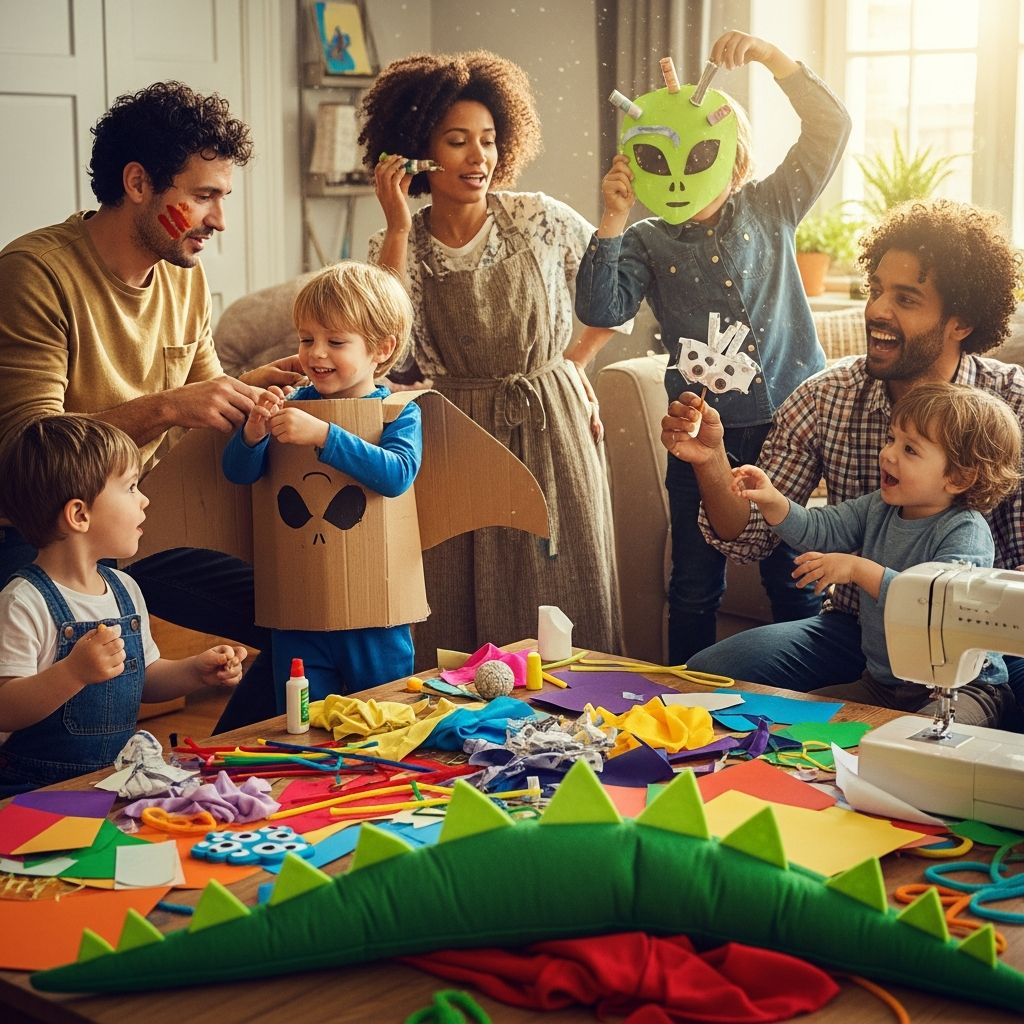
Parents often fall somewhere between buying a full costume and hand-sewing an heirloom-worthy outfit, and that middle space is where simple DIY costume kits shine. A well-planned kit lets kids play, experiment, and pretend without putting pressure on adults to be expert crafters.
Why Costume Kits Beat One-Off Costumes
Instead of creating a single perfect costume once a year, building a reusable kit turns dress-up into an everyday activity that grows with your children. When you emphasize flexibility over perfection, you save time and money while nurturing creativity.
Costume kits also reduce decision fatigue, because you can rely on a curated box of props and basics rather than starting from scratch for every event, party, or pretend-play session.
- They stretch across seasons: Halloween, school spirit days, themed birthdays, and rainy afternoons.
- They encourage kids to mix pieces and invent their own characters.
- They minimize last-minute emergency store runs for missing accessories.
Core Philosophy: Good Enough Is Great
Many parents avoid DIY costumes because they imagine advanced sewing projects and Pinterest-level photo shoots, but a successful kit embraces shortcuts. A costume only needs to be comfortable, safe, and recognizable enough for your audience: your child and maybe a handful of friends.
Patchwork, safety pins, and permanent markers are completely acceptable solutions, and your child is more likely to remember how they felt in the costume than whether the seams were professional.
Mindset Shifts for DIY-Ish Parents
- Done over perfect: A costume that exists beats a concept stuck in your head.
- Comfort over accuracy: Soft fabrics and easy bathroom breaks matter more than exact replicas.
- Play over photos: Plan for running, dancing, and candy-eating, not just pictures.
Planning Your Family Costume Kit
Before buying or gathering anything, think about the kinds of characters your kids tend to enjoy. Look for patterns in their favorite shows, books, or games, then select pieces that work across multiple themes instead of locking into a single, narrow idea.
Sketching a rough list or using a simple checklist will keep your kit focused and prevent it from turning into an overflowing bin of random clutter.
Questions to Ask Before You Start
- What colors do your kids gravitate toward in clothes and toys?
- Are they more into animals, heroes, jobs (like firefighter), or fantasy (like dragons)?
- Do you need costumes to be school-appropriate and easy to take on and off alone?
- How much storage space do you realistically have for dress-up items?
Essential Building Blocks for Any Costume Kit
Think of your costume kit like a capsule wardrobe for pretend play: a few smart basics and some bold accessories can generate dozens of looks. Focus on simple clothing layers that are comfortable and easy to wash, then round them out with hats, masks, and props.
Neutral base layers let you pivot from one character to another in minutes just by switching accessories, and they also work as pajamas or loungewear when the costume phase ends.
Clothing Basics
- Plain leggings and joggers in black, gray, and one bright color.
- Solid-color T-shirts and long-sleeve tops (white, black, red, blue).
- One or two simple dresses or tunics that can be fairy, princess, scientist, or pop star depending on accessories.
- Hoodies with no logos that can become animals, ninjas, or superheroes.
Transformative Accessories
- Assorted hats: crown, floppy sun hat, baseball cap, chef’s hat, knit beanie.
- Masks and glasses: simple eye masks, oversized sunglasses, toy goggles.
- Capes and wraps: old scarves, yardage of fabric, or store-bought capes in a few colors.
- Belts and sashes: soft belts, ribbons, and fabric strips for tying on tails or tools.
Low-Cost Props and Tools
- Kitchen tools that are safe and light, like wooden spoons and plastic spatulas.
- Cardboard shields, badges, and signs that can be redrawn or re-labeled.
- Felt shapes: stars, hearts, lightning bolts, animal ears, and simple emblems.
- Reusable hook-and-loop dots so badges and tails can be attached without permanent changes.
Role-Themed Mini Kits Inside the Big Kit
Once you have a basic set of clothing and accessories, you can cluster items into smaller role-based bundles. These mini kits make it easy for kids to grab everything they need for a character without digging through the entire box.
Each bundle can live in a labeled bag or clear pouch so you can see what is missing or broken at a glance, which makes pre-holiday checks simple.
| Role Theme | Core Pieces | Easy DIY Add-ons | Everyday Clothing Pairing |
|---|---|---|---|
| Animal Adventurer | Brown or green hoodie, fabric tail, felt animal ears on a headband | Cardboard binoculars, paper leaf crown, face paint whiskers | Leggings or joggers in any neutral color |
| Neighborhood Hero | Reflective tape vest, toy walkie-talkie, badge or name tag | Cardboard stop sign, paper megaphone, construction-paper armband | Jeans and sneakers |
| Space Explorer | Silver or white top, simple paper control panel taped to a belt | Foil-covered cardboard jetpack, plastic colander spaceship helmet | Dark pants or leggings |
| Royal Scientist | Play crown, lab-coat-style shirt or oversized white button-down | Colored water in plastic bottles, giant cardboard magnifying glass | Any comfortable bottoms |
How to Build Kits with What You Already Own
Many of the best costume pieces are hiding in plain sight in your closets and junk drawers. Start with a scavenger hunt through your home before buying anything new, and invite your child to help identify items they think would be fun to wear or transform.
By using what you already have, you reduce waste and teach kids that creativity often comes from reimagining ordinary things.
Simple Home Scavenger Hunt Ideas
- Look for scarves, old ties, belts, and bandanas that can become sashes or head wraps.
- Collect outdated costume jewelry, single gloves, and old sunglasses.
- Rescue worn-out T-shirts and turn them into capes or strips of decorative fabric.
- Gather small boxes, paper towel tubes, and bottle caps for future cardboard gadgets.
Time-Saving Hacks for Busy Parents
DIY costume kits do not have to be an all-weekend project; small bursts of effort can add up quickly. Keep a mini crafting toolbox near your kit so repairs and upgrades take minutes instead of becoming another big task on your list.
If you tend to remember costume needs at the last minute, consider setting a recurring reminder a few weeks before major holidays to peek inside the kit and see what needs attention.
Low-Effort, High-Impact Tricks
- Use fabric glue instead of sewing for attaching felt shapes and patches.
- Rely on adhesive tape, safety pins, and hook-and-loop fasteners for temporary changes.
- Print simple symbols (like stars or shields) on cardstock to tape or pin onto shirts.
- Keep a permanent marker handy for quick sign-making and name tags.
Organizing and Storing Your Costume Supplies
Even the best costume kit becomes frustrating if everything is tangled at the bottom of one large bin, so a little organization goes a long way. Clear containers and labels help kids find what they want, which encourages independent play and makes cleanup more manageable.
Choose a storage system that fits your space and habits rather than striving for picture-perfect organization that is hard to maintain.
Storage Options That Actually Work
- One large bin for clothing pieces and a smaller bin for hats and props.
- Over-the-door pocket organizers for masks, jewelry, and small accessories.
- Zip-top pouches or reusable fabric bags labeled by mini kit theme.
- A dedicated hook or low rack for capes and frequently used favorites.
Involving Kids in the Creative Process
Kids are far more invested in costumes they helped design, even if the results are mismatched or unusual. Encourage them to sketch character ideas, choose color combinations, and decide which props belong together.
Shared decision-making also allows you to gently guide them toward options that fit your budget, time, and comfort level, while still giving them control over the final look.
Age-Appropriate Ways Kids Can Help
- Toddlers: Choose between two hats or two capes and help stick on large felt shapes.
- Preschoolers: Draw badges, decorate cardboard accessories, and sort items by theme.
- Grade-schoolers: Design full characters, cut simple shapes (with supervision), and help label bags or boxes.
Safety and Comfort Considerations
While creativity is important, safety and comfort should guide your final choices. Any costume element that restricts vision, breathing, or movement is better saved for a quick photo than for an entire evening of activity.
Check that all pieces are age-appropriate, flame-aware, and easy to take on and off, particularly if children will wear them at school or crowded public events.
Quick Safety Checklist
- Ensure hats and masks do not block peripheral vision.
- Skip long, trailing pieces that might cause tripping.
- Avoid fragile accessories that could shatter or have sharp edges.
- Test face paints on a small patch of skin for sensitivity before full use.
Simple Costume Ideas from One Kit
To show how flexible a single kit can be, imagine a box that includes two capes, a crown, a pair of sunglasses, a strip of reflective tape, basic tops and leggings, and a few cardboard props. From that small collection, your child can assemble entirely different characters over time.
Encouraging them to combine pieces in new ways will help them see the kit as an open-ended toy rather than a fixed set of pre-approved outfits.
- Midnight Superhero: Black leggings, dark hoodie, bright cape, paper emblem pinned to the chest, and a cardboard flashlight.
- Royal Chef: Tunic, crown, apron, wooden spoon, and a cardboard menu taped to the wall.
- Backyard Explorer: Joggers, T-shirt, bandana, cardboard binoculars, and a zip-top bag labeled “specimens” filled with leaves.
- Friendly Robot: Neutral outfit, foil-covered cardboard chest panel, and decorated paper cuffs on wrists and ankles.
FAQs About DIY Costume Kits for Parents
Do I need sewing skills to make a good costume kit?
No sewing skills are required to build a fun and functional kit. Fabric glue, safety pins, and adhesive fasteners are usually enough for most projects, and many of your best pieces may come from clothing you already own.
How can I keep the cost under control?
Set a clear budget and focus on buying a few solid basics that will work for multiple characters, then add low-cost accessories over time. Thrift stores, hand-me-downs, and seasonal clearance sections are excellent sources of inexpensive pieces.
What if my child changes their mind at the last minute?
A flexible kit is designed for sudden switches, so keep some neutral layers and a range of quick accessories ready. When plans change, you can pivot by swapping hats, symbols, or props without starting from scratch.
How do I handle siblings with very different interests?
Choose a shared base of neutral clothing and then create smaller theme bags that match each child’s taste. They can trade pieces or borrow from each other over time, which often leads to collaborative, mixed-up characters.
Is it worth keeping the kit out year-round?
Keeping the kit accessible encourages spontaneous pretend play beyond holidays and parties. If space is tight, rotate a few favorite items into regular toy storage and tuck the rest away until the next big event.
DIY costume kits give parents permission to aim for playful, not perfect. With a few simple pieces, a bin or two of organized accessories, and a willingness to embrace your child’s imagination, you can create a flexible dress-up system that supports years of memorable make-believe.