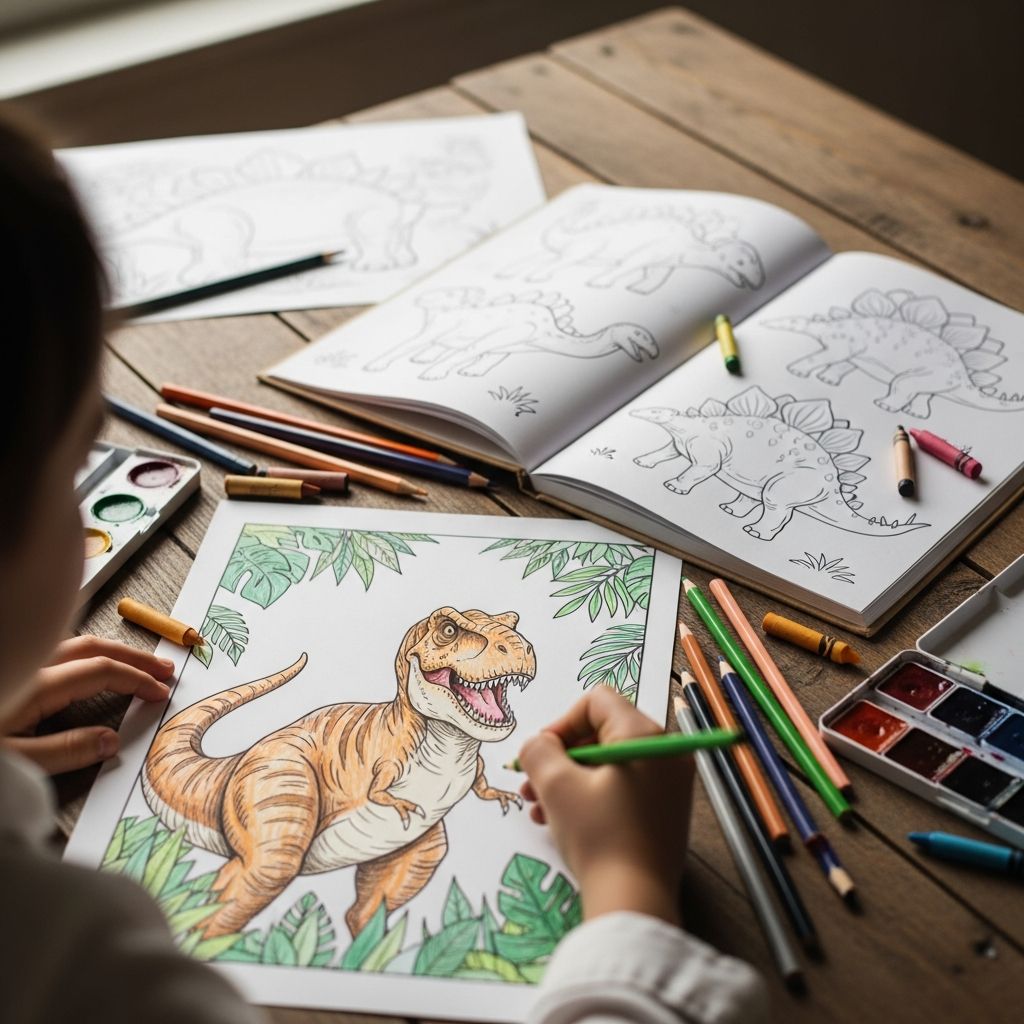
Dinosaur coloring pages do much more than keep kids busy. They tap into children’s natural curiosity about prehistoric creatures while quietly building fine motor skills, focus, and confidence. With a simple stack of printable sheets and a box of crayons, you can turn any afternoon into a fun, low-prep learning experience.
Why Kids Are Drawn to Dinosaurs
Dinosaurs fascinate many children because they feel both real and mythical: huge animals that actually existed, but that kids will never meet in person. Coloring pages bring these creatures down to kid scale, letting children explore giant teeth, long necks, armor plates, and wings in a friendly, non-scary way. This mix of mystery and discovery makes dinosaur coloring sheets an easy win for reluctant artists and strong enthusiasts alike.
- They turn big, complex creatures into approachable, cartoony or stylized images.
- They encourage questions about science, history, and nature without formal lessons.
- They let children control the story: a rainbow T-rex or a pastel stegosaurus is always allowed.
Hidden Learning Benefits of Coloring Dinosaurs
Coloring pages are often seen as simple entertainment, but they can support a wide range of early skills. When kids color dinosaurs, they practice holding tools, tracking shapes, and planning their next move, all while feeling like they are just playing.
- Fine motor skills: Small hand movements used to color within lines prepare children for writing, cutting, and tying shoes.
- Hand–eye coordination: Matching strokes of color to smaller details, like spikes or claws, strengthens coordination.
- Focus and patience: Completing a page from start to finish trains kids to stay with a task longer.
- Color recognition: Choosing and naming colors builds vocabulary and early art concepts.
- Emotional regulation: Repetitive, gentle movements can be calming for busy minds or anxious children.
Types of Dinosaur Coloring Pages to Try
Not all dinosaur coloring sheets are the same. Choosing the right style for a child’s age and interests makes the activity more engaging and less frustrating. Consider mixing different layouts so kids can switch when their attention shifts.
Age-Friendly Styles
- Bold outline dinosaurs: Simple shapes with thick borders are ideal for toddlers and preschoolers.
- Cute cartoon dinos: Rounder, friendlier dinosaurs help younger kids who might be scared of realistic teeth and claws.
- Scene-based pages: Dinosaurs set in jungles, deserts, or volcano landscapes suit early elementary kids who like storytelling.
- Detailed line art: Complex scales, patterns, and backgrounds fit older children and teens who enjoy careful work.
Learning-Focused Layouts
- Labeled species sheets: Pages that include names like “Triceratops” or “Brachiosaurus” build word recognition.
- Compare and contrast pages: Two dinosaurs side by side encourage noticing similarities and differences.
- Activity hybrids: Color-and-trace or color-and-count pages blend coloring with handwriting and early math.
Quick Guide to Popular Dinosaurs for Kids
Adding a little information to coloring time can turn a fun activity into a mini science lesson. This simple table offers kid-friendly talking points you can share while your child colors.
| Dinosaur | Fun Fact | Coloring Prompt |
|---|---|---|
| Tyrannosaurus rex | Often shown as a fierce meat-eater with strong jaws and tiny arms. | “What color would a sneaky hunter be? Bright and bold, or dark to blend in?” |
| Triceratops | Known for three horns on its face and a wide frill behind its head. | “Try different colors on the horns, frill, and body to make patterns.” |
| Brachiosaurus | A long-necked plant-eater that could reach leaves high in the trees. | “Use lighter colors up high and darker shades low to show tall height.” |
| Stegosaurus | Recognizable by its large plates along the back and spiky tail. | “Color each plate a different shade like a row of flags.” |
| Pteranodon (flying reptile) | Not technically a dinosaur but often appears with them in kids’ books. | “Imagine it as a sky creature: what colors match a sunrise or sunset?” |
How to Turn Coloring Pages into Simple Learning Activities
If you want more than quiet time, you can gently weave in learning without turning coloring into a formal lesson. Small, playful prompts are usually enough to spark curiosity and conversation.
- Ask open questions: Try prompts like “What do you think this dinosaur ate?” or “Where might it sleep?” instead of quiz-style questions.
- Link to real animals: Compare long-necked dinos to giraffes, armored dinos to armadillos, or flying reptiles to birds.
- Introduce size words: Use terms like small, big, gigantic, or heavy while your child colors different species.
- Practice counting: Count spikes, plates, teeth, or spots on the dinosaur’s body together.
Setting Up a Stress-Free Coloring Space
Coloring should feel relaxing for kids and adults, not like a chore. A little setup ahead of time keeps the focus on creativity instead of clutter and spills.
- Cover the table with a reusable plastic mat or old tablecloth.
- Place crayons, colored pencils, and washable markers in small containers for easy reach.
- Offer a mix of simple and detailed pages so kids can choose based on their mood.
- Keep a folder or box to store finished works and favorite sheets to reprint later.
Creative Ways to Use Finished Dinosaur Pages
Once a dinosaur page is colored, it can do more than sit in a pile. Reusing artwork gives kids a sense of pride and shows that their creations have value beyond the moment they put down the crayon.
- Wall gallery: Designate a small wall or door as a rotating dinosaur art gallery and swap pieces each week.
- Homemade books: Staple several colored sheets together and add simple captions or short stories.
- Room decor: Laminate artwork to create placemats, posters, or drawer liners with a dinosaur theme.
- Party supplies: Use colored pages as party placemats, gift bag tags, or DIY invitations for dinosaur-themed celebrations.
- Learning cards: Cut out dinosaurs, glue them on cardstock, and write their names or fun facts on the back.
Ideas for Parents, Teachers, and Caregivers
Dinosaur coloring pages are flexible enough to use in homes, classrooms, therapy settings, and childcare environments. With a few tweaks, the same sheet can feel fresh and purposeful in each context.
At Home
- Use a coloring page as a calm-down tool before bedtime or after a busy outing.
- Pair coloring with dinosaur picture books or short documentaries during family learning time.
- Invite siblings to color the same dinosaur differently and compare creative choices.
In the Classroom
- Offer dinosaur sheets in a science center for early finishers while studying animals or habitats.
- Use coloring as a station during a dinosaur unit, rotating groups through reading, building, and art.
- Encourage students to label parts of the dinosaur: tail, claws, neck, plates, wings, or horns.
For Therapists and Specialists
- Occupational therapists can use coloring for fine motor practice in a familiar, non-threatening theme.
- Counselors may use dinosaur imagery to talk about feelings: brave, scared, strong, or shy dinosaurs.
- Speech therapists can build vocabulary by naming colors, body parts, and action words like stomping or flying.
Choosing Between Printable and Digital Dinosaur Coloring
Families now have two main options: printable dinosaur coloring pages on paper or digital versions on tablets and computers. Both can be fun, but they offer different experiences, especially for younger children still developing hand strength.
| Option | Pros | Considerations |
|---|---|---|
| Printable pages | Support handwriting grip, reduce screen time, and can be displayed or gifted. | Require paper, ink, and storage space for finished art. |
| Digital coloring | Portable, no physical mess, and easy to erase mistakes. | Involves screens, may not build the same tactile skills, and can be distracting. |
For most young children, starting with printable sheets is often the better choice for building real-world coordination and giving their eyes a break from digital devices. Digital coloring can still be a fun bonus for travel days or long waits.
Frequently Asked Questions About Dinosaur Coloring Pages
What age are dinosaur coloring pages best for?
Dinosaur coloring pages can work for toddlers through tweens, as long as the designs match the child’s skill level. Very young kids tend to do best with big, open shapes, while older kids enjoy detailed images with backgrounds and patterns.
How can I keep coloring from becoming boring?
Rotate styles, tools, and challenges. One day, invite kids to use only warm colors like red and orange; another day, ask them to design a “camouflage dinosaur” that hides in a jungle or desert background. Adding small twists makes the same pages feel fresh.
Do kids have to stay inside the lines?
Staying within lines can be a helpful goal for practicing control, but it should not be a strict rule. For many children, especially younger ones, the joy of color and motion matters more than perfect precision, and creative freedom can keep them engaged longer.
Can dinosaur coloring pages help with emotional regulation?
Yes. The repetitive, predictable motions of coloring can be soothing, especially when paired with soft music or quiet conversation. Some children find that focusing on a friendly dinosaur character helps them process big feelings in a safer, less direct way.
What supplies work best for dinosaur coloring?
For younger kids, thick crayons and washable markers are usually easiest to grip and clean. Older children may prefer colored pencils or gel pens to add shading, patterns, and fine details to scales, feathers, or backgrounds.
Encouraging Creativity with Every Dinosaur
The most valuable part of dinosaur coloring pages is not staying perfectly inside every line. It is the sense of control and creativity that children feel when they choose colors, invent stories, and see their ideas appear on the page. With a little variety and encouragement, a simple dinosaur outline can become a doorway to calmer afternoons, stronger skills, and a lifelong love of art and learning.