Every snack, meal, and drink you have takes an amazing journey through your body, turning into the energy and building blocks that help you move, think, grow, and stay healthy.
Understanding your digestive system makes it easier to choose foods and habits that support clear skin, steady energy, strong immunity, and better focus in school.
Why Digestion Matters So Much in Your Teen Years
During the teen years, your body is growing fast, hormones are shifting, and your brain is still developing, so your cells constantly need nutrients from the food you eat.
Your digestive system is the pathway that turns burgers, salads, and smoothies into tiny particles your cells can actually use for growth, repair, and energy.
- Digestion breaks food into smaller pieces so nutrients can pass into your bloodstream.
- Absorption moves those nutrients from the gut into your blood so they can reach every body system.
- Elimination gets rid of what your body does not need, keeping your internal environment balanced.
Meet Your Digestive Superhighway
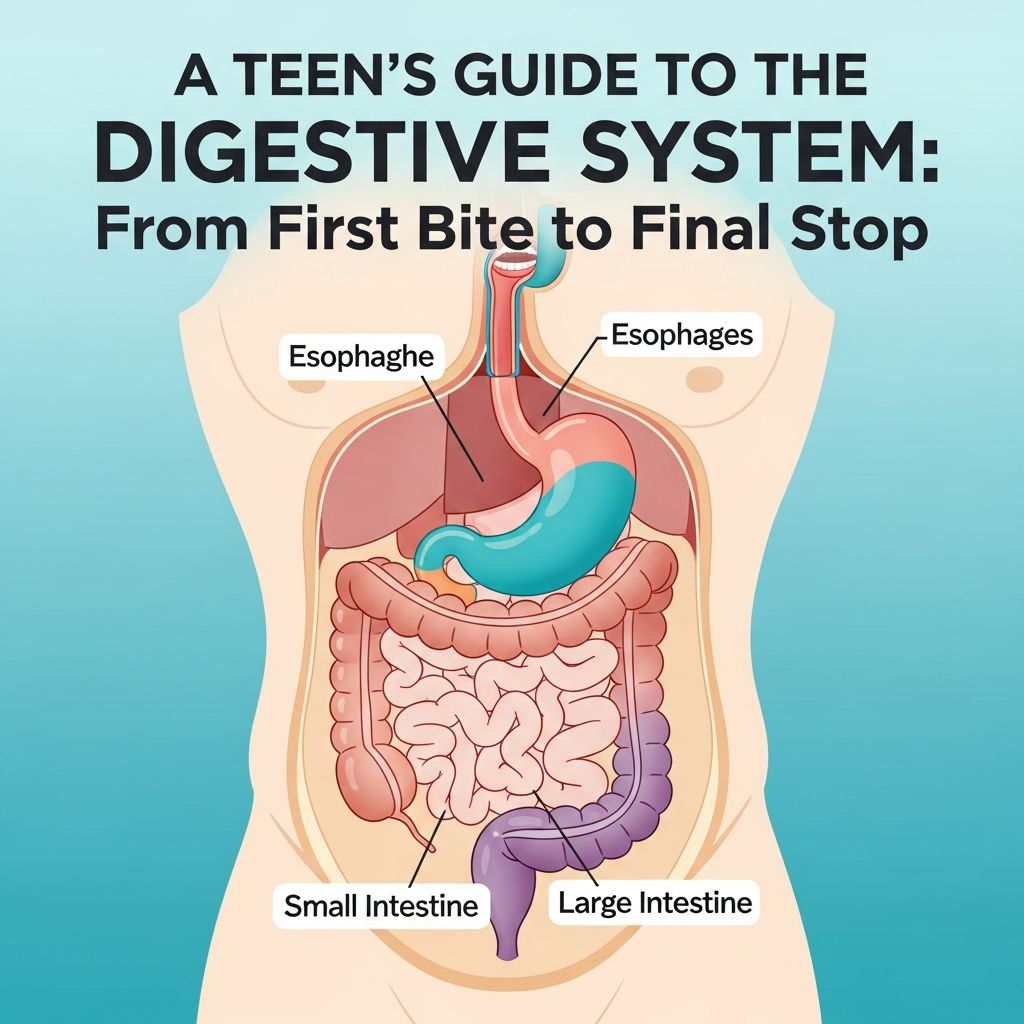
The digestive system is like a long, twisting superhighway that starts at your mouth and ends at your anus, with several organs acting as checkpoints and processing stations along the way.
Some organs form the main tube food travels through, while others sit alongside that tube and release chemicals and juices that help break food down.
| Part | Location | Main Job |
|---|---|---|
| Mouth and teeth | Head | Start digestion by chewing and mixing food with saliva. |
| Esophagus | Neck and chest | Moves swallowed food down to the stomach. |
| Stomach | Upper abdomen, under ribs | Churns and mixes food with acid and enzymes. |
| Small intestine | Middle abdomen | Finishes digestion and absorbs most nutrients. |
| Large intestine | Around the edges of the abdomen | Absorbs water and forms stool. |
| Liver | Right upper abdomen | Makes bile and processes nutrients. |
| Gallbladder | Under the liver | Stores and releases bile for fat digestion. |
| Pancreas | Behind the stomach | Releases enzymes and hormones like insulin. |
| Rectum and anus | Lower pelvis | Store and release solid waste from the body. |
Stage 1: What Happens When You Take a Bite
Digestion begins the moment food enters your mouth, long before it reaches your stomach, because your teeth, tongue, and saliva all work together as a team.
Chewing breaks food into smaller bits, while saliva moistens it and starts to chemically break down certain carbohydrates like bread and cereal.
- Teeth slice, tear, and grind food into pieces that are easier to swallow.
- The tongue helps position food so you can chew it properly and form a soft ball before swallowing.
- Saliva contains special proteins called enzymes that start breaking down starches into simpler sugars.
Stage 2: The Slide Down the Esophagus
After you swallow, food does not simply drop into your stomach; it is pushed down through a muscular tube called the esophagus.
The walls of this tube squeeze in a coordinated wave-like motion, moving food toward your stomach even if you are upside down or lying on your side.
- Muscle waves called peristalsis slowly push the food along.
- A ring of muscle at the bottom of the esophagus opens to let food enter the stomach, then closes to keep acid from splashing upward.
Stage 3: Inside the Churning Stomach
The stomach is like a stretchy, muscular bag that holds food for a few hours while it gets mixed and broken down further.
Strong muscles in the stomach wall gently churn food, while glands in the lining release acid and enzymes that help break down proteins in meat, beans, and dairy.
- Stomach acid helps activate enzymes and kill many germs that enter with food.
- The mixture in your stomach gradually turns into a thick liquid before it moves on.
- Only small amounts of this liquid pass at a time into the small intestine through another muscular valve.
Stage 4: The Small Intestine – Nutrient Powerhouse
The small intestine is a long, folded tube where most digestion and nutrient absorption happen, making it one of the most important parts of the whole system.
Digestive juices from the pancreas and bile from the liver flow into the beginning of the small intestine, helping to break fats, proteins, and carbohydrates into tiny units that can enter your bloodstream.
- The first portion of the small intestine receives acidic fluid from the stomach and mixes it with bile and pancreatic enzymes.
- The long middle and last sections are lined with millions of tiny projections that increase surface area for absorption.
- Nutrients like amino acids, simple sugars, fatty acids, vitamins, and minerals move through the intestinal wall into nearby blood vessels.
Stage 5: The Large Intestine – Water and Waste Management
By the time material reaches the large intestine, most nutrients have already been absorbed, and what remains is mainly water, fiber, and waste products.
The large intestine slowly absorbs water and certain minerals, compacts the remaining material into stool, and prepares it to leave the body.
- Helpful bacteria in the large intestine break down some leftover substances and produce certain vitamins.
- As water is removed, the contents become more solid and move toward the rectum.
- When the rectum is full, nerves signal that it is time to use the bathroom and empty the bowels.
Support Crew: Liver, Gallbladder, and Pancreas
Three important organs help digestion even though food does not pass directly through them: the liver, gallbladder, and pancreas.
They make or store special juices that are released into the small intestine at just the right time to help break down fats, proteins, and carbohydrates.
- Liver: Makes bile, processes nutrients absorbed from the gut, and helps filter harmful substances from the blood.
- Gallbladder: Stores bile from the liver and squeezes it into the small intestine when you eat fatty foods.
- Pancreas: Releases digestive enzymes into the small intestine and hormones like insulin into the blood to help control blood sugar.
How Nutrients Actually Feed Your Body
Once digestion breaks food into tiny molecules, your bloodstream transports these nutrients to every cell, where they can be used for energy, growth, and repair.
Different nutrients have different jobs, and your digestive system helps make sure each type is available in a form your body can use.
- Carbohydrates become simple sugars that can be burned quickly for energy or stored for later use.
- Proteins are broken down into amino acids that help build muscles, enzymes, and many cell structures.
- Fats turn into fatty acids and glycerol, which support brain function, hormones, and long-term energy storage.
- Vitamins and minerals help with immunity, bone strength, nerve signaling, and countless chemical reactions.
- Water is essential for moving nutrients, controlling temperature, and supporting digestion itself.
Common Digestive Issues in Teens
Many teens experience occasional stomachaches or bathroom problems, and most of the time these are related to what and how they eat, how stressed they are, and how active they are.
Knowing the most frequent issues can help you recognize when a simple change in habits might help and when you should talk with a trusted adult or health professional.
- Heartburn or acid reflux: A burning feeling in the chest or throat from stomach acid moving up into the esophagus.
- Constipation: Hard, dry stools that are difficult or painful to pass, often linked to low fiber, low water intake, or too much sitting.
- Diarrhea: Loose, watery stools that can be caused by infections, certain foods, or stress.
- Gas and bloating: A puffy or tight feeling in the belly when your gut bacteria produce gas while breaking down food.
- Food sensitivities: Discomfort after eating certain foods like lactose-containing dairy or very greasy meals.
Everyday Habits That Support a Healthy Gut
Small choices you make each day can have a big impact on how comfortable your stomach feels, how regular your bowel movements are, and how much energy you have.
Focusing on balanced nutrition, movement, and stress management gives your digestive system the support it needs to work smoothly.
- Eat a mix of fruits, vegetables, whole grains, lean proteins, and healthy fats.
- Include fiber-rich foods such as oats, beans, lentils, berries, and whole-grain bread or pasta.
- Drink water regularly throughout the day instead of relying only on sugary drinks or energy drinks.
- Stay active with walking, sports, dancing, or workouts to help food move through your intestines.
- Try to eat meals at fairly regular times rather than skipping all day and then overeating at night.
- Notice which foods seem to upset your stomach and adjust your choices accordingly.
When to Talk to a Doctor or Trusted Adult
While many digestive problems in teens are mild and temporary, some signs mean you should discuss what is happening with a parent, guardian, school nurse, or health care provider.
Getting help early can prevent small issues from turning into larger health problems and can ease worry about what is going on inside your body.
- Long-lasting stomach pain or cramps that keep coming back.
- Regular heartburn or pain when swallowing.
- Blood in your poop or black, tarry stools.
- Unexpected weight loss or loss of appetite.
- Diarrhea or constipation that lasts more than a couple of weeks.
- Feeling extremely tired along with digestive symptoms.
FAQs About the Digestive System for Teens
How long does it take to digest a meal?
For most people, it takes several hours for a meal to move from the stomach into the small intestine and many more hours to pass through the large intestine, so the entire process can often last about a day or more. The exact time depends on what you ate, how much you ate, and how active you are.
Is it normal to hear noises from my stomach?
Yes, gurgling or rumbling sounds usually come from your intestines as muscles move food, gas, and liquids along the digestive tract. These noises happen whether you have eaten recently or not and are not usually a sign of anything serious.
What is the difference between the small and large intestine?
The small intestine is longer and narrower and is where most digestion and nutrient absorption occur. The large intestine is shorter and wider and is mainly responsible for absorbing water and forming stool from the remaining material.
Can stress really affect my digestion?
Stress can change how quickly food moves through your digestive system and may trigger or worsen symptoms like stomachaches, diarrhea, or constipation. Relaxation techniques, regular exercise, and healthy sleep habits can often ease these stress-related digestive issues.
Are all bacteria in the gut bad?
Many bacteria in your large intestine are actually helpful and play roles in breaking down certain foods, producing some vitamins, and supporting your immune system. Problems can happen when the balance between helpful and harmful bacteria is disturbed, which may be influenced by diet, illness, or medications.
Key Takeaways for a Happier Gut
Your digestive system is a finely tuned, long-distance pathway that turns everyday foods into the energy and nutrients your body needs to grow, move, and think clearly.
By eating plenty of plant foods, staying hydrated, moving your body, and paying attention to how foods make you feel, you can support a strong, comfortable, and reliable digestive system throughout your teen years and beyond.