For many families, a trip to the grocery store is a chore to survive, not an outing to savor. Trader Joe’s has quietly changed that by turning routine shopping into a game built around hidden stuffed animals, surprise treats, and a lot of kid energy.
What Is This Stuffed Animal Game, Anyway?
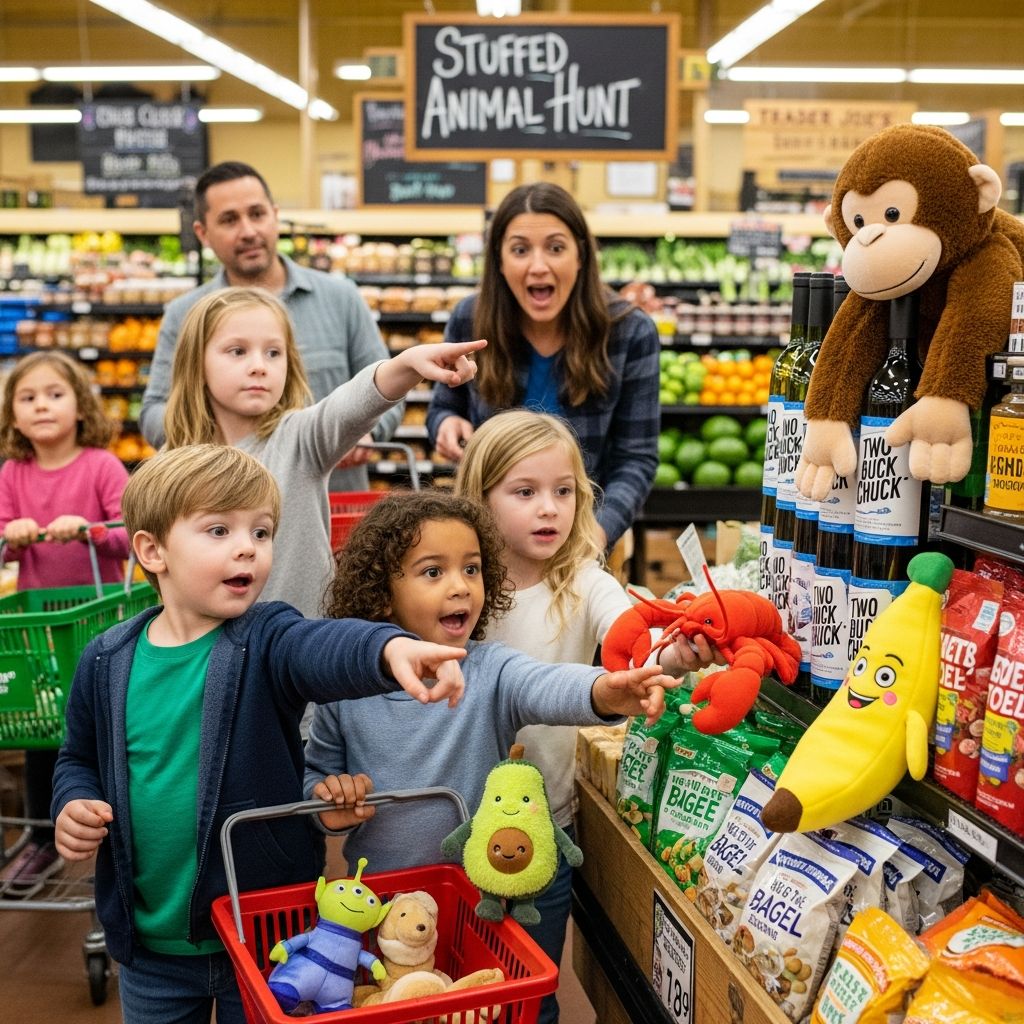
In many Trader Joe’s locations, staff tuck a plush toy somewhere in the aisles and invite children to search for it while adults shop. It might be perched on a shelf, tucked into a display, or peeking over a stack of cereal boxes. Finding it usually earns the child a small prize, such as a lollipop or sticker, rather than the toy itself.
The game is not always advertised loudly. Some stores have signs, while others rely on word of mouth or staff casually mentioning it to families. That low-key approach creates a sense of discovery that can feel magical for kids and slightly chaotic for parents who wandered in just to grab milk.
Why Kids Fall in Love with the Plush — Not the Prize
From an adult’s perspective, the logic is straightforward: the stuffed animal is a mascot for the game and stays in the store, and the child gets a small take-home reward. For a young child, especially a toddler or preschooler, this logic clashes with how they see the world.
Several developmental realities collide in that moment when a child spots the toy and learns it is not theirs to keep:
- Concrete thinking: Young children tend to interpret instructions literally. If they are told to look for a stuffed animal, they assume that finding it means it is now theirs.
- Emotional attachment: Many kids form instant bonds with soft toys, especially ones that feel special or “secret.” Holding the plush, even for a moment, can make it feel like a new friend.
- Limited perspective-taking: Understanding that the toy “belongs to the store” or has to be shared with other children is a sophisticated social idea that may be beyond a toddler’s current skill set.
All of this helps explain why a seemingly harmless game can quickly turn into a tearful standoff at the customer service counter.
Why Stores Hide Stuffed Animals in the First Place
From the retailer’s side, hiding a plush toy is a simple, relatively inexpensive way to make the store more inviting to families. It turns an errand that often involves boredom and whining into an experience laced with play and anticipation.
There are several reasons a grocery chain might embrace an in-store scavenger hunt:
- Keeping kids occupied: A focused child scanning shelves for a toy is often more content than one trapped in a cart with nothing to do.
- Building brand affection: Children who associate a store with fun are likely to remember it fondly, and parents often reward businesses that treat their kids kindly.
- Fostering community: The game encourages friendly conversations between staff, kids, and parents, reinforcing the store’s image as a warm, neighborhood space.
In theory, everyone wins: children get a mission, parents get a few peaceful minutes to choose pasta sauce, and the store earns loyalty through charm instead of aggressive sales tactics.
The Hidden Catch: When Fun Meets Toddler Logic
The problem appears when the delightful hunt collides with very real child emotions. A parent may walk in expecting an efficient trip and walk out juggling groceries, a sticky lollipop, and a sobbing toddler who just lost their plush soulmate.
Several pain points often emerge:
- Bait-and-switch perception: Children feel they were promised one thing (the toy) and given another (a small treat), even if no adult used those words.
- Inconsistent availability: Not every location or every visit involves the same toy or even the same rules, which can create confusion for families who shop at multiple stores or visit at different times.
- Emotional overload: Tired kids plus bright lights, crowds, and choices already strain patience; adding a high-stakes search can tip the balance.
Parents often find themselves in the uncomfortable role of translator, explaining store rules and fairness to a child whose only priority is hugging the penguin, giraffe, or shark they just heroically uncovered.
How Parents Can Prepare Kids Before the Hunt
Parents cannot control store policies, but they can shape expectations before the search begins. A thirty-second conversation at the entrance can be the difference between happy excitement and heartbreaking disappointment.
Consider these proactive steps:
- Set clear rules early: Explain that the stuffed animal lives in the store and that finding it earns a small prize, not the toy itself.
- Define success: Frame the goal as spotting the toy and telling an employee, rather than taking it home.
- Offer choices: Let your child decide whether they want to hunt for the toy or help choose items off the shopping list, giving them a sense of control.
- Practice disappointment skills: Use simple phrases like, “We can feel sad and still say goodbye to the toy,” to rehearse the idea before emotions spike.
When children know the script ahead of time, the final reveal — that the plush stays on duty at the store — feels less like a betrayal and more like part of the game.
Handling the Big Feelings in Aisle Five
Even with perfect preparation, meltdowns happen. A beloved stuffed sloth left behind can feel as devastating as losing a real pet, at least in the intense world of early childhood emotions. How adults respond in that moment matters more than whether the child leaves with a candy or a sticker.
Helpful responses often share a few key traits:
- Validation first: Acknowledging that the situation genuinely feels unfair helps kids calm down faster than dismissing their reaction.
- Simple explanations: Repeating, “The toy lives here; we visit it and say goodbye,” gives a clear, consistent narrative.
- Calm modeling: Keeping your own voice and body language steady teaches kids that big feelings can be managed, not feared.
Sometimes, leaving the store briefly or shifting attention to a new task (pushing the cart, choosing apples, counting items) can help a child regulate enough to finish the trip with dignity — for both of you.
A Quick Look at the Experience: Kids, Parents, and Store
To understand this tradition more clearly, it helps to see how different players experience the game. The table below summarizes typical motivations and challenges.
| Perspective | What They Love | What Frustrates Them |
|---|---|---|
| Kids | The thrill of searching, spotting something hidden, and being recognized for finding it. | Not being allowed to keep the stuffed animal they worked hard to find. |
| Parents | A distraction that keeps children engaged long enough to finish the shopping list. | Navigating disappointment, explaining store rules, and managing public meltdowns. |
| Store staff | Making connections with families and creating a lighthearted, playful environment. | Comforting upset children and mediating misunderstandings about what the prize includes. |
Viewed this way, the stuffed animal game is less a simple perk and more a mini social experiment in how adults and children negotiate fairness, sharing, and expectations.
How Stores Could Make the Game Kinder
The tradition clearly brings joy, but there is room to reduce the emotional landmines. Small tweaks to policy or presentation could preserve the fun while making the outcome gentler on young hearts.
Some possible improvements include:
- Clear signage: Posting friendly signs that explain the rules (“Find the store’s special friend and win a treat!”) helps align expectations before the hunt begins.
- Visible boundaries: Using a name tag or mini sign next to the plush reinforces that it is a store mascot, not a toy for sale.
- Consistent prizes: Offering a predictable reward, even if small, reduces confusion from visit to visit.
- Occasional bonus days: On rare occasions, allowing kids to take home a themed sticker sheet or mini coloring page linked to the mascot can soften the blow of leaving the plush behind.
These adjustments would not erase every meltdown, but they would send a strong message that the store respects both children’s joy and their emotional limits.
Turning the Game into a Parenting Tool
For parents, the stuffed animal hunt can become more than a distraction; it can also be a built-in parenting exercise. With a bit of intention, it can help teach resilience, patience, and empathy right there between the frozen vegetables and the pasta.
Here are ways to use the game for growth:
- Practice good sportsmanship: Celebrate the process of looking and trying, not just the moment of winning a prize.
- Model gratitude: Encourage children to thank the staff member who awards the treat, turning the experience into a lesson in manners.
- Talk about sharing: Explain that the toy stays so other children can enjoy the game, helping kids understand community and fairness.
- Reframe disappointment: After a tough goodbye to the plush, discuss how feelings changed over time and what helped them cope.
These micro-lessons, repeated over many errands, often leave a more lasting mark than the lollipop itself.
When the Hunt Is Too Much: Opting Out Gracefully
Not every child benefits from the added stimulation of a scavenger hunt, and not every parent has the bandwidth to referee feelings after a long day. It is completely reasonable to decide that this game is not the right fit for your family right now.
If you choose to skip it, consider:
- Redirecting attention: Offer alternative “jobs,” such as crossing items off a printed list or counting how many red packages they see.
- Shopping at off-peak times: Quieter environments can reduce exposure to other kids hunting for the toy, which might trigger curiosity or envy.
- Bringing a comfort item: Letting your child carry a favorite toy from home can satisfy their need for a cuddly companion during the trip.
Families do not owe any store their participation in every promotion. Knowing your child’s limits and your own can lead to better experiences for everyone.
What This Trend Says About Modern Parenting
The rise of in-store games like hidden stuffed animals reflects larger shifts in how society views both childhood and consumer spaces. Grocery aisles, once purely practical, now double as mini amusement parks, photo backdrops, and social media content.
Parents navigate a landscape where every errand seems expected to be “magical” and “memorable.” The tension between wanting to delight children and needing to simply complete basic tasks shows up in the laughter, tears, and negotiations triggered by a single plush penguin balancing on a shelf.
Frequently Asked Questions
Do all Trader Joe’s locations hide stuffed animals?
No. Many stores do, but practices can vary by location and even over time. The best way to find out is to ask a staff member at your local store whether they run a stuffed animal hunt and how it works.
Can my child keep the stuffed animal if they find it?
Typically, no. The plush toy acts as a mascot or marker and stays in the store for other children to find. Kids are usually offered a small prize, such as a candy or sticker, as a reward for spotting it.
What if my child becomes very upset about leaving the toy?
It is common for young children to feel strongly about a toy they just discovered. Acknowledge their feelings, remind them gently of the rules, and offer comfort. Over time, repeated experiences of saying goodbye to the store mascot can help them practice coping with disappointment.
Is it okay to skip the game altogether?
Absolutely. Parents are under no obligation to participate. If the game causes more stress than joy for your child or for you, you can redirect their attention to other tasks, bring your own entertainment, or simply say that today is a “no game” day.
How can I talk to my child about why the toy stays in the store?
Use simple, consistent language such as, “This toy lives here so every kid gets a turn to find it.” Emphasizing sharing and turns helps frame the rule as an act of kindness rather than punishment.
Beyond the Plush: Rethinking Kid-Friendly Errands
The hidden stuffed animal tradition highlights an important truth: families are hungry for public spaces that welcome children as they are, noise and all. Games like this can transform errands into shared memories, provided adults recognize the emotional stakes attached to even the smallest prizes.
Whether you embrace the hunt or politely decline it, the key is the same: blending practicality with play in a way that respects children’s feelings and parents’ sanity. The stuffed animal may stay behind on the shelf, but the stories families tell about those hunts — the triumphs, the tantrums, the negotiations — follow them home long after the grocery bags are unpacked.